
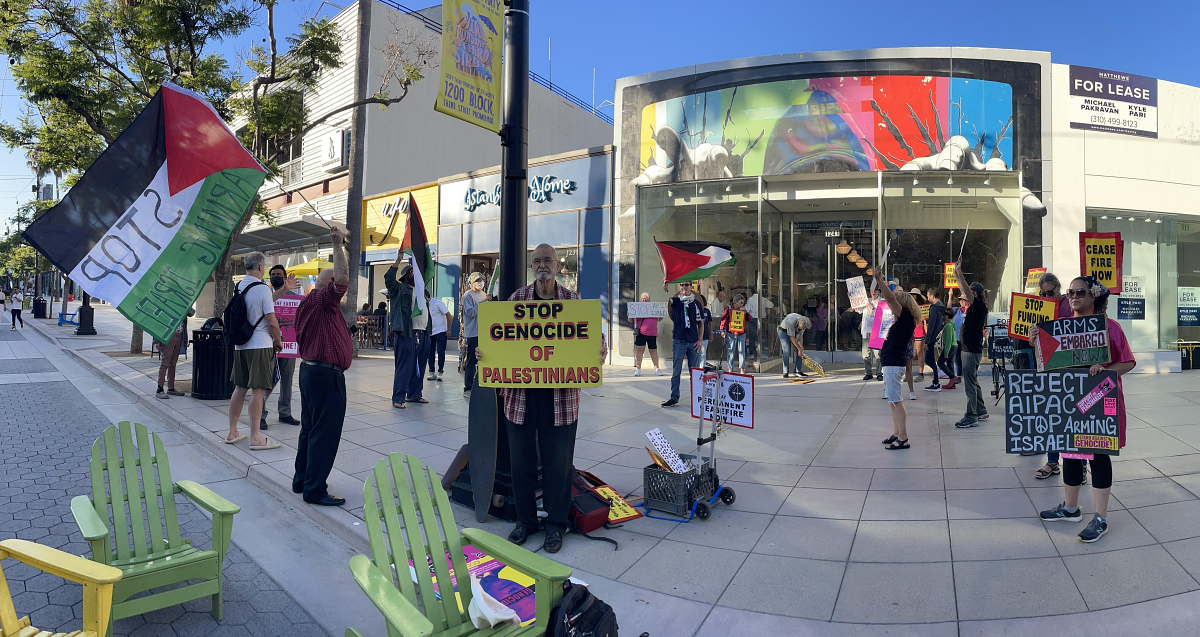
A regular Sunday demonstration on the Santa Monica Promenade (August 2024). Author is holding the sign that reads ""STOP GENOCIDE OF PALESTINIANS."

Aug 26, 2025 10:32 PM
What I have written below is a detailed description of the institutional violence against an entire population during a circumscribed time period, but it is only a snapshot.
I am sharing with you today, in August 2025, what I wrote in 2011 about my experiences as a human being and a Jew living in illegally occupied Palestine during the First Intifada (“Uprising”) (a non-violent uprising) in the early 1990s. My purpose is to give the reader a view of the general historical context for the Hamas attack on October 7, 2023. I am asking you to try to understand, not excuse or justify, this attack. The Hamas attack did not take place in a historical vacuum. It was Hamas’s response to the decades-long, brutal Israeli military occupation & ethnic cleansing campaign against the entire Palestinian population of the Gaza Strip & the West Bank.
The details of Israel’s violent, restrictive, and lethal daily military policies and actions (carried out consistently from June 1967 to the present) against a defenseless & innocent Palestinian population are not known to the overwhelming majority of U.S. citizens. In my essay below, NORMAL in PALESTINE (1990 – 1993), I present these details from a short period in the 1990s, from the perspective of the Palestinians who were victimized. This essay should also give you a partial context that might help you try to understand Israel’s current (2023-2025) savage genocidal campaign against all Palestinians.
For more context, I suggest that you read critically, Theodor Herzl’s, The Jewish State, the writings of Ahad Ha’am that criticize Zionism, and the history of the Zionist movement from 1896 to the present.
I have written right here a short, partial autobiographical essay to introduce you to who I am and how I came to write NORMAL in PALESTINE (1990 – 1993). I wrote it in 2011, at 68 years of age, almost two decades after I returned to the U.S. from having lived in Palestine during the First Intifada.
Related stories
I grew up in the late 1940s, the child of two first-generation U.S.-born Jewish parents whose parents were immigrants from Eastern Europe. Our entire extended Jewish family (from all four of my grandparents) were exterminated during the Nazi Holocaust. My parents spent much time in the late 1940s and early 1950s trying unsuccessfully to locate any surviving family members. I know this because I was present every night when they spoke regularly about this around the dinner table—between themselves, and with our Jewish neighbors. As a child, I always paid close attention to these painful discussions. My parents taught me not to hate any social group of people, that we should love and respect all peoples, and treat all people honestly and fairly. They opposed any form of discrimination, oppression, or persecution of individuals and social groups. They were opposed to wars, not only because of the killing & destruction, but also because of the horrible & immoral ways that soldiers behave in wartime. My father served in the U.S. Navy during World War II and was traumatized by what he saw U.S. soldiers do, on the ground, not only to enemy combatants, but also to innocent civilians living in the war zones. He taught me to always fight for justice for all peoples and to live my life by upholding the highest moral principles. He made it clear that all of these values that he was teaching me were part of a long tradition of Jewish values—and the values that his parents and grandparents honored & lived by in their East European Yiddish communities. I am confident that, today, my entire extended Jewish family, all of whom were exterminated during the Nazi Holocaust, would be horrified if they were to see what Zionism & the Zionist Jews of Israel have been doing to the Palestinians since 1947.
During the 1980s, I studied the Zionist movement and the history of the post-World War II Jewish immigration to Palestine. I gradually became critical of Zionism & the post-1947 Israeli injustices against the Palestinian people. My main sources of information & interpretation were primarily Jewish and Israeli thinkers: Theodore Herzl, Ahad Ha'am, Judah Magnes, Maxime Rodinson, Simha Flapan, Israel Shahak, Isaac Deutscher, Noam Chomsky, Edward Said, Walid Khalidi, Ibrahim Abu-Lughod, Eqbal Ahmad, & Sabri Jiryis.
I became active in the anti-Zionist movement sometime in the early 1980s. I joined the Palestine Aid Society (PAS). In 1989, in the second year of the First Intifada, I joined a 2-week delegation sponsored by the PAS and visited East Jerusalem and Palestinian villages and towns in the West Bank and Gaza Strip to see firsthand what this peaceful, widespread, Palestinian mass civil disobedience uprising was all about. One day, I joined a woman from our delegation when she went to interview Khalil Mahshi, the Director of the Quaker school in Ramallah (a private primary school and secondary school). I was so impressed with Mahshi’s ideas and prospective educational projects that I asked him if I could work for him. We communicated by postal mail over the next three months until he invited me to become the Director of a new project that he had just received funding for from a Dutch NGO. So, at the beginning of June 1990, I moved to the West Bank of Palestine and worked as the Director of the Educational Network, a Palestinian educational NGO, & I taught Modern World History (in English) to 12th-graders.
I lived in Ramallah (in the West Bank) from 1990-1993, but also spent much time in the Gaza Strip during these years. I worked closely with Palestinian teachers, Kindergarten—grade 12, in government, United Nations, and private schools throughout the entire West Bank and Gaza Strip, introducing progressive pedagogies and curriculum development. I also spent these years meeting regularly with the parents of K-12 students to listen to their concerns about the education of their children under military occupation and the important issues and problems they wanted our schools to address.
I did not own a car and walked everywhere I went inside the communities where I worked. Because of this, I witnessed Palestinian life up close, every day, day and night—in the streets, at work, and in my home—everyday for 3½ years. I formed close and mutually affectionate relationships with all of my Palestinian neighbors because I suffered whatever they suffered. We were all victimized together daily by the Israeli military and its so-called “Civil Administration.” I am still deeply traumatized by what I experienced in Palestine 35 years ago. When you read my essay below, you may understand how I became traumatized. Currently, in addition to having ongoing nightmares about what I saw in Palestine, I am regularly overcome during the day by memories of Israeli violence that cause me either to break down emotionally, in public, with extended periods of intense crying or, the opposite; I become enraged and intensely volatile (not violent)—an emotional explosiveness that I have been able to bring under control quickly (I do not want to act out the violence that I hate). I ask myself, many times these days, how would I react to witnessing the Israeli violence today if I were still living in Palestine.
The United Nations has been saying, for the last 58 years that Israel is illegally occupying the Palestinian Territories of the West Bank (including East Jerusalem) and the Gaza Strip: Sadly, this has always, for 58 years, concealed the horrific severity of the lethal, violent, cruel, and savage living conditions that the Israeli military has forced all Palestinians to endure everyday—day and night—everywhere in the Occupied Territories, for almost 6 decades. Also, the international mainstream media has, for 58 years, been ignoring Israel’s continuous, ongoing, and daily brutality against every aspect of Palestinian life in the Territories, but this media was, however, always ready to write about, and sensationalize, any singular violent Palestinian reaction to their massive, institutionalized victimization.
Only the left alternative media has written about Israel’s ongoing inhumane policies and actions against the innocent and defenseless Palestinians in the Occupied Territories. But, even this honest reporting has not conveyed to us the painful truth of the high level of human, physical, and agricultural destruction; and even more important, rarely, except when they present Palestinian eyewitness accounts of a particular (separate) violent incident, do we hear or see the massive immediate victimization. We never see the life-long invisible psychological and emotional trauma on all members of their community—young and old, male and female. Finally, the reporting of separate, violent Israeli actions does not allow us to see or understand the bigger picture: the fact that these cruel, brutal, and lethal Israeli actions are, and have been, occurring simultaneously in all Palestinian communities on a daily and continuing basis for decade after decade, resulting in lifelong psychological and emotional traumas.
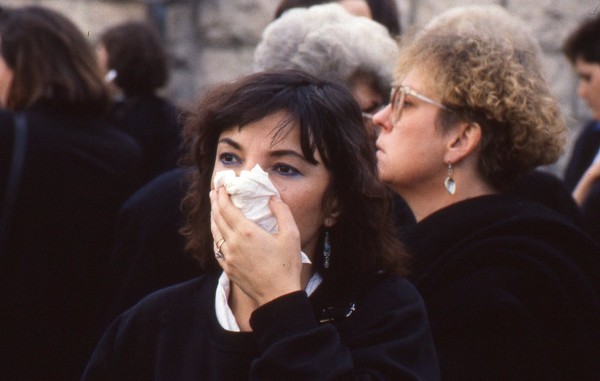
(Left) Woman injured at the peaceful & unprovocative demonstration in East Jerusalem in Dec. 1989. She was shot on her forehead with a rubber-coated metal bullet. Most people I saw who were shot in the head with these bullets had to be hospitalized. Note, these are NOT "RUBBER BULLETS" as the Israeli government & all media describe them. (Right) A man who was injured at the same peaceful & unprovocative demonstration in East Jerusalem in Dec. 1989. He was also shot with several rubber-coated metal bullets.
What I have written below, “Normal in Palestine,” is a detailed description of the institutional violence against an entire population during a circumscribed time period, but it is only a snapshot of what has been happening every day (and is still happening every day) for the last 58 years. This is a key issue that must be understood if we are to understand the reality of the Palestinian resistance and the Israeli genocide that is happening today. I describe the reality of daily life that I experienced in Palestine in the most simple and unpretentious terms, that will allow readers to visualize and, hopefully, stir their conscience to feel emotionally what that everyday life was like for all Palestinians, everywhere in the illegally occupied Palestinian territories, during the short period of a peaceful, widespread, mass civil disobedience. Even though my narrative covers only 3½ years, many of my close Palestinian neighbors told me that the conditions we were facing every day were the very same violent and repressive conditions that they had been suffering under since 1967, and were the same conditions that led to the peaceful, widespread, and mass civil uprising that began in December 1987.
I want readers to ask themselves how they think they might react (as a community) if they and their families were subjected every day to this kind of unrestrained, arbitrary, and unpredictable violence. And, for how long do they think a population would wait until it responds to this institutional violence—and it is “institutional”? The Hamas attack did not surprise me, nor should it have surprised anyone who was always being victimized by Israel’s violence. I am surprised that the attack did not occur sooner!
1. When a foreign military force commits violence, institutional violence, against the entire population—innocent and essentially unarmed people—day-in and day-out, for many decades, throughout the entire geographical area in which this population lives, this will eventually lead to some form of violent response. So, for me, the focus should not be on Hamas. It should be on Israel’s decades-long, daily, institutional wanton and unprovoked violence against all Palestinians everywhere in the Occupied Palestinian Territories.
Just as the slave revolts in the early 19th century U.S. (e.g., Gabriel Prosser, Nat Turner, and Denmark Vesey) were against the decades-long, daily institutional violence of slavery against all slaves throughout the slave states—not against the individual acts of violence by a few white slave-owners against a few slaves—so, the Hamas revolt on October 7, 2023, was against the decades-long, daily institutional violence of the state of Israel against all Palestinians living everywhere in the territories that Israel has been illegally occupying militarily and administratively since 1967.
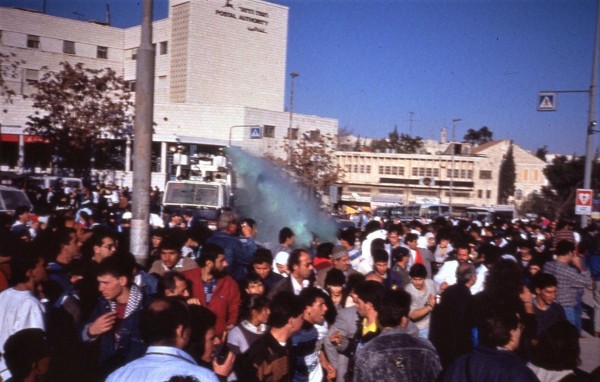
2. Also, the legality of Israel’s military occupation of Palestine is not a key issue. Even if the Israeli occupation were legal, the military would still maintain control over the population by acting through institutional violence. Any military occupation, anywhere, will always function by applying institutional violence against the people it is occupying (i.e., controlling).
The 19th century slave revolts in the U.S. were against a legal institution of slavery that used daily, institutional violence against the slaves to maintain its power. There were no slave revolts in the U.S. after 1865! Why?
3. So, if we want to end all of the violence & killing on both sides—we do not need to call for a “cease fire.” The solution is theoretically simple: end Israel’s military occupation of the West Bank (including East Jerusalem) and the Gaza Strip and you will end the institutional violence and all violence; you will end the basis for one population committing violence against another population, hopefully, forever. If there were no military occupation of any Palestinian territory, there would not be a Hamas (which was instituted as an Islamic national liberation and resistance movement).
(1990 – 1993) from the perspective of those who were victimized [written in 2011]
“NORMALITY!!!” Imagine the mass shootings, bombings, lethal violence, and physical destruction of the last 25 years in the USA—Las Vegas; Columbine; Oklahoma City (1995); El Paso; Sandy Hook Elementary; Parkland Elementary; Charleston Church; Pittsburgh synagogue; Santa Fe H.S. (Texas); ICE Raids and arrests; Arrests and deportations of immigrants, mostly without giving those arrested any due process; and police shootings of unarmed U.S. citizens (especially African American males).
Imagine that all of these types of tragedies were everyday events, occurring only in Southern California, or only in some other local community in which you live and work. But these tragedies that I have just listed occurred outside your home, during daylight; now, imagine these tragedies occurring everyday (in your neighborhood), possibly in the middle of the night, & possibly inside yourhome, with your family!
How would you feel every morning when you wake up and send your children to school, or go to the mall to shop, or go to the cinema, or to a concert or a restaurant??? Or, how would you feel when you go to bed at night, every night?
These feelings would only begin to approximate the everyday normality that I experienced for over 3½ years (1990-1993) living in Ramallah (West Bank) and working throughout the West Bank and Gaza Strip during 3½ years of the First Intifada in Palestine (Dec. 1987 – Sept. 1993).
In the illegally Occupied Palestinian Territories, the everyday normal conditions of life for all Palestinians that I will describe below, from the early 1990s, are the same (or worse) now than they were back in the 1990s:
It’s normal to live in fear, despair, and frustration everyday—fear for yourself, for your loved ones, and fear for all of the people in your community; despair and frustration because you, as an individual, feel helpless to intervene while the ongoing Israeli violence is being committed right in front of you.
It’s normal to live with the constant threat of sudden violence all around you.
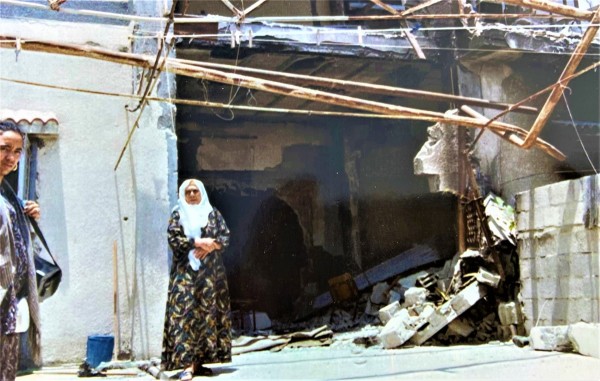
It’s normal for the Israeli military to blow up entire Palestinian family homes in your neighborhood, or use a bulldozer to level a family home while you are standing by, with your family, watching helplessly while your entire home is being demolished, with your furniture and possessions inside.
It’s normal for the Israeli military to seal off streets or entrances to homes (in your neighborhood) with large oil drums that are filled with cement and cemented together to form an impassable wall.
It’s normal for the Israeli military (in Ramallah and elsewhere, I was told) to regularly and frequently aggressively call out, on a megaphone, all males, ages 13–45 yrs. old, in your neighborhood, from their homes, late at night, and push them, like a herd of cattle, into a vacant lot, to be forced to sit on the ground, out in the cold, for hours, where the soldiers will physically and verbally abuse them (and, they are never told why this is being done to them!).
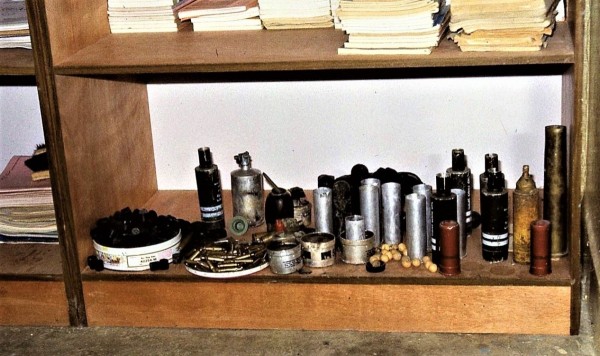
It’s normal for the military to invade elementary schools, shoot CS-gas into classrooms (is lethal in enclosed spaces, and did kill some students)—with students, ages 6 – 10-years-old, male or female, inside these classrooms—and oftentimes, also brutally beat up these students (who are only young children!).
It’s normal for the military to daily harass and beat up children (as young as 6-years-old), male or female, walking to and from school—including your children—seemingly trying to provoke them.
It’s normal for the military to close all Kindergarten—12th-grade schools and all universities—simultaneously throughout the entire Gaza Strip and West Bank and to keep most of these K-12 West Bank schools closed for most of the first 3 years of the First Intifada (and allowing some of them to open only for a few days total during the entire first 24 consecutive months of the Intifada.
Israel forces hundreds of thousands of children to stay away from the schools, with no opportunity to learn anything or to interact socially with each other in a learning environment; and these children have no computers at home to carry on any online learning activities. Israel criminalized our attempts at home teaching of small groups (8-10 students) of children (of all ages) during the military’s school closures.
It’s normal for the military to arrest you, not charge you with any crime, not give you a hearing or trial, and still hold you in prison (somewhere?), for months and months, and sometimes for years (this is called, “Administrative Detention”) [held “somewhere” means the military never notifies anyone in your family where it is holding you, and the military will not respond to your family’s many requests for information about you or your whereabouts—you are a “hostage”.]
It’s normal for the military to place whole communities of Palestinians, or the whole West Bank and/or Gaza Strip under strict, 24-hr. curfews, or area-wide military closures—at a moment’s notice (with no forewarning) —for anywhere from 1–41 consecutive days—and give you no foreknowledge of when they will end the curfew or closure. The Israeli military orders these curfews and military area-wide closures frequently—over and over again—too frequently. Curfews mean that no one may leave the inside of their home—women will be shot if they go to their roof to hang their wet clothes to dry (the women must go to the roof because they have no washing machines or dryers in their home.
It’s normal during curfews for the military to deny you passage to a hospital, or to a pharmacy, or to see a doctor or dentist who might live in your town, village, or refugee camp, even when you are severely ill; the soldiers might even shoot you or arrest you (and anyone who is helping you) while you are trying to get to a doctor or a medical clinic for emergency care.
It’s normal, if someone in the house dies during a curfew, to deny a proper burial. The family is forced to bury the person in the front yard (with soldiers standing there, monitoring the burial).
Curfewed areas also mean that all the schools are closed during the curfew period. This adds to the total number of days that the schools are closed (but these “military closures” are not included in the data that computes the official number of “school closure” days).
It’s normal for either the military or “Zionist” settlers (I differentiate “Zionist” settlers from the many Israeli Jews who treat Palestinians humanely and with respect) to rip out of the ground (with bulldozers) or chop down, or burn down, many of the fruit trees in your orchard; (settlers especially go after saplings shortly after you have planted them, which you planted to replace the mature fruit trees that they or the military had recently destroyed—a vicious and cruel cycle of destruction). Olive trees, e.g., are a source of food (olives and oil) and family income.
It’s normal for the military to invade your home in the middle of the night, beat up, arrest, or kill someone in your family, randomly and arbitrarily destroy or steal (loot) some of your personal possessions, and break your furniture.
It’s normal for the military to kill, maim, injure, or imprison your family members at any time, day or night.
It’s normal for the military to kill, maim, injure, or imprison your friends or acquaintances, or someone in your community at any time, day or night.
It’s normal for the military or Zionist settlers to injure and permanently disable children (including your children)—and you are unable to hold anyone accountable for this. Many times, the settlers are accompanied by soldiers who are there to protect them, not you.
It’s normal for the military or settlers to terrorize and traumatize children of all ages, and arrest children from ages 11-17 with or without charge, and physically abuse, rape, threaten, torture, and imprison them. This traumatizes the children; and the traumas in children (and adults) are invisible, ongoing psychological and emotional disorders (I call it OTSD—"Ongoing Traumatic Stress Disorder”). All of these experiences will stay with these children, and torment them, for the rest of their lives.
It’s normal that the constant fear & trauma in children will eventually turn into anger or something worse.
It’s normal that Palestinian children have insomnia, frequent nightmares, regular flashbacks of violence, bed-wetting (into their late teens), anxiety; depression; become aggressive in and out of school; lose concentration in schoolwork; drop out of school; ditch (skip) school; school performance worsens; they are traumatized.
It’s normal that the predominant themes in the artwork of younger children is violence; violence by soldiers against civilians, and especially depicting soldiers shooting and beating Palestinian children; and soldiers destroying Palestinian homes with military tanks, even depicting trees crying because of the Israeli violence around them. I happily never saw any artwork by Palestinian children that depicted children committing violence against anyone or anything else.
It’s normal to begin each day knowing (i.e., being aware) that something harmful could happen to you, to someone in your family, or to someone you know.
It’s normal to begin each day knowing (i.e., being aware) that the outcome of the day—any day—will always be precarious and uncertain.
It’s normal that you pay taxes to the occupation authorities and you have no right to say how these taxes are to be spent, and you have no access to learn how they are being spent. “Taxation without representation.”
It’s normal that the military will periodically shut off your water & electricity for a few days without explanation.
It’s normal to have your incoming and outgoing mail monitored by the Post Office (controlled by the Israeli “Civil Administration”; i.e., the military), and also to be forced by them to pay outrageously high import duties on packages containing simple things like soap, towels, etc. that friends or family might send you from abroad; and you are forced to pay before you even know what is inside the package.
So, how would you like to grow up in this kind of daily normality? How would growing up in this normality affect your psychological and emotional make-up? Your relationships with your peers? Your relationships with members of your family? Your relationships with authority figures? Your relationships with your children? Your intimate relationship with your spouse? What kind of person would you become as you grow from childhood into adolescence? —into adulthood?
This normality was so normal that the Western mainstream media never wrote about this during the First Intifada; so normal that it was not newsworthy to them! Nor did the Israeli media ever write about this normality.
The state of Israel, its military, and Zionist Israeli settlers have continually and daily perpetrated the most vicious, cruel, and violent actions against all Palestinians of all ages in the Occupied Territories—against males, females, the elderly, and the children—and against their property, with complete impunity. This violence is institutionalized violence.
Palestinians have no rights whatsoever to stop or mitigate these daily evil, and deeply criminal, violations of their humanity. Palestinians have no legal recourse to complain about, or to correct, the heinous actions taken against them. They have no authorities to appeal to to hold the state, the military, or the settlers accountable. The Palestinians are treated as inhuman subjects by a remorseless authoritarian state.
I will end by repeating what I wrote earlier above, I am confident that, today, my entire extended Jewish family, all of whom were exterminated during the Nazi Holocaust, would be horrified if they were to see what the Zionist Jews of Israel have been doing to the Palestinians since 1947.
Comments

Powered by RoundtableAn AI/DeFi-powered Enterprise Media Operating System. Learn more at Roundtable.io.© Roundtable 2026. By using this site you agree to the Terms of Use and Privacy Policy