


May 8, 2026 11:11 PM
Updated May 9, 2026 3:15 PM
I was an I was an American in wartime Russia. Finally, I came face-to-face with a Russian officer and was met with a steely stare.American in wartime Russia. Finally, I came face-to-face with a Russian officer and was met with a steely stare.
When I arrived at Moscow’s Zhukovsky International Airport on January 25, 2026, Russia’s political apparatus remained on high alert. My arrival would soon reveal the underbelly of the Russian security state. In short order, I found myself in an interrogation room, anxiously awaiting questioning from Russian security officers with the FSB.
Russia’s January sub-zero temperatures rivaled this chilling moment. Would the results of my interrogation be life-altering, or would I be granted safe passage into Moscow as a freelance journalist? I had planned to interview two Russian soldiers with whom I’ve been in contact.
On December 29, 2025, a month before my arrival in Moscow, the U.S. State Department issued its highest security alert, level 4, cautioning U.S. citizens not to travel to Russia. Those who did, it said, should not rely on the government for help. Unaware of this warning, I was about to be served a harsh slice of reality. Russia is not the only country suppressing the free flow of information. We are witnessing the global deterioration of press freedom. Acting with impunity, Israel has murdered 261 journalists during the Gaza Genocide. This mind-bending figure eclipses press killings in the last seven wars America has been involved in.
I would go on to endure my own cruel and unusual punishment in Moscow.
Related stories
As I waited for hours, I was confronted with an unfortunate fact: I was an American in wartime Russia. Finally, I came face-to-face with a Russian officer and was met with a steely stare. Then he inspected the contents of my passport. Struggling to find the words in English, he informed me, “There’s an issue with your passport, you reneed to wait.”
I sat there in the arrivals area surrounded by a majority Central Asians in the same predicament. Unbeknownst to me, this airport was the main deportation hub for them. I was the lone American.
The next stage on this rollercoaster ride was the interrogation.
An officer yelled, “Jonathan, USA!” I rushed upstairs. Immediately, I was surrounded. Russian security officers covered me on all sides ready to fire off penetrating questions, many of them politically motivated. Perhaps it was a trained interrogation tactic, but they were friendly and personable; not something I noticed when they questioned the Central Asians.
One officer asked, “What do you think of President Vladmir Putin and the Ukraine War?” I wondered if their line of questioning was a checklist to determine whether I was a foreign intelligence agent. The fact that they found both a picture of a Ukrainian flag and Ukrainian model on my camera didn’t help, especially since I had been to Ukraine several years ago. One of the officers asked if I “fucked her.” He shook his head in laughter when I replied, “No, her boyfriend was in the other room.”
Searching my personal devices, they were intrigued by my conversations with a certain publication’s editor. Probing further, they figured out I had plans to interview Russian soldiers returning from the Ukraine War. They were alarmed by this. “What if they give you military secrets?” One of the officers asked. I sat there cold as ice not knowing how I should respond.
They informed me I did not have the legal right to work there as journalist. According to Russia’s Law on Mass Media Article 55, “the representative office of foreign mass media shall be set up in the Russian Federation with the permission of the Ministry of Foreign Affairs of the Russian Federation unless otherwise provided for by the interstate agreement concluded by the Russian Federation. Foreign correspondents who stay in the Russian Federation shall be accredited by the Ministry of Foreign Affairs of the Russian Federation.”
Images of Evan Gershkovich’s arrest haunted me. This was the one predicament I feared. In a heightened state of alarm, I no longer cared if I made it into Moscow. Now I hoped I’d be deported and not arrested. Clearly, Russia is not a haven for press freedom. Reporting critically of the Russian government, journalist Ivan Safronov was sentenced to 22 years in prison. Authorities claimed he was convicted for treason after sharing classified information to Czech intelligence. According to a media report, it was public information.
When they asked if I was there to see someone, I told them about my Russian girlfriend waiting at the airport. She was aware of the situation, yet had told me to not erase my phone. “They already have all your information.”
After learning my girlfriend was at the airport, they rushed to find her and extend the interrogation. The situation was grim. In tears she pleaded with them, “We were not trying to find secret documents!” When they returned, I was subjected to additional questioning. Worrying about potential legal troubles my girlfriend might face, I asked “Is Marina going to be ok?” They replied, “Marina will be fine.”
With no food and limited water, I spent the first night in a hallway alone with only my thoughts to keep me grounded. Eventually an officer summoned me to take my fingerprints, mugshot, and a swab of saliva. After sitting in the hallway for hours, I finally received word from one of the officers that I would be deported. A sense of relief calmed my body and subdued the disturbing thoughts that consumed me.
When I informed my girlfriend, she plunged into sorrow. Her texts to me felt like she was going through an emotional breakdown. “I can’t believe they’re taking you away from me,” she texted.
Trapped in my own misery, I sat in the hallway. I could feel the void in my stomach from hunger. I was consumed by wishful thoughts of food and a hot shower.
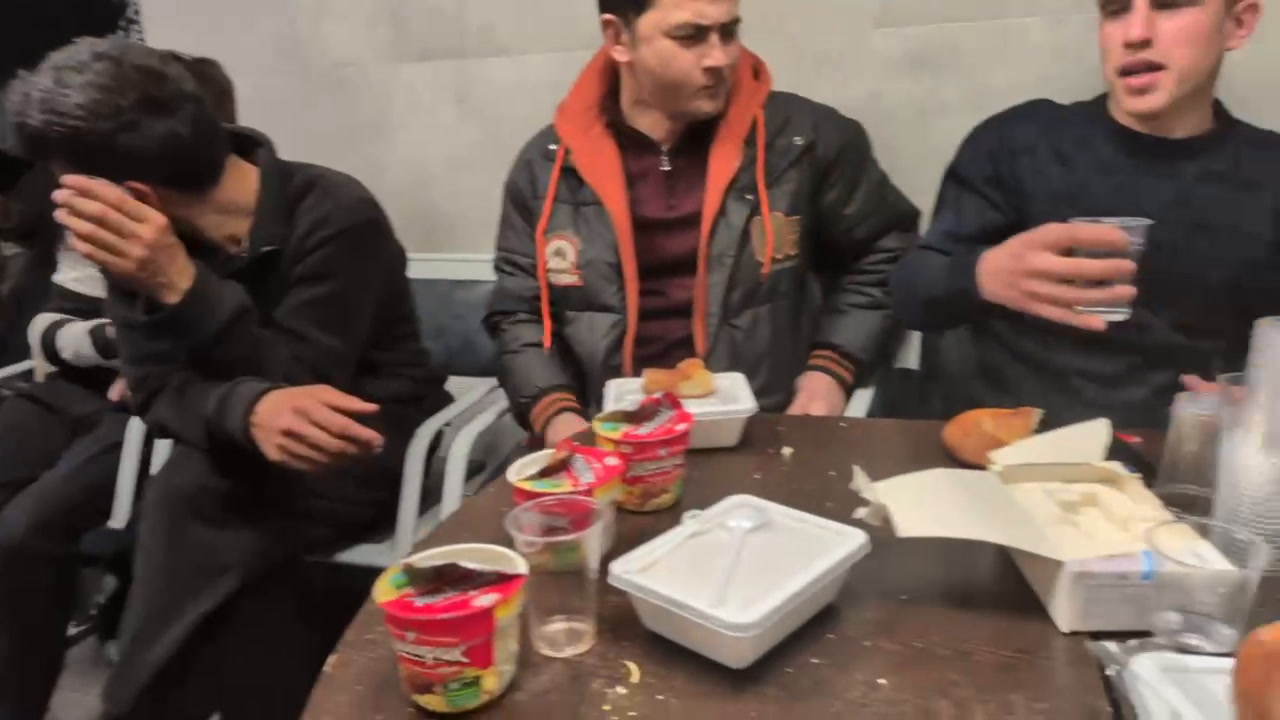
The next day an officer escorted me to the detainment room outside the hallway. Entering the room, I encountered what looked like 100 people waiting to be deported. For three long agonizing days inside this room, I was subjected to a shameful existence. Not only did I feel like an outcast, I was one. Observing men at the table, I noticed a hierarchy. Conjuring up visions of The Godfather, four men sat at the center of this power structure. The man closest to the water held substantial influence over the rest of us. He held the keys to our sustenance, water for our instant ramen or mashed potatoes. As time went on, I gradually ascended to this position.
Trapped in a small room, I was forced to confront my desperate situation. As the only American in this prison-like space, I was surrounded by cold stares, though later relieved by warm greetings. In this room three rows of bunk beds stood barely held together by fragile metal framing; gaps in the structure caused it to collapse. With no mattress or adequate bedding, I was forced to lie down against cold steel pressed against my body. With every new unfortunate soul consigned to deportation, the room shrunk in size.
Over the next couple days, time lost all meaning, minutes turned into hours, blending into one infinite loop. Among the cast of characters, I jelled with a man from Uzbekistan in the adjacent bunk. In his youth he dreamt of being a professional athlete, but his life took an unfortunate detour. He spent 15 years in prison for murdering a Russian police officer. This seemed uncharacteristic of the man who stood before me. The man I came to know was not that hardened criminal one would expect after leading such a life but a softened family man trying to provide a better life for them.
As hours and days went by we all prayed we would be leaving this horrible place. Surviving meant giving up a degree of your human dignity. At times the room was so crowded people slept on the floor in the aisles between our beds. In some cases, multiple people even shared beds. We weren't meant to feel alive in this place packed with excess humanity. We were stripped of even the most basic necessities. The shower lacked curtains, so no one used it. Food meant instant ramen or mashed potatoes, often paired with bread from local Central Asian countries. The room was cleaned daily, but a land fill had higher standards than this. We were forced to sleep in dirty bed sheets that reeked of mildew. Trash covered the floors underneath and alongside our beds.
My patience and mental stability began to dwindle. Clinging to visions of life outside these walls, I felt an assault on my own self-worth. Finally, I was informed I would be deported to Istanbul in three days. A moment of relief came over me. What once seemed like a distant uncertainty was now on the horizon. I was grateful I would soon leave this wretched place. A casualty of my own decisions, I was forced back to where my flight originated, Istanbul, Turkey. I tried to leave sooner but U.S. sanctions left me unable to use my American dollars to purchase a new ticket.
The last few days were grueling. I doubted whether I would be permitted to leave. Then, when one of the officers opened the door, I shot up in relief realizing it was my time.
I and a few other men left to be deported. I boarded the Turkish Airlines flight back to Istanbul. The pilot kept my passport for security reasons. As my flight left Moscow, it seemed my worries were behind me.
To my shock, when I arrived in Istanbul the pilot gave my passport to an airport representative. I thought to myself, “What’s going on?” I was soon subjected to additional security measures in Turkey. With everything I was forced to endure in Moscow, this minor, prolonged security debrief barely registered. After two hours of waiting an officer at passport control summoned me. He asked me why I was deported from Moscow. I simply replied, “For trying to work as a journalist.” Without pause he stamped my passport. Finally, I was able to move freely. Freedom was no longer a mirage or a cliché; it was how I felt. I finally met my girlfriend at the airport.
Comments

Powered by RoundtableAn AI/DeFi-powered Enterprise Media Operating System. Learn more at Roundtable.io.© Roundtable 2026. By using this site you agree to the Terms of Use and Privacy Policy