
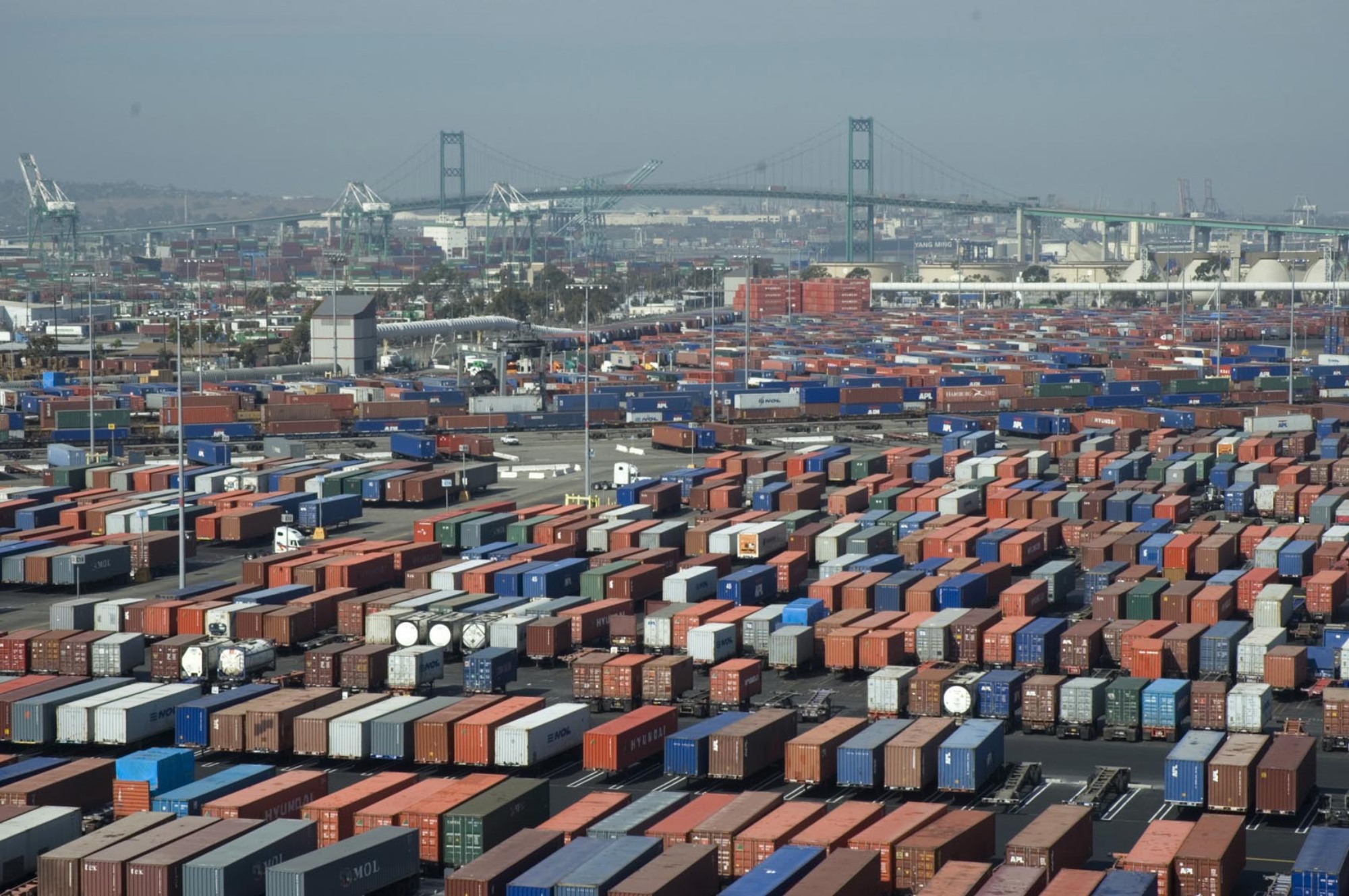
Charles Csavossy, Public domain, via Wikimedia Commons


The Jones Act creates an economic system that benefits U.S. shipping companies, or shipping cartels, which profits off Puerto Rico's colonial economic distress.
Oct 8, 2024 3:04 PM
The Jones Act creates an economic system that benefits U.S. shipping companies, or shipping cartels, which profits off Puerto Rico's colonial economic distress.
The Jones Act of 1920, part of U.S. cabotage laws, mandates that all goods shipped between U.S. ports be transported on U.S.-flagged, U.S.-built, U.S.-crewed, and U.S.-owned vessels. While the intent behind the law was to promote a robust U.S. maritime industry, its consequences for Puerto Rico have been economically crippling.
This detested American law in Puerto Rico is responsible for:
- Significantly increasing the cost of imports to the island
- Raising the cost of living
- Stifling the potential growth of Puerto Rico’s maritime and shipping industries
These costs are not insignificant; they amount to an estimated $1.5 billion annually, burdening Puerto Rican consumers and businesses.
Related stories
The Financial Cost of the Jones Act
Puerto Rico’s reliance on U.S.-flagged ships, which are more expensive than foreign-flagged alternatives, drives up the cost of nearly all imported goods, including food, fuel, construction materials, and consumer products. The estimated $1.5 billion annual cost from the Jones Act results from higher shipping rates, which are passed down to consumers and businesses, contributing to inflated prices for goods and an elevated cost of living.
Puerto Rican families and businesses are left to shoulder this colonial burden, making it harder for the island to compete economically with neighboring nations that can freely engage with foreign maritime companies offering more competitive shipping rates.
Additionally, the Jones Act stifles the growth of Puerto Rico’s maritime and shipping industry by prohibiting the island from developing its own competitive shipping fleet or benefiting from foreign maritime services. The result is an economic system that benefits U.S. shipping companies, often referred to as a shipping cartel, which profits off Puerto Rico's colonial economic distress.
The Socioeconomic Impact on Puerto Ricans
For the average Puerto Rican household, the Jones Act’s impact is felt daily in higher costs for basic necessities, from food to fuel. It also limits Puerto Rico's ability to access international markets, as shipping costs are prohibitively high. The increased cost of doing business discourages foreign investment and makes it harder for local industries to expand and compete on a global scale.
The higher cost of goods and imports also exacerbates Puerto Rico’s economic challenges, contributing to poverty and unemployment while slowing economic growth. Hurricanes, earthquakes, and other external shocks have further amplified Puerto Rico's economic vulnerability, as costly U.S. shipping restrictions delay relief efforts and increase recovery costs.
A Sovereign Puerto Rico: Reinvesting the $1.5 Billion to Transform the Maritime Industry
By transitioning to national sovereignty and freeing itself from the constraints of the Jones Act, Puerto Rico could reclaim the $1.5 billion annually siphoned off by U.S. shipping cartel interests and reinvest these funds into its maritime and shipping sectors. Over 10 years, this redirection of funds would total $15 billion, a substantial amount that could revolutionize Puerto Rico’s economy by turning it into a key maritime hub in the Caribbean and Latin America.
Here’s how a sovereign Puerto Rico could leverage these investments over the next decade:
Establishing a State-Owned Shipping Fleet
Puerto Rico could allocate $500 million annually toward building or acquiring a fleet of vessels, including container ships, oil tankers, and bulk carriers. With an average cost of $100 million per ship, Puerto Rico could acquire five ships annually, leading to a total fleet of 50 ships by the end of the decade. This fleet would reduce reliance on foreign vessels, support domestic trade, and position Puerto Rico as a competitive player in trans-Atlantic and regional shipping.
A state-owned national fleet would generate significant revenue through shipping fees and freight services, enabling Puerto Rico to handle large cargo volumes independently. Over time, this would reduce transportation costs for local businesses, lower consumer prices, and enhance economic competitiveness.
Modernizing & Expanding Puerto Rico’s Ports
Puerto Rico could allocate another $500 million annually to upgrade its major ports, including San Juan, Ponce, Mayagüez, and Ceiba. Modernizing port infrastructure, expanding docks, and developing advanced logistics hubs would position Puerto Rico as a central transshipment point, attracting global shipping companies to use its ports for cargo redistribution across the Americas.
After ten years of investment, Puerto Rico’s ports would rival the largest in the Caribbean, handling millions of containers annually. The port system would become a vital economic driver, generating over $1 billion annually from docking fees, cargo handling, and other port services.
Attracting Foreign Maritime Investors & Firms
Puerto Rico could attract foreign shipping and logistics companies by offering favorable tax incentives, leasing agreements, and business partnerships. By creating a business-friendly environment, Puerto Rico could position itself as an attractive destination for foreign direct investment (FDI) in the maritime sector.
After ten years, this investment would bring in $500 million to $1 billion annually in FDI, transforming Puerto Rico into a global maritime business hub.
Developing Maritime Support Services & Industries
Puerto Rico could invest in developing industries that support maritime trade, such as shipbuilding, ship repair, and maintenance. Establishing shipyards and maritime academies to train a skilled workforce would create an ecosystem that sustains Puerto Rico’s shipping industry and attracts foreign ships for repairs.
Ship repair and maintenance services would generate between $500 million and $800 million annually, creating tens of thousands of direct and indirect jobs in the process.
Puerto Rico’s Path to Maritime Sovereignty & Economic Growth
By reinvesting the $1.5 billion annually into its own national maritime and shipping industry, a sovereign Puerto Rico could generate an estimated $5 billion to $6.8 billion annually by the end of a 10-year period. This revenue would be derived from shipping and freight fees, port services, foreign direct investment, ship repair industries, job creation, and increased consumer spending.
By breaking free from the colonial grip of the Jones Act, Puerto Rico can unlock its potential as a maritime powerhouse in the Caribbean. Over a 10-year period, the $15 billion reinvestment in the maritime and shipping sector would position Puerto Rico as a global hub for shipping, logistics, and trade.
The economic benefits would not only recoup the lost $1.5 billion annually but also pave the way for long-term prosperity, generating billions in revenue, creating jobs, and lowering the cost of living for Puerto Rican citizens.
Comments

Powered by RoundtableAn AI/DeFi-powered Enterprise Media Operating System. Learn more at Roundtable.io.© Roundtable 2026. By using this site you agree to the Terms of Use and Privacy Policy