


Jan 24, 2026 1:11 AM
Many protesters who once opposed foreign intervention now say civilians are helpless against a heavily armed state that kills indiscriminately.
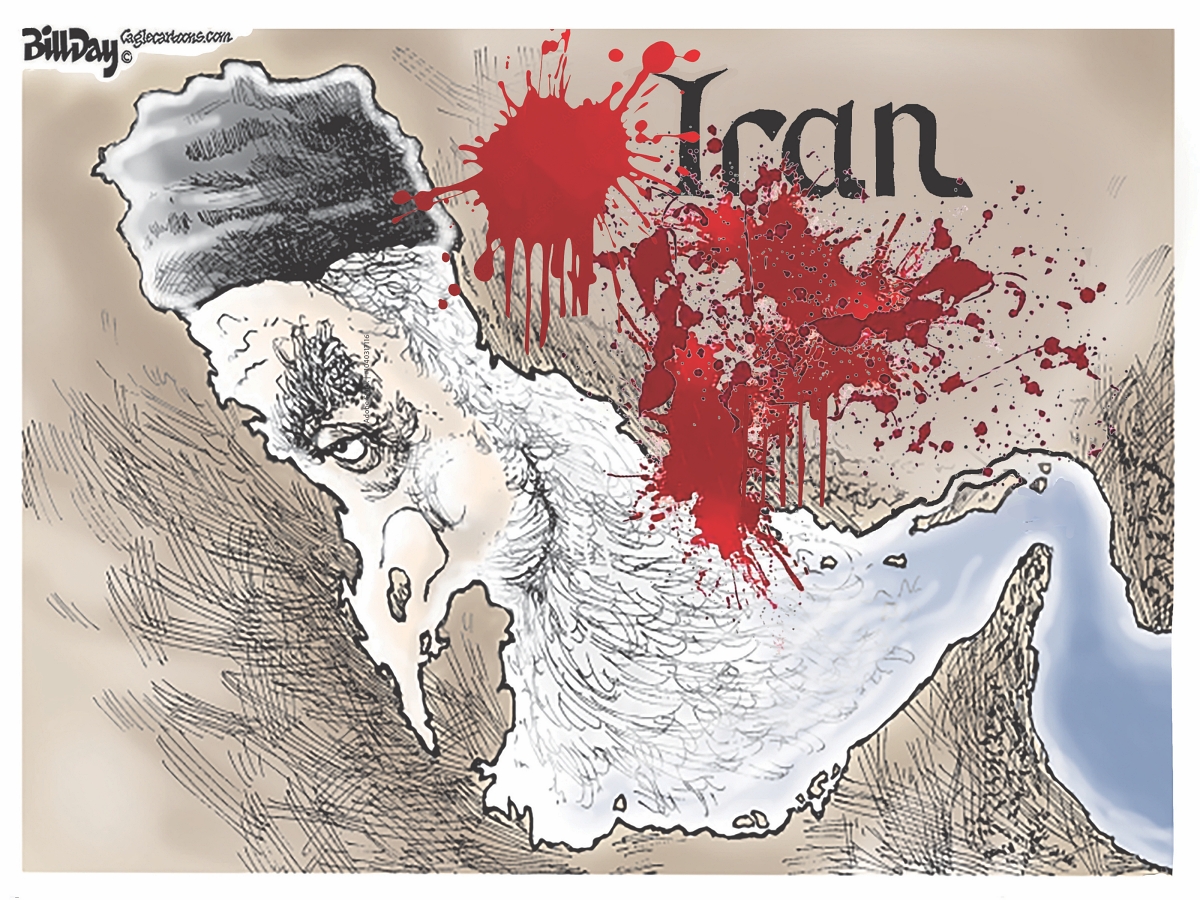
Despite the ongoing internet blackout in Iran that began around January 8, images and reports have leaked that prove the state is even more violent than it used to be, a brutal standard to surpass. An image that haunted me belonged to a sick man in a hospital gown shot in the forehead. Captions reported that security forces raided hospitals to kill injured protesters. In the last uprising, they arrested wounded protesters and blocked blood donations in the Kurdish city of Mahabad. Hospitals were unsafe but not deadly. The state now openly treats dissent as an existential threat.
I remember my family sobbing on the phone during the last major uprising as they heard gunshots all day, wondering each time if their child had been targeted or someone else’s. My cousin was shot shortly after. My family hid him in a basement since hospitals were dangerous, and a relative treated him. We lied to his father about his whereabouts, fearing a heart attack. My family is one of the myriad families that have bled through every uprising.
At the time, I thought it could not get worse. This year, I have not even heard my family’s voices. I do not know if they are alive, how they are enduring the violence, or how they are surviving the internet blockade that affects every aspect of daily life, including livelihoods dependent on online access. Human rights groups struggle to gather and verify information or estimate the number of those killed, including the three-year-old Mina Asadi, the single mother Delaram Kazemi, the teenager Amirmohammad Arbabpouri, and so many others.
One relative who recently returned to the US from Tehran suffers from severe PTSD after witnessing a boy, no older than seventeen, shot to death in front of him. He sees the boy in his nightmares, repeatedly trying and failing to save him. His cousin in Mashhad, an educated and gentle woman, found herself fantasizing about revenge after witnessing fifteen young men trapped in a dead-end street and executed. Security forces announced a curfew, forbidding anyone from leaving their homes until firefighters washed the blood away. It took hours, she said, as if the blood clung to the earth, demanding to be witnessed.
Related stories
This is only a glimpse of the suffering Iranians endure. Years of sanctions and state corruption have hollowed out the middle class. Families once considered stable now struggle to feed their children. This uprising began in the traditionally conservative bazaars. People across classes, ethnicities, and religions are fed up, but the future is uncertain. I do not write to offer solutions but to bear witness to a reality defined by exhaustion and the absence of viable paths forward.
Many protesters who once opposed foreign intervention now say civilians are helpless against a heavily armed state that kills indiscriminately. Some expected President Donald Trump to fulfill his promises and save them from the iron grip of the Supreme Leader, Ayatollah Khamenei. The ask is not out of ideological alignment but political exhaustion. Inside Iran, debates about what comes after the current despot are fierce. Kurds, Balouch, Arabs, Turkmen, and other ethnic minorities, long suppressed under both monarchy and theocracy, fear repetition: Persian supremacy rebranded and empowered.
When people living under bullets begin to argue about foreign intervention, it is not a call for empire. This is an indictment of a violent world that has reduced civilian survival to impossible choices: foreign intervention, the return of monarchy, and the fear of escalated chaos.
Comments

Powered by RoundtableAn AI/DeFi-powered Enterprise Media Operating System. Learn more at Roundtable.io.© Roundtable 2026. By using this site you agree to the Terms of Use and Privacy Policy