


Aug 21, 2018 2:32 PM
Updated Feb 10, 2022 10:30 PM
Jack Gil: Faith in institutions and agreements that the United States has historically supported and committed to are now being called into question, pushing other powers to fill the vacuum left by America’s descent from global hegemony - namely, the People’s Republic of China.
Donald Trump’s unstable, protectionist, and uninformed foreign policy has grown many unforeseen consequences for America’s standing and reputation abroad. With the United States’ absence from the Paris Climate Accords to the Iran Nuclear Deal, President Trump has successfully sabotaged the world’s trust in American leadership.
Faith in institutions and agreements that the United States has historically supported and committed to are now being called into question, pushing other powers to fill the vacuum left by America’s descent from global hegemony - namely, the People’s Republic of China.
Faith in institutions and agreements that the United States has historically supported and committed to are now being called into question, pushing other powers to fill the vacuum left by America’s descent from global hegemony - namely, the People’s Republic of China. Donald Trump’s bigoted and fiery rhetoric has damaged America’s relations with its closest allies, such as Canada and many of the United States’ European partners, allowing rapidly growing powerhouses like China to push further into new military and diplomatic endeavours that, prior to Donald Trump’s inauguration, would’ve been inconceivable.
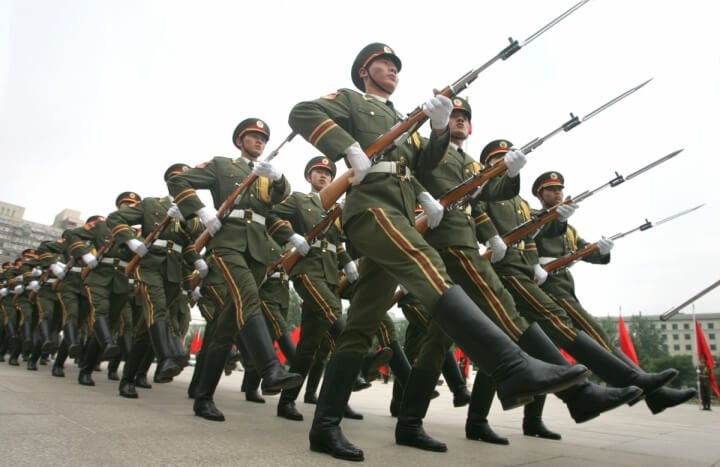
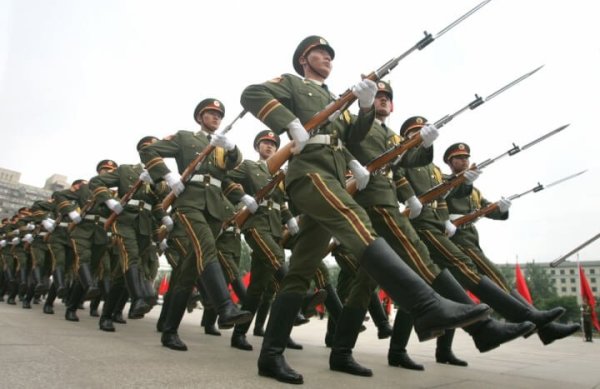
Chief among these is China’s plan to invade and occupy the island of Taiwan, which it considers to be a renegade province of the People’s Republic of China, but is in reality governed by the “Republic of China”.
Essentially, both mainland China and Taiwan claim to be the legitimate governments for the Chinese people, and both claim each other’s territories and refuse to recognize each other’s sovereignty as independent nations. This has been the case since at least 1949, when the People’s Republic of China was declared in Beijing, whereas the Republic of China fled the mainland at the end of the Chinese Civil War, and only retained control of the island of Taiwan.
Related stories
The issue of international recognition continued throughout much of the Cold War, as the US and most of its allies refused to recognize the communist People’s Republic, whereas the Soviet Union and the Eastern bloc denied recognition to the Taiwanese. This diplomatic conflict lasted until 1971, when the United Nations voted to oust Taiwan as the legitimate representative of China, swapping them out with the PRC.
In 1979, the United States officially claimed its recognition of Beijing’s sovereignty over China, and passed the “Taiwan Relations Act”, allowing the US to continue cultural and commercial relations with the island without establishing de facto diplomatic relations with them. This act (and subsequent US foreign policies and doctrines) also guaranteed the Taiwanese that the US would support them militarily and intervene should their autonomy from the mainland be threatened by a Chinese invasion - so long as Taiwan doesn’t rock the boat by declaring “independence” (by rescinding their constitutional and territorial claims over China) or invading the mainland.
However, the security guarantees established by the United States in regards to Taiwan are under threat due to Donald Trump’s inconsistency and refusal to commit to any further international agreements that require long-term US support and defensive capabilities, such his unrealistic and unclear demands that NATO members pay the United States for their defensive forces.
As far back as 2008, Taiwan’s Military Intelligence bureau discovered China’s covert plans to stealthily invade and occupy the island in a matter of hours, prompting Taiwan and the US (under Barack Obama) to further sharpen their defensive capabilities in the Taiwan Strait. According to their findings, the People’s Liberation Army (PLA) “has the objective of being ready to invade Taiwan by 2020.” A recent annual Pentagon report to Congress concurred, saying “[China] is likely preparing for a contingency to unify Taiwan with China by force”, adding that China has also been strengthening their naval and air defenses so as to launch a potential attack on other US allies and territories in the Pacific, such as Guam.
The situation in the Asia Pacific region is looking more and more hostile to US hegemony due to China’s growing military encroachments and territorial claims in the Ryukyu Islands (claimed and administered by Japan) and the South China Sea, and Trump’s inward-looking foreign policy is simply opening the door for increased Chinese military intrusions.
Thus, although an all-out invasion of Taiwan by the Chinese appears unlikely in the near future, this discovery is a glaring example of how dangerous Donald Trump’s non-committal, nationalist, and ill-conceived foreign policy is for American allies that depend on Washington for defensive and economic guarantees and exchanges for their survival.

Jack Gil
Jack Gil is an undergraduate student studying Conservation & Resource Studies at UC Berkeley and serves as Energy Commissioner for District 7 of the City of Berkeley. They are also the Sustainability Chair for the queer co-Ed fraternity, Sigma Epsilon Omega. Jack can be reached at [email protected] or on Twitter at @jackismynamee.
Comments

Powered by RoundtableAn AI/DeFi-powered Enterprise Media Operating System. Learn more at Roundtable.io.© Roundtable 2026. By using this site you agree to the Terms of Use and Privacy Policy