
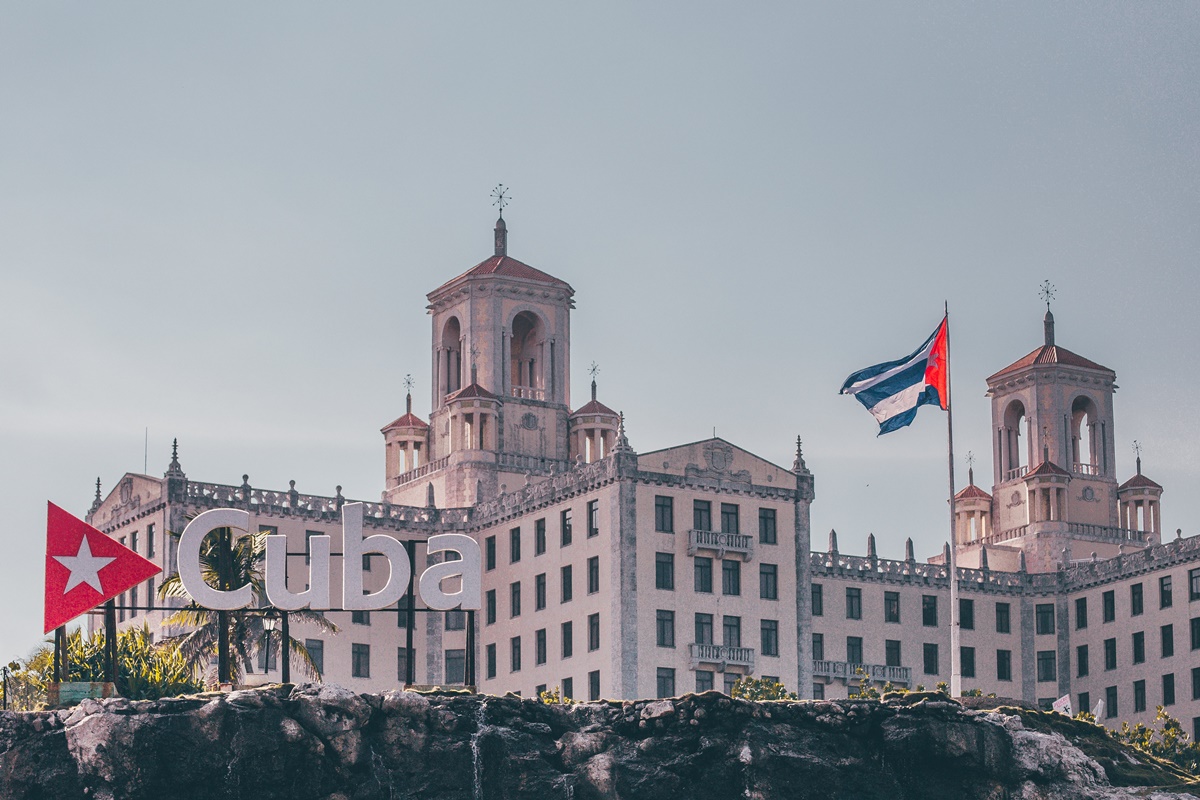

Cuban Capital Building
Dec 5, 2023 1:00 PM
Updated Dec 13, 2023 4:22 AM
Cuban mothers with children who are sick with cancer and who cannot access new treatments and medicines, due to cruel U.S. sanctions were heard
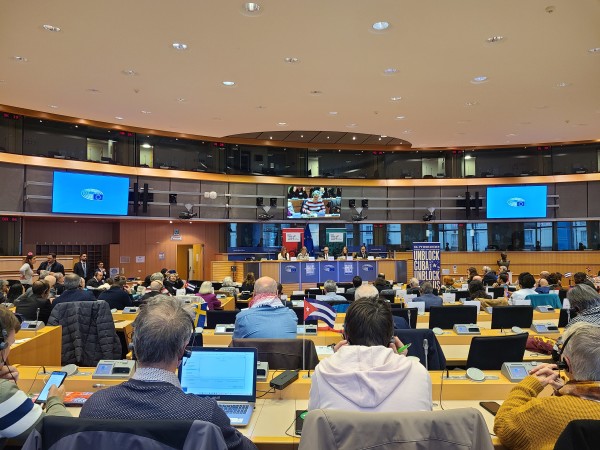
Brussels, Belgium. November 16-17 marked a prominent meeting at the European Parliament of 263 anti-blockade activists, government figures, lawyers, prosecutors, scientists, doctors, artists and others from 21 countries.
Following opening remarks and announcing categories of judges, prosecutors and witnesses, Cuban lawyer Yamila Gonzalez Ferrer reviewed 30 US government acts and executive orders against Cuba. Trading with the Enemies act, Torricelli Act and, the Helms-Burton Act, the most mentioned since it extends U.S. legislation to punish foreign companies investing simultaneously in the United States and Cuba. “This is not a bilateral affair; sanctions are applied against US and European businesses. Applied in an extra territorial manner, impacting 3rd country businesses and sovereignty. No blockade has ever been as brutal as against Cuba” Gonzalez Ferrer pointed out. Adding that this is a “crime of genocide, economic war where two sets of laws are being violated: 1) UN charter, Principles of International Law and 2) Universal Declaration of Civil and Human Rights. These sanctions are in violation of international law. This violates the rights of Cuban and citizens of the U.S. A web of laws that make up the blockade, an affront to our sovereignty and self-determination.”
Other speakers pointed out that the Electronic System for Travel Authorization (ESTA) program {an automated system that determines the eligibility of visitors to travel to the United States under the Visa Waiver Program } punishes Europeans for travelling to Cuba because they will be singled out, often intimidated and denied, as the case with Professor Helen Yaffe producer of Tarea Vida, when applying for a U.S. visa. This has a negative impact on Cuban tourism as a source of euros for purchases on the world market. Horrific fines are levied against European banks for loaning Cuba money to purchase necessary products.
Renowned jurists evaluated presentations by the victims, among them, Cuban mothers with children who are sick with cancer and who cannot access new treatments and medicines, due to the cruel sanctions that have punished Cuba for more than six decades.
Related stories
The prominent scientist Belinda Sánchez was involved in the development of the Covid vaccine. A hard task since Cuban scientists are heavily impacted by the sanctions which greatly limit their access to vital materials to be able to do their research and work. Sanchez mentioned, “I have worked for 30 years in the Molecular Innovation Center. Part of the Bio-Cuba Pharma company. The blockade has affected us for decades…We must contract the reagents and assets necessary for research from third parties, increasing their price, often by 20 percent, which means the expenditure of over one million annually, above what it would have cost, if acquired directly.”
She also said that the acquisition of technologies with components that exceed 10% of parts originating in the U.S. or its subsidiaries is prohibited, payment to scientific publications cannot be charged by their authors, and visas are denied to scientists from the island to participate in events in U.S. territory. (La Prensa)
Likewise, U.S. patients are denied the possibility of receiving treatment in Cuba, because they do not fall into the 12 categories authorized by the State Department.
“We have to go through a middleman to purchase inputs for research and production, such as ingredients—with a 20% price increase. Research is stifled. We cannot use Zoom or Teams to communicate with others internationally, we wait longer for products to get to hospitals. We could save millions of dollars if able to purchase directly from the US. Cuba faces an inability to pay for patents, so our medicines are copied by others, 24 in cancer research alone. There is an increased perceived risk of U.S. businesses working with us thus impacting clinical development of our lung cancer and diabetes treatments. Medicines are not getting to those who need them.” Ms. Sanchez added that U.S. patients are unable to travel to Cuba, and researchers are unable to travel to the U.S. to participate in scientific conferences. Leaving U.S. doctors and scientists with the inability to collaborate. Despite all these obstacles doctors have vaccinated virtually the entire population.
Later in the tribunal many organizations added to the evidence for the judges to consider. The president of Cuba-France Coopération, Víctor Fernández, stated that the extraterritorial impact of Washington's hostile policy hinders the execution of projects in France and Spain, to assist in the socioeconomic development of the island. He also attested to how banks refuse to make transfers to the Caribbean country, even in cases of humanitarian aid in the face of hurricanes.
Through a video message, the former Chancellor of Denmark and president, during 2015 and 2016, of the UN General Assembly, Mogens Lykketoft, pointed out the extraterritoriality of the siege and the consequences of this policy for the socio-economic development of the Caribbean country. Businessmen Juan Francisco (Spain) and Michele Curto (Italy) also denounced the impact of the blockade on European businesses. Other witnesses explained the difficulties they encounter in their humanitarian work, often limited in the pediatric field, due to the regulations derived from the blockade, which prevent the sale of drugs and medical supplies destined for the Greater Antilles.
Guadalupe Aguilar, representing Puentes de Amor led by Cuban-American Carlos Lazo, told the crowd “We represent the movement of Cuban and non-Cubans from around the world, off all different political views. We organize caravans, events around the world to bring powdered milk to Cuba, special medicines for liver surgery. The blockade is killing people. We tried to obtain catheters for Cuban children; the sanctioned company, would not sell to Cuba. Finally, we had to purchase thousands of these tubes from Mexico. Thus, impacting children. Puentes de Amor denounces the genocide against Cubans.”
Brenda Lopez, representing the Los Angeles & Cleveland Hands Off Cuba Committees, and the youngest witness to testify, described the impact of the blockade on U.S. youth. She listed more than six areas of interest to U.S. and Cuban youth that were restricted.
“In the US we are fooled to believe that we have equal access to opportunity and the ability to connect and exchange ideas with the whole world, but the reality is quite different. Here are some specific examples of what US youth lose because of the 243 sanctions and terrorism listing the U.S. has against Cuba:
First, the U.S. blockade of Cuba prevents a vital exchange of ideas and experiences between young American students and youth in Cuban educational institutions.
Second, over a quarter of US agricultural workers are overwhelmingly young immigrants, often undocumented, that work in super-exploitative health-endangering agriculture.
Third, In the U.S. fewer than 6% of medical graduates are Black/brown. Young people who dream of being doctors in the U.S. will owe a median average of $215,100 or more in educational debt.
Fourth, the blockade has also created gigantic obstacles towards collaboration between Cuba’s world-class biotechnical industries and scientists in the U.S., many of whom are young.
Fifth, U.S. farmers would like to sell more agricultural goods to Cuba, but cannot due to the blockade.
Sixth, U.S. youth are clearly interested in the state of our environment, as seen in the demonstrations where tens of thousands have come out to express their anxieties and fears about the lack of action by those in charge to address our climate crisis. Unlike Cuba, who addresses current environmental issues through their environmental plan Tarea Vida.
In conclusion, young people in the U.S. are looking for alternatives and solutions in a system that continuously shows it does not have our best interest in mind. When our governments stop us from connecting with others and building better futures together, we really have to question what it is they are actually trying to hide from us.”
The [MF1] judge Norman Peach commented that her testimony was refreshing since it was the only one that focused on how it affects people in the U.S., specifically the youth.
Franco Cavalier of MediCuba, a cancer center in Switzerland explained how they “were created to help supply materiel for Cuban health care system after the collapse of the Soviet Union. We now exist in 14 European countries.”
Michel Lambert, former member of the French parliament, attacked the “extraterritorial impact of U.S. laws such as the Helms-Burton act for EU businesses or individuals. We need a shield against the sword of the U.S.” Multiple members of the EU and French parliament spoke as did the Rosa Luxembourg Center in Mexico.
After two days of hearings, a judgment by the half-dozen judges included the following:
“The dramatic and huge impact of the above-mentioned laws and regulations, maintained for more than 60 years; also demonstrates that no blockade has been as comprehensive, long-lasting and brutal against a people as the one that the United States have maintained against Cuba. The blockade has resulted directly and indirectly in the loss of numerous human lives and the decision of the US to maintain this blockade until the Cuban people decide not to bow to the US are determined to maintain measures that are calculated to bring about in the long term the physical destruction at least in part of the Cuban people. Such an attitude could amount to a crime of genocide.”
In an interview with Resumen Latinoamericano, German tribunal Judge Norman Peach stated:
“We are hopeful that European governments will make a valid influence on the U.S. government. We appeal to the reason not only political, but also legal, of a government that must comply with the basis of the UN Charter to ‘live and coexist in peace with neighboring states. And although the court’s ruling will not be legally binding, it will serve as a theoretical and legal argumentation and also as working material for solidarity associations, political parties, trade union organizations, companies and countries.”
Fernando Gonzalez Llort closed a meeting with country representatives, held after the tribunal, at which time a resolution calling for internationally coordinated actions, led by European nations, would take place against the blockade. Each country was also motivated in the discussion to develop their own unique plan of action to put pressures on their governments to pressure the U.S. to get Cuba removed from Washington’s list of alleged terrorist nations and put an end to the inhumane blockade.
Link to Conference summary: https://youtu.be/2MrcY77i2FY?si=g6NrzpdpsWqV37ZP
Link to Tribunal Press Conference: https://www.youtube.com/watch?v=2MrcY77i2FY
By Brenda Lopez and Mark Friedman
Comments

Powered by RoundtableAn AI/DeFi-powered Enterprise Media Operating System. Learn more at Roundtable.io.© Roundtable 2026. By using this site you agree to the Terms of Use and Privacy Policy