
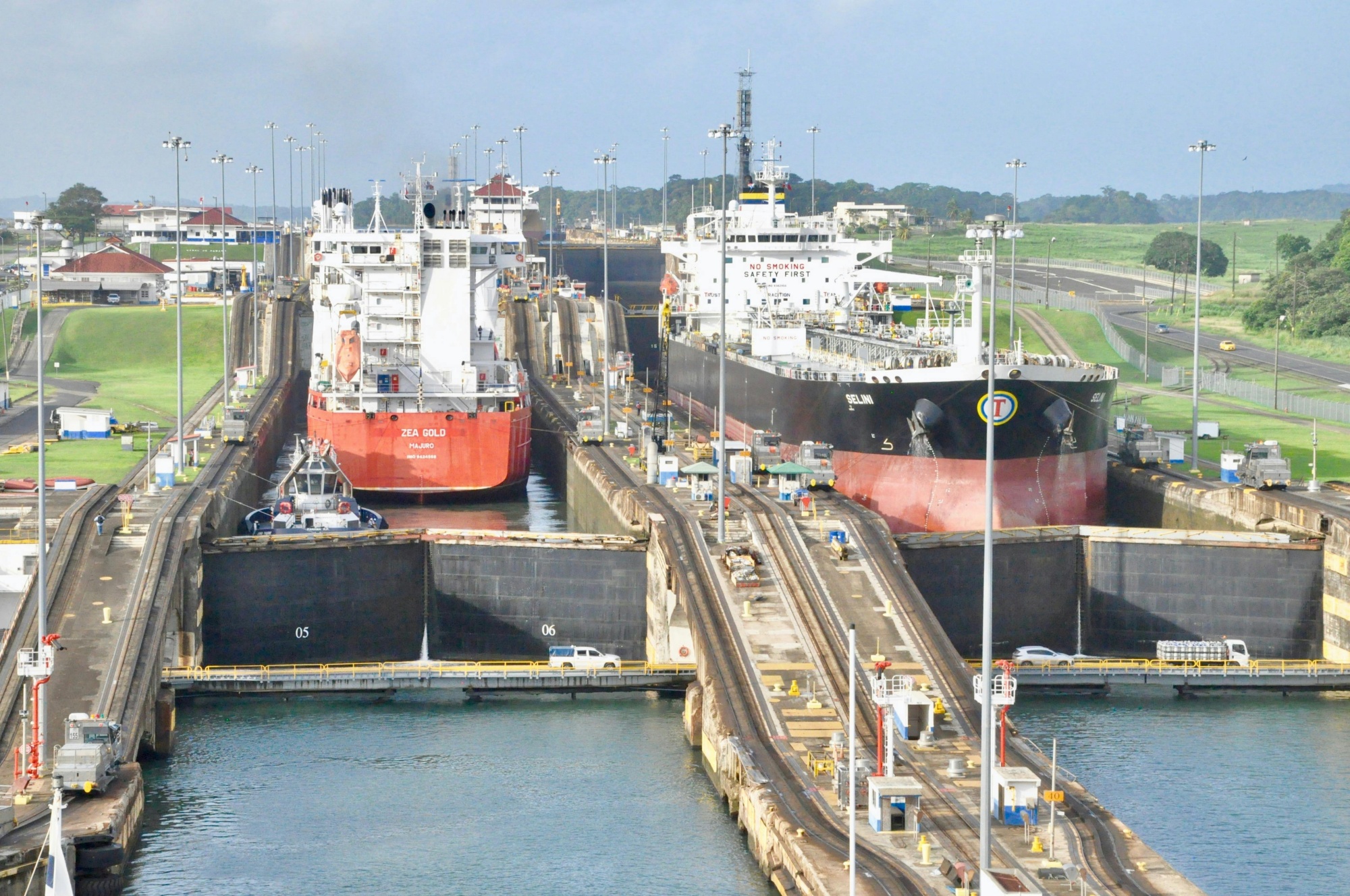
Photo by Michael D. Camphin on Pexels


By relying on these alliances, the United States aims to continuously contain and pressure China on issues related to the East China Sea and South China Sea.
Mar 25, 2025 9:21 AM
By relying on these alliances, the United States aims to continuously contain and pressure China on issues related to the East China Sea and South China Sea.
“Stupid, asinine, insane” was Scott Ritter’s description of Trump’s decision to launch massive bombing attacks on Yemen March 15. The Ansar Allah movement resumed its blockade of Israel-bound ships in the Red Sea after Israel re-launched its war and siege of Gaza. Trump chose not to tell Israel to stop in the interests of peace, attacking Yemen instead. By international law, all nations are expected to cut ties with the Israeli occupation and act to prevent genocide. So international law favors Yemen, not the US.
The US attacks have killed more than 100 Yemeni people, including women and children. The cost in US lives would be higher if the Yemenis were to sink any US war ships.
On March 19 Ansar Allah began a new attack on US war ships — their fourth attack on the carrier fleet in 72 hours. They launched “a number of cruise missiles and drones, targeting the aircraft carrier USS Harry Truman and a number of enemy warships,” Ansar Allah said, according to an AFP report.
Meanwhile, a People’s Dispatch report said ِthe Al-Qassam Brigades, the military wing of Hamas, shot a barrage of rockets at Tel Aviv on March 20, and the coastal city of Ashkelon on Friday, March 21. The rockets and missiles launched from Yemen and Gaza reportedly disrupted flights at Ben Gurion airport. Ansar Allah announced March 22 it targeted Ben Gurion Airport for the second time within 48 hours, as well as a number of warships affiliated with the US aircraft carrier USS Harry Truman.
Related stories
Ansar Allah warned all airlines that “Ben Gurion Airport has become unsafe for air traffic and will remain so until the aggression against Gaza stops and the blockade is lifted.”
Both Ansar Allah and Hamas said their attacks on the cities occupied by Israel were carried out in retaliation for Israel’s renewed genocidal aggression on Gaza that has left over 700 people dead and more than 1,000 injured since March 18.
Hamas said Thursday it is still committed to the Gaza ceasefire agreement. “Talks are underway with mediators to stop the aggression against our people and pressure the (Israeli) occupation to adhere to the ceasefire agreement,” Hamas spokesperson Abdul Latif al-Qanou said in a statement. “We are working with mediators to permanently spare our people war and to ensure the occupation’s withdrawal from the Gaza Strip,” he added.
Trump used his social media platform Truth Social to condemn the Houthis’ “unrelenting campaign of piracy, violence and terrorism.” A Houthi spokesperson said “The Red Sea is not part of the United States, and Yemen has the right to defend itself,” Newsweek reported March 21.
Trump said the Houthi attacks have disrupted shipping through the Red Sea and Gulf of Aden, key waterways for energy and cargo shipments between Asia and Europe through Egypt’s Suez Canal, AP reported March 17. It said from November 2023 until January 2025, the Houthis attacked over 100 merchant vessels with missiles and drones, sinking two vessels and killing four sailors.
The attacks on the Houthis are “a not-so-subtle signal to Iran,” the AP report said. Iran’s Revolutionary Guard chief Gen. Hossein Salami said “We have always declared — and we declare again today — that the Yemenis are an independent and free nation in their own land, with an independent national policy.”
Both Trump and Defense Secretary Hegseth have warned Iran of an “unrelenting response” over what they claim is its support of Ansar Allah. Professor Mohammad Mirandi of Teheran University said if the US were to carry out attacks against Iran, that could destabilize the world economy, as Iran could shut down the Persian Gulf and severely cripple the US-allied oil-producing states there.
Threats to Main Global Shipping Routes
“Navigating Troubled Waters,” was the title of an “UNCTAD Rapid Assessment” of “the Impact to Global Trade of Disruption of Shipping Routes in the Red Sea, Black Sea and Panama Canal” in February 2024. “For the first time, the world faces simultaneous disruptions in two major global maritime trade waterways, with far-reaching implications for inflation and food and energy security,” the report said.
“Since November 2023, escalating attacks on ships in the Red Sea have been compounding disruptions in the Black Sea caused by the war in Ukraine and in the Panama Canal due to climate-induced droughts.”
Trump Wants the Panama Canal
After Trump declared “the Panama Canal is ours, and I’m gonna take it back,” he got what he wanted when the BlackRock private equity group agreed to buy ports at both ends of the canal for $19 billion from CK Hutchison, a conglomerate owned by Hong Kong magnate Li Ka-shing. But the NY Times reported March 22 that “China’s leaders are now threatening to stop Mr. Li and the company he controls, CK Hutchison, from seeing the deal through, accusing the conglomerate of betraying Beijing.”
A major Hong Kong newspaper, Ta Kung Pao, published a commentary March 21, calling to “halt the transaction,” adding that “it is common sense that any action that is seriously harmful to the country and society will be regulated and punished by law,” according to a Global Times report. Hong Kong Special Administrative Region Chief Executive (HKSAR) John Lee said that any transaction must comply with legal and regulatory requirements, and the HKSAR government will handle the matter in accordance with the law and regulations, the report concluded.
It was Trump’s favorite former president, William McKinley, who first pushed for the Panama Canal. But McKinley was shot and killed in Buffalo, NY, on September 6, 1901 by a young Polish-American immigrant and self-proclaimed anarchist, who believed that McKinley was a symbol of oppression and the “enemy of the good people, the working people.”
The canal became the pet project of McKinley’s successor, President Theodore Roosevelt (TR). He first had to buy the rights and property for the canal from France, and then craft a treaty to lease it from Colombia, since Panama did not exist as a separate country at that time.
The treaty was ratified by the US Senate on March 14, 1903 but, “the Senate of Colombia unanimously rejected the treaty — it had become significantly unpopular in Bogotá due to concerns over insufficient compensation, threat to sovereignty, and perpetuity,” according to Wikipedia. So TR actively supported a separation of Panama from Colombia, and on November 2, 1903, US warships blocked sea lanes against possible Colombian troop movements coming to put down a Panama rebellion.
Panama declared independence on November 3, 1903. The United States quickly recognized the new nation. This happened so quickly that by the time the Colombian government in Bogotá launched a response to the Panamanian uprising, US troops had already entered the rebelling province.
So through TR’s decisive action the United States acquired both rights to build the canal, and a “loyal ally” in Panama.
President Roosevelt famously stated, “I took the Isthmus, started the canal and then left Congress not to debate the canal, but to debate me.” Several parties in the United States called this an act of war on Colombia: The New York Times called it an “act of sordid conquest.”
The New York Evening Post dubbed it a “vulgar and mercenary venture.” The US maneuvers are often cited as the classic example of US gunboat diplomacy in Latin America. It became a hallmark of TR’s motto — “speak softly but carry a big stick.” After the revolution in 1903, the Republic of Panama became a US protectorate until 1939.
In 1921, Colombia and the United States signed a treaty, in which the United States agreed to pay Colombia $25 million: $5 million upon ratification, and four $5 million annual payments, and grant Colombia special privileges in the Canal Zone. In return, Colombia recognized Panama as an independent nation, according to the Wikipedia report.
In May 1904 the US established an “Isthmian Canal Commission,” which made a deal with Panama to get control of the Panama Canal Zone, over which the US exercised sovereignty. But after World War II, US control of the Zone became contentious, and relations between Panama and the US became tense.
“Demands for the United States to hand over the canal to Panama increased after the Suez Crisis in 1956, when the United States used financial and diplomatic pressure to force France and the UK to abandon their attempt to retake control of the Suez Canal, previously nationalized by the Nasser regime in Egypt. Panamanian unrest culminated in riots on Martyr's Day, January 9, 1964, when about 20 Panamanians and 3 to 5 US soldiers were killed.”
- From the Wikipedia report
Ten years later the Panamanian nationalist leader Omar Torrijos launched negotiations for a treaty for Panama to take control of the canal. Jimmy Carter signed the deal with Torrijos in September 1977, his first year as President. The Wikipedia report says “The treaty led to full Panamanian control effective at noon on December 31, 1999, and the Panama Canal Authority (ACP) assumed command of the waterway. The Panama Canal remains one of the chief revenue sources for Panama.”
Ronald Reagan, in his campaigns in 1976 and 1980, insisted that “the United States had built, bought and paid for the Panama Canal and should keep it.” He cited the Monroe Doctrine that “the United States is the protector of the Americas.” Trump is harking back to Reagan’s themes.
On December 21, 2024, Trump claimed the rates Panama was charging American ships were “exorbitant,” and in violation of the Torrijos–Carter Treaties. He then added that the canal was “falling into the wrong hands,” referring to China.
Panamanian president José Raúl Mulino responded, denying that the United States was being unfairly charged or that anyone besides Panama was in full control of the canal, and affirming that the canal was part of the country’s “inalienable patrimony.” Three days later Panama City’s streets filled with protesters calling Trump a “public enemy” of Panama.
The same day, the Bolivarian Alliance for the Peoples of Our America (ALBA), made up of ten Central and South American countries, denounced Trump's comments and affirmed its support for Panama's “sovereignty, territorial integrity and self-determination.”
Trump has not given up. In early February, according to Wikipedia, the US Department of State posted on Twitter that the Panama Canal would no longer be charging US government vessels to cross. President Mulino called this an “intolerable falsehood,” and Secretary of State Marco Rubio (who had departed Panama a few days earlier) had to correct the announcement, saying he “expects” Panama to begin doing so in return for the Torrijos–Carter Treaties’ guarantee of US military protection in the event of an attack on the canal.
According to The New York Times, the Hong Kong-based Li family felt “under political pressure to exit the ports business.” Discussions with BlackRock about the Panama Canal had begun only a few weeks prior, coinciding with the beginning of the Trump administration.
Now the question is will the Chinese government press the Hong Kong company to back out of the deal. And what will happen next?
Defense Secretary Hegseth Heads East
US Defense Secretary Pete Hegseth is heading to Hawaii, Guam, the Philippines and Japan the last week of March. It’s Hegseth's first official visit to the Indo-Pacific region. The Global Times observed that it’s unusual: such trips typically include South Korea, but Hegseth has omitted South Korea and included the Philippines instead. Global Times comments that “this arrangement demonstrates the US intention to target China and is likely to encourage the Philippines to take further provocative actions against China.”
In early March 2025, Hegseth told Fox News the United States is “prepared” to go to war with China. He didn’t comment about possibilities that the US could lose in a fight against China. All recent Pentagon war games have concluded the US cannot win such a conflict.
Global Times cited Chinese military expert Zhang Junshe that Hegseth’s decision to forgo a visit to South Korea is linked to that country's unstable domestic political situation, but “this does not imply a diminished role for South Korea in the US Indo-Pacific Strategy, as it remains a crucial military ally for the US.”
Hundreds of thousands of people in South Korea have mobilized against US-backed President Yoon, who was been arrested and is facing impeachment for staging a fake war exercise aimed at suppressing his opponents and starting a war. The US maintains operational control of the Korean military, which has 600,000 active duty troops and double that number in reserve. The US also maintains a trilateral security treaty, JAKUS, with Japan and South Korea, preparing for war against both North Korea and China.
The Global Times report suggests Hegseth’s choice of the Philippines and Japan for his first visit to the region highlights the US strategic intent toward China. “Washington's alliances with Manila and Tokyo serve as key tools for its involvement in maritime issues surrounding China, advancing its strategy of using maritime leverage against China.” By relying on these alliances, the US aims to continuously contain and pressure China on issues related to the East China Sea and South China Sea.
Global Times suggests Hegseth will make strong diplomatic gestures during this visit to encourage both the Philippines and Japan against China.
The US Commission on the National Defense Strategy, led by Rand Corporation, the Pentagon’s unofficial think tank, issued a report last fall that said “The United States confronts the most serious and the most challenging threats since the end of World War II. The United States could in short order be drawn into a war across multiple theaters with peer and near-peer adversaries, and it could lose.”
Under the leadership of President Trump and his team, that seems to be a solid prediction.
Comments

Powered by RoundtableAn AI/DeFi-powered Enterprise Media Operating System. Learn more at Roundtable.io.© Roundtable 2026. By using this site you agree to the Terms of Use and Privacy Policy