


May 31, 2026 6:19 PM
The old priest-poet looked less like a public intellectual than a surviving fragment of some broken continental scripture.
I once sat in the audience of one of Hugo Chávez’s marathon outdoor broadcasts of Aló Presidente while the Bolivarian Revolution attempted to narrate itself beneath the Venezuelan sky. The broadcast unfolded on the outskirts of Caracas amid barrios climbing the hillsides in dense concrete layers like unfinished arguments against gravity itself. Loudspeakers crackled above crowds gathered beneath banners and tangled electrical wires. Children moved through clusters of chairs and television equipment while old women leaned from balconies listening to discussions about schools, housing, clinics, transportation, and the unfinished promises of the revolution.
The atmosphere carried the charged improvisational energy unique to Latin America, where politics so often ceases to be administration and becomes cosmology — a struggle over the meaning of history itself. Chávez’s security forces rehearsed their movements with almost ceremonial precision while ministers, journalists, local residents, soldiers, teachers, and organizers moved through the crowd beneath the tropical heat. One sensed that everyone there existed inside a republic permanently expecting either resurrection or catastrophe.
Then Chávez entered.
The atmosphere shifted immediately.
Related stories
Some men possess authority. Chávez possessed something stranger and more compelling: a charisma that seemed to alter the emotional climate around him. He entered the gathering the way a thunderstorm enters a valley—slowly at first, almost theatrically, and then all at once, consuming the atmosphere around him. He seemed forged from crude oil, military drums, church incense, baseball fields, peasant funerals, jungle heat, and the unfinished ghost of Simón Bolívar riding forever through the Andes beneath tropical lightning.
He spoke not like a conventional statesman but like a man improvising destiny in real time. His rhetoric came in burning rivers—lyrical, intimate, volcanic, improvisational. He governed not like a bureaucrat but like a myth attempting desperately to become flesh.
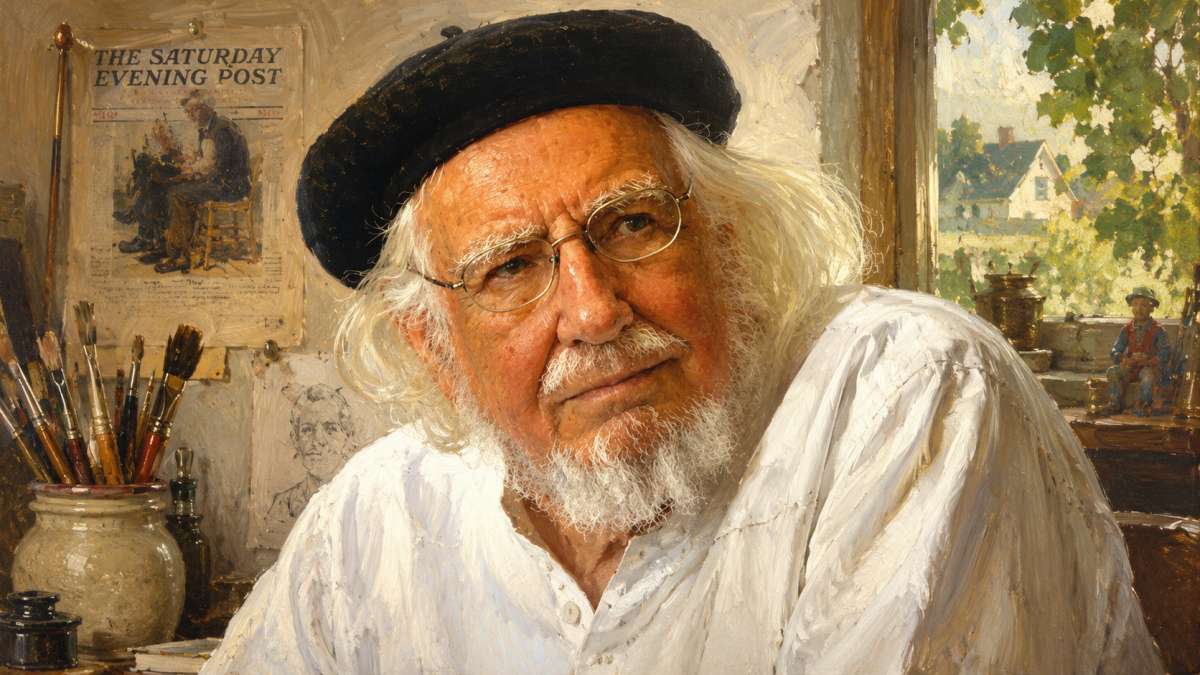
And in the rustling of the crowd, beneath the television lights, sat Ernesto Cardenal. White hair spilling beneath his black beret.
The old priest-poet looked less like a public intellectual than a surviving fragment of some broken continental scripture. His face carried the exhausted tenderness of those who have spent a lifetime attempting to force heaven into history.
Chávez praised him before the assembled crowd. And as I watched the old poet seated quietly beneath the Venezuelan sky while Chávez invoked his name with reverence, I realized I was witnessing not simply a political spectacle but the convergence of two great currents in Latin American history: revolutionary nationalism and prophetic Christianity.
Yet to understand Ernesto Cardenal merely as a revolutionary priest or political dissident would be to misunderstand him entirely.
He was, before all else, a spiritual figure.
Not in the sentimental sense so often attached to religion in affluent societies, where spirituality becomes private therapy detached from history, but in the ancient and dangerous sense: a man who believed the sacred had entered history through Christ and demanded transformation of the world.
Ernesto Cardenal Martínez was born in 1925 in Granada, Nicaragua, into an upper-class family tied to the traditional social order of Central America. Yet from an early age he experienced a restless dissatisfaction with privilege and bourgeois normality. He studied literature in Mexico and the United States, absorbing poetry, philosophy, and political thought while Nicaragua groaned beneath the dictatorship of the Somoza dynasty, a regime sustained through violence, corruption, and American support.
Like many Latin American intellectuals of his generation, Cardenal came of age inside the collision between Christianity and revolution.
He participated in early conspiracies against the Somoza regime before undergoing a profound spiritual crisis that redirected his life toward monasticism. In 1957 he entered the Abbey of Gethsemani in Kentucky, where he studied under Thomas Merton. That encounter transformed him forever.
Merton taught him that contemplation did not require retreat from history but deeper immersion within it. Silence was not escape. Prayer was not passivity. Spirituality did not mean turning away from human suffering but entering more fully into solidarity with it.
Under Merton’s influence, Cardenal’s Christianity became expansive, cosmic, and historically incarnated all at once. He rejected the image of religion as private consolation for the privileged. The Gospel, for him, belonged among workers, peasants, laborers, prisoners, fishermen, and the poor.
Ernesto Cardenal experienced the death of Thomas Merton not merely as the loss of a teacher, but as the collapse of a spiritual universe that had helped give meaning and direction to his own vocation.
Merton had been far more than a literary influence or monastic superior. For Cardenal, he represented a rare fusion of contemplation and moral courage — a monk who refused to retreat from history even while living within silence. Under Merton’s guidance at Gethsemani, Cardenal discovered a form of Christianity capable of confronting modernity’s violence without surrendering either mystical depth or political conscience.
When Merton died suddenly in Bangkok in December 1968, Cardenal was devastated. The death carried an almost apocalyptic symbolism for many within progressive Catholic circles. Merton had become one of the Church’s most eloquent critics of nuclear warfare, racism, militarism, and the Vietnam War. He had begun reaching outward beyond traditional Catholicism toward Buddhism, interfaith dialogue, nonviolence, and a global spiritual consciousness. To many admirers, his death felt like the extinguishing of one of the century’s great moral lights precisely at the moment the world seemed to be descending deeper into technological violence and imperial war.
Because Merton had become one of the most visible Christian critics of the Vietnam War and the expanding machinery of the American warfare state, his sudden death quickly attracted an atmosphere of suspicion and political myth. Officially, he died accidentally after being electrocuted by a faulty fan in his hotel room during an interfaith conference in Bangkok. Yet almost immediately rumors began circulating among friends, admirers, and later investigators that the monk who had condemned militarism, nuclear terror, racism, and imperial violence may not have died accidentally at all.
Whispers spread through the strange twilight world where politics, espionage, and tragedy often merge into legend.
Some claimed Merton’s body bore evidence of a blow to the back of the head. Others speculated that intelligence agencies such as the CIA—already deeply entangled in covert operations throughout Southeast Asia and Latin America—might have regarded the globally influential monk as politically dangerous. No conclusive evidence has ever emerged proving assassination, and historians remain divided over such theories. Yet the uncertainty surrounding his death only intensified the aura surrounding Merton himself: the contemplative monk who had wandered from the silence of the monastery into direct moral confrontation with war, empire, and technological violence.
Cardenal later wrote about Merton with profound tenderness and grief. He described him not only as a mentor but as a spiritual father. In his memoirs and reflections, Merton appears almost as a prophetic figure — simultaneously contemplative and rebellious, serene yet haunted by the violence of modern civilization.
What affected Cardenal especially deeply was the sense that Merton had shown him another model of priesthood entirely.
Not the priest as bureaucratic administrator.
Not the priest as guardian of ecclesiastical power.
But the priest as witness.
As poet.
As conscience.
As someone who could stand inside silence while still hearing the cries of history.
Merton’s death also intensified Cardenal’s own movement toward liberation theology and revolutionary commitment. One can almost trace a spiritual continuity between Merton’s antiwar witness and Cardenal’s later immersion in Solentiname, the Sandinista struggle, and the attempt to create a Christianity rooted among the poor.
Yet Cardenal never abandoned Merton’s contemplative inheritance.
Even at the height of his revolutionary struggle, his spirituality retained that distinctly Mertonian cosmic dimension: the belief that contemplation and liberation belonged together; that prayer without solidarity becomes empty ritual, but political struggle without inner transformation risks reproducing domination in new forms. And perhaps this is why Merton’s death remained so haunting for Cardenal throughout his life. Because Merton had embodied a possibility that history rarely permits to survive intact: a Christianity both radically contemplative and radically emancipatory at the same time.
After Merton died, Cardenal carried that unresolved tension forward into the storms of Latin American history — into Solentiname, into the Sandinista Revolution, into confrontation with Rome itself, and eventually into disillusionment with Ortega’s authoritarianism.
In a sense, part of Merton continued walking through history inside Ernesto Cardenal. When Cardenal returned to Nicaragua and was ordained a priest in 1965, he founded the Solentiname community on the Solentiname islands in Lake Nicaragua. There, peasants and artists gathered to discuss Scripture collectively, paint religious art, and imagine a society no longer governed by oligarchy and terror.
In Solentiname the Gospel descended from cathedral hierarchy into the village itself. Theology became dialogue rather than decree.
Peasants interpreted Christ through the lens of their own suffering and aspirations. The Magnificat became revolutionary poetry:
“He hath put down the mighty from their seats and exalted them of low degree.”
To conservative sectors of the Church, this was scandalous.
To the poor, it was revelation.
Cardenal believed Christianity itself had been stolen from the oppressed.
For him, Jesus was not the pale decorative figure hanging silently inside affluent suburban churches while stock markets opened on Monday morning. The Christ he encountered in the Gospels walked among laborers, prostitutes, fishermen, peasants, political dissidents, and the despised of empire. He overturned the tables of money changers. He announced catastrophe for the rich who worshipped accumulation while children starved outside their gates.
Like many liberation theologians across Latin America, Cardenal read the Gospel historically. Salvation could not be reduced to private spirituality while millions remained trapped beneath dictatorship, colonialism, economic dependency, and exploitation. To pray authentically required confronting structures of domination in the material world.
This theology eventually fused with revolutionary struggle.
The Sandinista National Liberation Front emerged in Nicaragua as a guerrilla movement seeking to overthrow the Somoza dynasty, whose rule had become synonymous with torture, assassinations, corruption, and grotesque inequality. Inspired partly by Augusto César Sandino’s anti-imperialist resistance against U.S. military occupation in the 1930s, the Sandinistas fused nationalism, socialism, Christianity, and revolutionary humanism into a movement unlike the rigid orthodox Marxist parties of Europe.
Cardenal supported the revolution.
And when the Sandinistas overthrew Anastasio Somoza Debayle in 1979 after years of armed struggle and immense bloodshed, it seemed to many across Latin America that history itself had opened.
The revolution launched literacy campaigns across the countryside. Young volunteers traveled into remote villages teaching peasants to read and write. Health campaigns spread through impoverished communities. Poets, teachers, workers, priests, and students converged around the dream of constructing a society no longer ruled by oligarchy and foreign domination.
Cardenal became Minister of Culture in the revolutionary government.
For a brief historical moment, Nicaragua appeared to embody the impossible dream of a revolutionary humanism rooted simultaneously in poetry, Christianity, literacy, and popular dignity. Across Latin America, young radicals, priests, teachers, and intellectuals looked toward Managua with a kind of trembling hope. It seemed conceivable that socialism might emerge not through bureaucratic terror but through culture, solidarity, education, and collective participation.
Yet history rarely permits innocence to survive intact.
Hovering above Nicaragua was the immense geopolitical shadow of the Reagan era. Washington regarded the Sandinistas not as a national liberation movement emerging from dictatorship but as a communist contagion threatening the hemisphere. The CIA armed and financed the Contras. Villages burned. Young men disappeared into mountains carrying rifles and unfinished dreams. Entire communities became trapped between revolutionary aspiration and counterrevolutionary violence.
And within the Catholic Church itself another battle unfolded — one no less fierce because it was fought through theology rather than bullets.
Liberation theology had erupted across Latin America during the 1960s and 1970s like a spiritual earthquake. Priests, nuns, bishops, and lay Christians began reading the Gospel not through the eyes of empire or ecclesiastical privilege but through the suffering of the poor themselves. Influenced by Marxist social analysis, anti-colonial struggles, and Vatican II reforms, liberation theologians insisted that Christianity demanded historical engagement with oppression rather than passive resignation before it.
The Gospel ceased being merely preparation for heaven.
It became an indictment of history.
And then came the airport.
Managua.
1983.
The runway at Augusto Sandino International Airport shimmered beneath the brutal tropical sun. Heat rose from the tarmac in trembling waves while television crews crouched behind cameras waiting for history to crystallize into image.
From the aircraft descended Pope John Paul II.
He arrived carrying the immense symbolic weight of Rome itself: cathedrals, doctrine, apostolic succession, centuries of institutional memory. But he also carried another history—the trauma of Soviet domination in Poland. Having witnessed communism firsthand in Eastern Europe, John Paul II regarded Marxism not as a vehicle for liberation but as a force capable of devouring spiritual life altogether.
He feared liberation theology.
He feared that priests participating in revolutionary governments risked transforming Christianity into ideology.
And so, as the Pope approached, Ernesto Cardenal stepped forward.
Then he knelt.
Slowly.
Deliberately.
The cameras tightened.
Around the world millions watched the old priest remove his black beret and bow toward the papal ring. In that instant he appeared almost medieval—a monk before an emperor, a prophet before the machinery of ecclesiastical power.
And then came the gesture that would echo through history.
Instead of blessing him, the Pope withdrew his hand.
Then he raised his finger.
That terrible finger.
It hovered above Cardenal like a rod descending from heaven itself.
“You must straighten out your situation with the Church,” John Paul admonished him publicly before the cameras of the world.
The scene lasted only seconds.
Yet those seconds contained an entire century of conflict compressed into an image.
The Vatican confronting liberation theology.
Ecclesiastical authority confronting prophetic Christianity.
The institutional Church confronting priests who believed the Gospel demanded solidarity with revolutionary struggles against dictatorship, capitalism, and empire.
Behind the Pope stood the immense anxiety of Cold War Catholicism terrified that Marxism would consume Christianity whole.
Behind Cardenal stood the barefoot poor of Latin America reading the Bible as a revolutionary text for the first time in centuries.
The image detonated across the continent with almost mythological force.
For conservatives, the Pope’s rebuke represented a necessary defense of orthodoxy against political contamination.
For liberation theologians and millions of ordinary Latin Americans, the scene appeared tragic and even cruel: the spectacle of Rome humiliating a priest whose life had been devoted to the poor.
And there was something profoundly symbolic in the choreography itself.
The Pope remained standing.
Cardenal knelt.
Authority towered above prophecy.
Institution above conscience.
Yet paradoxically, the gesture elevated Cardenal morally in the eyes of millions. The kneeling priest beneath papal reprimand came to embody the suffering and dignity of liberation theology itself—a Christianity willing to endure punishment rather than abandon solidarity with the oppressed.
Yet what made Cardenal extraordinary was that he refused bitterness.
Even after being suspended from priestly functions by the Vatican, he continued writing poetry of astonishing cosmic breadth and spiritual tenderness. His Christianity remained rooted not in resentment but in wonder.
He loved astronomy, evolutionary science, indigenous cosmologies, quantum physics, and the poetry of Walt Whitman. In works such as Cosmic Canticle, galaxies, atoms, biological evolution, revolutionary struggle, and divine presence all merged into one immense unfinished hymn of creation.
He did not believe God stood outside history manipulating humanity like pieces on a chessboard.
Rather, God emerged through acts of beauty, solidarity, compassion, liberation, and love.
Christ was not merely an object of worship.
Christ was humanity’s unfinished possibility.
And yet history would grow crueler still.
The Sandinista Revolution that once inspired millions gradually hardened under the rule of Daniel Ortega into something increasingly authoritarian. Corruption deepened. Revolutionary rhetoric became intertwined with personal power and repression.
Many former revolutionaries remained silent.
Cardenal refused.
He publicly denounced Ortega’s corruption and authoritarianism, condemning what he saw as the betrayal of Sandinista ideals. He would not sanctify power merely because it spoke the language of revolution.
And in that refusal lay the deepest truth of Ernesto Cardenal’s spirituality.
From John Paul II’s perspective, his concern was not simply “left-wing politics.” He had lived under both Nazism and Soviet communism in Poland. He feared that parts of liberation theology were absorbing Marxist categories in ways that subordinated the gospel to revolutionary ideology. He believed priests should not become functionaries of the state or agents of armed political movements. In Catholic tradition, clergy are generally supposed to maintain a certain pastoral universality rather than become partisan state officials.
So in principle, his concern had theological coherence.
But many critics argue he profoundly misread Latin America.
People like Gustavo Gutiérrez, Óscar Romero, and Cardenal himself were responding to societies marked by oligarchy, dictatorship, death squads, torture, and U.S.-backed repression. In Nicaragua, the Sandinistas had overthrown the Somoza dictatorship, which was notoriously brutal and corrupt. To many Christians there, neutrality looked impossible. If the gospel meant solidarity with the poor, then political struggle was unavoidable.
Cardenal saw participation in the Sandinista government not as abandoning Christianity, but as embodying it — literacy campaigns, cultural renewal, healthcare, anti-poverty work. He believed the revolution could become a vehicle for human liberation aligned with the gospel.
Many liberation theologians felt John Paul II treated Marxist influence as the primary danger while underestimating the violence of right-wing authoritarian regimes in Latin America. They also felt Rome sometimes disciplined radical priests more harshly than it confronted dictatorships aligned with Western interests.
History complicates everyone’s position:
- The Sandinista revolution achieved real social reforms.
- But the Sandinista government also developed authoritarian tendencies over time.
- Some revolutionary movements in Latin America did romanticize violence or absorb rigid ideological frameworks.
- Meanwhile, the Church’s “apolitical” posture could sometimes function as tacit support for oppressive systems.
So was John Paul II “correct”?
Theologically, one can defend his argument that priests should not hold state power or become fused with political regimes.
Morally and historically, many would say he failed to appreciate the urgency of the struggle against structural violence in Latin America and the profound Christian witness of figures like Cardenal.
Interestingly, later developments softened the conflict. Pope Francis rehabilitated many aspects of liberation theology’s legacy. In 2019, Francis formally lifted the canonical sanctions against Ernesto Cardenal shortly before Cardenal’s death. That gesture was widely interpreted as a reconciliation between Rome and a tradition once viewed with deep suspicion.
In a way, the entire dispute turns on an enduring Christian question:
Can the Church stand with the oppressed without becoming captive to political power — and can it avoid political power without abandoning the oppressed?
Cardenal’s loyalty belonged not to governments, parties, or ideological tribes.
It belonged to liberation itself.
To beauty.
To history unfinished.
To the scandalous possibility that the Gospel still belonged among fishermen, laborers, peasants, prisoners, and the wounded of the earth rather than among emperors and financial elites.
And perhaps that is why the image of the tarmac still endures so powerfully decades later.
Because beneath the tropical sun of Managua, the world witnessed more than a disagreement between a pope and a priest.
It witnessed two radically different visions of Christianity confronting one another before the eyes of history itself.
And history, that drunken playwright with a taste for farce, once staged for me a final absurdist epilogue worthy of a lost chapter from the Cold War. A doctoral student from another state had asked to meet me in Los Angeles to discuss Paulo Freire. We met at the Coffee Bean across from my house, beneath the hiss of espresso machines and the indifferent California sun. Eventually she confessed, almost casually, that she had worked with the Reagan administration on behalf of the Contras—the same Contra apparatus that left teachers murdered in ditches, students disappeared into the long night of Central America, and campesinos slaughtered in villages whose names never appeared in the American press except as statistics or anti-communist abstractions.
Her dissertation concerned Paulo Freire. I suspected it would be less a study than a prosecution. Still, perhaps out of stubborn hope I agreed to speak with her about Freire’s life and work, hoping that somewhere between the vocabulary of “subversion” and “national security” she might glimpse the dangerous beauty of teaching the poor to read both the word and the world.
As we left the Coffee Bean together to visit the bookshelves in my house, she telephoned a friend and gave her my address. Half an hour later, history itself came teetering through the front door in high heels.
It was Fawn Hall, the glamorous secretary of Oliver North, patron saint of shredded documents and sanctified covert operations. She entered my home as if arriving at a Hollywood cocktail party thrown jointly by the CIA and Fellini. Before I could fully process the moment, she planted a kiss on my lips and declared, “You are my favorite communist,” then instructed her friend to take a photograph of us together.
There I stood: a radical educator in Los Angeles being kissed by the smiling emissary of Reagan’s clandestine empire while the ghosts of Nicaragua hovered invisibly over my bookshelves. It was as though the entire Cold War had suddenly collapsed into a single surreal tableau staged somewhere between theology and vaudeville.
For one fleeting second I considered opening up a discussion about the bloody tactics of the Contras. But wisdom—or perhaps self-preservation—prevailed. Some historical encounters are too bizarre to interrogate directly. Better to let the theater conclude without inviting Act Two.
As my guests moved toward the front door, Fawn turned back. With a wry smile, she casually mentioned they were heading off to meet some old CIA friends and asked if I wanted to join them. Acutely aware that I was actively sacrificing what would have undoubtedly been an incredible story, I declined. Prudence had won out; I had no desire to find out if the afternoon would conclude in some windowless interrogation room.
And so they departed back into the Californian sunlight, leaving behind only silence, disbelief, and the faint afterimage of empire wrapped in perfume. I remember feeling immense relief as the door closed behind them. But I also remember thinking that Ernesto Cardenal would have laughed—a deep, weary, cosmic laugh—at the sheer delirium of it all.
Comments

Powered by RoundtableAn AI/DeFi-powered Enterprise Media Operating System. Learn more at Roundtable.io.© Roundtable 2026. By using this site you agree to the Terms of Use and Privacy Policy