
Alisdare Hickson • CC BY-NC 2.0 • Flickr


Aug 24, 2025 5:56 PM
Updated Aug 30, 2025 11:49 PM
What we saw in 2024 was a Democratic Party that knew how to run campaigns but not how to lead with conviction.
In Moral Ambition, Rutger Bregman writes about the need to align talent and opportunity with courage and purpose, noting that institutions play it safe, protect their access, and call that leadership. But real leadership means taking risks, especially moral ones. What we saw in 2024 was a Democratic Party that knew how to run campaigns but not how to lead with conviction. That imbalance is not sustainable when the stakes demand more than tactical competence.
The Democrats' loss in 2024 was a slow-motion unraveling that many of us saw coming but were told to ignore. Organizers warned the party, voters signaled their disillusionment, and communities mobilized not to elect someone else, but to hold the party accountable. Instead of listening, Democratic leadership chose denial. Now, as the Democratic National Committee prepares its post-election report, the party risks compounding its loss with a deeper failure: the failure to understand why this happened.
It wasn’t about disinformation. It wasn’t about third-party spoilers. And it wasn’t because people “didn’t understand the stakes.” People understood the stakes perfectly; they just didn’t see the Democratic Party acting like it did.
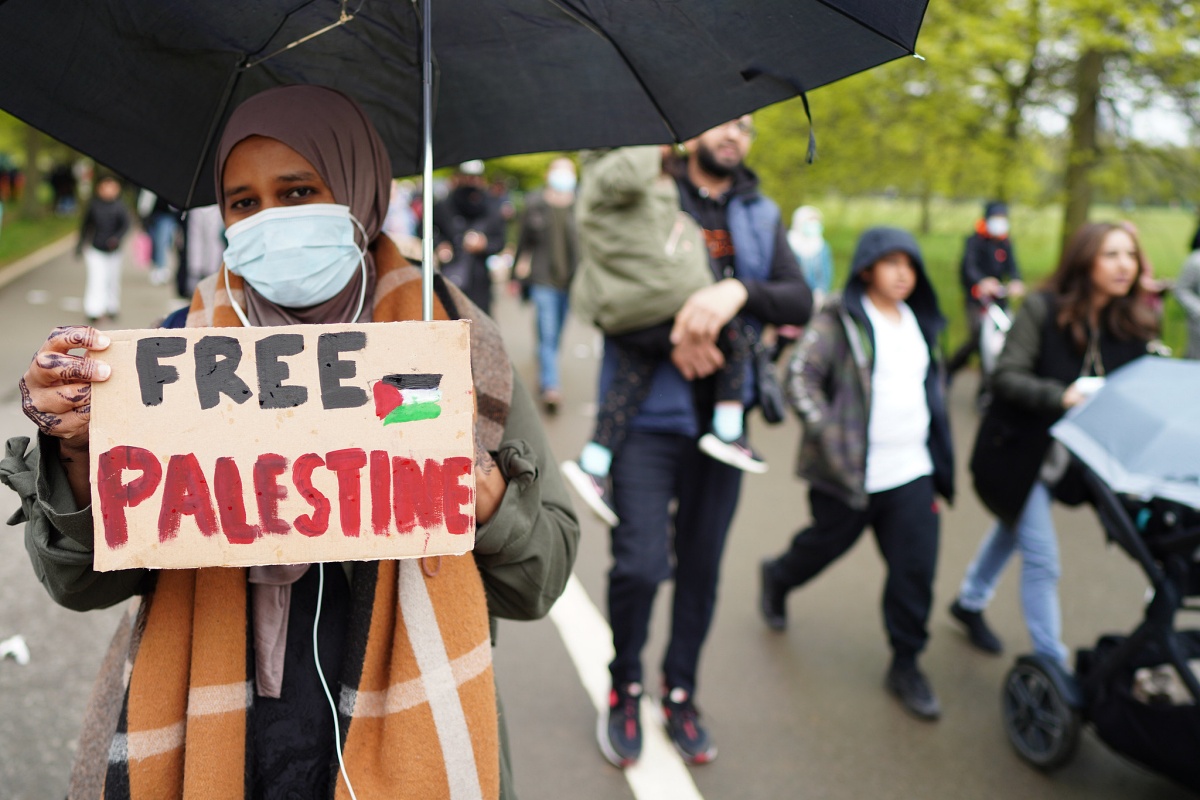
Gaza became the moral turning point that revealed everything wrong with the party’s approach to its own base. For many, the images were devastating and the death toll staggering, yet the Biden administration remained firm in its support for Israel’s military campaign while ceasefire demands were dismissed and protestors were sidelined. Muslim, Arab, and progressive Jewish voices were pushed to the margins, and the Democratic base watched in real time as the party turned its back on the clearest moral crisis of our time. This was a crisis of conscience that shattered what little trust remained.
Related stories
The moment of reckoning has come inside the DNC itself. When a 26-year-old DNC committee member Allison Minnerly introduced a resolution to suspend U.S. arms sales to Israel, it should have been a catalyst for real debate. Instead, party leaders worked overtime to kill it. Rather than opening dialogue, the party suppressed it. Progressive members of Congress were isolated, AIPAC money flooded primaries to punish dissent, and convention delegates who protested were treated as traitors. What should have been a chance for Democrats to listen to their base instead became another exercise in silencing them.
The DNC’s failures were cultural as much as political, embodied by figures like Ken Martin, whose elevation within party leadership reflects the narrow, self-satisfied logic that helped lead Democrats off a cliff. Martin’s brand of provincial pragmatism, stripped of imagination, cloaked in institutionalism, and disconnected from the urgency on the ground, was perfectly aligned with a party leadership that believed it could afford to ignore its grassroots. Parochialism doesn’t inspire coalitions; it dulls them.
At a time when the country was crying out for clarity, the Democratic campaign spoke in generalities, asking for votes out of obligation rather than inspiration. In contrast, movements for climate justice, racial equity, and Palestinian liberation pulsed with urgency and moral clarity. But the party’s refusal to connect with that energy reflected a deeper institutional disconnect from the communities that once formed its core. We already know what the party’s internal review will say: low turnout, disinformation, messaging gaps. But those are symptoms, not causes. The post-mortem will not say the party misjudged its base. It will not name its failure to speak clearly on Gaza. And it will not confront the chasm between the Democratic establishment and the communities it claims to represent. Yet those omissions are precisely what must be confronted if there is any hope of rebuilding trust.
Meanwhile, Republicans have consolidated power far beyond electoral politics, reshaping state legislatures, the judiciary, school boards, and even foreign alliances. Trump is no longer an outlier but the anchor of a disciplined authoritarian movement. This momentum does not come from popularity alone; it thrives in the vacuum left by a Democratic Party unwilling to provide a values-driven alternative.
If Democrats hope to rebuild, it won’t come from scolding their base or relying on fear of Trump. It will come from moral clarity on Gaza, on climate, on economic justice, and on the integrity of our democracy. The party can still choose to lead with purpose rather than calculation, to prioritize grassroots energy over donor comfort, and to recognize that moral courage is not a liability but a necessity. 2028 does not have to be another loss. But without a genuine course correction that acknowledges Gaza as the fault line where trust was broken, the party will lose again. The question is whether Democrats will finally listen or whether the future will belong to the movements that never stopped believing in the possibility of transformative change.
Comments

Powered by RoundtableAn AI/DeFi-powered Enterprise Media Operating System. Learn more at Roundtable.io.© Roundtable 2026. By using this site you agree to the Terms of Use and Privacy Policy