
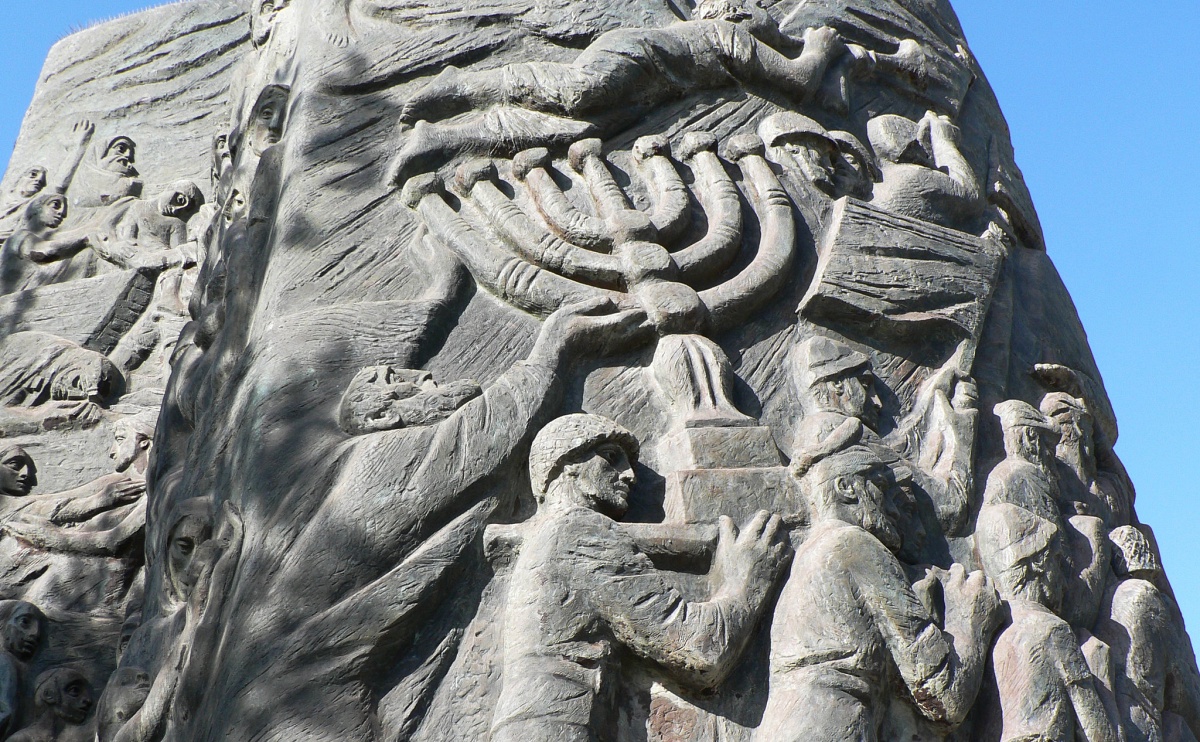
Prem Rose • Attribution-NonCommercial (CC BY-NC 2.0) • Flickr


Feb 18, 2026 8:19 PM
Updated Feb 18, 2026 8:20 PM
To oppose Zionism means not only to oppose the existence of a Jewish ethno-state and its injustices against Palestinians, but also to seek the decolonization of Palestine.
I write this as a proud Jewish anti-Zionist.
In recent years, the boundary between Zionism and anti-Zionism within Jewish discourse has been deliberately blurred by the reemergence of an ideology known as cultural Zionism. In its contemporary form, cultural Zionism claims to reject Jewish nationalism while insisting on Palestine as a protected epicenter of Jewish and/or Hebrew spiritual, academic, and cultural life.
At first glance, this may appear to offer a humane alternative to political Zionism. In reality, it rests on a profound historical ignorance.
Cultural Zionism originated in the late nineteenth century with the Hebrew essayist Ahad Ha’am. Unlike political Zionists, Ha’am did not explicitly demand a sovereign Jewish state, at least not immediately. Instead, he envisioned a flourishing Jewish community in Palestine—one coexisting alongside non-Jewish neighbors yet secure enough to cultivate a burgeoning Hebraic spiritual, scholarly, and cultural hub. Today, figures such as Peter Beinart, a prominent Jewish journalist and political commentator, draw explicitly from this tradition to assert that Jews do not need a Jewish state but rather “a Jewish society in Israel, which can flourish in a state of all its citizens.”
Related stories
As a trained historian—and as a Jew steeped in the Levant’s historical consciousness—I find these claims not only misguided, but astonishingly historically unaware. Such aspirations articulated by Ha’am and repeated today by Beinart already materialized centuries before either of them even drew their first breath.
For millenia, Palestine had been a land in which Jews lived, studied, worshiped, and built institutions without the backing of any Western-manufactured ideology. Jews fleeing persecution—from the Spanish Inquisition to European pogroms, and later the Holocaust—were welcomed into Palestine, where they were not merely tolerated but supported in building vibrant religious, academic, and cultural livelihoods.
The city of Safed (Tzfat) in northern Palestine offers a striking example. In the sixteenth century—centuries before Zionism existed—Safed became the global epicenter of Jewish spiritual life and learning. Jews expelled from Iberia were welcomed there in such expansive numbers that by the late sixteenth century the city was predominantly Jewish and housed the largest Jewish community in the Levant. Ashkenazi, Sephardi, and Musta‘arabi Jews flocked to Safed, creating a golden age of Jewish mysticism, scholarship, and institution-building. Some of Judaism’s most venerated rabbinical authorities such as Isaac Luria, Moshe Cordovero, and Shlomo Alkabetz, fathers of contemporary Kabbalsitic wisdom, were not anomalies transplanted onto Palestine—they were products of it, inseparable from Palestine’s pre-colonial social fabric of equality and protection that enabled their work.
This history alone should render cultural Zionism completely unnecessary. The Jewish flourishing in Palestine that cultural Zionists claim to desire did not, in fact, require Zionism—political or cultural. It already existed organically within an indigenous, pluralistic Palestinian society.
For cultural Zionists who insist they are non-nationalistic like Beinart, I offer a respectful but firm challenge: relinquish Zionism altogether and embrace anti-Zionism. Anti-Zionism, properly understood, is not a rejection of Jewish life in Palestine. Rather, it is the decolonization of Palestine—an effort to restore the social stasis preceding Zionism and European imperialism that once allowed Jews, among many others, to thrive in Palestine.
This is why I define myself as an anti-Zionist. To oppose Zionism means not only to oppose the existence of a Jewish ethno-state and its injustices against Palestinians, but also to seek the decolonization of Palestine—to return the land to its original condition before being distorted by colonialism and ethno-religious nationalism. That condition was defined not by homogenous domination but by diversity and unity.
Beinart and other cultural Zionists, shaped by Western intellectual environments, appear unaware that the non-nationalist Jewish cultural renaissance they long to establish within Palestine already existed for generations. Their impulse to institute cultural Zionism stems not from structural necessity, but from historical and Western-centric ignorance. Anti-Zionism fulfills every aspiration they articulate precisely because Palestine was already home to the world’s greatest centers of Jewish spiritual, academic, and cultural life.
At the same time, it must be said that many contemporary so-called anti-Zionists fail to grasp such historical nuance and decolonial complexity. These individuals have adopted ideologies which simply invert Zionism’s logic, namely Arab nationalism and Islamism. Just as Zionism thrives on otherizing non-Jews to uphold an ethno-religious nation-state, such frameworks reflexively attempt to oppose Zionism by latching onto other ethnic/religious nationalist paradigms which preclude Jews and other minorities. Rather than dismantling the underlying colonial structures pitting our peoples against one-another and reconstructing a national identity in which everyone in Palestine is a full and equal participant, many have sorrowfully fallen into this reactionary and exclusionary pitfall.
A truly decolonial Palestine is not one dominated or defined at the state-level by a single ethnic/religious identity. Historically, Palestine was home not only to Arabs and Jews, but to Kurds, Armenians, Samaritans, and others. Its social fabric was cosmopolitan long before modern nationalist and colonialist agents fractured it.
Take Mohammed El-Kurd, arguably the most famous contemporary Palestinian poet and human rights activist, who rightly criticized cultural Zionists as being akin to “cultural Nazis.” His own surname speaks to Palestine’s pluralistic past: El-Kurd traces back to Kurdish communities settled in Palestine under Saladin, the Kurdish leader who liberated Palestine from Crusader colonization. Kurds, like Jews and other non-Arab minorities, thrived for generations as part of a shared, diverse Palestinian mosaic.
Palestinian history thus proves that Western-manufactured ideologies are not required to guarantee communal protection or flourishing. In fact, they have done the opposite. The path forward is not through rebranded iterations of Zionism but through decolonization. By returning to a precolonial, indigenous social ethos, Jews can once again build institutions, practice their faith, and live in safety within a shared homeland, just as they did long before Zionism—cultural or otherwise—was ever imagined.
Comments

Powered by RoundtableAn AI/DeFi-powered Enterprise Media Operating System. Learn more at Roundtable.io.© Roundtable 2026. By using this site you agree to the Terms of Use and Privacy Policy