


Aug 18, 2026 4:33 PM
Updated Aug 18, 2026 4:50 PM
Trump and Pete Hegseth invoke the hostage crisis to portray the United States as an innocent victim—and erase the history of American intervention.
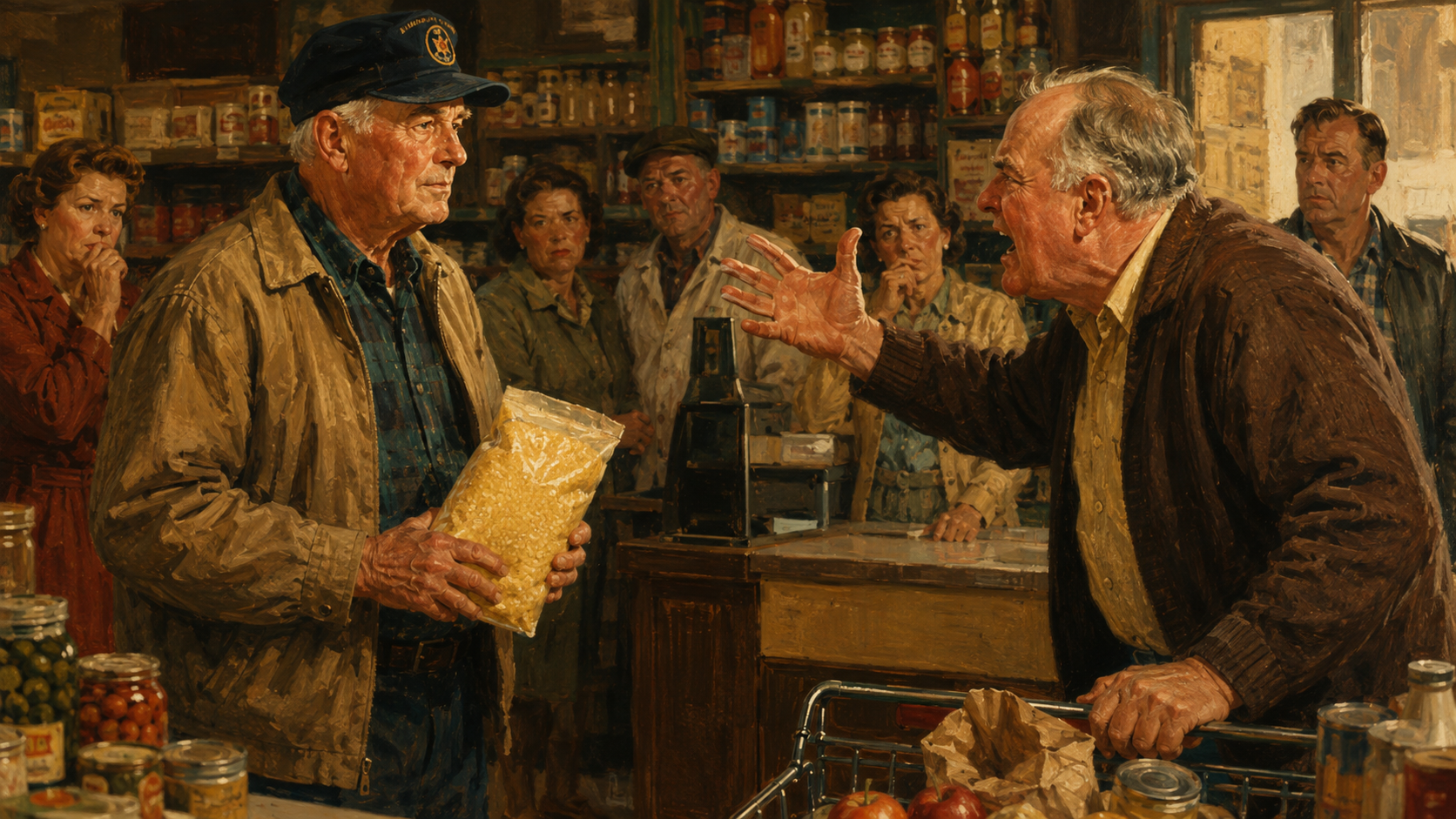
We dropped by our local family grocery today to pick up some coarse-ground cornmeal. I was heading to the check-out when a guy across the room spotted my veteran cap and hurried over to thank me for my service. He asked me what I thought about the war with Iran, and I gave him the short answer: “Pointless waste of money and lives.” Perhaps he thought that, as a veteran, I’d approve of the war, maybe even celebrate it. Clearly he wasn’t ready for what I said.
He took a few seconds to absorb my reply, and then he puffed up, got red in the face, and growled, “Forty seven years!” Indeed, that’s how long it’s been since Iranian students took US embassy staff hostage during Iran’s Islamist revolution. “They took over our embassy!” he barked. I suggested that maybe they attacked our embassy in 1979 because we helped to overthrow their elected government in 1953. He shook his head. “They’re evil people!,” he said. “That border used to be wide open. Now they kill anyone who tries to cross it!”
I think he meant the Strait of Hormuz, but I decided not to ask him to elaborate. Instead, I replied, “So maybe we should just kill ‘em all,” He gave me a big smile, waved his hand, and walked away. And I wondered, how did Iran become a target for the vindictive spite of a guy in a family grocery, haranguing a stranger about matters of which he clearly knows nothing? How did he come to be so ill-informed, and why do so many Americans seem to regard Iran and its people as the epitome of everything evil and monstrous?
Over half of the people in the United States were born after 1979, so they’ve learned everything they know about the events of that year from others, who will have given the story whatever spin they think appropriate. When the hostages finally came home in 1981, Americans celebrated as if they’d all been freed from captivity, and I suppose in a sense they had been. The ABC News program “America Held Hostage,” running nightly for over a year, helped to shape the truth of the event and fix it in the minds of an entire generation.
Related stories
Even for people who have no direct memory of the events themselves, the hostage taking holds a special significance—like Pearl Harbor, or 9/11—an honored talisman of Americans’ shared sense of themselves as virtuous people heinously wronged by malicious others. It’s woven into our cultural tapestry, pattern-forming weft on the warp of American exceptionalism. It’s ideal focus for propaganda, and there’s been plenty of that.
The day after the bombs started falling on Tehran, Donald Trump said, ‘For 47 years, the Iranian regime has chanted ‘Death to America’ and waged an unending campaign of bloodshed and mass murder, targeting the United States, our troops and innocent people....” The next day, Pete Hegseth reinforced the message: “For 47 long years, the expansionist and Islamist regime in Tehran has waged savage, one-sided war against America....They didn’t always declare it openly, except for their constant chants of ‘Death to America’...They did it through the blood of our people....We didn’t start this war, but under President Trump, we are finishing it.”
In fact, we did start this war, six months ago, not forty seven years. And it’s not the Iranians who are making it savage. According to the Foreign Policy Research Institute, in the first four days of the war, the United States and Israel unleashed over fifty bombs, rockets, missiles, and other types of ordnance on Iran every hour, striking 2,000 targets and killing almost 2,500 people. It was the most intense—not to say the most savage—aerial bombardment in all of modern warfare. And yet reminders of Iranian depravity have been coming steadily since Trump and Hegseth spoke.
However monotonous they may seem, both the deliberate misrepresentation of the facts and the regular repetition of the story are purposeful. In a speech last July, Trump boasted, “If you say it enough and keep saying it, they'll start to believe you.” Whether he knew it or not, he spoke on proven authority. Adolf Hitler’s propaganda minister, Joseph Goebbels, is said to have remarked, “If you tell a lie big enough and keep repeating it, people will eventually come to believe it.”
Whatever the guy at the family grocery thinks he knows about the war with Iran, there’s no mystery how he came to believe it. But he knows what he knows, and it would be a waste of time to try to impress him with information he hasn’t already embraced as true. As Paul Simon put it, “All lies and jest, still a man hears what he wants to hear and disregards the rest.” And so it is with the guy at the family grocery store. Trump told him, and Hegseth told him. They kept telling him, and he believes.
Comments

Powered by RoundtableAn AI/DeFi-powered Enterprise Media Operating System. Learn more at Roundtable.io.© Roundtable 2026. By using this site you agree to the Terms of Use and Privacy Policy