


Oct 18, 2025 3:02 PM
The awful truth dawned on him: "This forest in my father's name was not planted in the desert but on the destroyed orchards of the previous inhabitants."
In 1966, Erik Ader hitchhiked from the Netherlands to Israel. His final destination was a forest of 1,100 pine trees planted by the Jewish National Fund (JNF) near Kibbutz Netiv Halamed-Hehin, roughly 30 kilometers southwest of Jerusalem. The forest was dedicated to the memory of Erik Ader's father, the Reverend Bastiaan Jan Ader, for having helped hundreds of Dutch Jews survive the Nazi occupation, a labor of love that prompted Israel's World Holocaust Remembrance Center Yad Vashem to recognize the reverend as a "Righteous Among the Nations", an honorific bestowed on non-Jews who risked their lives to save Jews during the Holocaust. Rev. Bastiaan Jan Ader was executed by the Nazis in 1944. A memorial plaque placed by his wife in 1962 marked the site where the trees had been planted.
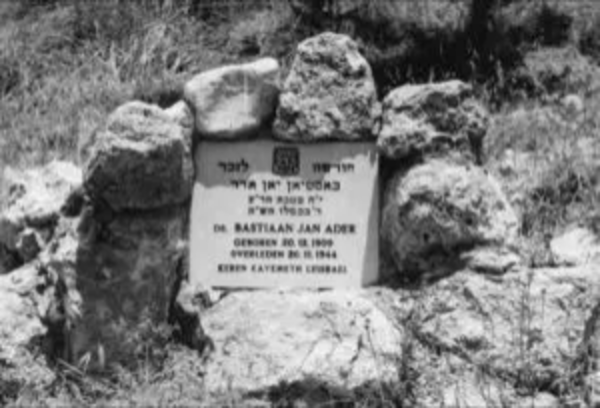
What Erik Ader saw in 1966 was a "dense planting of small trees, a few years old, in a hilly terrain."
The connection with Israel was longstanding. Erik's father had made a pilgrimage – by bicycle – from the north of Holland to Jerusalem in 1936. Following in his father's bicycle tracks, the son's trajectory took him through Syria, Lebanon, and Jordan, which at the time still included the West Bank. "In those countries," he said, "I discovered the other side of the Zionist coin: that the land that was now Israel had not been empty at all, but that almost a million Palestinians had lived there, who now – eighteen years after the establishment of the state of Israel – were not allowed to return to their lands and homes, but were doomed to a hopeless existence as refugees, for the most part in desolate camps."
Upon his return to the Netherlands, Ader started reading up on the history. His reading included Israeli authors who contested the claim that the Palestinians had been encouraged by their leaders to flee rather than be expelled. "Under international law," noted Ader, who would go on to become a diplomat, "they had the right to return, regardless of whether they had been expelled or fled; that right has been systematically denied them."
Related stories
Erik Ader revisited the Rev. Ader Forest in 2004, and was shocked by what he saw: "everywhere ... construction cranes stood out against the blue sky; settlements under construction."
In 2005, he visited once more. "What I hadn't noticed before, I saw now: in some places there were still a few centuries-old olive trees." On closer inspection, he saw "traces of old neglected terraces in the hilly terrain under the now much larger pine trees."
And then the awful truth dawned on him: "This forest in my father's name was not planted in the desert but on the destroyed orchards of the previous inhabitants."
"Making the desert bloom"
The Rev. Ader forest was part of an ongoing effort by the Jewish National Fund (JNF) to cultivate uncultivated land in Israel in order to "make the desert bloom like a rose," as was solemnly and biblically inscribed on donor certificates. "Making the desert bloom", Ader learned, was a euphemism for the expropriation and expulsion of Palestinians from the time of JNF's founding by the World Zionist Congress in 1901 to the present.
Ader next contacted the JNF in Jerusalem and asked what had been there before. In vain. Repeated inquiries proved fruitless.
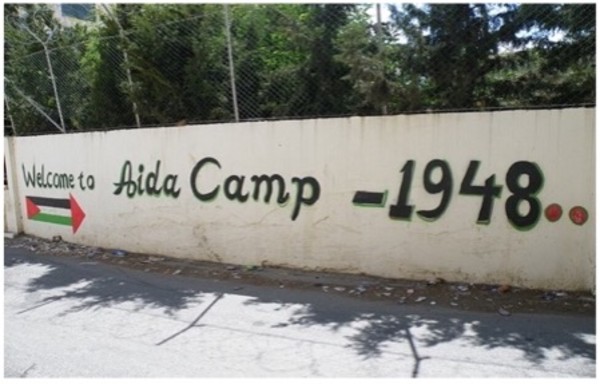
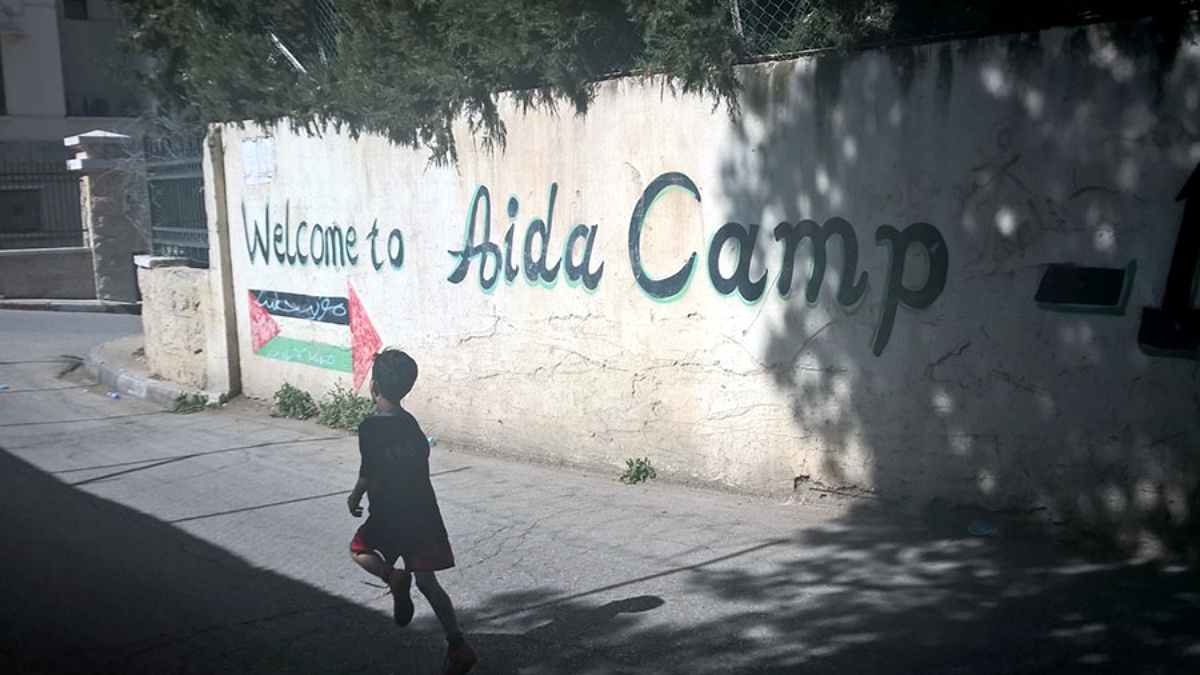
Subsequent research established that what was there before was the village of Bayt Nattif, whose 1,200 villagers had been forced to flee in October 1948. Survivors of the ethnic cleansing told Ader that since 1949 they'd been living as propertyless paupers in the Aida refugee camp near Bethlehem.
In the early period of colonization, Ader found, the JNF used the collected funds to buy land in Palestine from large landowners and then proceeded to expel the tenants. As such, the JNF whetted the expansionist craving of Zionist leaders like Theodor Herzl, David Ben Gurion, and Yosef Weitz.
In Israel itself, Ader noted as well, the JNF planted forests in the Negev on Bedouin grazing lands and assisted in the creation of Jewish settlements there. In East Jerusalem, Hebron, and in the settlements on the West Bank it is JNF's subsidiary Himanuta that oversees the operation.
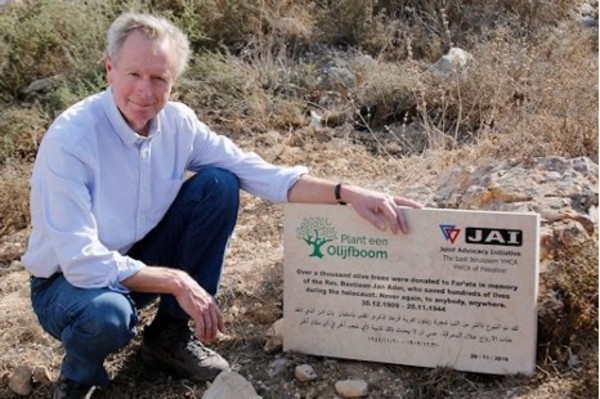
In 2016, Erik Ader took matters in his own hands. In that year he planted eleven hundred olive trees in his father's name in Palestine. "I saw earlier the burned olive groves of a Far'ata, destroyed by settlers from a neighboring settlement, and decided to plant my olive trees there, as a gesture of material, and above all moral, support to people who cannot but think that the rest of the world has forgotten them."
Never again, to anybody, anywhere. 30-12-1909 - 20-11-1944.
The Palestinian Information Center of September 3, 2025, reported that the Israeli occupation authorities have issued a decision to confiscate 455.58 dunums of the Tell village lands, west of Nablus in the northern West Bank, and the villages of Far’ata and Jit, east of Qalqilya Governorate in the northern West Bank.
Adapted from a talk Erik Ader gave on May 21, 2022, at the Henri Veldhuis Symposium (Culemborg, the Netherlands). Erik Ader (1944), former ambassador from the Netherlands to Norway, is the author of Kinderen van Amalek: Mythes en feiten rond het Israelitisch-Palestijns conflict (2023) (Amalek's children: myths and facts round the Israel-Palestine conflict). The full speech, in Dutch.
Comments

Powered by RoundtableAn AI/DeFi-powered Enterprise Media Operating System. Learn more at Roundtable.io.© Roundtable 2026. By using this site you agree to the Terms of Use and Privacy Policy