
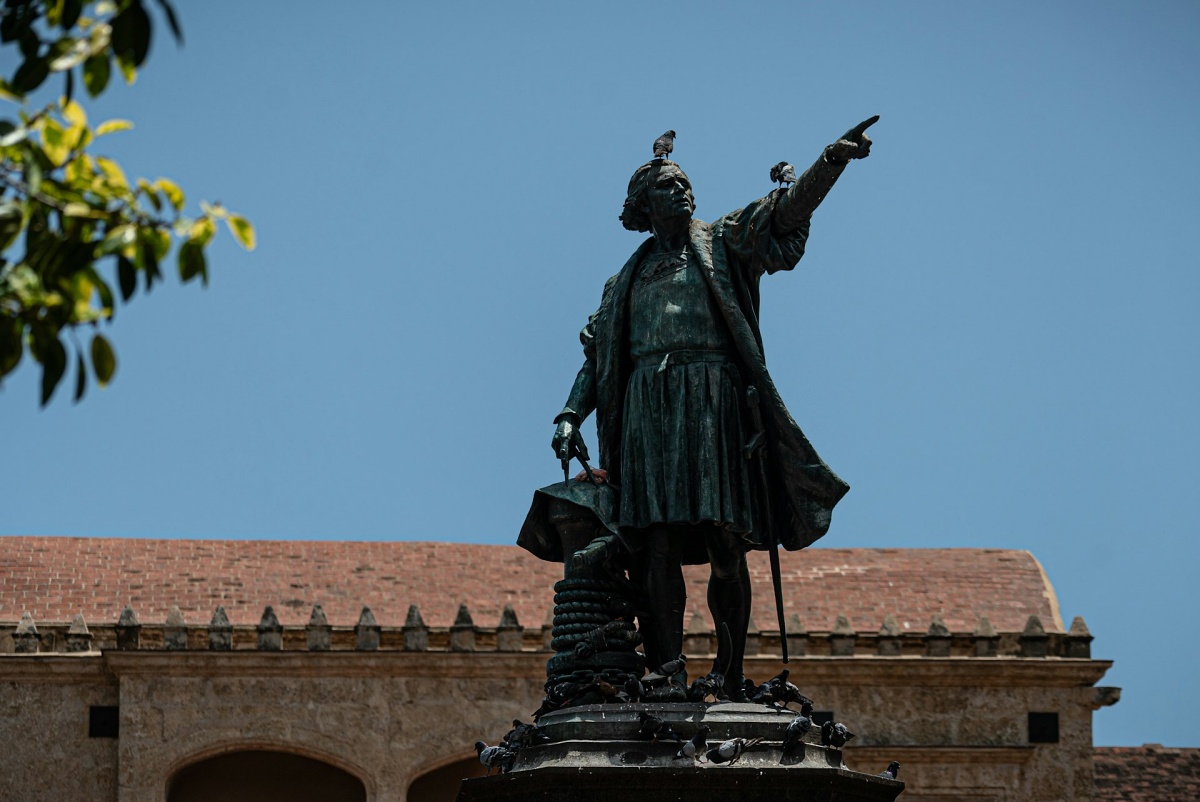
Photo by Kevin Olson on Unsplash


Oct 15, 2025 3:57 PM
His voyages were funded in a moment of religious intolerance, his landings marked the beginning of conquest, and his rule brought brutality to Indigenous peoples.
Trump’s proclamation of October 9th declaring Columbus among other things a national hero, revives old myths about Columbus while erasing the Jewish expulsion from Spain, the violence of colonization, and the destruction of Indigenous peoples.
To present Columbus as a flawless hero ignores the actual record: his voyages were funded in a moment of religious intolerance, his landings marked the beginning of conquest, and his rule brought brutality to Indigenous peoples.
1492: Persecution and Expulsion
Columbus set sail the same year that Ferdinand and Isabella signed the Alhambra Decree, ordering the expulsion of Spain’s Jews. Columbus himself noted in his log that after “the expulsion of the Jews, Your Highnesses ordered me to equip a fleet.” Some scholars suggest Columbus himself may have been a converso (a Jew forced to convert) given the DNA test that were done. IT is clear that the individuals he spent time with were Jewish. Although this could be debated, what is not debated is that he launched his voyage against a backdrop of religious persecution, intolerance, and forced exile.
Where He Landed
On October 12, 1492, Columbus and his crew landed on an island in the Bahamas, which he named San Salvador. Over the next decade he explored parts of Cuba, Hispaniola (today’s Haiti and Dominican Republic), Puerto Rico, and Jamaica. Columbus never actually set foot in what is now the continental United States.
Related stories
Who He Encountered
The first people Columbus encountered were the Taíno, Indigenous peoples of the Caribbean. He described them as generous and kind, but also noted how they could be exploited. In his journal, he wrote that they would make good servants because “they have no weapons and are very timid.” This set the tone for the colonial project that followed.
What He Did
Columbus established a fort at La Navidad on Hispaniola and later founded Santo Domingo, the first permanent European colony in the Americas. During his governorship (1492–1500), he and his brothers imposed harsh systems of tribute and forced labor. Taíno people were required to deliver gold or cotton; failure meant brutal punishment, including mutilation or death.
Consequences Over Time
Within just a few decades of Columbus’s arrival, the Taíno population of Hispaniola plummeted from an estimated 300,000–1,000,000 to only a few thousand survivors. Causes included violence, enslavement, and European diseases. Columbus also initiated the transatlantic slave trade by shipping enslaved Taíno people back to Spain.
Why This Matters
Trump’s order erases this complexity. Columbus’s voyages cannot be separated from colonial violence, slavery, and the decimation of Indigenous cultures. To celebrate him without acknowledging this is to repeat the lies of empire.
The real story of Columbus is not one of unblemished heroism but of ambition, brutality, and the opening of a long era of dispossession. And the 1492 expulsion of Jews reminds us that even Columbus himself may have been touched by intolerance and exile — a reality erased from today’s proclamations.
If we are serious about truth, we must tell the full story: Columbus did not “discover” America; he stumbled upon islands already inhabited by vibrant peoples. His voyages ushered in centuries of exploitation, not liberty. History belongs not to mythmakers but to all of us who insist on honesty.
Comments

Powered by RoundtableAn AI/DeFi-powered Enterprise Media Operating System. Learn more at Roundtable.io.© Roundtable 2026. By using this site you agree to the Terms of Use and Privacy Policy