
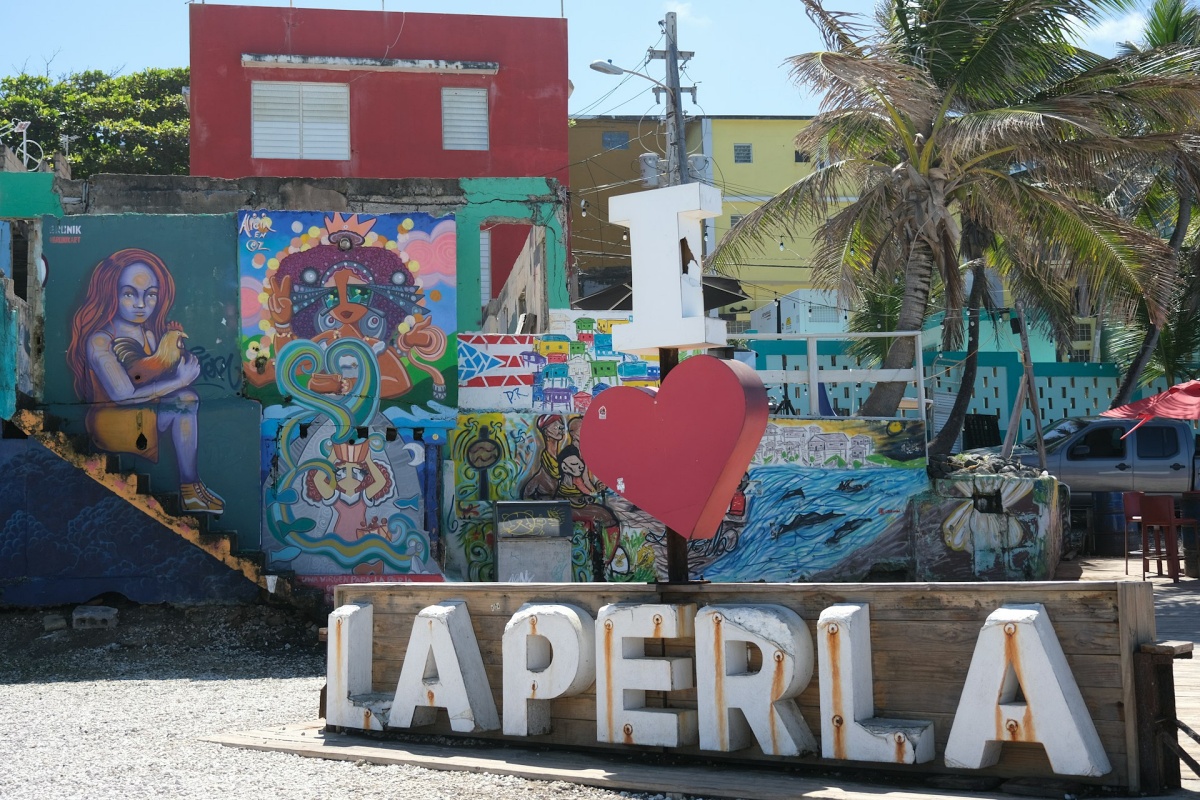
Photo by Andreea Munteanu on Unsplash


Jul 6, 2025 5:37 PM
Updated Jul 13, 2025 7:14 PM
The legal structure of U.S. colonialism continues to deny the Puerto Rican people their rightful nationhood, democratic self-rule, and economic freedom.
For over a century, the United States has imposed a series of colonial laws on Puerto Rico that control the island-nation’s politics, economy, trade, legal status, and future. These five central laws - enacted from 1917 to 2016 - form the foundation of what can only be described as a modern-day colonial regime. Like the British Intolerable Acts that sparked the American Revolution, these U.S. federal laws have triggered a rising tide of Puerto Rican nationalism, anti-colonial resistance, and calls for sovereignty. This legal structure of U.S. colonialism, maintained under the illusion of “Commonwealth” status, continues to deny the Puerto Rican people their rightful nationhood, democratic self-rule, and economic freedom.
The Five Colonial Cornerstones of U.S. Rule in Puerto Rico
The Jones–Shafroth Act imposed U.S. citizenship on Puerto Ricans without a plebiscite or consent. This maneuver was less about inclusion and more about militarization. In 1914, even Puerto Rico’s democratically-elected House of Delegates unanimously opposed U.S. citizenship for Puerto Ricans, yet, of course, Puerto Rico was ignored. Passed just weeks before the U.S. entered World War I, the Act enabled the U.S. government to conscript Puerto Ricans into its armed forces. Simultaneously, it replaced the 1900 Foraker Act, establishing a colonial government with a U.S.-appointed governor and maintaining ultimate federal control over Puerto Rican affairs. This Act laid the foundation of U.S. political, colonial, and constitutional supremacy over the island and effectively subordinated Puerto Rico to foreign colonial governance under the American flag.
The Jones Act of 1920: Colonial Economic Chains
Section 27 of the Merchant Marine Act, known as the Jones Act of 1920, is one of the most economically debilitating and harmful laws affecting Puerto Rico. It mandates that all goods transported between U.S. ports - including to and from Puerto Rico - must be carried on U.S.-built, U.S.-owned, and U.S.-crewed ships. The impact is devastating: higher import costs, stifled exports, increased consumer prices, and severe restrictions on Puerto Rico’s access to global trade. This law mirrors the British mercantilist Navigation Acts that once restricted trade in the British colonies and treats Puerto Rico as a captive market designed to benefit U.S. maritime interests rather than Puerto Rican economic development. The U.S. does to Puerto Rico what the British Empire used to do to the Thirteen Colonies.
The Puerto Rico Federal Relations Act (1950): The Colonial Charter
This Act authorized the drafting of a Puerto Rican constitution - but under strict federal oversight and control. It gave Congress the power to review and approve any provisions of Puerto Rico’s constitution, and Congress retains the authority to amend or revoke Puerto Rico’s self-governance at will. Far from establishing true autonomy, the Act reinforced Puerto Rico’s subordinate status and codified colonial governance under the deceptive term “Commonwealth. As a Commonwealth, the U.S. sought to maintain direct and full colonial control over Puerto Rico, yet give the illusion that Puerto Rico was now “autonomous” and decolonized. Puerto Ricans that spoke out against this colonial farce were persecuted and silenced; those that supported this farce were rewarded with power and privilege.
Related stories
Public Law 82–447 (1952): The Mask of Commonwealth
This joint resolution formally approved the Constitution of the Commonwealth of Puerto Rico, which was ratified by the people, but rewritten and approved by Congress. The United States presented this act to the international community as evidence that Puerto Rico had gained self-government, but in reality, it was a public relations maneuver. The U.S. retained full sovereignty, authority over foreign affairs, immigration, defense, trade, and key legislative powers. Puerto Rico remained a territory under the U.S. Constitution’s Territorial Clause, and the Commonwealth was, and remains, a colonial euphemism.
Under this colonial farce, the U.S. was later able to pressure and strongarm the United Nations in 1953 to accept this farce and pass Resolution 748 (VII) recognizing that Puerto Rico was no longer a colony, this taken off the list of Non-Self-Governing Territories. Since the 1970s, the UN’s Special Decolonization Committee has issued resolutions calling for Puerto Rico’s self-determination and independence, which the U.S. has historically ignored.
PROMESA Act & Sánchez Valle (2016): The Fiscal Dictatorship and the Death of the Commonwealth Myth
The most recent and egregious of the Intolerable Acts, the Puerto Rico Oversight, Management, and Economic Stability Act (PROMESA), imposed an unelected Fiscal Control Board (la Junta) on Puerto Rico. Appointed by U.S. president Obama and accountable only to Washington, this board has the power to override Puerto Rico’s elected legislature, control the budget, and dictate economic policy. PROMESA was passed to manage Puerto Rico’s $70+ billion colonial public debt - a crisis manufactured in part by U.S. tax policies and predatory financial practices - but it established a federal colonial dictatorship that stripped Puerto Rico of the last vestiges of its illusory democratic governance.
Also in 2016, the U.S. Supreme Court issued a pivotal ruling in Puerto Rico v. Sánchez Valle, reaffirming that Puerto Rico is not a separate sovereign. The Court made clear that, as a U.S. territory - not a state - Puerto Rico derives its authority from Congress, not from any independent or original source of sovereignty. The decision had profound legal and political implications: it shattered the long-standing myth that Puerto Rico possessed even a limited form of sovereignty or autonomy (a myth and narrative that had been supported by the pro-Commonwealth PPD for decades). Instead, the ruling confirmed what many had long asserted: Puerto Rico has no sovereignty at all, and therefore remains a colony under the plenary power of the United States.
The Consequences of the Intolerable Acts
Together, these five laws have created a suffocating framework of American colonial rule in Puerto Rico. They:
- Denied Puerto Rican sovereignty and constitutional independence by subordinating Puerto Rican laws, courts, and government to the U.S. Congress and federal courts.
- Imposed economic dependency and trade restrictions, preventing the growth of a national economy and obstructing Puerto Rico’s access to global markets, investment, and maritime freedom.
- Institutionalized colonial debt and financial mismanagement through federal incentives for triple tax-exempt municipal bonds that encouraged borrowing without economic growth and then forcing Puerto Ricans to pay the colonial debt (that was approved by U.S. agencies) and pay for the Fiscal Control Board that was to rule them. To this day, the Fiscal Control Board has cost Puerto Rico over $2 billion yet has failed, year after year, to resolve the debt issue nor spur economic development.
- Suppressed political self-determination, as the U.S. continues to refuse binding plebiscites or negotiation processes for independence or free association.
- Reinforced Puerto Rico’s role as a colony to benefit U.S. corporations, turning the island-nation into a tax haven for the wealthy while offering crumbs to the Puerto Rican working class in the form of federal aid - aid often delayed and/or politically weaponized.
A Rising Tide of Anticolonial Defiance
As more Puerto Ricans become educated and aware of the structural colonialism enshrined in these laws, support for national sovereignty is rising, particularly among younger generations, professionals, and civil society leaders. Recent plebiscites have shown growing support for independence and free association, now up to 43%, while support for statehood and trust in American institutions and political representation continues to erode.
The collapse of federal disaster response after Hurricane María, the imposition of austerity measures by the junta, and the economic immiseration caused by colonial trade laws have all confirmed one truth: Puerto Rico – whether as a commonwealth or state - will never find justice, dignity, or prosperity under American colonial rule.
Toward a Free and Sovereign Republic
Puerto Ricans reject the falsehood of American “colonial virtual representation” in Congress through a powerless and non-voting Resident Commissioner in Washington, DC. Nor do we want two senators and representatives in the U.S. Congress, a foreign legislature we are not welcomed in as Puertorriqueños – a Spanish-speaking Latin American and Caribbean nation.
We demand a real national legislature: a Puerto Rican Parliament, representing the democratic will, interests, and future of the Puerto Rican people. A real national legislature where Puerto Ricans vote for real legislators with real political power to improve our lives and nation.
This future Republic must:
- Break free from U.S. economic constraints and maritime laws;
- Develop national industries and control natural resources;
- Establish fair trade agreements and global partnerships;
- Reclaim our political agency and cultural identity;
- Design and implement a national constitution rooted in liberty, democracy, and civil rights.
In short, Puerto Rico must destroy the colonial political economic aristocracy (the colonial elites) and the colonial institutions that uphold it and build a just and independent nation founded on democratic participation and economic freedom.
Boricuas Bow to No One
The so-called “Commonwealth” of Puerto Rico is not a state, not a republic, and not a free people. It is a U.S. colony shackled by five modern Intolerable Acts. Just as the original Thirteen colonies revolted against British tyranny, Puerto Rico must rise against the colonialism and foreign rule imposed by the United States. Enough is enough. It is time to break the chains, reject dependency, and demand liberty.
We must declare to the world and to Washington: Boricuas bow to no one. Puerto Rico will be free.
Comments

Powered by RoundtableAn AI/DeFi-powered Enterprise Media Operating System. Learn more at Roundtable.io.© Roundtable 2026. By using this site you agree to the Terms of Use and Privacy Policy