


Aug 6, 2026 6:26 PM
Updated Aug 6, 2026 6:32 PM
For teachers, students, workers, artists, theologians, and all those across the world who continue rehearsing a future worthy of our shared humanity.
"Without a minimum of hope, we cannot so much as start the struggle."
—Paulo Freire, Pedagogy of Hope: Reliving Pedagogy of the Oppressed (1994)
The Future Is Not Something We Inherit
When Che Guevara, Paulo Freire, and the Pedagogy of Revolution first appeared in 2000, it was among the earliest books I wrote after embracing revolutionary critical pedagogy as the central horizon of my educational work. At the time I believed, as I continue to believe today, that education can never be politically neutral. Every classroom embodies a vision of the future. Every curriculum presupposes a conception of what it means to be human. Every pedagogical encounter either reproduces the existing relations of domination or participates, however modestly, in humanity's unfinished struggle for liberation.
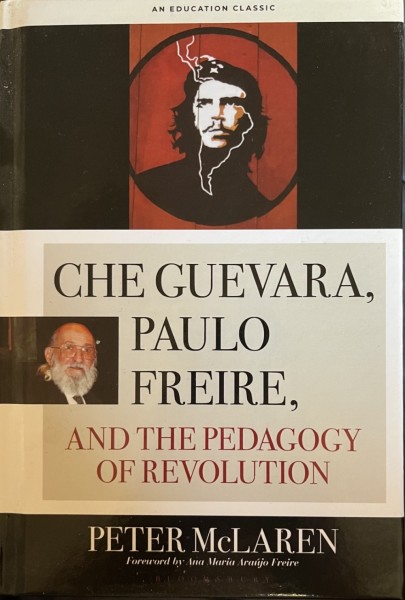
I could never have imagined that twenty-five years later Bloomsbury Academic would designate the book an Education Classic. I accepted that recognition with profound gratitude, recognizing that such honors belong not to individuals alone but to the communities of teachers, students, colleagues, workers, artists, theologians, and social movements whose lives continually enlarge the horizons of our thinking. If the book has endured, it is because the questions that animated it remain painfully alive.
Related stories
Books, after all, are never finished.
They continue their lives in conversations their authors never anticipated. They travel into classrooms the author will never enter. They accompany readers who reinterpret them through historical circumstances that did not yet exist when the manuscript first appeared. The finest books do not conclude conversations. They begin them anew.
This essay is written in that spirit.
It is also written during a moment of extraordinary historical urgency.
The world that produced Che Guevara, Paulo Freire, and the Pedagogy of Revolution has undergone transformations few of us could have fully anticipated. Neoliberal globalization has deepened into forms of financialized capitalism whose reach now extends into almost every dimension of human existence. Ecological devastation threatens the very conditions necessary for collective survival. Artificial intelligence is reshaping labor, communication, education, and culture with astonishing speed. Democratic institutions across the globe confront increasingly authoritarian political movements, widening economic inequality, and unprecedented concentrations of corporate power.
Against this historical horizon Cuba once again occupies a place of extraordinary importance. For more than six decades successive administrations in Washington have attempted, through embargoes, sanctions, diplomatic isolation, covert action, and economic pressure, to reshape Cuba according to American geopolitical priorities. Under President Donald Trump this long history of coercive policy has once again intensified.
Whatever one's political evaluation of the Cuban Revolution, it is impossible to ignore the human consequences borne by ordinary Cuban families struggling with shortages of food, medicine, fuel, electricity, and countless necessities of daily life.
These realities compel us to ask a question extending far beyond the Caribbean.
Does any nation possess the moral right to determine the political future of another sovereign people through sustained economic coercion and military threats?
My answer is unequivocal.
No.
I write unapologetically in defense of Cuba's sovereignty.
That declaration should not be misunderstood.
To defend Cuba's sovereignty is not to argue that the Cuban Revolution has been without contradiction, error, limitation, or injustice. Revolutions, perhaps more than any other political undertaking, reveal simultaneously humanity's greatest aspirations and its deepest contradictions. They deserve neither romantic mythology nor ideological dismissal. They deserve historical understanding.
Genuine solidarity requires honest criticism.
But criticism differs fundamentally from domination.
Dialogue differs fundamentally from coercion.
The future of Cuba belongs to the Cuban people.
Not to Washington.
Not to multinational corporations.
Not to those nostalgic for the restoration of colonial dependency.
Nor to those who confuse economic strangulation with democratic concern.
The principle at stake is larger than Cuba itself.
It concerns the right of peoples everywhere to determine their own historical future.
My own intellectual journey has unfolded alongside these questions.
Some of my answers have changed.
The questions have only become deeper.
When I first encountered the writings of Ernesto Che Guevara and Paulo Freire, I was drawn not simply to their critique of capitalism but to something even more fundamental. Both refused to believe that history had exhausted human possibility. Both insisted that human beings remained capable of transforming not only social institutions but themselves. Neither confused hope with optimism. Hope required struggle. Hope demanded critical consciousness. Hope insisted upon dialogue. Above all, hope refused resignation.
Those convictions first drew me toward revolutionary critical pedagogy.
They continue to animate my work today.
Yet history has taught me something my younger self could not yet fully understand.
Ideas remain alive only when they continue entering into dialogue with history.
There was a time when I believed that such fidelity meant remaining steadfast to a revolutionary tradition.
Today I understand fidelity differently.
Traditions remain faithful to themselves precisely by allowing history continually to deepen them.
I have gradually come to describe this process as dialectical fidelity.
Dialectical fidelity refuses both orthodoxy and historical amnesia.
It rejects the comforting illusion that revolutionary traditions possess finished answers applicable to every historical moment.
It equally rejects the fashionable relativism that dissolves every emancipatory commitment into endlessly shifting interpretations.
Instead, dialectical fidelity asks us to remain faithful to humanity's liberation while permitting history continually to enlarge our understanding of what liberation demands. Dialectical fidelity preserves the emancipatory core of a tradition precisely by refusing to imprison it within its own past.
History itself remains unfinished.
So does democracy.
So does socialism.
So does Christianity.
So does humanity.
Perhaps nowhere has this lesson become clearer to me than through my continuing dialogue with Cuba.
Many readers may expect this essay to defend or condemn the Cuban Revolution.
I intend to do neither.
I intend something far more difficult.
I wish to listen.
For nearly four decades Cuba has remained one of my most demanding teachers.
Not because it offered perfect answers.
But because it continually refused simplistic questions.
Each journey challenged assumptions I had scarcely recognized within myself.
Each conversation reminded me that revolutions are never abstractions.
They are lived by teachers.
By physicians.
By factory workers.
By artists.
By farmers.
By grandparents.
By children.
By ordinary women and men attempting to preserve human dignity under extraordinary historical circumstances.
It is easy to judge history from a distance.
It is far more difficult to learn from it.
That is why I continue returning to Ernesto Che Guevara.
Not because he offers a finished political program.
Not because I agree with every aspect of his revolutionary practice.
But because he continues asking questions our own civilization increasingly avoids.
Can democracy survive without economic democracy?
Can education become something more than preparation for the labor market?
Can solidarity prevail over competition?
Can public life be organized around human need rather than private accumulation?
Can another humanity emerge within a world increasingly governed by commodification?
These are not relics of the twentieth century.
They are among the defining questions of our own time.
Capital today does more than exploit labor.
It increasingly ensepulchers human possibility beneath the accumulated sediment of commodity fetishism, ecological devastation, financial speculation, algorithmic governance, imperial violence, and the relentless expansion of consumer desire. It buries democratic imagination beneath the claim that no alternative remains possible. It teaches us to mistake consumption for freedom, competition for excellence, and resignation for realism.
Against this burial of human possibility, education assumes an extraordinary responsibility.
Not because education alone transforms society.
It does not.
But because education prepares women and men to imagine societies worthy of transformation.
Over the years I have gradually come to believe that education is humanity's rehearsal for the future. Every classroom becomes a place where another society quietly practices itself before it fully arrives. Critical educators attempt to build the social relationships that they hope their students will one day inhabit.
If education reproduces hierarchy, exclusion, indifference, and competition, then we rehearse those realities until they become accepted as inevitable.
If education cultivates dialogue, solidarity, democratic participation, intellectual courage, tenderness, and the willingness to struggle together for justice, then another future quietly begins taking shape before it fully arrives.
Education is not merely preparation for life.
Education is already part of history's becoming.
It is the soft explosion through which human possibility unfolds into the world.
Like the first opening of a bird of paradise beneath the morning sun.
Like the patient emergence of a seed breaking open beneath the earth long before anyone witnesses the flower.
The deepest revolutions rarely begin with thunder.
They begin quietly.
Patiently.
Dialogically.
History itself often unfolds in this way.
It was through that unfolding that I first encountered Cuba.
Cuba as Pedagogue
My own engagement with Cuba began when Paulo Freire invited me to participate in a conference there at which he was also speaking. That invitation opened the way to a relationship with Cuba that would continue over several visits and profoundly shape my understanding of revolutionary education. During those visits I lectured with Cuban educators, appeared briefly on Cuban television, visited Che Guevara's home with his daughter Aleida, and later helped bring computers into Cuban schools while teaching at Instituto McLaren in Mexico. More recently, I was deeply honored to receive recognition in Cuba for my work on Paulo Freire and for my contributions to critical pedagogy.
History possesses its own pedagogy.
Looking back across the decades, I now realize that I arrived carrying far more assumptions than understanding. Like many North Americans on the Left, I brought with me admiration for the Cuban Revolution, respect for its remarkable achievements in education and health care, and deep curiosity about a society that had endured decades of economic blockade and international isolation. Yet I also carried questions that could not be answered by books alone.
History teaches slowly.
Often it teaches by unsettling certainties we never knew we possessed.
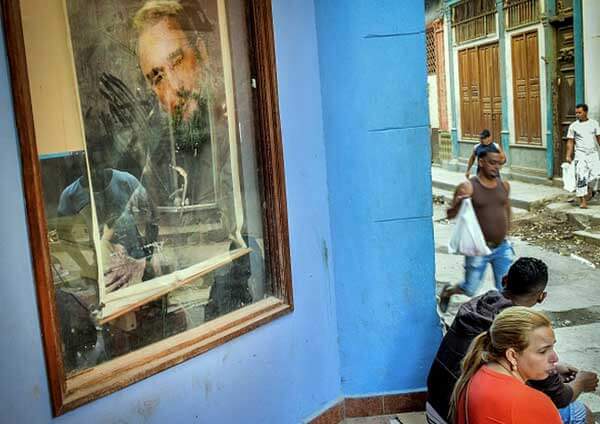
Memory preserves only fragments of that first journey, yet those fragments have acquired increasing significance with the passing years. I remember standing beneath a monumental image of Fidel Castro, conscious that I was walking through a country that had become one of the principal symbolic battlegrounds of the twentieth century. I remember conversations that drifted effortlessly among politics, poetry, education, music, philosophy, theology, and the ordinary concerns of everyday life. Above all, I remember discovering that history, when lived by ordinary people, possesses a texture profoundly different from history as represented in newspapers or academic journals.
That was my first lesson.
History is never experienced as history.
It is experienced as daily life.
It is experienced by mothers preparing meals despite shortages.
By teachers opening classrooms despite inadequate resources.
By physicians treating patients without asking whether they can afford medical care.
By grandparents telling stories to children who inherit neither victories nor defeats but the responsibility of carrying history forward.
Every revolution eventually becomes ordinary life.
Only from a distance does it appear extraordinary.
That realization altered my understanding of politics. The most enduring transformations seldom occur through spectacular events alone. They emerge gradually through institutions, relationships, habits, conversations, schools, neighborhoods, and communities struggling to preserve human dignity under difficult historical circumstances.
Looking back across the decades, I also came to understand that history had continued its work—not only upon Cuba but upon me. The Cuba of my first visit differed profoundly from the Cuba of the Special Period that followed the collapse of the Soviet Union in 1991. The island confronted economic hardships almost unimaginable to those outside its borders. Scarcity became woven into everyday existence. Yet what continued to impress me was not simply resilience but the determination of ordinary Cubans to preserve what they believed were the Revolution's greatest achievements: universal education, universal health care, literacy, cultural life, and the conviction that society bears responsibility for the well-being of all its members.
No honest observer could ignore the contradictions.
Nor could any honest observer ignore the extraordinary pressures under which those contradictions unfolded.
History demands context.
Judgment without context quickly becomes ideology.
One of the memories that has remained closest to my heart concerns neither a political gathering nor an academic conference.
It concerns children.
During one visit organized through Instituto McLaren in Mexico, I participated in an educational initiative that brought several computers to Cuban elementary school students. I did not enter the school itself. Instead, I met with children gathered outside the school grounds. Looking back today, I realize that the computers themselves were never the true significance of that encounter.
Technology rapidly becomes obsolete.
Curiosity never does.
What remained with me was not the technology but the children—their curiosity, generosity, laughter, and unmistakable sense that education belonged to them as a public good rather than a private commodity. It reminded me that the deepest purpose of education is never the transmission of machines but the cultivation of human possibility.
What remains most vivid in my memory are the children's faces.
My friend Sergio and I would simply say, "Fidel," and the children would immediately respond in unison, "¡Viva!" Their spontaneous enthusiasm reflected the political culture in which they had been raised, and that brief exchange has remained with me across the years.
Their eagerness to learn.
Their confidence that education mattered.
Their excitement before possibilities not yet fully imagined.
In those moments I was reminded once again that Paulo Freire had always been right.
Education begins neither with technology nor with information.
It begins with hope.
Hope cannot be downloaded.
It cannot be standardized.
It cannot be measured by examinations or market indicators.
Hope emerges through dialogue.
Through trust.
Through relationships.
Through the discovery that another future remains possible.
Years later I had the privilege of meeting Aleida Guevara, Che's daughter. Standing beside her, I found myself thinking less about revolutionary mythology than about historical memory. Che Guevara had become one of the most recognizable faces in modern history, endlessly reproduced on posters, murals, coffee mugs, T-shirts, and commercial merchandise. Few revolutionaries have been appropriated so completely as commodities by the very system they sought to transcend.
Yet conversations with Aleida reminded me that history can never be reduced to symbols.
Behind every icon stands a human life.
Behind every revolutionary image stand families, friendships, hopes, disappointments, acts of courage, and moments of profound vulnerability.
Our conversation was marked not by political theater but by generosity.
By reflection.
By mutual curiosity.
By dialogue.
That, too, became an enduring lesson.
Revolutionary traditions remain alive not because they endlessly repeat inherited formulas but because they continue asking difficult questions.
Questions preserve traditions far better than certainties.
That lesson returned to me during subsequent visits, when I had opportunities to speak with Cuban teachers. Their understanding of education differed markedly from the increasingly market-driven assumptions shaping educational policy in many Western societies. They spoke of schools not primarily as mechanisms for producing human capital but as institutions entrusted with sustaining democratic life, cultural memory, social responsibility, and collective well-being.
The contrast was striking.
Across much of the contemporary world, education has gradually been subordinated to the imperatives of competition, efficiency, standardization, and economic productivity. Students increasingly become future workers. Universities become corporate enterprises. Knowledge becomes intellectual property. Learning becomes investment.
Lost within this transformation is perhaps the most important educational question of all:
What kind of human beings should education help us become?
Che asked that question.
Freire asked that question.
It continues to guide my own work.
For Che, the Revolution required not only new institutions but new human relationships. He understood that political transformation could never endure if it merely replaced one ruling elite with another while leaving untouched the habits of competition, selfishness, and domination cultivated by capitalist social relations. His vision of the nuevo hombre—the new human being—has often been caricatured or misunderstood. Yet at its deepest level it posed an enduring educational challenge.
How do societies cultivate solidarity?
How do they nurture generosity rather than acquisitiveness?
How do they educate democratic responsibility rather than individual advancement?
Whether one ultimately agrees with Che's answers, the questions themselves remain indispensable.
Freire approached these questions differently.
For him education became the practice through which oppressed women and men learned to name the world critically and therefore participate consciously in its transformation. Dialogue stood at the center of this process. Human beings became more fully human not through domination but through encounter, reflection, collective struggle, and love.
Che and Freire traveled different historical paths.
Yet both believed that education participates fundamentally in the creation of history.
Neither accepted the assumption that the future simply arrives.
The future must be made.
Over time I came to understand this more deeply than I had when I first wrote Che Guevara, Paulo Freire, and the Pedagogy of Revolution.
Today I would express it differently.
Education is humanity's rehearsal for the future.
Every classroom becomes a place where another society quietly practices itself before it fully arrives.
If classrooms cultivate hierarchy, fear, conformity, exclusion, and competition, those become the social relations we rehearse.
If classrooms cultivate dialogue, democratic courage, solidarity, compassion, intellectual rigor, and collective responsibility, then we begin rehearsing another humanity.
Education does not guarantee liberation.
Nothing can.
But without education capable of nurturing historical imagination, liberation itself becomes increasingly difficult to conceive.
As I departed Cuba after one of my visits, I found myself thinking less about governments than about children.
Less about ideology than about hope.
Less about political systems than about the future those children would inherit—or create.
I began to understand that every society, whatever its political tradition, is ultimately judged by the futures it makes possible for its young.
The question, therefore, was no longer simply what Cuba had become.
The deeper question was what history had become.
And what it continued asking of us.
It would take many more years before I discovered my own answer.
It emerged not from abandoning revolutionary critical pedagogy.
It emerged from allowing history itself to deepen it.
This realization did not arrive through a single intellectual breakthrough. It emerged gradually through decades of teaching, political organizing, dialogue with colleagues throughout Latin America, Europe, Asia, Africa, Canada, and the United States, and sustained engagement with communities confronting poverty, racism, colonialism, ecological devastation, and capitalist exploitation. It also emerged through a renewed encounter with the revolutionary currents of Christian theology—not the Christianity of empire, nationalism, or the prosperity gospel, but the prophetic Christianity embodied in a preferential option for the poor, in liberatory praxis, and in solidarity with the poor practiced by countless women and men who have risked their lives in the struggle for social justice.
Over time, I became convinced that historical materialism and the prophetic imagination were not adversaries. Properly understood, they illuminate one another. Marx provides the most penetrating critique of the capitalist mode of production ever written. He reveals the structural logic of exploitation, commodity fetishism, alienated labor, and the relentless expansion of capital. Marx's critique was never merely an abstract economic science detached from the suffering of ordinary people. It was animated throughout by the possibility of human emancipation.
Likewise, the prophetic tradition is too often reduced to personal morality or religious piety. In reality, the biblical prophets were uncompromising critics of empire, exploitation, corruption, and the concentration of wealth. They condemned societies that accumulated riches while abandoning widows, orphans, laborers, and strangers. They challenged rulers who confused power with righteousness and exposed systems that transformed human beings into instruments of domination. Their vision was profoundly historical, insisting that justice must become embodied in the institutions of everyday life.
Liberation theology recovered this revolutionary dimension of the Christian tradition. Gustavo Gutiérrez, Leonardo Boff, Jon Sobrino, Frei Betto, Ernesto Cardenal, and countless others refused to separate faith from the historical struggle against oppression. Archbishop Óscar Romero gave his life defending the poor against a military dictatorship sustained by oligarchic privilege. His martyrdom reminds us that genuine prophecy is never merely rhetorical. It confronts structures of domination even when such confrontation demands the ultimate sacrifice. For me, the prophetic imagination is grounded not in supernatural escape from history but in the biblical vision of the Kingdom of God as a radically transformed social order. Properly understood, the Kingdom is not a promise of private salvation detached from the world. It is an historical summons to create relationships founded upon justice, compassion, solidarity, reconciliation, and the full flourishing of human life. Read in this way, the prophetic tradition does not stand outside revolutionary struggle; it deepens its ethical horizon.
As I reflected upon these traditions alongside the revolutionary humanism of Che Guevara, the pedagogical philosophy of Paulo Freire, and the continuing development of revolutionary critical pedagogy by scholars around the world, I realized that something new had begun to emerge—not a rejection of revolutionary critical pedagogy but its historical deepening.
The crises of the twenty-first century demanded nothing less.
Global capitalism had entered a period of profound civilizational instability. Ecological collapse accelerated. Financial capital detached itself ever further from productive labor. Digital surveillance expanded the reach of authoritarian governance. White nationalism, religious fundamentalism, and neofascist movements gained renewed legitimacy. Education itself increasingly became subordinated to the imperatives of markets, data extraction, standardized accountability, and corporate management. Universities, once imagined as democratic public spheres, were increasingly reorganized according to the logic of investment portfolios, branding strategies, and entrepreneurial competition.
These developments cannot be understood simply as isolated political failures or temporary policy disputes. They reveal a deeper civilizational crisis. We are witnessing not merely the exhaustion of particular governments, but the limits of a social order organized around endless accumulation, permanent competition, commodified human relationships, ecological destruction, and the subordination of democratic life to the imperatives of capital.
At such a historical moment, critique alone is no longer sufficient.
The task of revolutionary educators cannot end with exposing domination. It must also cultivate forms of hope capable of sustaining collective struggle across generations. It must recover those ethical, spiritual, cultural, and political resources through which oppressed communities have continually imagined futures beyond capitalism. It must defend not only democracy but the very conditions that make our shared humanity possible.
Toward a New Historical Horizon
Our task has never been simply to interpret the world but to participate consciously in its transformation. That conviction first drew me to Paulo Freire's pedagogy of liberation, to Che Guevara's revolutionary humanism, to Marx's critique of capital, and to the countless educators, workers, peasants, students, artists, and organizers whose collective struggles have continually enlarged humanity's democratic imagination.
Over the course of more than four decades, revolutionary critical pedagogy has become an international movement. What began as a dialogue among a relatively small community of educators has developed into one of the world's most influential traditions of critical educational scholarship. Across every inhabited continent, teachers, researchers, community organizers, and activists have employed its insights to challenge racism, colonialism, patriarchy, ecological destruction, neoliberalism, imperialism, and the commodification of education itself.
Its development has always been collective. Henry Giroux helped establish the field by demonstrating that schools are sites of cultural politics rather than neutral institutions of knowledge transmission. What is needed is the creation of a counter public sphere. Antonia Darder deepened its ethical and philosophical foundations through her work on biculturalism, cultural democracy, and Freirean philosophy. Joe L. Kincheloe continually expanded its theoretical horizons through critical constructivism, teacher education, and his remarkable capacity to build intellectual communities across disciplinary boundaries. Shirley R. Steinberg transformed the study of youth, popular culture, and critical multiculturalism into indispensable dimensions of emancipatory educational theory. Donaldo Macedo strengthened the movement's global reach through his lifelong collaboration with Paulo Freire and his pioneering work on language, literacy, colonialism, and critical translation. Glenn Rikowski illuminated the relationship between schooling and the commodification of labor under capitalism. Pepi Leistyna exposed the political economy of media and representation. Richard Kahn advanced ecopedagogy by placing ecological devastation at the center of critical educational analysis. Suzanne SooHoo, Carl Boggs, James Kirylo, and many other colleagues have continued to expand revolutionary critical pedagogy into new historical terrains, demonstrating that the project has always been larger than any single individual. Paul R. Carr has significantly expanded the international reach of revolutionary critical pedagogy through his extensive scholarship on democracy, global citizenship, critical media literacy, peace studies, environmental justice, intercultural relations, and transformative educational change. His work consistently examines the relationship between education and democratic public life, challenging educators to cultivate critical consciousness, civic engagement, and social responsibility in the face of authoritarianism, neoliberal globalization, and the erosion of democratic institutions.
Lilia Monzó has made indispensable contributions to revolutionary critical pedagogy through her scholarship on race, migration, labor, revolutionary praxis, and the political formation of teachers and communities. Her work demonstrates how critical pedagogy must confront the intersecting realities of racial capitalism, coloniality, immigration, and class exploitation while advancing collective struggle, international solidarity, and the creation of genuinely emancipatory educational practices.
I have been privileged to walk alongside many of these comrades. Together we have argued, disagreed, written, organized conferences, stood in solidarity with popular struggles, and attempted, however imperfectly, to keep alive Freire's conviction that education remains one of history's most powerful practices of freedom.
Yet history never stands still.
The crises now confronting humanity require us to deepen rather than merely repeat our earlier formulations. The rise of authoritarian capitalism, digital surveillance, ecological collapse, permanent war, settler colonialism, resurgent fascism, and the increasing concentration of wealth have created conditions that demand new theoretical resources and new forms of political imagination. We confront not simply educational crises but a civilizational crisis.
It is from this historical necessity that I have come to formulate what I call Revolutionary Prophetic Pedagogy.
Revolutionary Prophetic Pedagogy is neither a departure from revolutionary critical pedagogy nor a retreat into religious idealism. Rather, it is the historical deepening of revolutionary critical pedagogy under the conditions of twenty-first-century global capitalism. It preserves the indispensable insights of dialectical historical materialism while placing them in sustained dialogue with the prophetic traditions of justice, compassion, solidarity, reconciliation, and the defense of human dignity. It understands education not simply as the development of critical consciousness but as the collective formation of historically conscious women and men capable of creating democratic, socialist, ecological, and spiritually grounded forms of life beyond the rule of capital.
Its purpose is not to replace revolutionary critical pedagogy but to carry its emancipatory project forward. It insists that the struggle against exploitation must also become a struggle for compassion; that the struggle against alienation must also become a struggle for human communion; and that the struggle for democracy must also become a struggle for the flourishing of life itself. Revolution, in this sense, cannot be reduced to the capture of institutions or the transfer of political power from one ruling group to another. It must also involve the continuing creation of new social relationships grounded in justice, solidarity, humility, hope, love, and collective responsibility.
Revolutionary Prophetic Pedagogy therefore brings into creative dialogue Marx's critique of capital, Freire's pedagogy of liberation, Che Guevara's revolutionary humanism, and the prophetic traditions that have challenged empire, exploitation, racism, colonialism, and every form of dehumanization throughout history. It calls educators not only to expose structures of domination but also to cultivate the ethical imagination, historical consciousness, and revolutionary hope necessary to create forms of life in which human beings no longer relate to one another primarily as competitors, commodities, consumers, or instruments of accumulation.
Against the brutal rationality of capital, Revolutionary Prophetic Pedagogy affirms the irreducible dignity of every human being.
Against commodification, it defends the immeasurable value of human relationships.
Against despair, it insists that hope is a historical practice.
Against the logic of empire, it affirms international solidarity.
Against the normalization of violence, it proclaims the possibility of peace grounded in justice rather than domination.
Above all, it refuses to permit capitalism to define the limits of the human future.
Throughout this essay I have described the contemporary world as entering a condition of ensepulcher—a civilizational state in which the institutions of capitalist modernity increasingly entomb humanity within systems of exploitation, ecological devastation, spiritual emptiness, manufactured ignorance, and normalized cruelty while presenting these conditions as inevitable. Ensepulcher names not only oppression but the ideological burial of historical possibility itself. It describes an age in which human beings are encouraged to mistake the architecture of their own confinement for the natural order of existence.
Education worthy of the name must become an act of resurrection.
It must recover buried histories of resistance. It must nurture forms of collective memory that capitalism seeks to erase. It must cultivate the moral courage to confront power while refusing hatred. It must enable women and men to recognize themselves not as isolated consumers but as historical subjects capable of transforming the world together.
That conviction remains as urgent today as when he first wrote Pedagogy of the Oppressed.
The future has not yet been written.
The task before us is therefore neither resignation nor nostalgia.
It is to continue building revolutionary movements, democratic institutions, communities of solidarity, and educational practices capable of bringing into being a world in which human dignity is valued more highly than profit, cooperation more highly than competition, and love more highly than domination.
Cuba remains, for me, less a destination than a question history continues to ask. It preserves the memory of women and men who believed that another world could be built even under conditions of extraordinary sacrifice and relentless pressure. Che Guevara gave his life not for personal glory but for the conviction that human beings need not surrender their future to imperialism, empire, the blood-soaked whim of dictators or the commodification of life itself. Whether one embraces or contests his revolutionary vision, his life continues to confront us with a question our own age cannot evade: What are we willing to sacrifice so that future generations may inherit a world governed less by exploitation than by justice, less by domination than by solidarity, and less by fear than by hope? Cuba's greatest legacy may not lie in the answers it has offered, but in its refusal to permit those questions to disappear.
Comments

Powered by RoundtableAn AI/DeFi-powered Enterprise Media Operating System. Learn more at Roundtable.io.© Roundtable 2026. By using this site you agree to the Terms of Use and Privacy Policy