
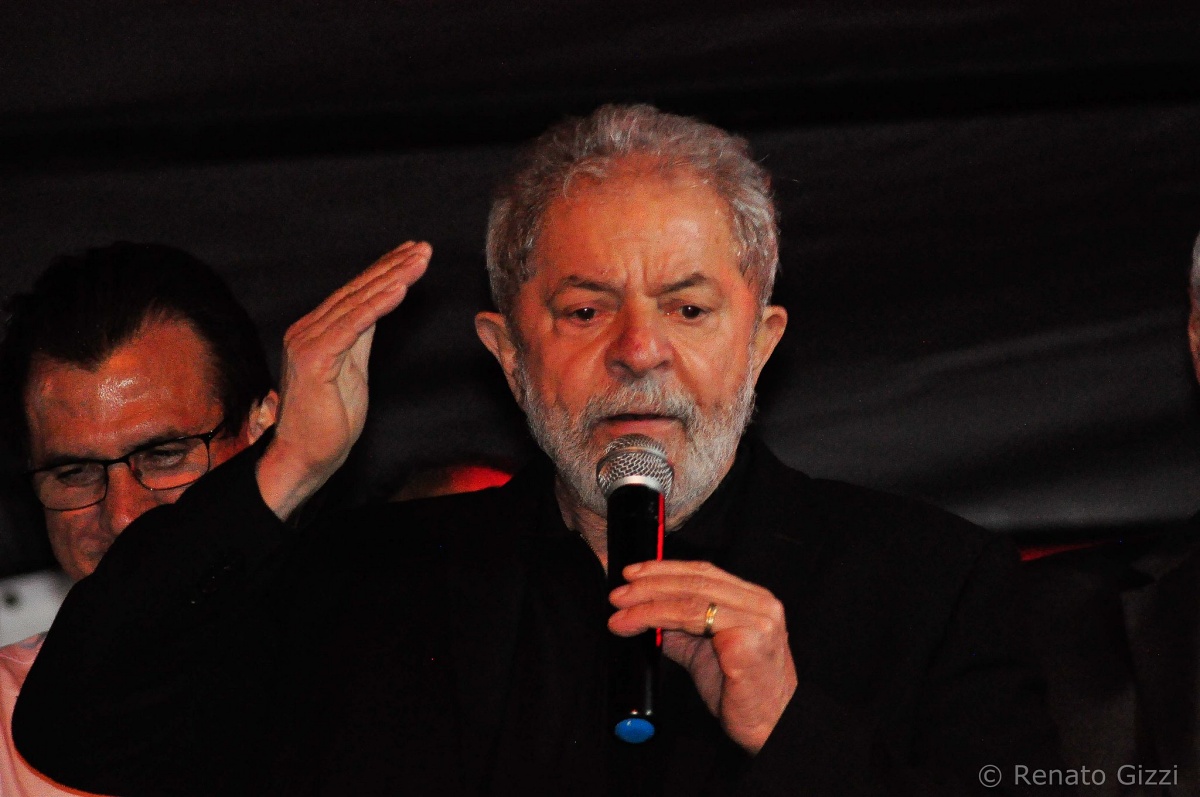
Renato Gizzi • Attribution-NonCommercial (CC BY-NC 2.0) • Flickr


Jan 10, 2023 6:44 PM
Brazil is more than just a copy machine. It has a long history of conservative governments, going back to Portuguese colonial rule that only ended in the 1820s.
It was easy to see the parallels: 6 January 2021 in the United States, 8 January 2023 in Brazil. Two defeated right-wing populists who wouldn’t accept the results: Donald Trump, Jair Bolsonaro. Unruly mobs inspired by the defeated candidates, occupying and trashing major government buildings in the Capitol cities, Washington and Brasilia, demanding the reversal of the electoral verdict. Bolsonaro, first elected in 2018, was explicitly inspired by Trump, first elected in 2016. Bolsonaro’s followers were inspired by the insurrection of 6 January 2021.
The parallels are certainly meaningful. Decades ago, long before the internet and social media, Marshall McLuhan coined the phrase “global village,” meaning that what happens anywhere in the world can be known instantly around the world. McLuhan could scarcely have imagined how his global village has become a global hothouse.
But Brazil is more than just a copy machine. It has a long history of conservative governments, going back to Portuguese colonial rule that only ended in the 1820s, after more than three centuries. And independent Brazil became an empire, with a member of the Portuguese royal family as Emperor. The Empire only ended in 1888 when the aged Emperor Pedro II was replaced by a conservative republic dominated by the ruling classes of the most important states.
This First Republic was interrupted in the 1930s by the rise of Brazil’s first populist leader, Getulio Vargas, who mobilized much of the working class to displace the old ruling elites. Because he supported the United States during World War II, Roosevelt didn’t have him overthrown, to assure its control of Latin America as its “back yard.” But after the war, he was overthrown. He subsequently was elected President again, but committed suicide in office.
Related stories
Next came a decade of a center-right, anticommunist democracy with which the US was satisfied. But when a leftist, João Goulart succeeded to the presidency in the early 1960s, alarm bells went off in both Brazil and Washington. A military coup in 1964 initiated a 20-year military dictatorship that was dedicated to cutting out the “cancer” of communism and creating a safe democracy under military tutelage. The CIA probably had a hand in organizing the coup of 1964, as it did with similar coups in Argentina, Chile and Uruguay in the same epoch.
Democracy finally returned to Brazil in 1985 (again—what a coincidence!—in the same general period as it returned in Argentina, Uruguay and Chile). Elected governments were generally moderate to conservative through the early years of the 21st century.
Finally, after several failed candidacies, the leader of the Workers’ Party (PT), Luiz Inácio Lula da Silva (universally known as Lula) won election in 2002 as the first true leftist to lead Brazil. He had two terms, leaving office at the end of 2010, when he was succeeded by another PT stalwart, Dilma Rousseff, who was less successful and was impeached and removed from office in 2016.
Rousseff’s failure, and the subsequent prosecution and conviction of Lula on corruption charges cleared the field for Jair Bolsonaro’s election in 2018. What followed was Brazil’s first right-wing populist government, with vocal support from Donald Trump.
But the Brazilian Supreme Court threw out Lula’s conviction and freed him in time to run against Bolsonaro in the recent election, which Lula narrowly won in a runoff. Bolsonaro never conceded his defeat, but did not attempt to block the transition. Like Trump, he encouraged his followers to try to reverse the outcome, but without openly advocating violence.
The United States is the power behind the curtain in Brazil and the rest of Latin America. The US became less obsessed with anticommunism after the end of the Cold War. Indeed, Lula met with US approval as he pursued a basically center-left orientation. When Bolsonaro was elected, Trump celebrated, and the two supported each other until Trump lost in 2020.
The Biden administration scarcely hid its distaste for Bolsonaro and its pleasure at Lula’s victory. This partisan tilt in how different American administrations react to foreign governments is something new. Democratic and Republican governments were once equally reactionary in their foreign policies.
Comments

Powered by RoundtableAn AI/DeFi-powered Enterprise Media Operating System. Learn more at Roundtable.io.© Roundtable 2026. By using this site you agree to the Terms of Use and Privacy Policy