


Jul 8, 2026 9:00 PM
Updated Jul 20, 2026 10:50 PM
Washington measures success by military destruction. Tehran measures it through survival, resistance, and a Shia history shaped by persecution and martyrdom.
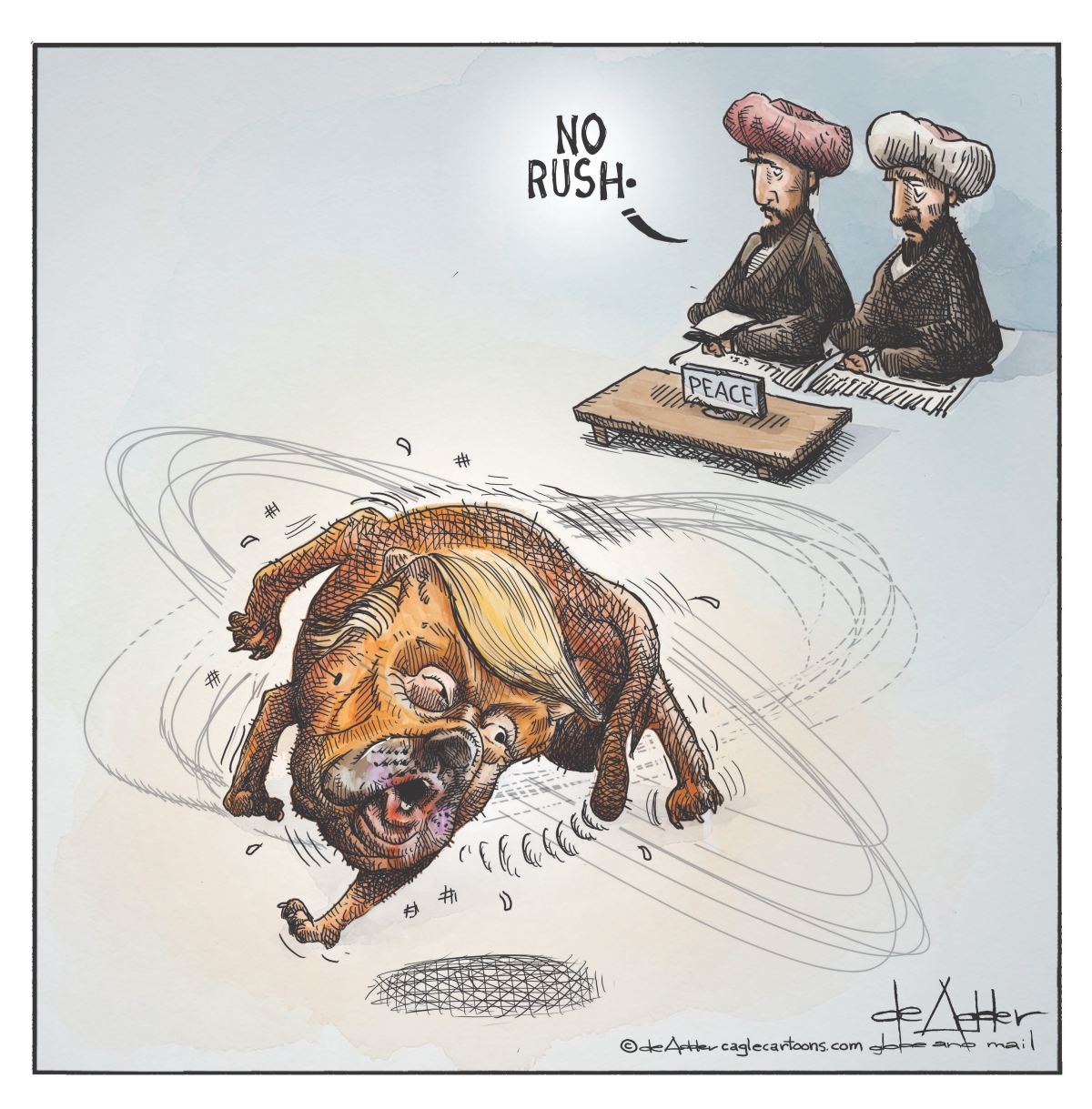
The United States has declared victory over Iran. Iran has declared victory over the United States. Both countries firmly believe what they say. Can we clear up the apparent contradiction here?
Yes. Both countries are using the word victory in the same sense. But they have different criteria, standards, or benchmarks for success. The US’s criteria are military devastation, degraded infrastructure, and severe economic damage. These criteria worked for most twentieth century wars, but not all. Vietnam is a conspicuous exception. In the twenty-first century, the American military took a remedial course in Afghanistan.
In contrast with the American criteria for victory, Iran’s criterion was much like that of the North Vietnamese, not surrendering. In a mismatch of military firepower, long-term survival suffices for success. The three Asian nations mentioned had the same criterion but different foundations for it. Here we are interested only in Iran. The basis for its criterion is the Shia interpretation of history that began in the seventh century after Muhammad died and has continued to today.
Because Muhammad did not expressly designate an heir, several people contended to take his place, the two most important being Abu Bakr and Ali. Abu Bakr was Muhammad’s chief associate in spreading Islam. Ali was Muhammad’s cousin and son-in-law; he appealed to the tribal principle that the closest blood relative should succeed a leader. Abu Bakr was selected by tribal leaders to succeed Muhammad. Ali and his followers felt betrayed and that they had been treated unjustly.
Related stories
Ali’s supporters were named Shi'at Ali (followers of Ali), and later, simply Shia (followers). Those who supported Abu Bakr were named followers of the tradition of the prophet, briefly, Sunni. As the name “tradition” suggests, Sunnis value stability and preserving the status quo. Abu Bakr’s caliphate lasted only two years. The two factions, along with others, continued to compete. Eventually, Ali persevered to become the fourth caliph in 656. But he was assassinated five years later. By blood right Hasan, Ali’s eldest son and Muhammad’s grandson, should have succeeded Ali; but he yielded to the more powerful Muawiya, the fifth caliph. Upon Muawiya’s death, Husayn, Hasan’s younger brother, became caliph. The defining event of Shiite identity occurred when Husayn and seventy of his warriors were ambushed and slaughtered by duplicitous Umayyads at the Battle of Karbala (October 10, 680). He was immediately understood to be a martyr because, as his followers thought, Allah had chosen him as caliph. The ambush was also unjust because his killers violated a treaty with Husayn. The slaughter is memorialized with deep mourning each year on the Day of Ashara.
These historical events have shaped the religious psychology of Shias. From their perspective, history shows that the righteous are continually persecuted by the powerful. Even their minority status—Sunnis outnumber Shiites by about eight to one—is confirmation of the persecution they suffered. What Shiites understand as passion for justice and faithfulness to Allah, non-Shiites understand as resentment and vindictiveness.
From at least the 1950s, the policies of the US and other Western countries supplied additional evidence of persecution. In 1953, the CIA cooperated in the overthrow of Shiite Prime Minister Mohammad Mossadegh. The US supported Mohammad Reza Pahlavi, the Shah of Iran, for almost forty years. Although a Shia, the Shah secularized Iran and embraced the West. Following the Iranian Revolution, Ayatollah Ruhollah Khomeini assumed leadership and relations between the US and Iran became toxic. President George W. Bush declared Iran part of “the axis of evil” in 2002. It should not have been surprising that after suffering under American sanctions for half century, the Iranian leadership in return called the United States the Great Satan. Indeed, Iran has no good reason to trust President Trump who unilaterally withdrew from the Joint Comprehensive Plan of Action (JCPOA) negotiated by the US and Iran, not to mention the other faithless actions of Trump.
For Shiites, suffering is redemptive and brings them closer to Allah. Mazloumiat is the virtue of being oppressed. Harming one’s enemy is part of the pursuit of justice. The current war with the US and Israel confirms Iran’s belief in their persecution. To surrender to the Great Satan would be a sin against Allah. Victory is survival.
American war planners should have known about and appreciated the enduring weight of redemptive suffering for Shias. Seeing things from the other person’s perspective is always well-advised; and “Know your enemy” is not a difficult concept.
As we were preparing to send off this piece, July 8th, we learned that the war has heated up again. Trump has called the cease fire dead and the Iranian leadership “scum” and "sick.” These intemperate words are, worse, ignorant.
Comments

Powered by RoundtableAn AI/DeFi-powered Enterprise Media Operating System. Learn more at Roundtable.io.© Roundtable 2026. By using this site you agree to the Terms of Use and Privacy Policy