


Nov 27, 2025 12:07 AM
Both historically, by dumping arms directly into the country in the 70s and 80s, and currently, by arming countries, the U.S. is complicit in the atrocities taking place in Sudan.
The conflict raging between the Sudan Armed Forces (SAF), the country's official military, and the Rapid Support Forces (RSF), a paramilitary group that was formerly part of the state, is far from the first civil war to engulf Sudan. Nor it is the first time famine and genocide have been declared in the country. Struggling to overcome the legacies of the Trans-Atlantic Slave Trade and colonialism, and on the frontlines of the climate crisis, unless there is a determined effort to finally stem the flow of arms entering Sudan, the Sudanese people don’t stand a chace.
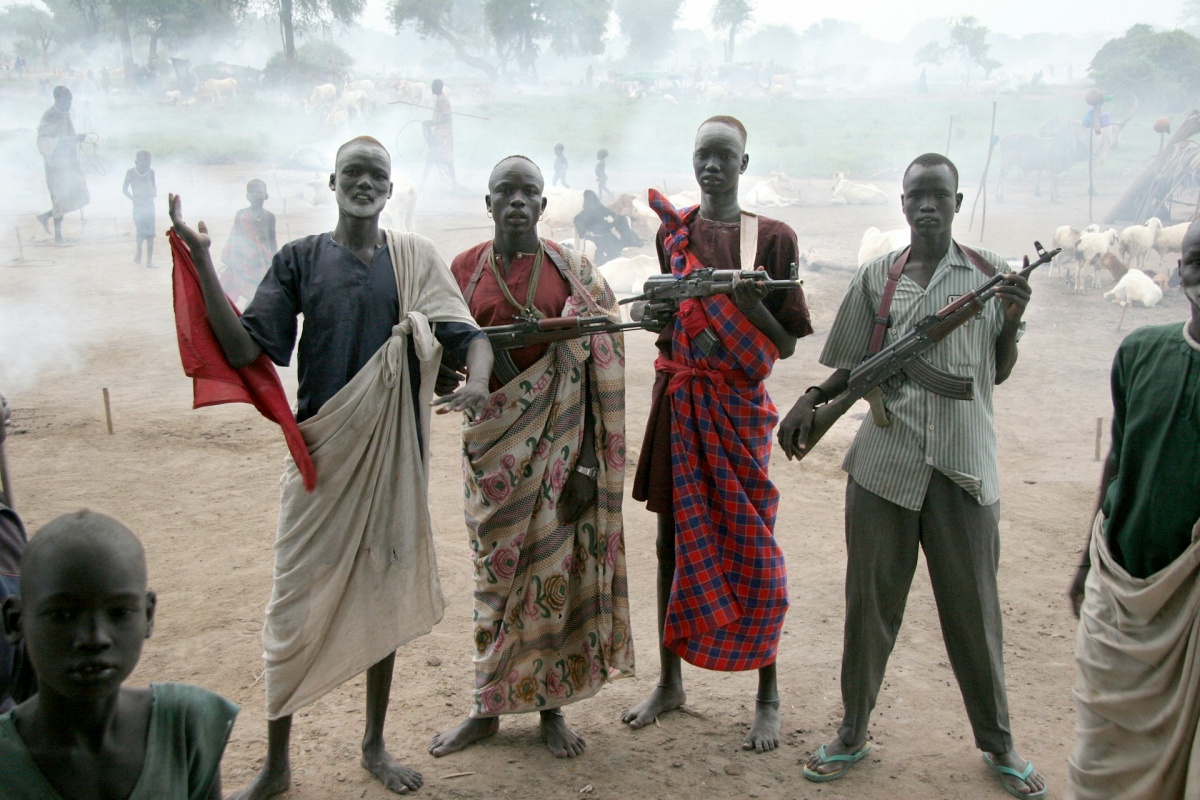
Following 57 years of British-Egyptian colonial rule, by the time Sudan finally achieved independence in 1956, the country was already awash with weapons and embroiled in a civil war. By the1980s, the UK, Germany, the U.S., Russia, China and others had flooded Sudan with so many weapons that the country was dubbed “Africa’s arms dump”.
Brigadier General Omar al-Bashir seized power in 1989 and in 2003, to address rising ethnic tensions, exacerbated by prolonged drought and desertification from climate change, he deployed the militia group, the Janjaweed. Together, with the Sudanese Armed Forces (SAF), they carried out summary executions, including of women and children, partook in mass sexual violence, and looted and burned entire towns and villages, destroying anything—livestock, food, wells, blankets, and clothing—that could support life. By the time the war ended in 2005, their scorched earth campaign had killed hundreds of thousands, and displaced millions. Al-Bashir became the first sitting head of state to be indicted by the International Criminal Court.
Related stories
In 2013, al-Bashir formally integrated the Janjaweed—from then on to be called the Rapid Support Forces (RSF)—into the state as an official state paramilitary force.
The United Arab Emirates was already supporting the RSF who supported their war in Yemen, when, in April 2023, tensions between RSF leader Mohamed Hamdan 'Hemedti' Dagalo and de facto head of state Abdel Fattah al-Burhan, who outed al-Bashir in 2019, boiled over into all-out civil war. By September, the New York Times was reporting that the Emirates were running a covert operation through a remote airbase in Chad to provide military support to the RSF under the guise of bringing in humanitarian aid (the UAE adamantly denies the charge).\
On October 26, 2025, following over 500 days of a siege that had already led to famine, the RSF captured the Northern Darfur capital of El Fasher. "An absolute horror show," said United Nations’ aid chief, Tom Fletcher, upon seeing what he described as a "crime scene" so severe that satellite images exhibit bright-red blotches of blood-soaked sand.
According to the United Nations, some 90,000, including unaccompanied minors as young as three years, have fled El Fasher, gunfire at their feet. Amid widespread sexual violence and extortion, with no safe route for escape, only a fraction of them have been able to make it to the nearest refugee camp in Tawila, about 40 miles away. “People arriving in the camp are mostly disoriented and dehydrated with bruises all over, described Shashwat Saraf, who runs the camp. “Sometimes they do not even remember their names.
With the horrors that accompanied the fall of El Fasher, America and the rest of the world are finally paying attention. But limiting the focus to the RSF, and the UAE’s supply of weapons to them, is short sighted. As the UAE, who denies the charge that supplying weapons to the RSF has pointed out, the SAF too is engaging in war crimes. Armed by China, Iran, Egypt, Turkey, and others, the SAF carries out airstrikes, heavy artillery shelling of civilian areas, and weaponizes humanitarian aid and access. They have also been credibly accused of using chlorine gas on at least two occasions.
Egypt is the second-largest recipient of U.S. military aid after Israel. Like the UAE, they deny funneling weapons into Sudan but have credibly been accused of doing so, including satellite imagery from late 2024 showing Egyptian military convoys moving toward northern Sudan as SAF air raids on civilian neighborhoods were intensifying. This past March, the Institute of War accused Egypt of likely having given the SAF a batch of fighter jets.
According to a March 2025 Washington Post investigation, Turkey who Congress approved a $304 million arms sale to in May 2025, has been supplying weapons to both sides of the conflict. Their largest defense company, Baykar, arms the SAF with drones, and warheads, while Arca, the Turkish company that the Pentagon bought 116,000 rounds of ammunition from in 2024, has dealings with the RSF.
In July 2024, Amnesty International released a report identified shotguns and rifles being used in the war by Turkish gun manufacturers Hatsan, Sarsılmaz, and Derya Silah, all of which have U.S. subsidiaries. HatsanUSA has been importing Turkish weapons into the U.S. since 2012. SAR USA (Sarsılmaz’s U.S. subsidiary) partners with the Galveston, TX Police Department. Derya Silah, whose MK-12 shotgun was identified by Amnesty in use in West Darfur, has a 15,000-square-foot facility in Jacksonville, FL, that imports as well as manufacturers.
Senator Van Hollen and Representative Sara Jacobs have introduced the Stand Up for Sudan Act that, if passed, would block certain arms sales to the UAE until they stop aiding the RSF. In June, Amnesty International sent a letter from more than 30 Sudanese and human rights organizations calling on Senators to support Joint Resolutions of Disapproval (JRD) to block several significant arms sales to the UAE.
Both historically, by dumping arms directly into the country in the 70s and 80s, and currently, by arming countries that are arming the RSF and the SAF, the U.S. is complicit in the atrocities taking place in Sudan. Amnesty International, Senator Van Hollen, and Representative Jacobs are right that we must extricate ourselves from the conflict and leverage our relationships. Immediately, this means stopping arms sales and suspending military aid to the UAE, Egypt, Turkey, and all other countries arming the conflict. Having swam in a sea of guns for too many decades now, the Sudanese people can’t wait another minute.
Comments

Powered by RoundtableAn AI/DeFi-powered Enterprise Media Operating System. Learn more at Roundtable.io.© Roundtable 2026. By using this site you agree to the Terms of Use and Privacy Policy