


Jan 29, 2026 8:58 PM
Updated Jan 29, 2026 9:00 PM
Mike Cole and Peter McLaren: What Can We Learn From Venezuelan Socialism During Hugo Chávez's Presidency?
|Venezuela under Hugo Chávez was an audacious wager against the settled order of things: an experiment in democratic socialism carried out not in seminar rooms or policy journals, but in the daily lives of the poor. Imperfect, volatile, and fiercely contested, it nonetheless stood as a living laboratory of social democracy in the Global South—a state attempting, however unevenly, to bend history toward those long excluded from its promises. This essay traces that experiment through Chávez’s rise, his policies, and his death in 2013, attending to both its aspirations and its contradictions.
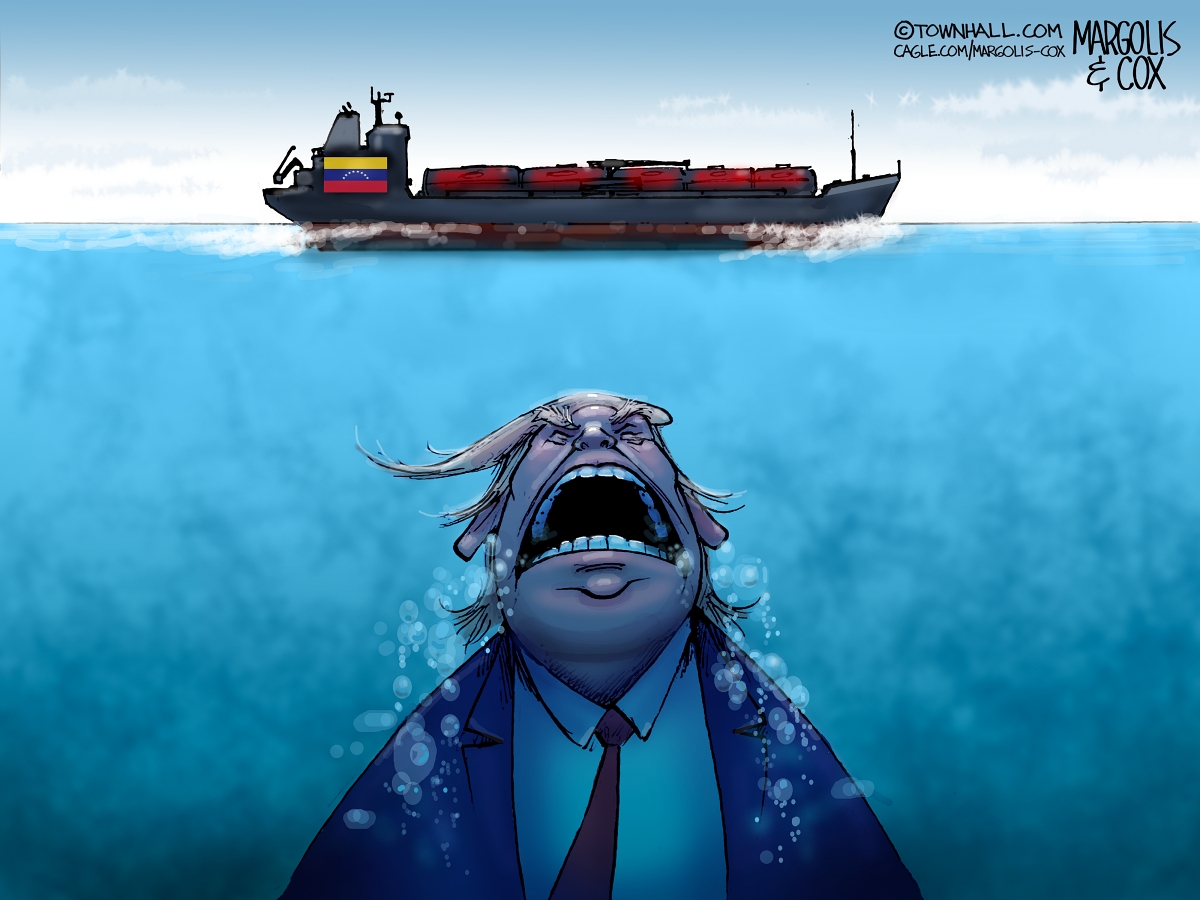
But history does not pause politely at the moment of his death. The Angel of History is driven forward by a storm, his face turned toward the wreckage piling at his feet. In the first week of 2026, another ruin is added to the heap: the illegal seizure of Chávez’s successor, Nicolás Maduro, by the President of the United States, followed by a declaration—as brazen as it is lawless—that he will now “run Venezuela.” This decree arrives after months of aerial assaults on Venezuelan fishing zones, justified by incantations of “narcoterrorism”—a word spoken as spell rather than evidence.
In one chilling episode, a U.S. strike obliterated a small fishing boat at sea. Then the aircraft returned. Survivors clinging to splintered hull and floating debris were struck again—a double tap, the signature of annihilation. Under the laws of war, even war’s most permissive codes, those who are wounded and defenseless are hors de combat. To strike them again is not combat but execution. It is the deliberate erasure of witnesses, the declaration that even survival is a punishable offense. When such acts are normalized, the firmament of law is torn open and the rupture is crowned as command.
Selective Justice as Geopolitical Theater
The Trump administration insists that its pursuit of Nicolás Maduro is driven by an uncompromising commitment to counter-narcotics. But history—merciless in its accounting—exposes this claim as theater. On 8 March 2024, Juan Orlando Hernández, the former president of Honduras and for years a favored ally of Washington, was convicted in U.S. federal court on multiple counts of drug trafficking and weapons conspiracy. Prosecutors demonstrated that hundreds of tons of cocaine flowed through Honduras under his protection, that the state itself had been converted into a cartel corridor. On 26 June 2024, he was sentenced to decades in prison, a juridical acknowledgment that a narco-state had operated in plain sight with U.S. blessing.
Related stories
Yet in December 2025, Donald Trump erased that judgment with the stroke of a pen. Hernández was pardoned and released, recast not as a convicted trafficker but as a victim of a Biden political “witch hunt.” The message could not have been clearer: drug trafficking is intolerable only when committed by adversaries. When practiced by loyalists—by men who served U.S. strategic interests—it becomes forgivable, even forgettable.
This is not law enforcement. It is dramaturgy. Justice is staged abroad and suspended at home; legality is mobilized as a weapon, not a principle. The same administration that theatrically invokes narcotics law to justify the extraterritorial capture of Maduro simultaneously dismantles its own most consequential drug prosecution when it proves politically inconvenient. The contradiction is not accidental—it is structural.
And it does not stop at hypocrisy. By framing selective enforcement as moral crusade, Trump establishes a precedent far more dangerous than any single operation. Sovereignty becomes conditional. Borders become permeable to power rather than law. If Washington may seize a foreign leader under the banner of criminality while absolving its allies of far graver crimes, then other authoritarian regimes are invited to do the same. What is presented as accountability metastasizes into permission.
History will not record this as a war on drugs. It will remember it as the moment law was openly conscripted into empire—and the signal was sent that hypocrisy itself could be sovereign.
No bombs fell on Honduras. No blockades were declared. No sovereignty was annulled by decree. Yet Trump’s seizure of a presidential drug suspect—while pardoning another at home—lays bare his moral farce. Law is wielded not as justice but as spectacle. His pursuit of Maduro, framed as righteous enforcement, functions instead as a signal flare: a green light to other authoritarian powers that borders are negotiable, sovereignty is conditional, and force may be sanctified by convenience. What is sold as accountability becomes an invitation—to invade, to annex, to rule by precedent set through hypocrisy.
Thus Venezuela becomes both target and screen: a nation reduced to a backdrop for imperial theater, where domestic failure is transmuted into foreign fire. When law collapses, power begins to speak in myths—of destiny, of necessity, of hemispheres ordained for rule. And the Angel of History, blown backward into the future, can only watch as the debris rises higher still.
We have much to learn from the history of Venezuelan socialism—not as a finished doctrine, but as a living struggle to place dignity before profit and the poor at the center of political life. Its lessons were unfinished, its failures real, but its aspiration mattered. That vision does not belong to generals, oligarchs, or foreign strongmen. It belongs to the people who carried it in their daily lives. We do not write to absolve or sanctify the politics of the Maduro government. Our concern is elsewhere: with the unfinished achievements of Hugo Chávez’s Bolivarian Revolution and its attempt—fragile, embattled, and incomplete—to carve a socialist horizon within a hostile world. We turn instead to the wreckage and the promise left behind by Chávez’s accomplishments—its brief illuminations, its hard-won gains, and its struggle to wrest socialism from the storm of history before it was buried under the debris.
The Dawn of Austerity/Immiseration Capitalism
Europe, 2014
Under austerity/immiseration capitalism, Europe is witnessing its deepest economic and social crisis since the Second World War. In 2012, more people lost their jobs than in any other year in the last two decades. The situation is particularly severe in southern and eastern European countries. For example, in Greece and Spain, one person in four is officially unemployed, with over half of young people without work (Schwarz, 2013). As Peter Schwarz (2013) puts it:
Despite the social catastrophe they have provoked with their austerity policies, European governments are intent on tightening the fiscal screws. They are no longer limiting themselves to the periphery of the euro zone, but are ever more ferociously attacking the working class in the core countries.
Thus new draconian plans are afoot in Italy, France and Germany, while in the UK, with almost a quarter of the population living in poverty, the ConDem government is systematically attempting to undermine the welfare state, including the National Health Service, social welfare and state education (Schwarz, 2013). As Prime Minister David Cameron said of education: “In welfare reform we’ve been radical, in education almost revolutionary – busting open the state monopoly of education and allowing new Free Schools to start up, and crucially to compete in this global race” (The Official Site of the British Prime Minister’s Office, 2013).
Echoing Margaret Thatcher’s famous speech when she defended neoliberalism by insisting that there is no alternative (TINA), Cameron has declared, “[t]here is no alternative” (to the continuance of ConDem economic policy). This statement needs to be seen in light of what Jean Shaoul (2012) describes as a social counter-revolution, the aims of which are the drastic diminution of workers’ rights and living standards, the latter having been pushed back 30 years.
The nominally social democratic parties of Europe have had little impact on the imposition of austerity/immiseration capitalism. Indeed, they have colluded with it. Since the beginnings of the current crisis in 2007, social democrats have lost elections in Italy, Sweden, the Netherlands and Hungary. Crucially, as Dave Stockton (2013) concludes:
There are no signs that François Hollande in France, Sigmar Gabriel in Germany or Ed Miliband in Britain will fundamentally reverse social democracy’s subservience to capital or ideological decomposition that Lionel Jospin, Tony Blair and Gerhard Schröder carried on for so long.
The United States
In the United States, the situation is spectacularly grim. The US economy has not managed to climb back from its pre-recession level of unemployment. Far from it. Nearly 14 million Americans currently are jobless and things look to be getting worse before they get better (assuming they do get better), in what is increasingly becoming an era of downward mobility for 99 percent of Americans and a new “Gilded Age” for the 1% who constitute the financial aristocracy. There is just one job available for every five individuals looking for work. Those finding jobs are finding pretty lousy jobs, often part-time and with fewer and fewer benefits. But it is appreciably different for those at the top. The richest 10 percent of Americans received an unconscionable 100 percent of the average income growth in the years 2000 to 2007. You would think that this would have driven most people in US cities into the streets howling like a naked Allen Ginsberg with his angel-headed hipsters. But it did not (although it certainly contributed to the rise of the Occupy Wall Street movement). In 2009, the richest 5 percent claimed 63.5 percent of the nation’s wealth. The bottom 80 percent, collectively, held just 12.8 percent.
According to Andre Damon (2013), in the economic downturn that started in 2008, the US economy lost 8.9 million jobs. Since the end of 2009, the economy has added only 5.7 million jobs. But these new jobs pay much less than those lost during the recession and an increasing number of them are part-time. The share of people working part-time has grown from 16.9 percent at the start of the recession to 19.2 percent. The percentage of the population that is employed fell from 63.3 percent in February 2007 to 58.5 percent at the present time. Long-term unemployment has likewise increased significantly. The slashing of government jobs will intensify as a result of the recent passage of $1.2 trillion in “sequester” job cuts. According to the Congressional Budget Office, the imposition of the sequester will result in 750,000 job losses, and increase the unemployment rate by a wide margin (Damon, 2013).
The unprecedented combination of mass unemployment, falling wages and an influx of free money from the Federal Reserve has led to a record-setting surge in corporate profits. Corporations are flush with capital, but are just sitting on it, preferring at this time not to invest their vast windfalls in jobs. Instead of investing in production, major corporations, whose coffers are overflowing and whose stocks are hitting record levels, are paying out dividends and inflating their own stock values (Damon, 2013). CEOs are cashing in on stocks that are soaring in value with the rising market, with a growing number of CEOs reaping individual profits of $50 million or more.
Peter Hudis (2012a) and other Marxists have pointed out that the profits of speculative capital are largely invisible to the average person. But what is very visible to most US citizens are the rising levels of state and federal debt and the accompanying cutbacks and fiscal restraint that come with it. This situation acts as an ideological cover, an alibi or smokescreen, by making people believe that the reason for the declining conditions of everyday life is because the government is spending too much of their money. This is nothing short of an ideological scam. The structural reasons for the current fiscal crisis in state and local governments, including massive layoffs in the private sector and reduced living standards, have been manipulated by the right in their arguments that proclaim that our current fiscal crisis was caused by the government.
By arguing that national debt levels threaten their economic well-being, and by getting voters to agree to cutbacks in government spending and social programs, capital can redistribute value from labor to capital without revealing the very nature of the system – and, as Peter Hudis notes, the right can then more easily blame the crumbling economic system on illegal immigration and other phony reasons. But here we need to understand that in order that capital accumulation proceed apace and capital be able to sustain itself, the relative proportion of value going to capital as against labor must be increased. And we need to understand, as Hudis (2010, 2012a, 2012b) points out, that most of the value produced in capitalism is consumed not by capitalists or workers, but by capital itself, through productive consumption, by capital consuming a greater share of the social wealth. The economic stimulus package that US President Obama installed shortly after he took office in 2009 was insufficient to stem the rise of unemployment. Still, an astronomical amount was pumped into the economy in the years immediately following the 2008 financial crisis – trillions of dollars by the US Federal Reserve and over $1 trillion by the European Union. Hudis notes that this certainly saved global capitalism from going over the cliff, but it proved insufficient to reverse the deeper structural crisis plaguing capitalism itself (Hudis, 2012b).
The whole physiognomy of capitalism has changed, with finance capital requiring a parallel accumulation of political power, with financiers married to an unchecked political oligarchy spawning highly parasitic financialized forms of capitalism.
Redistributing wealth to the poor by means of a Roosevelt-style “New Deal” would offer temporary help for those most immiserated by the current crisis of capital, but this would hardly be in the interests of the oligarchic bourgeoisie, who are currently profiting from the fusion of banking and monopoly capital and who are consolidating their power through an intersection of economic and political forms of domination. As capital moves freely, investing in production or in fictitious forms of capitalism, and as speculators, financier capitalists, stock and bond traders, investment bankers, hedge fund managers, and others help to unleash the forces of capital accumulation globally, and as neoliberalism, with its aggressive pro-market state policies, allows this finance capital to restructure itself, to diversify its forms, to expand its accumulation opportunities and enhance its global reach, then it is safe to assume that the entire ecosystems of the planet have been harnessed exploitatively in a system of capitalist commodity production such that we cannot talk about capitalism at all without talking about capitalism as a world ecology. The whole physiognomy of capitalism has changed, with finance capital requiring a parallel accumulation of political power, with financiers married to an unchecked political oligarchy spawning highly parasitic financialized forms of capitalism such as asset-stripping. The vampire of capitalism has grown a second set of fangs. The long shadow of Nosferatu falls across a systematic ongoing attack on the living standards of the vast majority of the population.
Neoliberal policies are decimating social programs such as education, health care, police and public transit services, spending for the disabled, and other areas of state services and employment. On the other hand, subsidies to corporate elites in the form of the 2008 TARP bailout are given urgent priority, while officials speak of the need to cut back on educational spending.
21st Century Socialism in the Making in Venezuela – an Alternative to Neoliberal Capitalism
All this begs the question: “Is there a viable alternative to neoliberal capitalism?” In 1998, President Hugo Chávez won the presidential elections in Venezuela by a landslide. At first, Chávez expressed an interest in Tony Blair’s “Third Way,” only to regret this soon after. As he put it in Time magazine in 2006: “I naively took as a reference point Tony Blair’s proposal for a ‘third way’ between capitalism and socialism – capitalism with a human face” (Pabian, 2008). Following his first election victory, Chávez’s views dramatically changed. Maria Paez Victor (2009) concisely summarizes Chávez’s impact:
Immediately the elites and middle classes opposed him as an upstart, an Indian who does not know his place, a Black who is a disgrace to the position. Hugo Chávez established a new Constitution that re-set the rules of a government that had been putty in the hands of the elites. Ratified in overwhelming numbers, the Constitution gave indigenous peoples, for the first time, the constitutional right to their language, religion, culture and lands. It established Human Rights, civil and social, like the right to food, a clean environment, education, jobs, and health care, binding the government to provide them. It declared the country a participatory democracy with direct input of people into political decision making through their communal councils and it asserted government control of oil revenues: Oil belongs to the people.
Chávez stressed the importance of “development from below” which could be achieved through the democratization of the workplace by way of workers’ councils and a major shift of ownership of production, trade and credit in order to expand food production and basic necessities to the poor who inhabit the “internal market.” Once President Chávez was able to control the oil industry, his government was able to reduce poverty by half and extreme poverty by 70 percent. Public pensions rose from 500,000 to over two million. Chávez helped turn Venezuela from being one of the most unequal countries in Latin America to being the most equal in terms of income after Cuba. Under the naked thrall of neoliberal capitalism, the United States has become one of the most unequal countries in the world.
Capitalism works through a process of exchange-value, whereas Chávez was more interested in the process of communal exchange – that is, to cite but one example, exchanging oil for medical care in a program with Cuba in which Cuban doctors were brought into Venezuela and were set up in various barrios.
Chávez followed the principle of “buen vivir,” which can be translated as “to live well.” But this term, which has indigenous roots, is very different from the North American term, “the good life.” Buen vivir requires that individuals in their various communities be in actual possession of their rights and able to exercise their responsibilities in the context of a respect for diversity and in accordance with the rights of ecosystems. It’s about social wealth – not material wealth.
One of us (McLaren) was privileged to be a guest several times on Alo Presidente, once sitting next to Ernesto Cardinal. I listened to Cardinal speak eloquently about Chávez, and Chávez’s dream of bringing humanity together through a deep spiritual love. I attended meetings of the misiones, social programs in health, education, work and housing, set up by Chávez when he came into office in 1999 to help the poor to become literate, to finish high school, to organize their communities and to get medical attention. Misiones involved citizen-and worker-managed governance and helped dramatically reduce poverty throughout Venezuela. These initiatives spanned education (Mission Robinson, Mission Ribas, Mission Sucre), the environment (Mission Energia), food and nutrition (Mission Mercal), science (Mission Ciencia), socioeconomic transformation (Mission Vuelvan Caras), health care (Mission Barrio Adentro), housing (Mission Habitat), indigenous rights (Mission Guaicaipuro), land reform (Mission Zamora), rural development (Mission Vuelta al Campo, Mission Arbol), identity rights (Mission Identitdad), civilian militia (Mission Miranda) and culture (Mission Corazon Adentro).
In 2005, when President Chávez offered residents of the Bronx a new type of program to heat homes, it was ridiculed as a cheap publicity stunt in the US media. Chávez was using the profits from his nation’s rich oil reserves to enact social spending programs, and was offering residents of the Bronx the same deal, which meant he would provide home heating oil to economically disadvantaged residents at a major discount – through Citgo – provided the savings that were made were reinvested into programs that benefitted the poor. Veteran Congressman José Serrano has since voiced his praise of Chávez for instituting this program in his district.
In 2006, when one of us (McLaren) was denounced by a right-wing organization as UCLA’s “most dangerous professor” and the organization offered to pay students $100 to secretly audiotape my classes, or $50 to produce notes from my lectures, it was the Chavistas who first rallied to my support at the World Educational Forum in Caracas. I will never forget the solidarity.
The other writer of this article (Cole) remembers the first visit to a local bar in Caracas. From the bustle and vibe emanating from inside, I expected to find a lot of noisy male football supporters shouting at a TV screen. Instead, I encountered women and men from the local barrio engaged in serious and passionate discussions about the president and the direction of the revolution.
Another of Cole’s abiding memories is when, at the start of one of several seminars he gave at the Bolivarian University of Venezuela in Caracas (UBV), a caretaker arrived to unlock the room. Instead of going on to other chores, he sat down, listened and actively contributed to the discussion. A lively interchange of views ensued about the meaning of socialism.
Since more than 70 percent of university students came from the wealthiest quintile of the population, Chávez instituted the Bolivarian University System, in which the students themselves were able to participate in the management of their institution. Education was designed to promote citizen participation and joint responsibility, and to include all citizens in the creation of a new model of production that stressed endogenous development, that is, an economic system that was self-sufficient and diversified. Misiones were created to create a social economy and a diversity of production, and designed to meet the needs of Venezuela’s poor and to counteract Venezuela’s oil dependency. Higher education was de-concentrated from the urban centers in order to assist rural communities. I (McLaren) remember how much I enjoyed teaching at the Bolivarian University of Venezuela, located near the Central University of Venezuela -part of Mission Sucre, which provides free higher education to the poor, regardless of academic qualification, prior education or nationality – housed in the ultra-deluxe offices of former PDVSA oil executives that Chávez had fired for their attempt to bring down the government. College enrollment doubled under Chávez. Student projects were insolubly linked to local community improvement. At a graduation ceremony in the early years of the university, Chávez famously said: “Capitalism is machista and to a large extent excludes women, that’s why, with the new socialism, girls, you can fly free.”
Chávez set up a structure to offer employment for the graduates of UBV through a presidential commission that enabled new graduates to be placed around the country in development projects. The graduates would receive a scholarship that was slightly above the minimum wage. Some of these projects involved Mision Arbol (Tree Mission), recovering environments damaged by capitalism such as the Guaire River. When I (McLaren) was first invited to Venezuela by the government to help support the Bolivarian revolution, I recall speaking at the Central University of Venezuela. The students who attend this university are mainly the children of the ruling elite. Not many were Chavistas, well, at least not when I spoke there. After I announced to the students present that I was a Chavista (Soy Chavista!), I was told later that some students in retaliation had ripped my portrait off of a mural students had created of critical theorists. Yet I was able to have very good conversations with some of the students there in the years that followed.
Education under Chávez was education for the creation of a “multi-polar” world. For Chávez, education either meant giving life support to capitalism’s profit-orientation in such a way as to bolster the remains of the welfare state, or education meant recreating a socialism for the 21st century. Chávez was not concerned with incorporating the oppressed within the liberal-democratic framework, but rather in changing the framework through the reorganization of political space through education, that is, through making the state function in a non-state mode by reorganizing the state from the bottom up through the education and initiatives of the popular majorities. Socialism, Chávez understood, could be sustained only by the subjective investment of those involved in the process.
Under Chávez, Venezuelan education was not only geared to help provide universal access to education (as Venezuela’s poor had been shut out for generations), in particular, to those traditionally disadvantaged and/or excluded groups such as the urban and rural poor, those of African descent, and indigenous communities, but to help prepare the next generation of Venezuelans to enhance the conditions of possibility of a socialist alternative to capitalism. Venezuelan education aspired to be a combination of Freirean-influenced critical and popular education, where horizontal and dialogic (subject-subject) relationships were pursued using holistic, integral and transdisciplinary pedagogies and methodologies based on andragogical principles for a liberating and emancipatory education.
Under Chávez, little attempt was made to distance educational reform from a politicized approach. Education reform clearly directed itself towards an organic form of endogenous socialist development of the social-community context as part of a larger struggle for a participatory-protagonistic democracy. Against the privatization of education and approaches hegemonized by the neoliberal education industry, and its consumerist role grounded in egoism, competition, elitism and alienation, Venezuelan education aspired to be humanistic, democratic, participatory, multi-ethnic, pluri-cultural, pluri-lingual and intercultural.
The development of a critical consciousness among the population was crucial, as was an integration of school, family and community in the decision-making process. Venezuelan education favored a multidisciplinary approach linking practice and theory, curriculum and pedagogy, with the purpose of creating social, economic and political inclusion within a broader vision of endogenous and sustainable development, and with the larger goal of transforming a culture of economic dependency to a culture of community participation. This approach, for example, underwrote the courses at UBV where mentorship was provided to students who undertook projects in their local communities. For instance, community health students worked with doctors within the Barrio Adentro health mission, and legal studies students established a community legal center to advise and support families with civil law issues, while education students worked in local schools with a teacher-mentor (Griffiths and Williams, 2009). And in the evening, during classes at the UBV, students discussed theory “linking back into and arising from their experiences in the project” and thus became part of a broader project of social reconstruction (Griffiths and Williams, 2009).
Of course, there were obstacles to be overcome with this approach. For example, how do you create an approach that addresses the political formation of students in a way that is not simply a formalistic and uncritical response to official ideologies that support socialist objectives? Of course, these are not challenges that faced Venezuelan education under Chávez only, but are the challenges of critical pedagogy in whatever context it is taken up and engaged.
Despite these challenges, education under Venezuela prospered. Over 93 percent of Venezuelans aged 15 and over can read and write. The Venezuelan government has more than 90 institutions of higher education and remains committed to the idea that every citizen should be able to have a free education. Education was conceived within an integrationist geo-political conception of Latin American countries in a way that enabled Latin Americans to challenge economic dependency fostered on them by the imperialist powers, to resist colonialist globalization projects, and to create spaces where students could critically analyze local problems from a global perspective (Muhr and Verger, 2006).
Under Chávez’s leadership, the Venezuelan government invested significantly in all educational levels. In fact, between 1997 and 2002 – under Chávez – all social classes benefitted from an increase in access to higher education. Chávez refused to follow the neoliberal strategy of finance-driven reforms – i.e., transferring fiscal and administrative responsibilities to either lower levels of government or to individual schools for cost-saving and efficiency purposes – thereby challenging the dictates of the Washington Consensus policies (Muhr and Verger, 2006). He refused a shift of the cost of education to the “users” through privatization, which would simultaneously instrumentalize “participation” as pecuniary and non-pecuniary household/community contributions (Muhr and Verger, 2006). Chávez ‘s approach of municipalización refused to isolate universities from the rest of society and geographically de-concentrated the traditional university infrastructure and took the university to where the people are, to municipalities that had traditionally been underserved as well as factories and prisons, achieving what was known as “territorial equilibrium,” i.e. harmonic development across the entire territory at the demographic, productive and environmental levels (Muhr and Verger, 2006).
Chávez was not about to let the business sector set the priorities for public education and thereby colonize the commons with the ideas of the transnationalist capitalist class in which the knowledge most valued is that which is the most exploitable in a capitalist economy, and where knowledge becomes fragmented, instrumentalized and narrowly specialized and is destined to produce self-alienating subjectivities. Consequently, Chávez created integral and permanent municipal education spaces called aldeas universitarias or “university villages,” immersing higher education in concrete contextual geographies (geo-spatial, geo-historical, geo-social, geo-cultural, geo-economic) in contrast to the model favored by neoliberal economics, that is, an economicist “efficiency” rationale or an approach that offers marketplace specialization (Muhr and Verger, 2006). The internationalization of Venezuelan education is not market-based, but based on the logic of co-operativism, culture and exchange and forms an integral part of a broader counter-hegemonic proposal for regional integration – the Alternativa Bolivariana de las Américas (ALBA), replacing liberal “comparative advantage” with a “co-operative advantage” (Muhr and Verger, 2006).
Although I (McLaren) met President Chávez half a dozen times, I only had one conversation with him – in the Miraflores Palace. He thanked me for my work in critical pedagogy, and for my willingness to share some of my work with those in the Bolivarian revolution. But he reminded me that I have as much to learn from the people of Venezuela, and that I needed to maintain that attitude in my work. He turned out to be right. After our brief conversation, Chávez turned to the young female secretary who was working in the office where we had our meeting. In a friendly tone, he asked her questions about why she was working in the office and not attending university. He encouraged her to pursue her educational opportunities to the fullest and offered her his advice.
Much has been said of the success of Venezuela’s creation of more than 100,000 worker-owned co-operatives consisting of more than 1.5 million workers, and these include both agricultural co-operatives and manufacturing co-operatives. Accompanying this success has been the creation of more than 16,000 communal councils that facilitate the development of infrastructure projects advanced by community participants. But it is also important to note that Venezuela has done much to address gender inequities (Leech, 2012). In accordance with the Venezuelan constitution (Article 88), the Venezuelan government pays women for housework they perform in their homes. Approximately 100,000 poverty-stricken housewives receive 80 percent of the national minimum wage (Leech, 2012). Furthermore, programs have been created to provide education and training to women who are living in poverty. In 2008, Venezuela surpassed Chile and Costa Rica to become the country with the second-lowest level of inequality in Latin America (Cuba has the lowest level).
Hugo Chávez’s demonization and ridicule in the Western press was lamentable, but understandable. He took on President George W. Bush, whom he called “Mr. Danger,” and showed that a more humane world could be had through a democratic socialist alternative. For weeks following Chávez’s untimely death on March 5, 2013, newspaper stories condemned his dictatorial brutality, thereby tarnishing the legacy of one of the world’s most ardent visionaries of a world outside of capitalism.
Opposition to the Bolivarian Revolution
La Salida
Unsurprisingly, all these progressive developments, both social democratic and socialist in character, have been met and continue to be met with fierce opposition from neoliberal capitalists and their supporters. Unrest in Venezuela at the time of writing (spring 2014) has gained a large amount of publicity worldwide, much of it hostile.
The aim of the unrest, organized by La Salida (The Exit), is specifically to oust the democratically elected Maduro government, and has taken the form of attacking and destroying the symbols of the Bolivarian revolution such as community televisions, housing misiones,ambulances, the environment ministry, public transport and PDVSA (the state-owned oil and gas company) trucks. In addition, roads from farming areas to urban areas have been blocked to stop goods being transported, and food trucks have been burned (Pearson, 2014).
As the president himself points out, anti-government protestors have physically attacked and damaged health care clinics, burned down a university and thrown Molotov cocktails and rocks at buses. Other public institutions have also been targeted, such as the Supreme Court, CANTV (the public telephone company) and the attorney general’s office (Maduro, 2014).
Only in Venezuela do the poor celebrate and the rich protest.
The headquarters of the Venezuelan government’s housing mission in Caracas and an adjacent pre-school were also attacked. The housing mission is one of the government’s largest social projects, aiming to construct three million homes by 2019 (Venezuelans living below minimum wage are eligible to receive free housing under the mission, while low income families receive heavy government subsidies for the homes) (Mallett-Outtrim, 2014).
Tamara Pearson (2014) has pointed out that the aim of the opposition is:
not just to intimidate, but to stop government institutions and social organizations on a practical level from getting on with other things. The violent opposition sectors are not farmers, bus drivers, teachers, producers of anything, builders, etc., so they can’t strike in order to bring things to a halt, they can only use violent barricades to stop others from working.
One group of barricaders strung up galvanized barbed wire 1.2 meters high so that motorcycle riders who tried to pass would be decapitated. This actually happened to two people (Dutka, 2014).
Luis Britto García (cited in Lovato, 2014) has quoted the Colombian novelist William Ospina who states that in the entire world, the rich celebrate and the poor protest. Only in Venezuela do the poor celebrate and the rich protest. Maduro sums up his view of the current situation in a similar fashion: “Today in Venezuela, the working class is in power: it’s the country where the rich protest and the poor celebrate their social wellbeing” (cited in Milne and Watts, 2014).
While the violence was instigated by the opposition, and it is they who have perpetrated the vast majority of violent acts, it needs to be pointed out that Maduro and the attorney general have acknowledged the responsibility of the National Guard and the Bolivarian police in the death and mistreatment of some demonstrators (Ianni, 2014) and Maduro has pledged:
A very small number of security forces personnel have also been accused of engaging in violence, as a result of which several people have died. These are highly regrettable events, and the Venezuelan government has responded by arresting those suspected. We have created a Human Rights Council to investigate all incidents related to these protests. Each victim deserves justice, and every perpetrator – whether a supporter or an opponent of the government – will be held accountable for his or her actions (Maduro, 2014).
US Intervention in Venezuela
Maduro (cited in Milne and Watts, 2014) accuses the United States of using the ongoing street protests as an attempt at a “slow-motion” Ukraine-style coup against his government to “get their hands on Venezuelan oil.” Maduro describes current events in Venezuela as a “revolt of the rich,” adding that it will fail because the Bolivarian revolution is more deeply rooted than in 2002 (cited in Milne and Watts, 2014). In that year, there was a coup that temporarily ousted Chávez, who was very soon reinstated by the will of the people.
“I have told President Obama: we are not your backyard anymore.” – Nicolas Maduro, president of Venezuela
Ed Vulliamy (2002), writing in the Observer newspaper, argues that his newspaper established shortly after the coup that it “was closely tied to senior officials in the US government . . . [who] have long histories in the ‘dirty wars’ of the 1980s, and links to death squads working in Central America at that time.” According to officials at the Organization of American States “and other diplomatic sources,” Vulliamy goes on, “the US administration was not only aware the coup was about to take place, but had sanctioned it, presuming it to be destined for success.” Moreover, “the visits [to the White House] by Venezuelans plotting a coup . . . began . . . several months ago,” and went on until weeks before the coup. The “crucial figure around the coup,” Vulliamy states, was Elliot Abrams, who was senior director of the National Security Council for “democracy, human rights and international operations,” a leading theoretician of “Hemispherism,” which “put a priority on combating Marxism in the Americas.” It led to the coup in Chile in 1973, Vulliamy concludes, and sponsored regimes and death squads elsewhere in Latin America.
Venezuela, Maduro argues, is currently facing the “unconventional war that the US has perfected over the last decades,” via US-backed coups – from 1960s Brazil to Honduras in 2009. As he puts it, the aim of the opposition is to paralyze “the main cities of the country, copying badly what happened in Kiev, where the main roads in the cities were blocked off, until they made governability impossible, which led to the overthrow of the elected government of Ukraine.” (cited in Milne and Watts, 2014). He goes on:
[t]hey try to increase economic problems through an economic war to cut the supplies of basic goods and boost an artificial inflation . . . . To create social discontent and violence, to portray a country in flames, which could lead them to justify international isolation and even foreign intervention (cited in Milne and Watts, 2014).
He then refers to 100 years of intervention in Latin America and the Caribbean: against Haiti, Nicaragua, Guatemala, Chile, Grenada and Brazil and the aforementioned 2002 coup attempt against Chávez by the Bush administration. He concludes, “[w]hy does the US have 2,000 military bases in the world? To dominate it. I have told President Obama: we are not your backyard anymore” (cited in Milne and Watts, 2014).
Maduro’s points remind us how Wikileaks cables, Edward Snowden’s exposés and US state department documents reveal US plans to “divide,” “isolate” and “penetrate” the Chávez government, along with extensive US government funding of Venezuelan opposition groups over the past decade (cited in Milne and Watts, 2014). Seumas Milne and Jonathan Watts (2014) point out that some were via agencies such as USAID and the Office for Transitional Initiatives – including $5 million of overt support in the current fiscal year. They also note that Maduro’s remarks follow admissions in April 2014 that USAID covertly funded a social media website to “foment political unrest and encourage ‘flash mobs’ in Cuba under the cover of ‘development assistance'” which White House officials acknowledged were not “unique to Cuba” (Milne and Watts, 2014).
The goal is “to transform the extractionist model into a productive state without becoming a predator to nature, the struggle to transform our consumerist culture, to reclaim life on a human scale and promote self-sustainable community.”
Maduro cannot forget that his primary goal is to assist the defenders of socialism in mobilizing against the opposition and to continue the deepening of socialism in Venezuela. The struggle against the counterrevolution in Venezuela will not only need to be won on the streets but also in the media where the social imagination of Venezuela is currently being fashioned by the opposition’s manufactured lies: “hence the need for responding in an appropriate manner by creatively using not only all the traditional media (the press, the radio, television), but also the great opportunities given by the social networks” (Boron, 2014).
If Venezuela were to fall to the fascists in the opposition, then other Latin American democracies would be targeted with the same strategies soon after – Ecuador, Bolivia, Argentina, Brazil and Uruguay. Arlenys Espinal-Aporrea (2014) captures the essence of the struggle ahead when he argues that the goal is “to transform the extractionist model into a productive state without becoming a predator to nature, the struggle to transform our consumerist culture, to reclaim life on a human scale and promote self-sustainable community, or else what are the communes for?”
Maduro is in no doubt about the permanency of the Bolivarian revolution: “The people will decide until when I can be here. Be certain that if it is not me it will be another revolutionary. What will be indefinite is the popular power of the people.” As he puts it, “When Chávez said ‘the 21st century is ours’ in 1992 . . . ‘it was a romantic idea. Today it is a reality and no one is going to take it away from us'” (cited in Milne and Watts, 2014).
Conclusion
Writing about Europe, Peter Schwarz concludes:
The only alternative to a relapse into mass poverty and barbarism is a socialist program. The banks and major corporations must be nationalized and placed under democratic control. Production must be reorganized so that it serves the needs of society and not the profit interests of financial speculators and parasites. Such a program can be achieved only through the united struggle of the European and international working class. It requires the formation of workers’ governments and the establishment of the United Socialist States of Europe (Schwartz, 2013).
The path to socialism entails participatory democracy. In representative democracies in place throughout most of the world, political participation is by and large limited to parliamentary politics, which represent the imperatives of capitalism, rather than the real needs and interests of the people. Parliamentary politics and representative democracy are still major players in Venezuela, of course. There are, of course, numerous extra-parliamentary movements and processes throughout the world. Participatory democracy, on the other hand, involves direct decision-making by the people. Twenty-first century democracy must be participatory democracy and part of a program for the construction of 21st century socialism.
Chávez made it clear that he was not arguing for the reform of the Venezuelan capitalist state, but its overthrow. As he put it, in perhaps his most clearly articulated intention to destroy the existing state:
we have to go beyond the local. We have to begin creating . . . a kind of confederation, local, regional and national, of communal councils. We have to head towards the creation of a communal state. And the old bourgeois state, which is still alive and kicking – this we have to progressively dismantle, at the same time as we build up the communal state, the socialist state, the Bolivarian state, a state that is capable of carrying through a revolution (cited in Socialist Outlook Editorial, 2007).
After his final re-election in October 2012, Chávez declared: “Venezuela will continue along the path of democratic and Bolivarian socialism of the 21st century.”
It is our view that Chávez’s death is a tragedy of immense proportions for socialism and for the Bolivarian revolution. However, 21st century socialism is and must be first and foremost a revolution of the people, as Chávez was well aware. The fact that masses of working people have taken socialism to heart ensures that the revolution he started will not die with him. While democratic socialism may sound utopian in the European context, and positively unimaginable in the United States, there is a viable alternative to the neoliberal model in existence. It is incumbent on the left to think seriously about what can be learned from the Bolivarian revolution. That revolution can provoke us to imagine an alternative to capitalism, whether through forms of freely-associated producers planning and allocating the social wealth, syndicalist and Marxist forms of socialism, or self-governing popular assemblies or autonomous communities.
While some believe we may be entering a new era of epoch-making rebellion, others on the left feel we are merely traversing old symbolic vistas that have proven fraught experiences in practice. No matter which perspective we hold, clearly, the struggle is no longer men in boiler suits or railhead pants versus factory owners in top hats, continental cross ties and double-breasted vests. Or the sans-culottes versus the breech-garbed ruling class. Or financiers with capes and silver-tipped canes exploiting the labor power of fruiters, cobblers and copper miners lugging lunchpails of lost dreams. The struggle is the transnational capitalist class against all those who depend upon wages for their labor.
We need cultures of contestation that are transnational in scope to defeat the capitalist class. Some revolutionary struggles have been more reformist than revolutionary, shutting down revolutionary projects while appearing to support them.
While democratic socialism may sound utopian in the European context, and positively unimaginable in the United States, there is a viable alternative to the neoliberal model in existence.
Revolutionary action today must be grounded in decisions pertaining to which past legacies, which historical determinants, should be used as a basis for action. We have a variety of different experiences that provide us with multiple perspectives from which we can choose. And we have offered the Bolivarian revolution as an example that we, the authors, have experienced as a template for how to renew socialism in the 21st century. In should be stressed at this point that, while the reforms in Venezuela represent a major challenge to US imperial hegemony, and its attendant ideological and repressive apparatuses (Althusser, 1971), and allow the export of socialist ideas and ideals, they are in themselves classic social democracy rather than socialism, somewhat akin to the policies and practice of the post-World War II Labor governments in the UK. What makes Venezuela unique, however, is that whereas these British Labor governments were posing social democracy as an alternative to socialism, and, indeed, attempting to fight off (sporadic) attempts by revolutionary workers to move toward participatory democracy and socialism, Chávez presented these reforms as a prelude to socialism. The creation of the communal councils, communes and workplace democracy are nexuses of power, which are part of a transition process from capitalism to socialism, a process which, in fact, predates Chávez (Ciccariello-Maher, 2013; Cole, 2014).
The challenge of coordinating such revolutionary action in the global north remains a difficult obstacle, especially at a time when there exists a sense of impending destruction due to modern technological advances in weapons of mass destruction, when the security state has achieved such levels of sophistication, and especially when the conventional left has failed to articulate a convincing alternative to neoliberal capitalism in economic as well as world ecological terms.
Today, the most serious of the social movements for economic justice in the United States, such as the Occupy Wall Street Movement, will have no truck with promulgating a mendacious and sanitized history of capitalism, with giving away huge tax breaks for the rich, squandering taxpayer dollars on the pharmaceutical industry by making it illegal for Medicare to bargain for lower drug prices, rescinding financial regulations that enable Wall Street to operate like a Las Vegas casino, and enacting legislation that has put countless numbers of Americans out of work. As they stand, the best of the social movements are preparing us to be reborn with a transmuted consciousness, and taking us to the next step in the pursuit of socialism. But they have not yet created a new space of social emancipation, mainly because we do not know the spacial transformations necessary to prepare us for an alternative to the law of value. And while many of these movements have seen the old vanguard as a hindrance to further social change, they are still wrestling with the forms of organization needed to transform a world stage-managed by a transnational capitalist class. These new social movements are the fore-consciousness of change, whereas what is needed is a change in the subconscious of the historical agent; that is, we need to raise the question of how we can gain an acceptance of the “deep mind” for the fact that a social universe outside of labor’s value form is necessary for the very survival of humankind, not to mention extra-human life.
Some aspects of our goal must remain unspecified. Our path must remain trackless, our cry soundless and our destination uncertain, or else we will fall into the trap of imposing a blueprint, or re-coding old formulae. But at the very least, we have to attune ourselves to history’s migratory urge to sublate that which we negate as we struggle to create a world less populated by human suffering, exploitation and alienation. We can build upon the vestiges of past struggles and move into an entirely new terrain of resistance and transformation. We believe the best example at present to be the ongoing struggle of the Bolivarian revolution.
The pent-up force of the unmet shadow of capitalism has the potential to destroy the very form of our past struggles. New modes of organization are called for. The political imagination must be reconfigured to the challenges of the present. However, we must recover from our past what that past regarded as utopian and thus was rejected by our predecessors and offer new forms of rebellion that can better ensure that such knowledge will re-impact the present more effectively.
While we wrestle with replacing immiseration capitalism with socialism, and all that entails – i.e., direct democracy, participatory democracy, grassroots democracy, autonomous communities – we maintain that such a struggle acquires a certain valence of authenticity, and the example of 21st century socialism in the making in the Bolivarian Republic of Venezuela provides just that.
We, the authors (Cole and McLaren) wrote the above comments in 2014. What happened in Venezuela since then has been tragic. The dream of Chávez’s Bolivarian revolution did not come to fruition for a host of intertwined reasons—structural, political, and external. At its core, the project was ambitious: to wrest Venezuela from the grip of entrenched oligarchies, redistribute wealth through oil revenues, expand social services, and create a participatory democracy rooted in the barrios. It sought not only material justice but a transformation of political culture itself, challenging centuries of exclusion and hierarchies that had shaped Venezuelan society.
Yet structural realities constrained the vision. Venezuela’s economy was overwhelmingly dependent on oil—a volatile commodity subject to global markets. The state’s social programs and redistributive initiatives flourished when oil prices were high but became fragile when prices collapsed. This dependency made the revolution exceptionally vulnerable to external shocks and internal mismanagement alike. Bureaucratic inefficiency, corruption, and centralization of power eroded the very institutions Chávez claimed to empower. In the name of popular sovereignty, decision-making increasingly concentrated in the executive, limiting the capacity for sustainable, bottom-up governance.
Externally, Chávez’s Venezuela was besieged. The United States and regional elites opposed his project from the start, using economic pressure, media campaigns, and support for opposition movements to undermine legitimacy. Sanctions and market manipulation strangled resources, while international isolation meant reliance on strategic allies like Russia, China, and Cuba, tethering the revolution to geopolitical calculations beyond Venezuela’s control.
As Sirantos Fotopoulos (2026) notes, the Bolivarian project genuinely alleviated suffering that Venezuela’s liberal order had long ignored, but it did so atop unresolved structural flaws. Redistribution relied on oil rents rather than a transformed productive economy, leaving social gains exposed to commodity shocks. Nationalizations reproduced bureaucratic control instead of democratic worker power, while price and currency controls distorted incentives and hollowed out domestic production. Political authority increasingly centralized in the executive, treating dissent as a threat rather than a corrective.
Fotopoulos (2026) points out that these contradictions predated Nicolás Maduro but intensified under his rule. When oil prices collapsed after 2013, the government responded with monetary expansion, tighter controls, and tolerance for institutional decay. Oil production imploded, hyperinflation destroyed wages, shortages spread, and infrastructure collapsed—well before the harshest sanctions were imposed, undermining claims that external pressure alone caused the crisis.
Politically, crisis management relied on repression rather than participation. Electoral credibility eroded, institutions were bypassed, dissent criminalized, and popular legitimacy replaced by coercion and patronage. The outcome was not only economic collapse but social disintegration, marked by mass emigration.
Venezuela’s collapse reflects neither the inherent failure of socialism nor external sabotage alone, but as Fotopoulos (2026) underscores, the failure of a state-centered, rent-dependent reform that never transformed relations of production. Workers remained recipients, not governors, of economic power; planning was bureaucratic, not collective. Extractive rents combined with centralized authority produced fragility, corruption, and institutional self-preservation. Anti-imperialism, severed from internal democracy, proved insufficient: without accountable governance and material improvement, revolutionary legitimacy could not survive.
In the words of Fotopoulos (2026):
The Venezuelan case also exposes the limits of anti-imperialism when it is decoupled from internal democracy. Opposition to foreign intervention and sanctions is not only justified but necessary, yet it cannot substitute for accountable governance or excuse domestic repression. A politics that treats popular hardship as collateral damage in a geopolitical struggle ultimately forfeits the allegiance of the very class it claims to represent. International solidarity cannot be sustained through slogans alone; it depends on the credibility of a project that demonstrably advances human flourishing. … Redistribution without structural transformation is reversible. State ownership without democratic control is brittle. Charismatic leadership without durable institutions invites collapse once the leader is gone. And economic sovereignty built on a single commodity is not sovereignty at all but dependency by another name. Venezuela fell not because it challenged global capitalism, but because it did so incompletely, inconsistently, and without building the material and institutional foundations necessary to endure crisis.
None of this erases the significance of the Bolivarian moment or the real hopes it generated. On the contrary, its tragedy lies precisely in the distance between what it promised and what it ultimately delivered. For those committed to emancipatory politics, the Venezuelan collapse should not function as a warning against ambition, but as a reminder that genuine transformation requires more than redistribution, more than rhetoric, and more than control of the state. It requires the patient construction of democratic economic power from below, capable of surviving both external pressure and internal failure. Without that, even the most inspiring revolutions remain vulnerable to their own contradictions.
Finally, the revolution faced a paradox of expectation. Chávez promised radical transformation in a deeply unequal society, but the leap from revolutionary aspiration to everyday political reality proved difficult. Mobilizing millions was achievable in rallies and campaigns; embedding a participatory, self-sustaining governance system was another matter. Social gains were real—poverty rates fell, literacy rose, healthcare expanded—but the institutional foundations necessary to secure these gains for the long term were never fully established. When economic and political crises compounded, the revolutionary state lacked resilience.
In the end, the Bolivarian dream faltered not because its ideals were empty, but because they collided with the harsh arithmetic of global capitalism, entrenched domestic power, and the limits of human governance. Chávez inspired hope, mobilized millions, and redefined political imagination in Latin America—but his revolution was never insulated from the world it sought to transform, and the very forces it sought to overcome—structural inequality, external hostility, and institutional fragility—ensured that the dream remained unfinished.
It is important to emphasize that Venezuela did not collapse. It turned instead to Russia and China—seeking partners willing to provide lifelines: military aid, economic support, investment, and infrastructure.
What the United States imagined as pressure became, paradoxically, propulsion—driving Venezuela into alliances that countered Washington’s influence and hardened its sovereignty against coercion. Survival dictated strategy; desperation dictated diplomacy. In trying to force obedience, the U.S. created Venezuelan resilience. In trying to isolate, it strengthened dependence on rival powers. The lesson, written in oil, currency, and armed readiness, is unambiguous: power imposed without legitimacy invites resistance, and sanctions wielded without foresight can become the architects of the very alliances they aim to prevent.
Now we depend once more on those most ravaged by capitalism—to rise, to remember, and to reclaim that vision from the grasp of a crypto-fueled pretender and self-crowned king, Donald Trump, who traffics in force where he lacks legitimacy, and in spectacle where he fears accountability. History has always turned on such moments, when power overreaches and the people must decide whether memory or domination will prevail.
We must remember that a president is not a king, and the Constitution is not a sheath for his sword.
The President of the United States does not possess the authority to hurl the United States into war by personal decree. War is not a tweet, not a morning boast, not a gesture of will. It is a collective crime or a collective defense, and the power to choose it was deliberately chained to Congress so that no single man could gamble with the blood of others.
The military seizure of Venezuelan president Nicolás Maduro and his wife, Cilia Flores, has triggered a rare convergence of constitutional, legal, and moral alarm within the United States. Senator Bernie Sanders denounced the operation as an “unauthorized act of war,” reminding the nation that the Constitution grants Congress—and not the president—the sole authority to declare war or authorize offensive military action abroad.
“Trump has crossed a dangerous line. He cannot act as if he has a free pass to start wars without being accountable to the American people,” Sanders said CIBERCUBA, https://en.cibercuba.com/noticias/2026-01-04-u1-e199894-s27061-nid317851-alcalde-nueva-york-critica-trump-captura-maduro.
Sanders also questioned the administration’s stated rationale, warning that the language of democracy too often masks economic coercion.
“Trump is trying to ‘steer’ Venezuela for the big oil companies. It’s a pattern we’ve seen before in the history of the United States,” he stated.
That warning was echoed from City Hall in New York. Mayor Zohran Mamdani condemned the operation in equally stark terms, calling it an “act of war” and a “violation of international law.” CIBERCUBA https://en.cibercuba.com/noticias/2026-01-04-u1-e199894-s27061-nid317851-alcalde-nueva-york-critica-trump-captura-maduro.
“I was informed this morning about the military capture of Nicolás Maduro and his wife, as well as their transfer to federal custody here in New York,” Mamdani wrote on his X account (formerly Twitter).
Rejecting unilateral force against a sovereign nation, he underscored the gravity of the precedent being set.
“Unilaterally attacking a sovereign nation is an act of war and a violation of federal and international law,” he emphasized.
Mamdani stated that he personally contacted President Donald Trump to voice his opposition.
“I called President Trump directly to express my opposition to this act,” he said.
He also stressed that the consequences of regime-change warfare do not stop at foreign borders.
“This blatant attempt at regime change not only affects those outside the country, but also has a direct impact on New Yorkers, including the thousands of Venezuelans who call this city home,” he added.
Nations are not subsidiaries. Peoples are not property. Sovereignty is not a management contract awarded to the loudest empire.
We stand with Bernie Sanders who exhorted Congress to act immediately to pass a War Powers resolution to end this illegal military operation and reclaim the constitutional gravity it has too long abdicated. Silence, in this moment, is not neutrality; it is collaboration.
Tragically, Republican Sens. Josh Hawley of Missouri and Todd Young of Indiana—two of the GOP senators who had voted the previous week to advance the measure—joined their party in supporting a point of order that blocked the war powers resolution from receiving a fast-track vote, thus giving Trump unchecked power in Venezuela.
The Angel of History is driven forward by a storm called leadership.
His face is turned backward, toward the wreckage piling at his feet,
where law lies torn like a parchment in the wind
and empire names the tearing order.
Trump’s assault on Venezuela rends the firmament of law and crowns the rupture.
Another hole opens in the sky, and through it pour permissions—
permissions written in American ink:
Invade. Seize. Overthrow.
Call it necessity. Call it destiny.
So spoke the tyrant before the grave was filled,
so spoke Putin as Ukraine became a ledger of bones
and history was baptized in ash.
When law collapses, power does not fall silent.
It begins to speak in myths—
ancient, blood-soaked myths of fate and soil and iron,
where force dresses itself as providence
and murder learns the grammar of inevitability.
From the crypt of doctrines long thought buried,
Trump summons the Monroe Doctrine,
that imperial gospel proclaiming a hemisphere ordained for dominion.
He speaks of oil with the candor of a thief at dawn—
possession, control, extraction—
as if a people were a reservoir
and sovereignty a valve to be turned by decree.
This is not diplomacy.
It is plunder with a press secretary.
Imperialism unmasked, unblushing,
its hands still wet with the old Latin American night—
coups that fell like guillotines,
disappearances swallowed by silence,
mass graves blooming beneath the soil,
entire generations taught to mistrust the word democracy.
History has not forgotten.
The Angel cannot forget.
The debris rises skyward, ruin upon ruin,
and each repetition swears it is the first.
Once, Trump named himself peace.
A king who cannot keep his own hearth
sets fire to his neighbor’s fields
and calls the smoke strategy.
Trump cannot govern the republic he was entrusted to tend.
Yet he would impose dominion elsewhere by decree and force. Such is the old imperial madness—
confusing domination with strength,
violence with order,
command with wisdom.
But history—terrible, patient history—teaches otherwise.
Empires do not fall because the world resists them.
They fall because they forget the law that made them possible.
They fall when forgetting becomes doctrine,
and doctrine becomes habit,
and habit becomes destiny.
And when the forgetting hardens into policy,
remembrance is no longer the task of Congress alone.
It passes, like a final warning,
into the trembling hands of the people.
Note
Austerity/Immiseration Capitalism: What Can We Learn From Venezuelan Socialism Parts of this article first appeared as Cole and McLaren (2013) and as McLaren (2013). The introductory and concluding paragraphs have been updated given the recent attack on Venezuela by the United States.
References
- Althusser, L. (1971) ‘Ideology and Ideological State Apparatuses,’ in Lenin and Philosophy And Other Essays, London: New Left Books. https://www.marx2mao.com/Other/LPOE70NB.html
- Boron, A. (2014) ‘How to Fight the Fascist Offensive in Venezuela’, April 9. Venezuelanalysis.com. https://venezuelanalysis.com/analysis/10592
- CIBERCUBA, https://en.cibercuba.com/noticias/2026-01-04-u1-e199894-s27061-nid317851-alcalde-nueva-york-critica-trump-captura-maduro
- Ciccariello-Maher, G. (2013). We Created Chávez: A People’s History of the Venezuelan Revolution. Durham, NC, and London: Duke University Press.
- Cole, M. (2014) ‘The Bolivarian Republic of Venezuela: Education and Twenty-First Century Socialism’ in S. C. Motta and M. Cole Constructing Twenty- First-Century Socialism in Latin America The Role of Radical Education, New York and London: Palgrave Macmillan
- Cole, M. and McLaren, P. (2013) ‘Immiseration Capitalism or Twenty-First century Socialism?’ in D. Hill (ed.) Immiseration Capitalism and Education: Austerity, Resistance and Revolt, Brighton: The Institute for Education Policy Studies
- Damon, A. (2013) ‘February Employment Report Masks Depth of US Job Crisis’, World Socialist Web Site. March 9. https://www.wsws.org/en/articles/2013/03/09/econ-m09.html
- Dutka, Z. C. (2014) ‘Mercal Shooting Highlights Class Polarization, Psychologists Fear “Fractured Coexistence”‘, Venezuelanalysis.com, April 4. https://venezuelanalysis.com/analysis/10574
- Espinal-Aporrea, A.. (2014). ‘Who Dares Evaluate the Bolivarian Revolution?’ Venezuelananalysis.com. https://venezuelanalysis.com/analysis/10635
- Fotopoulos, Sirantos. (2026) On Venezuela. Unpublished Draft. Griffiths, T. and Williams, J. (2009) ‘Mass schooling for socialist transformation in Cuba and Venezuela’, Journal for Critical Education Policy Studies. 7 (2). (November). https://www.jceps.com/?pageID=article&articleID=160
- Hudis, P. (2010). The Critical Pedagogy of Rosa Luxemburg. Paper prepared for the Encuentro Internacional del Pensamiento Critico: Marxismo y Educacion Popular. Morelia, Michoacan, Mexico, December 9-11.
- Hudis, P. (2012a) ‘Marx’s Concept of the Alternative to Capitalism’, Brill: The Netherlands.
- Hudis, P. (2012b) ‘From the Economic Crisis to the Transcendence of Capital’, The International Marxist Humanist. https://www.internationalmarxisthumanist.org/articles/economic-crisis-transcendence-capital-peter-hudis
- Ianni, V. (2014) ‘The Debate Today is How to Stop The Violent Offensive of the Neoliberal Right-Wing’ Rebelión, Venezuelanalysis.com. March 31. https://venezuelanalysis.com/analysis/10561
- Leech, Gary. (2012). Capitalism: A Structural Genocide. London and New York: Zed Books.
- Lovato, R. (2014) ‘Why the Media Are Giving a Free Pass to Venezuela’s Neo-Fascist Creeps’, The Nation, Venezuelanalysis.com. April 2. https://venezuelanalysis.com/analysis/10567
- Maduro, N. (2014) ‘Venezuela: A Call for Peace’, The New York Times April 1. Venezuelanalysis.com. https://venezuelanalysis.com/analysis/10565
- Mallett-Outtrim, R. (2014) ‘”Terrorists” Attack Housing Mission and Preschool in Venezuela’, Venezuelanalysis.com, April 2. https://venezuelanalysis.com/news/10568
- McLaren, P. (2013) ‘The Man in the Red Beret’ Speakout. https://truthout.org/speakout/item/14997-the-man-in-the-red-beret
- MercoPress (2013) ‘Maduro takes the oath as acting president and candidate for the coming elections’, March 9. https://en.mercopress.com/2013/03/09/maduro-takes-the-oath-as-acting-president-and-candidate-for-the-coming-elections
- Milne, S. and Watts, J. (2014) ‘Venezuela protests are sign that US wants our oil, says Nicolás Maduro’ The Guardian April 8. https://www.theguardian.com/world/2014/apr/08/venezuela-protests-sign-us-wants-oil-says-nicolas-maduro
- Muhr, T. and Verger, A. (2006) ‘Venezuela: Higher Education for All’, Journal for Critical Education Policy Studies 4 (1). https://www.jceps.com/?pageID=article&articleID=63https://www.jceps.com/?pageID=article&articleID=63
- Pabian, M. (2008) ‘Venezuela: From “third way” to socialist revolution’, Direct Action. September 4 https://directaction.org.au/issue4/venezuela_from_third_way_to_socialist_revolution
- Pearson, T. (2014) ‘Demonising the “Colectivos”: Demonising the Grassroots’, Venezuelanalysis.com. April 2 https://venezuelanalysis.com/analysis/10569
- Schwarz, P. (2013) ‘Europe in 2013’, World Socialist Web Site (WSWS). January 10. https://www.wsws.org/en/articles/2013/01/10/pers-j10.html.
- Shaoul, J. (2012) ‘Cuts push UK workers’ living standards back 30 years’, World Socialist Web Site (WSWS), March 12. https://www.wsws.org/articles/2012/mar2012/wage-m12.shtml
- Socialist Outlook Editorial (2007) ‘Chavez: “I also am a Trotskyist”‘, Socialist Outlook 11, Spring. https://www.isg-fi.org.uk/spip.php?article430
- Stockton, D. (2013) ‘Is European social democracy in irreversible decline?’ Workers Power, 5. April 1. https://www.workerspower.co.uk/2011/12/is-european-social-democracy-in-irreversible-decline/
- The Official Site of the British Prime Minister’s Office (2013) ‘Prime Minister David Cameron’s speech to the World Economic Forum in Davos’, January 24. https://www.number10.gov.uk/news/prime-minister-david-camerons-speech-to-the-world-economic-forum-in-davos/
- Victor, M. P. (2009) ‘From Conquistadores, Dictators and Multinationals to the Bolivarian Revolution’, Keynote speech at the Conference on Land and Freedom, of The Caribbean Studies Program, University of Toronto, October 31, 2009 Venezuelanalyis.com. December 4, 2009. https://www.venezuelanalysis.com/analysis/4979
- Vulliamy, E. (2002). “Venezuela Coup Linked to Bush Team,” The Observer, Sunday, April 21. https://www.theguardian.com/world/2002/apr/21/usa.v
Comments

Powered by RoundtableAn AI/DeFi-powered Enterprise Media Operating System. Learn more at Roundtable.io.© Roundtable 2026. By using this site you agree to the Terms of Use and Privacy Policy