
Twitter


$20B Arms Deal
Nov 23, 2024 5:07 PM
Updated Nov 23, 2024 9:00 PM
The fight to end military aid to Israel is far from over, but with strategic organizing and relentless advocacy, it's a fight we can win.
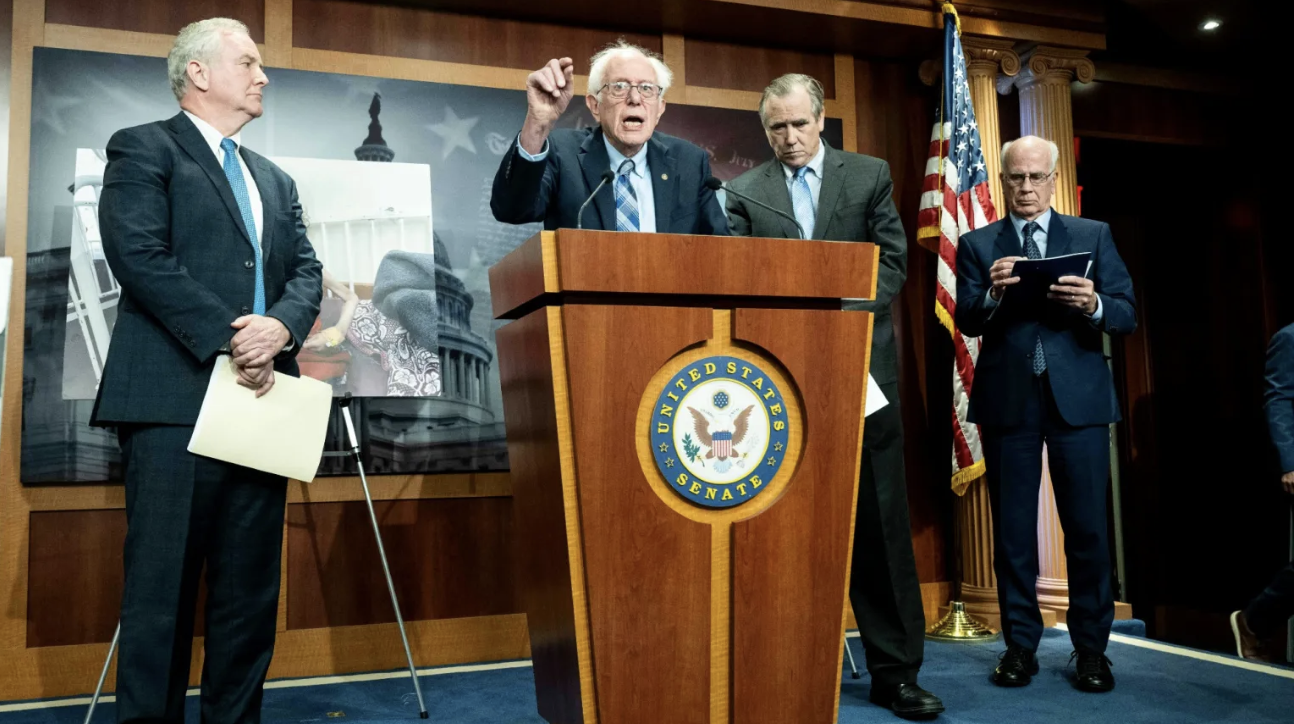
The recent vote in the U.S. Senate on resolutions to block a $20 billion arms deal to Israel was the boom of moral clarity. Introduced by Senator Bernie Sanders, these resolutions brought 19 senators together to challenge a longstanding U.S. policy of unconditional military aid. At the heart of their decision was a commitment to human rights, justice, and the belief that U.S. foreign policy must align with democratic values, not perpetuate oppression.
This vote occurred against the backdrop of a humanitarian catastrophe in Gaza. As thousands of civilians, including women and children, face the devastating consequences of war, these senators said, "Enough." They rejected the idea that U.S. military aid should flow unchecked into a conflict where accountability and respect for international law are absent. While these senators deserve recognition for their courage, this moment also underscores the need for sustained, organized action. Progressives now have an opportunity—and a responsibility—to build on this momentum. The fight to end military aid to Israel is far from over, but with strategic organizing and relentless advocacy, it's a fight we can win.
The Courage to Stand: Why These Senators Said No
Each of the 18 senators who supported the resolutions brought a unique perspective to this critical vote, but they shared a common belief: that the United States must not be complicit in human rights abuses.
In an era where U.S. foreign policy often prioritizes militarism over morality, 19 senators recently made a courageous stand. Senator Tammy Baldwin voted present. They voted to block a $20 billion arms deal to Israel, introduced by Senator Bernie Sanders. Their decision not only challenged the status quo but also reaffirmed a commitment to human rights, diplomacy, and the pursuit of peace.
Related stories
Their vote sent a powerful message: the United States must not be complicit in escalating humanitarian crises. As the conflict in Gaza devastates lives, these senators demonstrated that standing for justice is more important than bowing to political pressures or powerful lobbying forces.
Bernie Sanders (I-VT): The Architect of Resistance
Senator Bernie Sanders has consistently led the charge for peace and justice. By introducing these resolutions, he sought to halt the unchecked flow of arms that fuels conflicts and causes immense human suffering. Sanders framed the issue clearly: the U.S. must not reward policies that violate international law and basic human rights.
Elizabeth Warren (D-MA): Championing Accountability
Senator Warren has long fought for transparency and fairness. Her vote against the arms deal aligns with her belief that U.S. policy should uphold the principles of justice and accountability—not enable further violence against civilians.
Tim Kaine (D-VA): Advocate for Congressional Oversight
Kaine’s support reflects his enduring commitment to ensuring Congress exercises its constitutional authority over matters of war. For him, this vote was about holding the executive branch accountable and preventing American complicity in the worsening humanitarian disaster.
Chris Murphy (D-CT): A Tireless Critic of Militarism
Murphy has been a vocal opponent of U.S. arms deals that exacerbate conflict. His leadership on foreign policy issues underscores his belief that peace is achieved through diplomacy, not through fueling endless cycles of violence.
Raphael Warnock (D-GA): Guided by Moral Leadership
Warnock, a pastor and moral leader, brought his deeply rooted values to this vote. He understands the sanctity of human life and the moral imperative to prioritize peace over profit.
Mazie Hirono (D-HI): Defender of Ethical Foreign Policy
Hirono’s vote underscores her consistent dedication to human rights. As a senator who champions justice and equity, she recognized that approving this arms deal would send the wrong message about U.S. priorities.
Brian Schatz (D-HI): Balancing Security and Humanity
Schatz emphasized the need for U.S. actions to align with humanitarian values. His vote demonstrates a belief that national security should never come at the expense of innocent lives.
Jon Ossoff (D-GA): A Fresh Voice for Accountability
As a younger senator, Ossoff represents a generation increasingly skeptical of unchecked militarism. His support for this resolution signals his commitment to reevaluating America’s role in perpetuating global conflicts.
Jeff Merkley (D-OR): Standing for Human Rights
Merkley’s advocacy for refugees and humanitarian causes made his vote a natural extension of his values. His leadership reflects a steadfast dedication to ensuring U.S. policies uplift, rather than harm, vulnerable populations.
Ed Markey (D-MA): Progressivism in Action
Markey’s progressive platform includes a strong stance against militarism. He has consistently advocated for reallocating resources toward building a more equitable world, rather than perpetuating violence.
Angus King (I-ME): Independent Ethics
King’s independent stance reflects his thoughtful approach to governance. His vote signals a commitment to ensuring U.S. foreign policy aligns with ethical principles and global stability.
Tina Smith (D-MN): A Quiet Force for Justice
Smith may not always make headlines, but her principled decision to oppose this arms deal reflects her belief in prioritizing humanitarian outcomes over political expedience.
Jeanne Shaheen (D-NH): A Balanced Perspective
Shaheen, known for her measured approach, emphasized the importance of balancing national security with global human rights. Her support for the resolution highlights her understanding of the broader consequences of U.S. actions.
Chris Van Hollen (D-MD): Strategic and Compassionate
Van Hollen’s foreign policy vision is rooted in strategic humanitarianism. His vote underscores his commitment to policies that promote stability and accountability.
Peter Welch (D-VT): Continuing a Legacy
As Vermont’s junior senator, Welch follows in the progressive footsteps of Bernie Sanders. His vote demonstrates his commitment to upholding the values of peace and justice.
Martin Heinrich (D-NM) & Ben Ray Luján (D-NM): Voices of Pragmatism
Both Heinrich and Luján represent a pragmatic approach to U.S. foreign policy, recognizing that unchecked arms sales contribute to cycles of violence rather than fostering security or stability.
Dick Durbin (D-IL): A Seasoned Advocate for Peace
Durbin’s vote reflects decades of experience advocating for policies that prioritize diplomacy over military escalation. His leadership lends weight to this critical moment.
These senators remind us that courage in governance is about standing for what is right, even when it is not politically convenient. Their collective vote against the arms deal signals a growing awareness that U.S. foreign policy must be rooted in justice, accountability, and the pursuit of peace.
This moment is more than just a legislative vote—it’s a statement of values. At a time when so many leaders choose the path of least resistance, these senators stood firm, challenging the notion that military aid without accountability serves American interests or global stability.
We should honor their bravery and demand more from those who did not join them. Their example is a reminder that it is possible to forge a foreign policy that reflects America’s highest ideals.
What Progressives Can Do Next
While this vote represents progress, it is only the beginning. Ending military aid to Israel will require a multifaceted strategy that combines grassroots organizing, electoral advocacy, legislative action, and international solidarity. Here’s how progressives can build on this momentum:
1. Build Grassroots Power Through Brand New Congress
Organizations like Working Families Party have already shown their ability to support candidates who challenge entrenched political norms. Progressives should focus on recruiting and electing candidates who pledge to condition U.S. military aid on adherence to international human rights standards. Grassroots campaigns must target districts where voters are increasingly disillusioned with endless militarism. By mobilizing communities around this issue, progressives can ensure that opposition to unconditional aid becomes a central electoral theme.
2. Create Intersectional Movements
Ending military aid to Israel intersects with broader struggles for racial justice, economic equity, and climate justice. The military-industrial complex harms communities both abroad and at home, diverting resources away from healthcare, education, and environmental sustainability.
By partnering with movements like Black Lives Matter, labor unions, and climate justice organizations, progressives can draw clear connections between militarism and systemic injustice. An intersectional approach will broaden the coalition and make the case for change more compelling.
3. Organize Direct Action and Mass Mobilizations
Historically, movements have succeeded by taking bold action. Progressives should organize nationwide protests, marches, and sit-ins to demand an end to military aid. These actions must also target key decision-makers, such as members of Congress who have yet to support conditional aid. Grassroots pressure is essential to changing the political calculus.
4. Shift the Narrative Through Media Campaigns
The narrative surrounding U.S.-Israel relations has been dominated by powerful lobbying groups. Progressives must counter this with media campaigns that elevate Palestinian voices, expose the human cost of military aid, and challenge the false dichotomy of supporting Israel versus supporting peace.
Independent news outlets, social media platforms, and cultural influencers can play a critical role in reshaping public opinion. By amplifying the stories of those directly affected by U.S. policies, progressives can foster empathy and build momentum for change. This is the sole reason that I write week-after-week, it’s to disrupt the search engines pumping out Israeli propaganda.
5. Push for Legislative Accountability
Building on Sanders’ resolutions, progressives should advocate for new legislation that:
- Conditions military aid on compliance with international law. Aid should be suspended if it is used to commit war crimes or target civilians.
- Redirects funding to humanitarian assistance. U.S. taxpayer dollars should support peacebuilding, not perpetuate violence.
- Mandates independent investigations into alleged abuses. Congress must ensure transparency and accountability in how U.S.-funded weapons are used.
6. Leverage International Pressure
Progressives should collaborate with global movements advocating for Palestinian rights and peace in the Middle East. Partnering with international human rights organizations and grassroots groups within Israel and Palestine can amplify the call for change and pressure world leaders to act.
7. Educate and Mobilize the Masses
Many Americans remain unaware of the scale and impact of U.S. military aid to Israel. Progressives must lead mass education campaigns that explain how these policies contribute to suffering and destabilization abroad. By engaging communities and providing clear, accessible information, they can turn public opinion into political action.
Against All Odds: The Path Forward
The senators who opposed this arms deal showed us what is possible when leaders prioritize justice over political expediency. But their courage must be matched by sustained organizing. Progressives face immense challenges, including the influence of powerful lobbying groups and deeply ingrained political norms. History teaches us that transformative change is born of perseverance.

Ending unconditional military aid to Israel is a moral imperative. It’s about ensuring that U.S. foreign policy reflects our highest values. It’s about standing with those who suffer under systems of oppression and refusing to be complicit in their pain. The road ahead is difficult, but the stakes are too high to back down. Progressives must seize this moment, build coalitions, and demand a foreign policy that prioritizes peace, accountability, and human rights. Only then can we hope to break the cycle of violence and forge a path toward lasting justice.
Comments

Powered by RoundtableAn AI/DeFi-powered Enterprise Media Operating System. Learn more at Roundtable.io.© Roundtable 2026. By using this site you agree to the Terms of Use and Privacy Policy