


Sep 25, 2016 4:14 PM
Updated Feb 10, 2022 10:39 PM
Georgianne Nienaber: It is said that the spirits have told the People that they will win this fight against the pipeline if they maintain a stance of prayer and peaceful resistance.
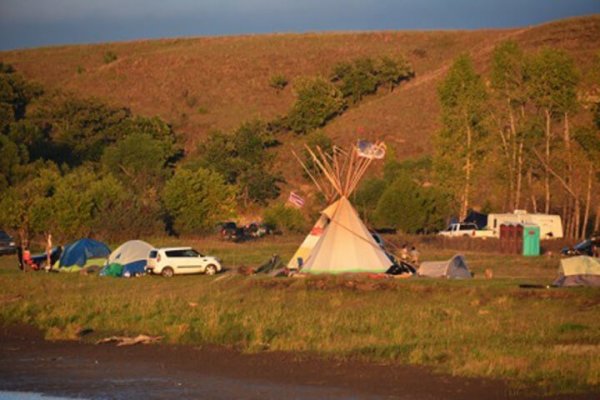
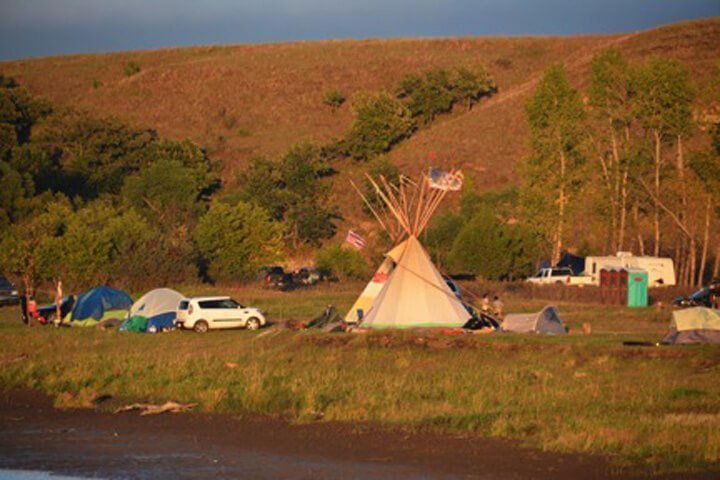
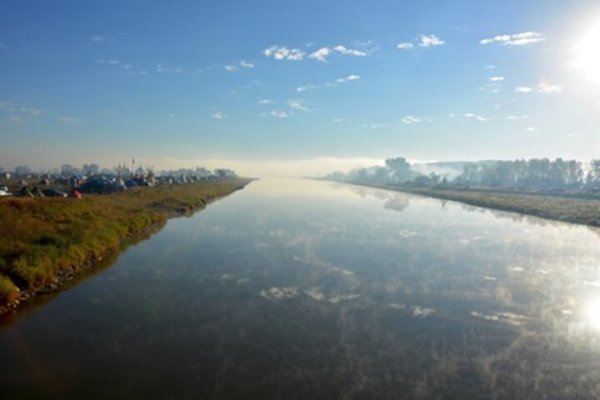
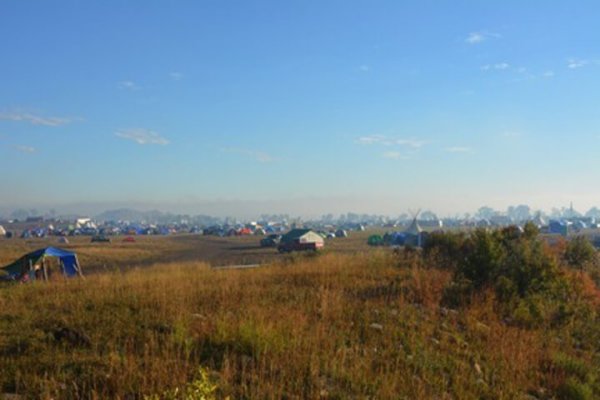
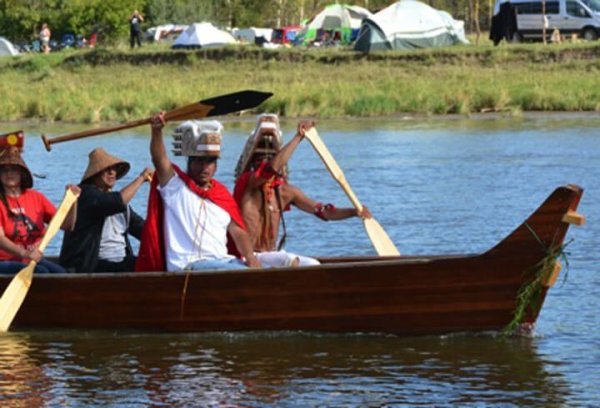
Life at the main camp of the Water Protectors, known as Oceti Šakowiŋ (Seven Council Fires), provides a beautiful postcard from the banks of the confluence of the Missouri and Cannonball Rivers. But the behind the mists dancing on the morning waters, a story of unbelievable sorrow resides. The waters are and have always been sacred to the Lakota people and constitute the lifeblood of spirituality for the Great Sioux Nation.
After the construction of the Lake Oahe Dam, the Cheyenne River Indian Reservation lost 150,000 acres and Standing Rock Reservation lost 55,993 acres. The Bureau of Reclamation took this fertile ground from the People by eminent domain. Construction began in 1948 and the dedication by President John Kennedy took place in 1962.
Agricultural land and prime soil that supported medicinal plants was lost forever. Instead of allowing tree harvesting for wood, the tree stands were flooded. Entire villages still lie at the bottom of Lake Oahe, the fourth largest artificial reservoir in the United States. Visitors noticed that there were no old people after the flooding. Edward Lazarus writes in his book Black Hills, White Justice, “the old people had died of heartache.”
The People face yet another heartache as the specter of the Dakota Access Pipeline threatens their water supplies and sacred burial grounds. It is said that the spirits have told the People that they will win this fight against the pipeline if they maintain a stance of prayer and peaceful resistance.
Related stories
The Army Corps of Engineers has engaged in a breach of trust by authorizing the DAPL to discharge dredged material in to Lake Oahe and construct a crude oil pipeline under the water. By treaty, the Great Sioux Nation has clear property rights under federal law in the waters of Lake Oahe.
I think the souls of the old ones found their way into some of these images. They speak every morning as the sun rises over the waters.
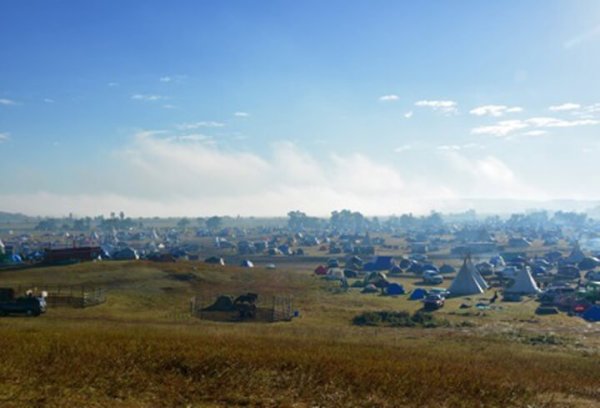
At day’s end, spirits linger over campfires as the Harvest Moon gently banishes the shadows.
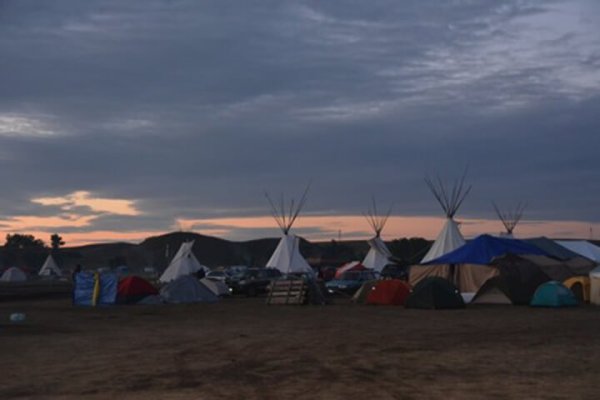
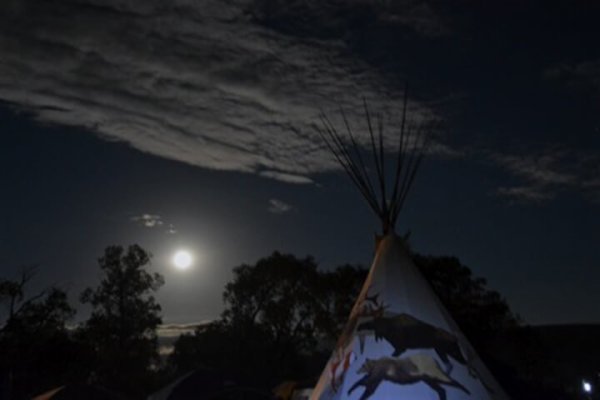
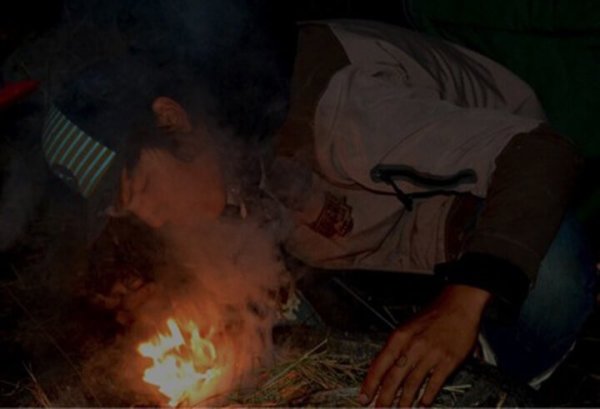
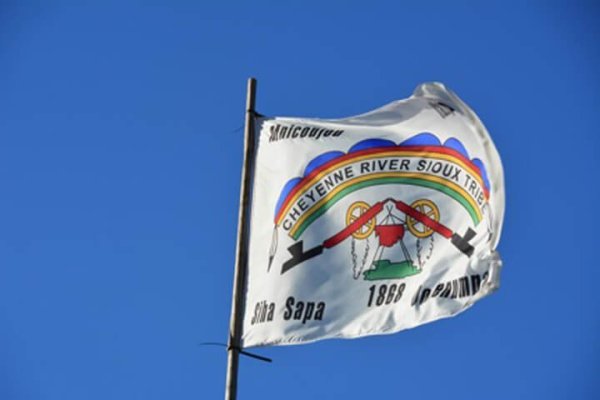
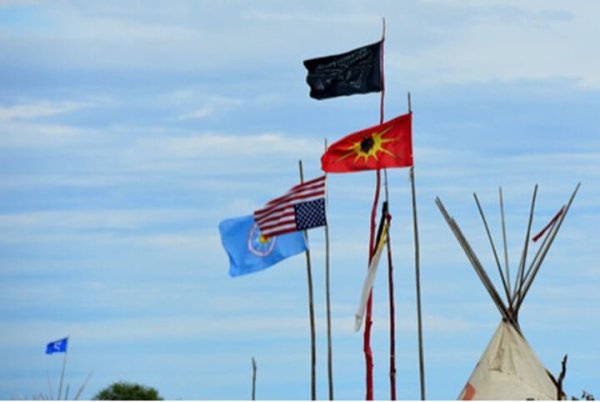
The Cheyenne River Indian Reservation was created by the United States in 1889 by breaking up the Great Sioux Reservation. Their flag is one flag among hundreds from Nations all over the world who gather at the camps of the water protectors along Highway 1806. The blockade ordered by the Governor of North Dakota did not deter this United Nations of Tribes. There is always another road, although it might be longer.
The Cheyenne River Sioux Reservation is bordered on the north by the Standing Rock Sioux Reservation and bordered on the east by Lake Oahe. Like Standing Rock, the Cheyenne River Sioux depend upon Lake Oahe, which is now a reservoir on the Missouri, for its drinking and agricultural water, and water that supports fishing and hunting. All of these rights are guaranteed by treaty.
The 1851 Fort Laramie Treaty and the 1868 Sioux Nation Treaty made solemn promises to the Tribes, including the explicit guarantee of “protection.” In return, ceded a large portion of their aboriginal territory in the northern Great Plains.
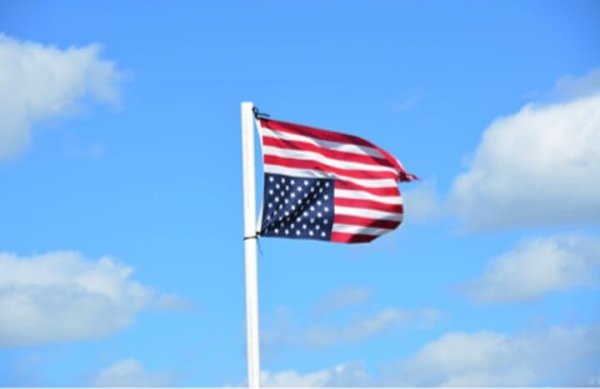
It is no wonder, after all of the promises of protection from the United States, that we find the U.S. flag flying in distress. The United States’ Flag Code directs that the flag should never be displayed with the stars down, except as a signal of dire distress in instances of “extreme danger to life or property.” Nowhere have there been more instances of extreme danger to life and property than the examples we can find in this, the Heartland of fly-over country.
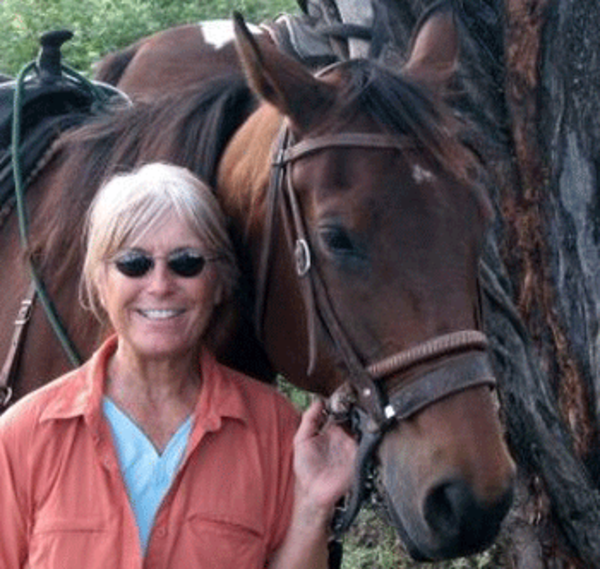
Lorna Hanes, standing to the right in this photo below, is Sagkeeng First Nation from Manitoba Canada. She now lives at the White Earth Reservation in northern Minnesota. The Anicinabe people have a rich, ancient history and reside along the Winnipeg River and Traverse Bay at the Fort Alexander Indian Reserve. Spend any time at the Main Camp and you will see Lorna riding her horse, Lucky, and organizing supplies at the Red Warrior Camp.
Keri Pickett is an accomplished, award-winning filmmaker (you can catch her Documentary “The Fabulous Ice Age” on Netflix). She is currently in post-production on “First Daughter and the Black Snake,” which tells the story of Winona LaDuke’s successful fight to stop the Enbridge Sandpiper pipeline in Northern Minnesota. Keri had the prescient awakening to know this was coming for at least four years.
As I look back over memories suspended in photos, this one really makes me smile. Keri and Lorna remind me that women are the heart and soul of camp life. At least that is what I experienced. Women offer the spiritual heartbeat, and these two friends from cultures a world apart symbolize strength, unity, and collaboration.
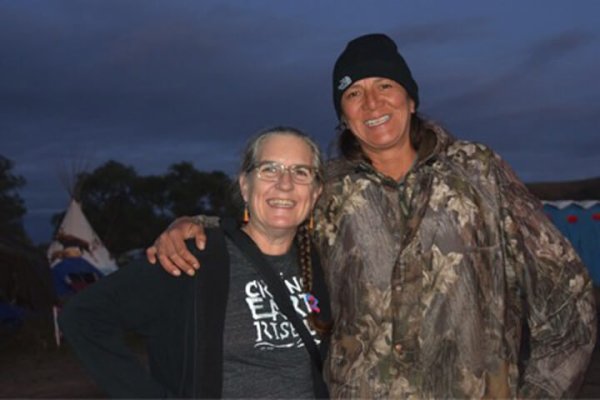
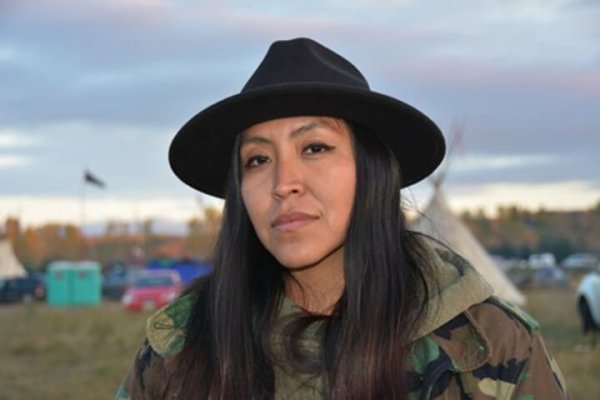
Women will stare unflinchingly into the lens. The twin fires of determination and fearlessness are captured in the light, while the photographer hides.
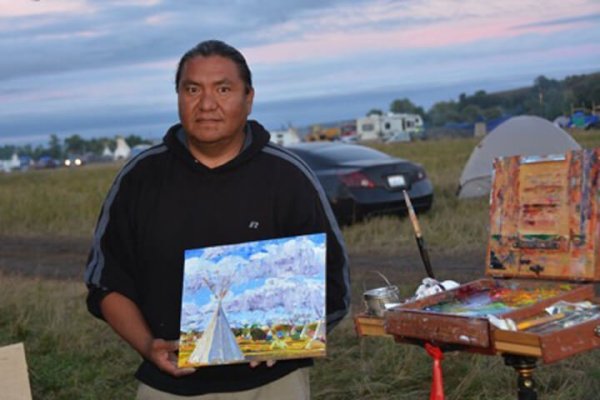
The artist is Monty Singer from Albuquerque, New Mexico. His work speaks for itself. Capturing history on the canvas. A hundred years from now, where will this painting reside? Will it be in a museum, or will it be a mystery? What stories will it tell? No one here today will be alive. What will be the legacy of this gathering and this artist’s work?
Then there is the photo I cannot show you. I would love to introduce you to one of the women of Standing Rock who is a friend and someone I admire deeply. My friend was arrested for “disorderly conduct’ by North Dakota law enforcement in August. Her crime? She stood on a road owned by the reservation and stepped in front of a DAPL truck that was forcing peaceful protestors off the road.
I watched a video of this intelligent, humble and compassionate woman being handcuffed and then put in chains that wrapped awkwardly around her waist before she was hauled away in a van. At the jailhouse she was strip-searched, put into an orange jumpsuit and a holding cell. I asked her if she was frightened. What did she do while waiting for bail? She told me that she stretched out on a bench and sang Lakota prayer songs. The ancestors were with her. Perhaps her prayer songs summoned some of the old ones, who died of heartache when the floods came. She felt comforted and unafraid.
The prayerful actions at Standing Rock have great spiritual power. You feel it. It summons you to return. Winter is coming, and so also is the trial of my friend. This is why I cannot identify her.
It took me days to find a photo that represents her courage. In the end it was an easy choice. When you see war paint on a horse’s flank, it means success in combat. Prayer and a spine of steel, along with the guiding hands of the ancestors, means she is destined to win the battle in the only court that counts—the court of courage.
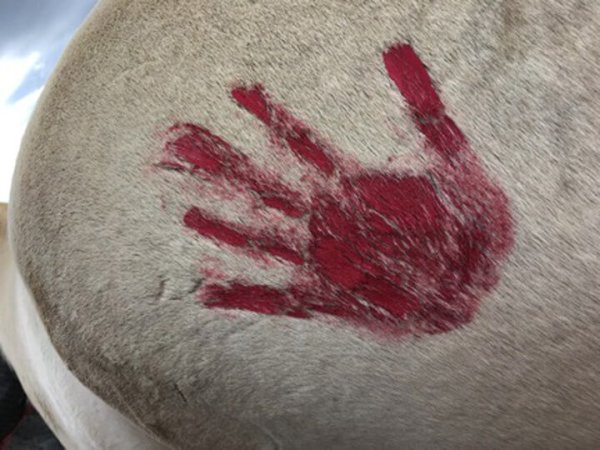
I trust and hope that these glimpses of life in the camps of the water protectors at Standing Rock inspire you to learn more.
The Army Corps of Engineers and U.S. society as a whole have a moral duty to these people. Reading through the court docket of Case No. 1:16-cv-1534-JEB, Standing Rock and Cheyenne River Sioux Tribes vs. U.S. Army Corps of Engineers and Dakota Access Pipeline LLP, I find the phrase “a trust that should be judged by the most exacting fiduciary standards.” Fiduciary in this case means “trust, especially with regard to the relationship between a trustee and a beneficiary.” By treaty the United States had a moral obligation to honor the trust the Sioux Nation has placed in us after they surrendered their aboriginal homeland.
So far we have failed miserably. Stopping the black snake of the Dakota Access Pipeline is a small step we could take to make up for our egregious failures to honor our promises.
Earlier in this essay I asked if the painting by Monty Singer would be remembered. Will it be remembered for the time the United States honored its treaty, or will it be added to the list of past atrocities?
Will this camp of women and children and warriors standing guard be written in history beside the story of another camp of innocents at Wounded Knee?
It is up to us to write an honest story.
Georgianne Nienaber
Comments

Powered by RoundtableAn AI/DeFi-powered Enterprise Media Operating System. Learn more at Roundtable.io.© Roundtable 2026. By using this site you agree to the Terms of Use and Privacy Policy