


Nov 7, 2025 8:44 PM
Updated Nov 15, 2025 6:06 PM
When a private utility’s negligence meets a warming planet, disaster isn’t an accident—it’s a business model.
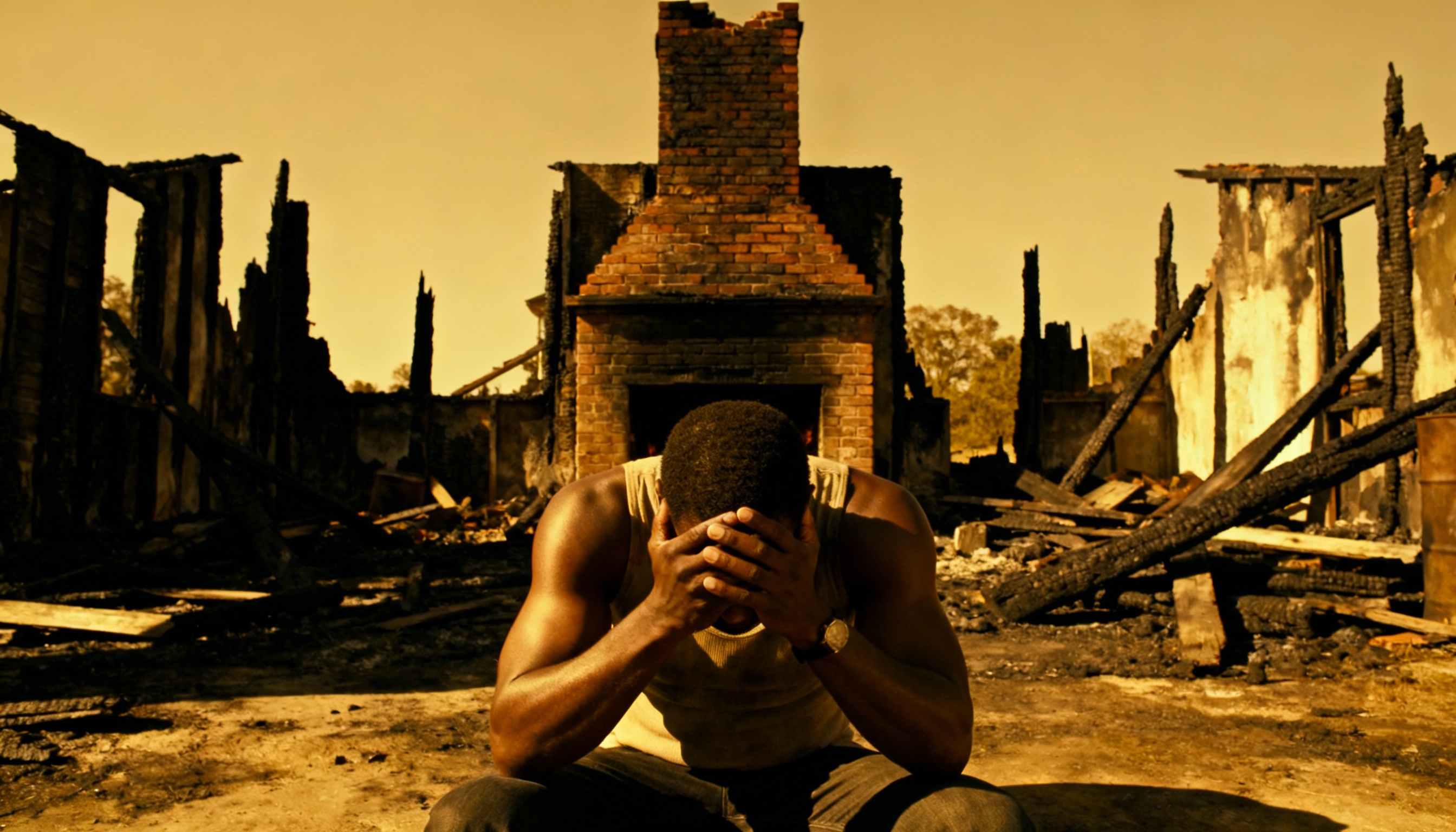
In January 2025, flames tore through Altadena’s foothills in what became known as the Eaton Canyon Fire. The blaze resulted in loss of life, destroyed homes, scorched landscapes, and exposed thousands to toxic smoke and ash. Survivors say it wasn’t just a natural disaster—it was a corporate one.
Their rallying cry — “Fix What You Broke” — serves as both an appeal for justice and a direct indictment of corporate negligence. In a comprehensive report spearheaded by researcher Andrew Wessels and the Eaton Fire Survivors Network, residents methodically deconstruct Southern California Edison’s proposed recovery plan, denouncing it as inadequate, inequitable, and steeped in the same corporate mindset that caused the disaster in the first place.
Earlier this week, KBLA Talk 1580 hosted a town hall moderated by Tavis Smiley and James Farr to address the ongoing struggles of Altadena’s residents. Although Southern California Edison had initially agreed to participate, the utility ultimately withdrew from the event. The discussion revealed what many survivors are demanding — real accountability, fair compensation, and a recovery plan that truly centers the people who lost everything.
What the Survivors Are Asking For
The survivors’ 51-page report reads like a blueprint for justice. Its core argument is simple: Edison caused the damage, so Edison must pay to repair all of it—not just what insurers will cover. You can read the report in its entirety here:
Related stories
But, in a nutshell, the report lays out concrete policy reforms, these reforms include:
- Establishing a fully funded compensation fund for survivors before paying insurers or hedge funds.
- Basing eligibility on verified harm, not arbitrary “fire zone” maps or visible damage.
- Covering the full range of losses—physical, financial, emotional, and communal.
- Providing housing support until people are safely housed, at current market rates, including deposits, utilities, and moving costs.
- Valuing children’s trauma and loss equally to adults’.
- Including renters and small business owners, who are too often written out of recovery plans.
- Recognizing and remediating toxic soil contamination even where structures remain standing.
- Simplifying documentation for small businesses and gig workers.
- Creating a long-term health monitoring fund for smoke and contamination exposure.
- Ensuring transparency and survivor participation in how the fund is managed.
On the evening of January 7, 2025, I stood at my living room window in Northeast Los Angeles and watched flames rise out of Eaton Canyon, five miles north, staining the night sky orange. Many of the people affected by that fire are close friends. The story may no longer lead the news cycle, but it continues to shape their lives in devastating ways. Most have received little—if any—meaningful financial relief.
Their demands are far from radical; they represent the most basic moral responsibility for a corporation whose infrastructure may have played a role in sparking a deadly blaze. While the official investigation into causation remains underway, a larger question lingers: what does Southern California Edison’s corporate identity say about its real commitment to the communities it’s supposed to serve?
Corporate Power, Regulatory Weakness
It's important to note here that Southern California Edison isn’t a public agency—it’s a for-profit subsidiary of Edison International, a publicly traded company listed on the New York Stock Exchange. Like all C corporations, Edison’s first legal obligation is to maximize shareholder value.
That’s where the problem begins. Edison operates as a state-sanctioned monopoly. The California Public Utilities Commission (CPUC) allows it to serve vast territories of Southern California without competition. In exchange, the CPUC is supposed to regulate Edison’s rates, profits, and safety practices.
But the CPUC doesn’t have the power—or the political will—to transform how Edison does business. It can issue fines, hold hearings, and approve rate increases. What it cannot do is force Edison to become a benefit corporation, one legally obligated to serve the public good as well as profit.
In other words, the CPUC can regulate Edison’s behavior, but it can’t change its conscience.
Climate Change Makes the Fire Inevitable
Blaming one corporation doesn’t tell the whole story. Climate change has rewritten California’s risk map. Hotter temperatures, prolonged drought, stronger winds, and urban sprawl have turned the state into a tinderbox. The National Oceanic and Atmospheric Administration reports that the western U.S. has warmed about 2.5°F since 1970—enough to double or triple the area burned by wildfires.
Add aging electrical infrastructure to the mix, and the result is predictable. The Eaton Canyon Fire, like the Camp Fire (2018) and Thomas Fire (2017) before it, represents a perfect storm: corporate negligence meets environmental collapse.
The survivors’ demand—fix what you broke—echoes beyond Altadena. It’s a demand for systemic accountability in an era where profit-driven utilities are fueling climate disasters, then billing ratepayers for the cleanup.
The New Front Line: Insurance and Housing
The climate crisis isn’t just burning homes—it’s breaking California’s insurance system. As wildfires grow more destructive and frequent, major insurers such as State Farm, Allstate, and Farmers have either halted new policies or raised premiums beyond reach. Entire communities—especially in foothill areas like Altadena, Topanga, and Calabasas—are being deemed “uninsurable.”
Homeowners who do find coverage are often forced into the state’s last-resort FAIR Plan, a high-cost, limited coverage program that offers little protection against total loss. That leaves tens of thousands of residents financially exposed in a state already grappling with an affordable-housing crisis.
Meanwhile, utilities like Southern California Edison continue to pass wildfire liability costs to ratepayers through CPUC-approved surcharges. In effect, Californians are now paying twice: once for corporate negligence, and again for the insurance companies retreating from risk.
This insurance unraveling is the clearest signal yet that climate change is no longer a future threat—it’s a present-day economic reality reshaping where and how we can live.
A System Designed to Protect Shareholders, Not Survivors
To understand why this keeps happening, it helps to look at the corporate structure itself. The “C” in C Corporation refers to Subchapter C of the Internal Revenue Code, which dictates how corporations are taxed. These entities pay corporate tax on profits, then shareholders pay tax again on dividends—“double taxation.”
That might sound punitive, but the tradeoff is power. C-Corps like Edison International can issue unlimited shares, retain earnings, and prioritize profit above everything else. They have no legal obligation to the communities they serve unless regulators impose one.
In contrast, benefit corporations (or B Corps) legally bind themselves to create public benefit—balancing profit with purpose. Edison isn’t a B Corporation, and the CPUC has no authority to make it one. That’s why corporate power remains unchecked even after catastrophe.
Democracy vs. Oligarchy
This dynamic echoes the conclusions of a famous 2014 Princeton and Northwestern University study by Martin Gilens and Benjamin Page, which found that the United States functions less like a democracy and more like an oligarchy—a system where “economic elites and organized business interests have substantial independent impacts on government policy, while average citizens have little or none.”
Edison and other investor-owned utilities fit that description perfectly. They wield enormous political influence, funnel campaign donations to Sacramento, and shape legislation that determines their own oversight.
The Fire Next Time
The survivors’ message couldn’t be clearer: California’s wildfires are not random tragedies—they’re the predictable consequence of corporate greed colliding with planetary crisis. Tavis Smiley and Dr. Cornel West have a discussion on this topic on KBLA Talk Radio's YouTube channel. I've embedded that discussion below and highly recommend that you subscribe.
When a monopoly utility profits from public necessity while neglecting public safety, when regulators answer more to investors than to survivors, and when the planet itself grows hotter by the year—then fix what you broke becomes not just a demand, but a moral imperative.
Because the next fire isn’t a question of if. It’s a question of where.
Comments

Powered by RoundtableAn AI/DeFi-powered Enterprise Media Operating System. Learn more at Roundtable.io.© Roundtable 2026. By using this site you agree to the Terms of Use and Privacy Policy