
https://flickr.com/photos/edenpictures/54584670904/in/photolist-2rasGXA-2r7dj2n-2pGERiB-2pGAgmH-2pGAgqF/


Eden, Janine and Jim • CC BY 2.0 • Flickr
Jun 17, 2025 3:27 PM
His approach reflects the urgency of this moment and the belief that municipal government can still be a force for dignity and justice.
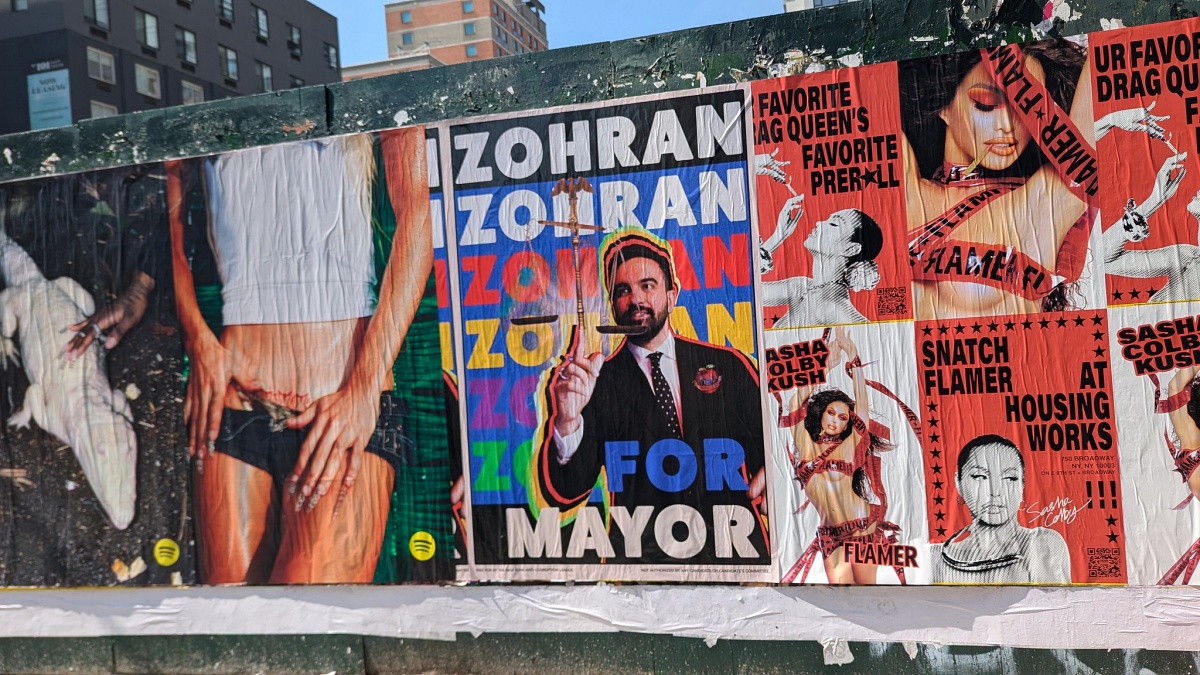
Zohran Mamdani’s mayoral campaign is capturing the attention of a city long told to temper its expectations. In a political climate where incrementalism is sold as pragmatism, Mamdani is offering something different: a vision of New York where housing is guaranteed, transit is free, and the city's moral compass includes solidarity beyond its borders.
His platform reflects more than campaign promises, it builds on a proven track record. As a Queens assemblymember, Mamdani helped secure Good Cause Eviction protections, fought to expand access to public transportation, and has been a consistent voice for immigrant, working-class, and marginalized communities. His approach reflects the urgency of this moment and the belief that municipal government can still be a force for dignity and justice.
This consistency extends beyond local issues. Mamdani has been unapologetic in his calls for a ceasefire in Gaza and divestment from fossil fuels and weapons manufacturers. These positions have earned him admiration among many constituents and criticism from establishment figures, but his willingness to take principled stands, even at political risk, has made him one of the most trusted public officials among a new generation of voters.
The Establishment Pushback
The New York Times editorial board disagrees with this approach. In a recent decision not to endorse anyone in the race, the paper issued a warning instead, specifically naming Mamdani’s platform as a “turbocharged version” of former mayor Bill de Blasio’ record, which they described as “dismaying.” The critique felt less like substantive policy analysis and more like an attempt to draw boundaries around who is allowed to lead and how far they’re allowed to go.
Related stories
This isn't the first time The Times has passed over a candidate on the rise. In 2018, the board declined to endorse Alexandria Ocasio-Cortez in her challenge to Joe Crowley. That race reshaped American politics. This week’s mayoral race has the potential to do the same. If the Times is wary of Mamdani’s candidacy, it may be because it signals a redistribution of narrative power away from media gatekeepers and toward movements that don’t rely on traditional validation. While the paper has questioned whether Mamdani’s politics are “divisive,” the campaign has only grown in momentum and clarity.
A Movement-Powered Campaign
What Mamdani represents is a movement that reflects a changing electorate—one that’s younger, more diverse, and more willing to challenge the status quo. His campaign is not built on elite fundraising or focus group messaging. Instead, it’s powered by volunteers, small-dollar donors, and communities that are often treated as an afterthought in New York City politics.
The message appears to be resonating. While some candidates have leaned on institutional endorsements, Mamdani has built support from grassroots organizations, labor organizers, climate justice coalitions, and tenant unions. His campaign’s energy feels familiar to those who remember the early days of de Blasio’s first run, when the “tale of two cities” framing rang true for millions of New Yorkers. But Mamdani is arriving in a different moment, one shaped by years of unmet promises, a housing crisis that has only deepened, and a public increasingly frustrated by performative politics.
As a professor of property law, I find Mamdani’s housing platform not only compelling but grounded in sound public policy. Good Cause Eviction and universal rent control are often caricatured in the press, but these measures reflect a deeper understanding of what property is supposed to do in a just society: provide security, shelter, and a foundation for community, not merely serve as a speculative asset class. These reforms bring balance to a housing market that has long been tilted in favor of landlords and developers at the expense of long-term residents and neighborhood stability.
A Return to New York’s Fighting Spirit
A victory on June 24 would not be a fluke. It would reflect years of organizing, a deep commitment to city residents who feel abandoned by politics as usual, and a bold insistence that New York can meet this moment with ambition rather than resignation. Zohran Mamdani isn’t campaigning on nostalgia or slogans. He’s campaigning on a track record, a vision, and a movement that believes New York City's future can be defined by justice—not just in rhetoric, but in budget priorities, housing policies, and how we show up for each other.
In a city shaped by struggle and resilience, Mamdani's rise feels less like a disruption and more like a return to what New York has always done best: fight for more, and refuse to settle.
Comments

Powered by RoundtableAn AI/DeFi-powered Enterprise Media Operating System. Learn more at Roundtable.io.© Roundtable 2026. By using this site you agree to the Terms of Use and Privacy Policy