
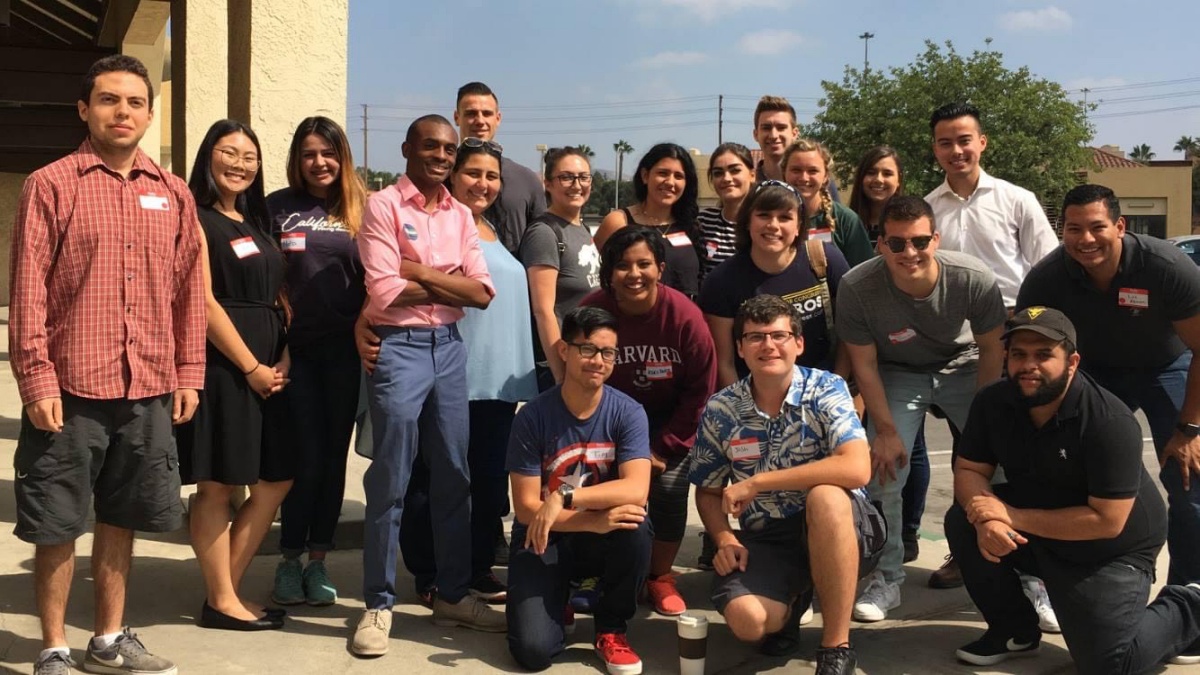
University of Pennsylvania Democrats Organizing Team


University of Pennsylvania Democrats Organizing Team
Aug 19, 2024 5:21 PM
All of these efforts by young voters targeting young voters also have a broader goal: making voting habitual among young people from demographic groups that lack a high voter turnout history.
One month ago, there was little voter enthusiasm for Joe Biden among Democratic-leaning young voters. Today, as the Democratic Convention opens behind Kamala Harris, young voters enthusiasm has skyrocketed.
But will this boost voter turnout? Yes, says Nick Guthman, whose Blue Future organization connects young people to progressive campaigns. Guthman’s group and others are addressing turnout concerns by relentlessly calling young voters and mobilizing them to the polls.
A National Grassroots Strategy
Guthman was on three different calls the week before Biden dropped out with partner organizations. The news was not good. Calls found young people feeling hopeless and fearful. Many did not see Biden representing the future. They doubted he could win.
This has dramatically changed since Harris became the nominee. Blue Future hired fifty young people—88% people of color—who made over 53,000 phone calls covering 21 states. Now it’s recruiting 100 young people to work 5-10 hours a week from September 7 to Election Day. Guthman told me they are getting “more applications than ever before.”
Related stories
That should translate into over 100,000 phone calls targeting young voters from Blue Future alone.
Do contacts matter? Tufts University’s Tisch College did a study in 2018 that found 56.7% of young voters between 18-24 who were contacted multiple times said they were extremely likely to vote. This fell to 38% for those only contacted once and to 27.7% among those never contacted.
Voter outreach to young people clearly boosts turnout.
Consider local groups like the Detroit Change Initiative (DCI). DCI works to increase registration among young black voters, whose turnout levels could swing Michigan’s presidential and U.S. Senate races. In addition to prioritizing registration and voter turnout, DCI does civic education work year-round in high schools throughout Detroit.
DCI also recruits poll workers, who need only be 16 years of age in Michigan. Hiring students to be poll workers connects them to eligible voters among their families and friends. All contributes to increased voter turnout. So does efforts by Michigan’s Democratic Governor and Secretary of State to expand early voting,
Blue Future is funding the Youth Democracy Lab to develop a pipeline of young leaders in key Southern battleground states including North Carolina, Florida, and Texas. The Lab partners with local organizations in each state to run intensive civic engagement boot camps and then places young folks within organizations doing advocacy and electoral work focused on climate, racial, reproductive, and educational justice.
All of these efforts by young voters targeting young voters also have a broader goal: making voting habitual among young people from demographic groups that lack a high voter turnout history.
More Funding Needed!
Nobody disputes that Democratic election victories in many states are dependent on young voter turnout. Yet for all of the hundreds of millions of dollars being raised by Act Blue and the Harris-Walz campaign, surprisingly little makes it way to voter outreach targeting young blacks and Latinos.
With Nevada and Arizona up for grabs, Democrats should be targeting young Latino voters in both states. Yet the most active local group dedicated to boosting young Latino civic engagement and voter outreach is the Texas-based Somos Tejas. Working primarily in the Dallas area Somos Tejas uses tamale parties in parks and other creative strategies as part of their outreach efforts.
Polls prior to Harris becoming the nominee found her biggest advantage over Biden was in her support among younger Latinos. Voto Latino, which plans to spend $44 million targeting young Latinos, has seen a 221% increase in voter outreach since Harris became the top candidate.
So the trend for Democrats look good. But given the upside of young Latino voter outreach in swing states, I asked Guthman why the Democratic Party was not targeting more money to youth voter outreach.
He said, “This is just speculation, but I think they don’t think its worth the investment, not worth the time. They think that young people are already going to vote for the Democrats, so spending a lot of money trying to increase their turnout is not necessary.”
I’ve long heard that explanation for why Democrats do not fund outreach to low-propensity voters. All while senior voters are always prioritized despite their already being the most likely to vote.
But I know from firsthand experience working to boost black turnout in Cincinnati for the 2004 presidential election—twenty years ago!—that grassroots outreach to low-propensity voters can dramatically boost turnout. When resources are not deployed, low voter turnout becomes a self-fulfilling prophesy.
Guthman observed, “Since we started Blue Future six years ago, there has not been a significant movement of resources from the party committees or from the presidential campaign to move resources to the groups that we work with. The groups doing the work on the ground.”
“On the ground” refers to knocking on doors, talking to peers at community centers, connecting at cultural and neighborhood events, and going where the people are. Blue Future works with many local groups focused on school board campaigns. Those races often drive student voter turnout, which then translates into voting on state and federal campaigns.
Many Grassroots Organizations
Among the many groups focusing on youth voter turnout are the Student PIRGs. We wrote about the Student PIRGs New Voters Project in 2020. The organization helped propel record youth voter turnout that November. Many of its most active chapters are in swing states.
College Democratic chapters will also be registering voters and pushing turnout. College Republican chapters will as well. Republicans are putting most of their student vote resources into Turning Point USA. I’ve heard mixed views about the group’s success at boosting Republican voter turnout. Some see Turning Point USA as primarily building student support for Donald Trump’s agenda. Unlike Democratic-leaning groups, Turning Point USA appears less concerned with getting low-propensity voters to cast ballots than in convincing students to vote Republican.
We’ll keep you posted on the efforts of Blue Future and other groups as the election nears. But one conclusion is clear: there is likely to be record young voter (18-24) turnout this November. And Democrats should benefit the most.
Comments

Powered by RoundtableAn AI/DeFi-powered Enterprise Media Operating System. Learn more at Roundtable.io.© Roundtable 2026. By using this site you agree to the Terms of Use and Privacy Policy