
Michael Fleshman • Attribution-ShareAlike (CC BY-SA 2.0) • Flickr


Jun 28, 2023 4:40 AM
Updated Jun 28, 2023 7:41 AM
Perhaps the greatest potential of West's campaign is to reshape the electoral strategy debate for progressives.
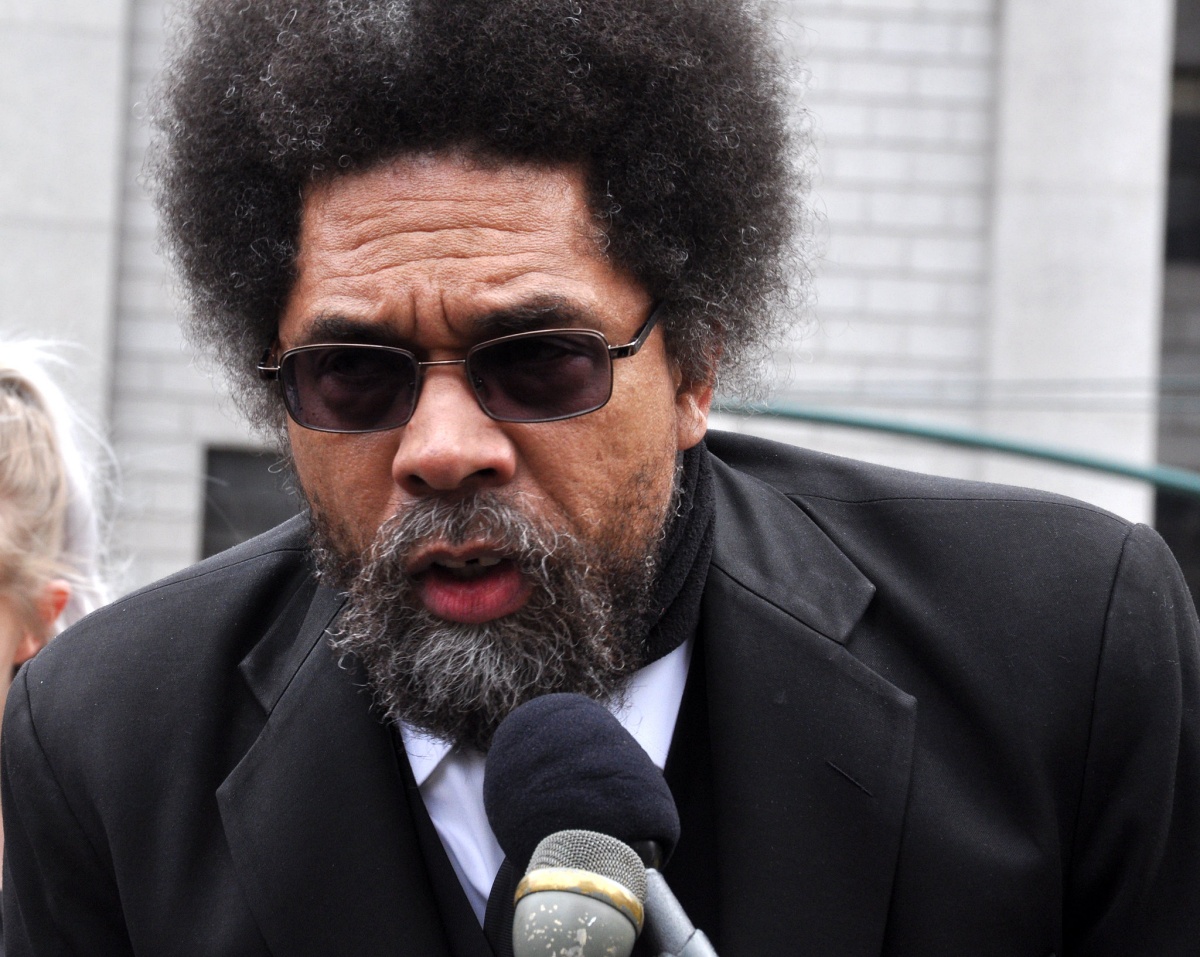
On June 6, long-time scholar, philosopher, political activist, and social critic Cornel West announced his 2024 candidacy for President. Within a week, West declared he would seek the Green Party's presidential nomination.
- As West runs outside of the U.S. duopoly, how does his electoral reform platform advance independent politics in the United States? and,
- What can West gain from the experience of the Green Party — the only nationally-organized progressive political party that is meaningfully ‘in the trenches’ of being an actual, independent political party — through gaining ballot status, having hundreds of thousands of members, and then running its own party members every year as candidates on local, state and federal levels, and winning almost 1400 local elected offices in its history?
A True Democracy
Under ‘Create a True Democracy’, West’s campaign website lists three election-related reforms: ’get money out of politics’, ‘enact term limits in Congress’, and ‘switch to hand-counted paper ballots.’ On all three, West either doesn’t go far enough or simply doesn't get it right. But this can change as he gets more involved with the Green Party.
Related stories
West’s three elected-related positions seem to be informed by his dalliance with the top-down Movement for a Peoples Party/Peoples Party (MPP/PP). For many Greens, at times the MPP/PP platform feels more like ‘calculated faux populism’ than progressive — and in this case, not informed by real on-the-ground experience with the U.S. electoral system.
By contrast, a key value for the Green Party is ‘grassroots democracy’; and few on the U.S. left understand the onerous daily reality better than the Greens, of trying to build an independent progressive party within the restrictive and undemocratic U.S. electoral system.
Voting Rights
For that reason, perhaps what is most glaring by its omission, is the absence of ‘voting rights’ from West’s democracy planks. The attacks on voting rights by the U.S. Supreme Court and by Republican-controlled state legislatures are real and ominous. But at the same time that Democrats push back on this, they are also cynically passing restrictive ballot access laws and pursuing legal challenges to make it difficult for Greens (and other independents) to even be on the ballot.
Not only have Democratic-led state legislatures passed laws to make it harder for minor parties like the Greens to compete on the state level. But the Congressional Democrat’s recent voting rights bills — the “For the People Act” and the “Freedom to Vote Act” — each quietly had sections that would have driven the Green Party off the ballot in much of the country. Apparently for many Democrats, ‘voting rights’ means the right to vote for them (or if you must, the Republicans), but not for those who might challenge the duopoly, especially from the left.
For Greens, party suppression is voter suppression. Voting rights must go beyond the right to vote, and having it counted accurately and transparently. For Greens voting rights also means being able to vote for candidates and parties that reflect your views and to win representation in proportion to how widely those views are held.
Proportional Representation
The Green Party has a vigorous pro-ballot access/ballot status platform section of its platform that West could use to buttress his own. But what about the right to actually win representation with your vote, according to their proportion in the electorate?
Here, deeply problematic is West’s ‘reform’ position where he advocates ‘enacting term limits’ to elect members of Congress. This is not progressive in the least. The progressive approach is to enlarge Congress and conduct Congressional elections from multi-seat districts by proportional representation.
Under proportional representation systems, if a party gets a certain percentage of the vote, they win that percentage of the seats. Simple as that. Most of the world’s established democracies abandoned winner-take-all, single-seat district elections (like in the U.S.) long ago and moved to proportional representation from multi-seat districts. Under such systems, far more voices get a seat at the table of democracy than under the current U.S. system, which limits representation to only one political viewpoint for a geographical area.
Ironically, the ‘rationale’ for term limits comes out of this inherent limitation. Since many geographical areas tend to have a plurality or majority political viewpoint among the electorate, winner-take-all systems often result in ‘no-choice’ elections where one party has a permanent monopoly on power. In such cases, the winning party is effectively predetermined, and the incumbent from that party can continue to get re-elected until they voluntarily step down.
But term limits are a pseudo-antidote to this because they don’t get at the root problem of winner-take-all elections. Term limits also restrict voter choice for those who want to vote for the incumbent. And even when enacting independent redistricting commissions to counter partisan gerrymandering, the use of single-seat districts still inherently limits representation, regardless of who draws the lines.
Countries that use proportional representation don’t use term limits, because the problem they are meant to solve doesn’t exist. At the same time, proportional representation countries experience higher voter turnout, because more voters see their vote go towards electing someone who more closely represents their views.
Independent politics
Moving to elections by proportional representation represents the best opportunity for the rise of independent politics in the U.S. — and to leave the ‘lesser-of-evils’ duopoly behind and replace it with a broadly representative, viable multi-party system. By accepting the problematic U.S. winner-take-all system and simply trying to put a band-aid on it with term limits, West’s position would miss the need for structural electoral reform in the United States.
For Greens, ‘superficial populist sloganeering’ by calling for Congressional term limits’ = the MPP/PP. Displaying a sophisticated understanding of electoral systems and calling for proportional representation = Green.
Campaign Finance Reform
West also calls for ‘getting money out of politics’ — another catchy slogan, but mostly meaningless as is, because it takes money to run for office and reach voters. Since money can’t entirely be taken out of politics, the relevant public policy questions here are “How do voters receive information about the candidates and ballot measures before them?”; and “Where money is needed to communicate to voters, is the money public, private, or some mix of the two?
If the money is private, does it come from a small number of big-money donors who are able to exercise undue influence over elections? Or does it come from a large number of small donors who seek a say in the election of those who govern them?
If it's public, is it used to provide information about all ballot-qualified candidates, so that all voters have a baseline of information about all of the choices on their ballots? Or does it only favor the top tier of major party candidates?
What about the use of public infrastructure? Does public money consist only of direct funding, like via public matching funds and democracy vouchers? Or does it also include mandated free media time on the public broadcast spectrums for all ballot-qualified candidates, free candidate statements in governmental voting guides, and debate inclusion for all ballot-qualified candidates?
West’s platform should speak forcefully on all of these questions. Then going to the next level and confronting a core problem of money in politics, West should join the Green Party and many others who call for a constitutional amendment to unequivocally define that money is not a form of free speech; that human beings, not corporations, are persons entitled to constitutional rights; and that full regulation and limitation of campaign contributions and spending be allowed by law.
Election Integrity
Perhaps the most inexplicable part of West’s three-point electoral platform is advocating for changing from machine-counting of paper ballots to hand-counting. This is what many far right-wing election deniers are calling for - and enacting in some counties.
Machine-counting paper ballots is far more accurate than hand-counting, election results come in quicker and it costs far less money — especially for cash-strapped local elections officials.
West’s advocacy of faux-populist hand-counting unnecessarily feeds into the election denialism that led to the January 6, 2021 attack on the U.S. capitol and the fake electors scheme to overturn the results of the 2020 presidential elections.
Millions of voters rightfully feel frustrated when they receive no representation under single-seat, winner-take-all elections. But instead of responding to that frustration by offering false ‘solutions’ like hand counts, progressives should be offering elections by proportional representation so that everyone gets a voice in the system. This would substantially change the stakes from a ‘winner-take-all’ model to a ‘power-is-shared’ model in U.S. politics and elections. That is what our democracy needs most, not playing into paranoias about its legitimacy.
As for election integrity itself, that is an extremely important issue, and there is a menu of options that should be part of West’s platform. For vote counting, this includes wider use of risk-limiting audits — which are a well-established way to ensure that the reported result is correct — along with publicly available ballot images and cast vote records, which people can use to count the votes themselves.
Potential for West's Campaign to Reshape U.S. Politics
While West's campaign can play a powerful role in promoting issues of justice and equity in U.S. politics, perhaps its greatest potential is to reshape the electoral strategy debate for progressives — and the electoral systems debate for American democracy overall.
The Green Party platform calls for electing the US. House of Representatives and state legislatures by proportional representation from multi-seat districts. For single-seat executive offices like Governor and President, as well as for the U.S. Senate (which the Green Party believes should be abolished), they should be elected by ranked-choice voting. These reforms would revolutionalize American politics for the better, and support for them is growing rapidly.
Because of the breadth of support West already enjoys — based upon his decades-long important role in American society — his presence in the race is going to be hard to ignore. Because his presence will also vex the duopoly, it will draw media and voter interest. For these reasons and more, West has a lever to accelerate national debate on electoral reform. And when he explains that part of the reason he is running is that the system doesn’t offer enough choice, he can also explain how a system that actually does offer sufficient choice would work.
As for progressives who have tried for years and decades to ‘move the Democratic Party Left’, and who have experienced the limits of duopoly politics, they now will have a complimentary electoral reform strategy to pursue.
A true ‘inside/outside’ strategy is not only about building social movements and then hoping a lesser-of-evils duopoly party will respond. It is having an inside/outside strategy within the electoral system itself.
If you want to move the Democrats to the left, the best strategy is for them to suffer an electoral cost when they don’t - an alternative progressive party winning seats. And that would happen naturally under proportional representation. That would be real leverage for progressives and social movements, who could then freely support the party and candidates that represent them most.
Isn’t that what a ‘true democracy’ should be about?
Comments

Powered by RoundtableAn AI/DeFi-powered Enterprise Media Operating System. Learn more at Roundtable.io.© Roundtable 2026. By using this site you agree to the Terms of Use and Privacy Policy