


Aug 5, 2015 4:50 PM
Updated Feb 10, 2022 10:33 PM
Mario Solis-Marich: What I learned is that many people, organizations, and institutions base their political strategy on the fact that Latinos vote in numbers far below our potential.
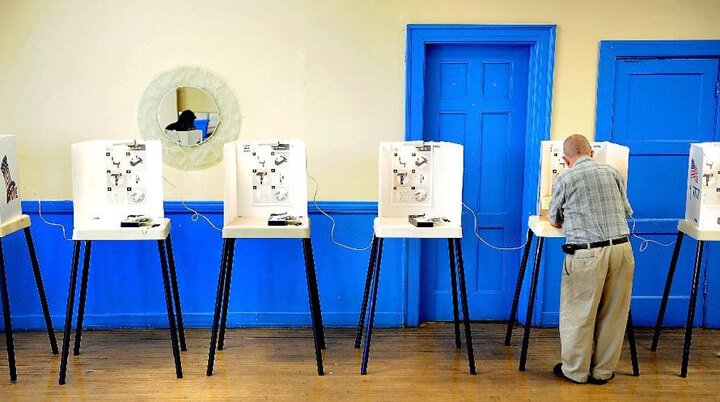
A few months ago I was approached by Antonio Gonzalez the President of Southwest Voter Education Registration Project to help with a project that eventually became named “Voteria”. The concept while controversial was simple. Southwest Voter, a nonprofit dedicated to voter engagement for the last 40 years, would offer a $25K cash sweepstakes that anybody in LAUSD Board District 5 would be entered into if they were registered or became registered and voted in the May 5th election.
The controversy that followed was predictable while the outcome was not. Personally, like most in the small group of people directly involved in leading the project, I was skeptical of it. But I was always taught that skepticism is good and should not be a barrier to discovery, so I joined the effort. The contest moved forward and in fact there is a study conducted by Center for the Study of Los Angeles on the impact of the Voteria that you can see here.
What I learned is that many people, organizations, and institutions base their political strategy on the fact that Latinos vote in numbers far below our potential.
The study stands on it’s own, but what I personally learned from the effort is an area not yet explored by that study or any study. What I learned is that many people, organizations, and institutions base their political strategy on the fact that Latinos vote in numbers far below our potential. In addition, I learned that not all of the entities betting on our lack of participation are conservative.
There were certainly critics who were philosophically opposed to offering financial or material incentives for civic engagement and they posited fair and reasoned objections. However much to my surprise the vast majority of the Voteria critics were concerned that the contest would actually work. I heard with consistency from people who openly worried that Latinos would turn out and vote for a candidate who had not been endorsed by their favored leadership. Quite frankly, that is a position that I find to be shameful. While there are legitimate arguments against Voteria type efforts, worries that it might get people to the polls is not one of them. I believe that hoping Latinos won’t vote so your candidate can win is even worse than what the LA Times Editorial board referred to as “bribing” people to vote.
Related stories
Look at the first L.A. Times editorial criticizing Voteria, which stated that if the effort were to be successful that it would be “... a troubling precedent that could easily devolve into an arms race among interest groups trying to get out their votes to influence an election.” Now wouldn’t that be an unprecedented shame?
Someone should let the LA Times editorial board and others know that interest groups spend millions of dollars each cycle trying to get out their supporters to influence the outcome of each election. Getting your voters to the polls is known as “democracy”. One must ask if the LA Times has ever criticized any previous funded GOTV effort as being bad for the election process.
Far more serious a problem than incentivizing voters is that the current state of democracy in the U.S. is based in part on the calculus that Latinos, except during Presidential election cycles, continually under vote. The marginalization of Latinos has a serious impact not only in politics but in business as well. The lack of seriousness received by our private sector leadership is a direct result of our communities image as non participatory. This is an expensive marginalization for our community and our country and changing it is of the utmost urgency.
For those who said that the effort was designed to help the eventual winner of the race—Ref Rodriguez—because he was more appealing to Latinos, I must tell you that it was not. Both sides of the school board race promoted the sweepstakes to motivate their voters. However, I also must ask those who offer that particular criticism: should we only try to motivate Latinos to vote when we are sure that the outcome suits specific political desires? In California and throughout the Southwest, occasional and selective GOTV efforts would mean the continued institutionalization of our communities marginalization.
We have become accustomed to the status quo as if political participation is culturally dictated. I am convinced, as are many others, that participation is a matter of information dissemination and a wide variety of incentivisation. When I speak of incentivisation, I mean that we need to demonstrate that voting leads to better social and economic outcomes and if it takes a sweepstakes to get a nonvoters attention so we can make that case, then so be it.
Getting attention is an area that Voteria clearly worked as the number of news stories about the May 5th school board election heavily outweighed those of previous cycles. While there are still coffee table and bar stool conversations about the value of a Voteria, the lesson for that I learned from it is not debatable: we must be willing to do all that it may take to engage non-participating voters even though many are betting that we will fail.

Mario Solis-Marich
Comments

Powered by RoundtableAn AI/DeFi-powered Enterprise Media Operating System. Learn more at Roundtable.io.© Roundtable 2026. By using this site you agree to the Terms of Use and Privacy Policy