

Jeff Gates • Attribution-NonCommercial-NoDerivs (CC BY-NC-ND 2.0) Flickr


Jul 10, 2023 1:00 PM
Although at times Trump may be prone to bad behavior, that should not and does not negate his message.
In order to understand Donald Trump, it useful to consider the concept of a Formal System. A formal system has three components: its own terminology, a set of axioms, and its rules of inference. Some familiar examples of formal systems are games together with the rules for how to play them. For chess the vocabulary includes the names of the pieces and what it means to say check. The axioms are the description of the board, the basic way each piece moves, the starting position, and that the two players alternate in making their moves. The rules of inference cover capturing a piece from the other player, further details on legal moves, and how the game ends.
Plane geometry and symbolic logic are also formal systems. In each of these formal systems, axioms are claims that are taken as self-evident truths, and the rules of inference are principles used to deduce additional true propositions.
The terminology for Trumpian Logic will consist of various accusations, insults, and boasts such as: fake news, witch hunt, deep state, no talent, low energy, wacko, loser...
In this article we will attempt to devise a formal system to account for Trumpian Logic. This system will enable us to generate “truths” in the Trumpian universe, where the definition of “truths” refers to claims that Trump can make which will be fervently believed by Trump’s base, although Trump himself might or might not actually believe them. The terminology for Trumpian Logic will consist of various accusations, insults, and boasts such as: fake news, witch hunt, deep state, no talent, low energy, wacko, loser, Fredo (Godfather reference), and I can end the war in 24 hours, to name just a few of them.
Related stories
Our system for Trumpian logic will have three axioms, i.e., self-evident “truths.” All the axioms purport to assert obvious truths about Trump’s achievements and the heroic nature of his character. The first axiom is that Trump is a winner not a loser, and that his enemies hate him intensely for being such a big winner. The second is that Trump is a “truth teller” in the sense that, although what he says might not be literally true, his truths come from a deep comprehension of “larger truths.” The third axiom is that although at times Trump may be prone to bad behavior, that should not and does not negate his message: he is a fierce fighter and that is what matters, not his occasional moral and legal lapses.
In Trumpian Logic there are three rules of inference for deducing further “truths”. These rules deal with the tactics that Trump should be empowered to use in combatting the deep state.
- The first rule provides Trump with a means of protecting himself against scurrilous attacks, so when he is accused of doing something illegal, not only is this accusation a lie, but his accusers themselves are actually the ones who are guilty.
- The second rule is that Trump has been anointed to save America from the woke socialist activists, who don’t give a damn about the Bible, want to desecrate the sacred institution of marriage with unholy pairings, who care more about protecting the environment from invented dangers than safeguarding the rights of the unborn, and want to expose children to dangerous ideas about race and gender. Given the epic nature of the battle, this second rule of inference is broad enough to justify almost any actions.
- The third rule relies on the enormous anger and sense of grievance prevalent in the Trump base as license for Trump to use questionable tactics. Therefore, it is perfectly okay for Trump to make things up out of thin air or to dishonestly shift blame. Also, when he is asked a challenging question, Trump has the right to intentionally misinterpret the question, so he can use it as an opportunity to air his own grievances.
Some applications of “truths” that can be deduced from this system for Trumpian logic are: That Trump won the 2020 election by a landslide. This follows as almost a tautology given that by the first axiom that he is a winner not a loser. That he won can be confirmed by the overriding importance of making America great again (second rule of inference) and not allowing the woke crowd to ruin our great country.
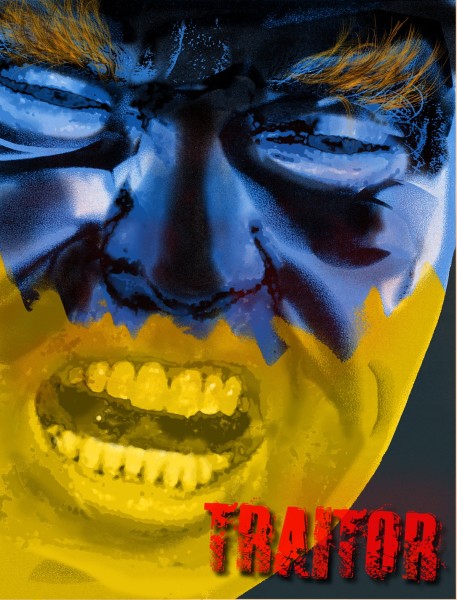
That the criminal charges against him are just a witch hunt follows from how much his enemies hate him (the first axiom) and the first rule of inference that no matter what he is being accused of, his enemies are lying—this implies that the charges against him must necessarily be fake news cooked up by the deep state.
The third rule of inference gives Trump even more latitude to defend not just his positions on important issues, but also to defend himself against charges of wrong-doing. Regarding his long-standing claim that climate change is not a problem, he has supported this view by citing the patently false statistic that the sea level will rise 1/8 of an inch (at other times he has sharpened this lie to a rise of just 1/100 of an inch) over the next 300 years. It is not clear whether he made up his ludicrous statistics on the spur of the moment or with aforethought.
Another application of the third rule is Trump’s innate right to shift blame. According to Trump the January 6 rioters were mostly peaceful with love in their hearts. Although Trump has admitted that there were a few hooligans who did some bad things, the blame for that is squarely on Nancy Pelosi and other Democrats who should have realized the potential for violence and taken precautions (presumably against the elaborate, secret plot for Trump to stay in power.)
Applying the third rule, Trump can and often should change the subject if he is asked a tough question. In an interview, Jon Karl of NBC news, asked Trump if he had been worried about Mike Pence’s safety during the January 6 rioting. Trump replied “I thought he was well-protected.“ Karl pressed Trump with the fact that many rioters were yelling “hang Mike Pence.“ Trump then did a great pivot. He replied, “It’s common sense, Jon. It’s common sense that you’re supposed to protect. How can you -- if you know a vote is fraudulent, right, how can you pass on a fraudulent vote to Congress.” Using the third rule, Trump not only had deftly dispelled any concerns that that Mike Pence’s life might have been in danger, but also was able to repeat his lie about the election being stolen.
Finally, let’s consider the following hypothetical interview with Jon Karl, in which Karl asks Trump another tough question and Trump answers with a deft pivot: Karl: “Mr. President, the Trumpian Logic theory has been in the news lately. Many experts think that theory has considerable explanatory power for the dynamics of how you and your supporters mesh. What is your response?” Trump answers, “Explanatory power, Jon, you know, let explain something to you about power. (pause) I know how to use power. Believe me, I could end the war in 24 hours.” Karl presses him, “ I’m asking you whether Trumpian Logic has any validity?” Trump, “Jon, it’s just a hoax cooked up by some no talent, low energy, wacko loser, who is probably a Fredo.”
Comments

Powered by RoundtableAn AI/DeFi-powered Enterprise Media Operating System. Learn more at Roundtable.io.© Roundtable 2026. By using this site you agree to the Terms of Use and Privacy Policy