


Jan 21, 2026 4:45 PM
Psychological Androgyny can explain Mamdani’s ability to attract women and men equally, and challenge hegemonic masculinity.
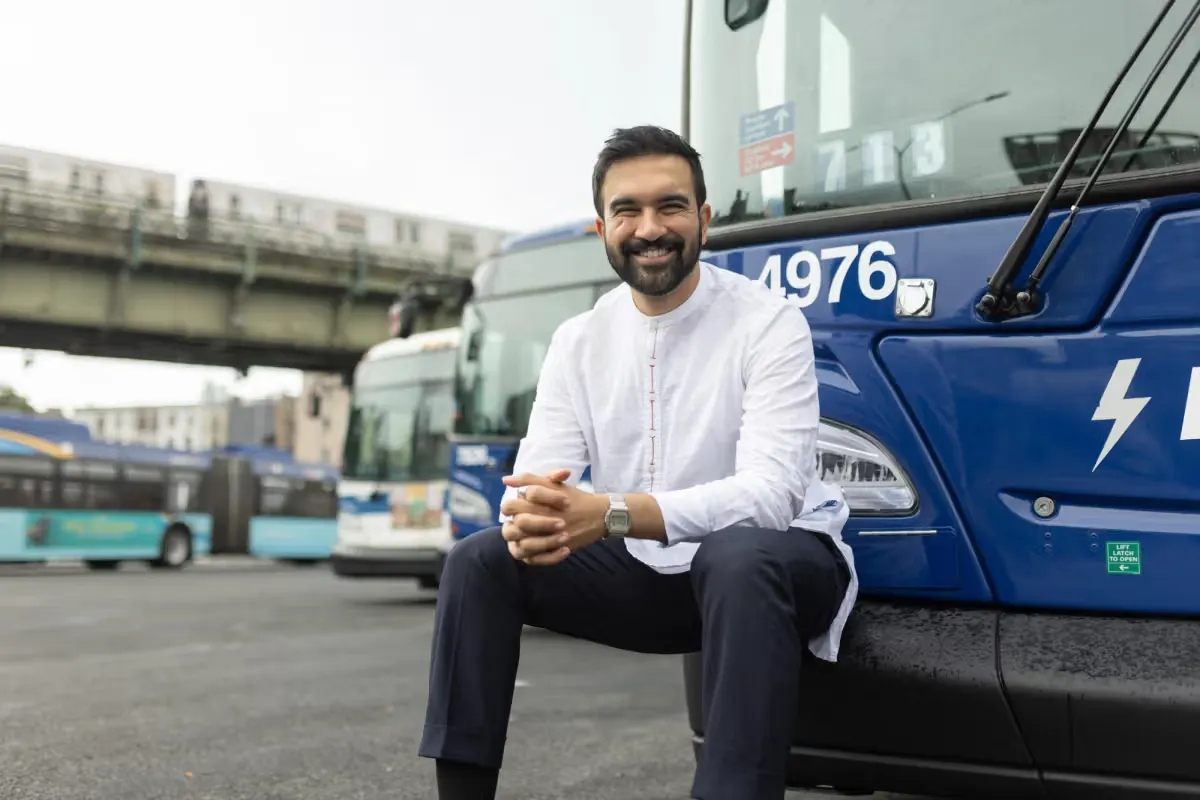
New York City Mayor Zohran Mamdani did the seemingly impossible in his decisive victory. He charged from almost total obscurity to handily beating Andrew Cuomo, a former two-term governor, twice, in the primary and general elections, despite an avalanche of negative racist attacks fed by boatloads of PAC money. His victory may signal something very important about our future.
In winning decisively, Mamdani has shown a wide range of talents, organizing skills, charisma, and psychological maturity that offers a blueprint for future Democratic candidates. But more striking, with equal support from men and women, Mamdani offers a powerful positive model for masculinity in the face of the cruel misogyny and extreme hegemonic masculinity that is at the core of President Donald Trump’s impulses and the macho MAGA movement.
Mamdani’s strengths and appeal poses a fundamental challenge to the MAGA efforts to crush #MeToo and set gender relationships back six decades. Misogynist Trumpism is now facing a growing challenge.
National Dems Take Notice
Mamdani’s victory decisively addressed two interrelated fears of the Democratic party: the ongoing erosion of male voter support, and the panic about losing young voters across the board. This fear was especially acute among young men, a voting demographic that badly slipped under Biden, and turned into a plus for Trump. Trump won men under age 30 by 56%, up 15 points from 2020. In contrast Mamdani, according to The New Yorker, won male voters between 18 and 29 by an astonishing 40 points, and 69% of all voters 18 to 40, according to CNN exit poll.
Related stories
Mamdani showed how the “youth vote” can be powerfully organized. He listened and then mobilized an unprecedented field operation, with tens of thousands of volunteers, an approach which Democrats have deemphasized over the years under the influence of high-powered consultants who believe people’s minds are changed primarily by TV ads and now social media.
No Gender Gap
But the Mamdani results show something even more striking: There was no gender gap. None. Zero. This is highly unusual in our polarized electoral system. Dems and liberal candidates typically have large gender gaps ( more female than male voters.) For example, Virginia’s recently elected Democratic Gov. Abigail Spanberger: 17 points; New Jersey’s recently elected Democratic Gov. Mickie Sherrill, 13 points. Former President Barrack Obama’s gender gap in 2012 was 10%. Hillary Clinton 13% against Trump in 2016. President Joe Biden’s was 12% against Trump in 2020. Vice President Kamala Harris was 10% against Trump in 2024. It is true that the gender gaps in these races were against male Republican candidates. But Cuomo, running a highly negative attack campaign, endorsed by a mix of Trump, Republicans, billionaires, and conservative Democrats, and known as a “political brawler,” was a very reliable stand in for macho Republicans on the New York ballot.
Mamdani the super feminist still wins the men
The absence of a gender gap is central to the essence of Mamdani’s magic. His unique appeal is why I see the model of psychological androgyny as a way of understanding why Mamdani is the person to challenge the model of macho, dominating, misogyny that lords over the Nation in this time of MAGA. (More on androgyny coming up).
The fact Mamdani is a strong proponent of protecting trans rights would normally send many male voters packing. According to NPR, Trump’s campaign spent $222 million on anti-trans and LGBTQ ads, which many felt contributed significantly to the Harris loss.
But Mamdani didn’t shift with the conventional wisdom. He has pledged to make New York City a “sanctuary city” for LGBTQ+ people, protecting them from hostile anti-trans investigations or legal actions from other states or the federal government. He is very strong on reproductive rights. He also has supported the decriminalization of sex work between consenting adults.
In the end, Mamdani’s platform resonated strongly with young women as well. Exit polls indicated he won more than 70% of women under 45 and won majorities of Black, Latina, and Asian women overall.
And yes, to say it again, Mamdani won 50% of the male vote, the same as his proportion of the female vote. He won male Democrats by 71% (and females by 64%), compared to Cuomo at 26% and 34% respectively. Despite hyped trends about MAGA’s inroads among minority men, Mamdani won Black men by 60% and Latino men by 54%. Among all other voters (who were 17% of the overall vote), he won by 62%.
Androgyny: A potential antidote to hegemonic masculinity
If its essence can be captured, the Mamdani model of sensitivity, inclusion, listening, and sturdy determined advocacy for all New Yorkers offers a powerful pushback to the dominating “broligarchy” (aka MAGA supporting tech billionaires and popular podcasters) which fueled the male energy that helped elect Trump in 2024.
This MAGA style of male behavior is known in social science as hegemonic masculinity. It was developed by R. W. Connell and James Messerschmidt and influenced by Antonio Gramsci’s notion of hegemony as “an ideological practice that sustains and legitimizes the powerful in society.”
As they write, “Hegemonic masculinity is broadly considered to be ‘macho,’ i.e. assertive, aggressive, courageous, almost invulnerable to threats and problems, and includes a refusal to acknowledge weakness.” It is clear that Trump/MAGA is acting out an extreme version of this dynamic.
Hegemonic masculinity dominates MAGA and much of corporate America, along with many institutions including the military, police forces, ICE, private security, and sports. It embraces the violent cage wrestling, ubiquitous sports betting (and increasingly betting on everything,) and the range of risk-taking behaviors that are key factors in the “bro culture.” But it doesn’t have to be the model that controls America. It wasn’t controlling during the Obama and Biden administrations. Hegemonic masculinity is not healthy masculinity, but rather the rancid category of “toxic masculinity.”
Which brings us to how Mamdani was able to achieve the unusual trick of equal support from men and women.
I attribute part of his success to his psychological maturity and balance — his comfort in his own skin — which leads to his authenticity, which, in turn, leads to his attractiveness to both men and women.
Mamdani’s political essence is represented by what I know of as psychological androgyny, the combination of masculine and feminine personality traits, leading to greater adaptability, flexibility, and well-being. It is not related to sexual orientation. Androgynous individuals can draw on a wider behavioral repertoire (e.g., being both assertive and nurturing), which studies link to higher self-esteem, creativity, social competence, and better mental health, allowing them to respond situationally rather than being confined by rigid gender roles.
Advocates for psychological androgyny argue that most men and women inherently have a range of male and female characteristics at birth. Under socialization, the pressures of religious traditions, hierarchical institutions, strict father family models, as articulated by the linguist George Lakoff, and a dominating hyper capitalism, rigid gender models persist. In the time of MAGA, they are present on steroids. The result is an ever-increasingly polarized society, and physical and emotional harms suffered by men and women.
The Tough and Tender polarity
I see in the Mamdani personality and approach the potential to transcend the attempt by MAGA to turn the clock back 60 years. I call Mamdani “tough and tender” because he showed so clearly that you do not have to be a pugilistic, macho, cruel guy to be firm and tough. Even Trump was wowed in their White House meeting, when he said Mamdani was likely to be successful and they could work together. I suspect that Trump was awed by Mamdani’s fierceness with a smile, along with the “Teflon nature” of Mamdani’s success, where tons of money, vicious attacks, the influence of powerful corporate and political figures, and Trump’s own endorsement could not dent his popularity.
Mamdani is the most “integrated” person I have ever observed in politics. He embraces his feminine and masculine parts with ease — it is truly his essence. What this means to me is that he has resolved his polarities.
In that sense he is the opposite of Trump.
A “polarity” is comprised of two seemingly opposite parts of a person’s personality that can cause an inner conflict. Fritz Perls, the creator of Gestalt Therapy, had at its center the resolution of our polarities. We all have these seemingly opposing forces, and often they are shaped by society.
Thinking about all of this takes me back many years when I was engaged in exploring men’s roles in sexism, and its effect on couples in graduate school.
I was in training as a Gestalt therapist for a career in psychotherapy. I was developing theories about sex role stereotypes as part of my dissertation research. I realized then how resolving polarities and androgyny go hand in hand.
Back then “tough and tender” was my favorite polarity. It seemed an essential balance for all genders. (My psychological career path was waylaid when I could not resist the call of politics and campaign managing, back then for Ruth Messinger and then David Dinkins in NYC.
In my research, I encountered a school of feminist thought led by Sandra Bem, and others who proposed that androgyny is psychologically healthier than strictly masculine or feminine identities because it allows for a wider range of adaptive behaviors in different situations.
Bem’s work, along with and that of Joan Bean and Alexandra Kaplan, editors of “Readings Toward a Psychology of Androgyny,” and others, helped reframe gender roles as socially constructed and flexible, rather than fixed and biological. A high level of androgyny is strongly linked to creativity and original thinking, as it allows for a broader spectrum of psycho-emotional responses. People who have expanded their behavioral repertoire feel better about themselves, as Mihaly Csikszentmihalyi , the expert on “flow’ has noted.
Ironically, androgyny recently got a shout out in The New York Times. In a look back at Gen X cultural phenomena, androgyny was associated at first with gender fluid music stars like Boy George, Grace Jones and Prince, along with the popularity of “glam rock.”
But as the Times notes, androgyny “became not just a fashion statement but a critique of social constraints and a way to assert nonconformity in an increasingly commercialized, media-saturated world. It also laid the groundwork for today’s charged and evolving conversations about gender fluidity and identity.”
These seem like germane goals for mature people. Hopefully, the need for fresh takes on “liberated” masculine behavior means that androgyny could have a third life in 2026 and beyond.
For me, resolving polarities and embracing the psychology of androgyny is primarily about fighting the powerful conditioning to see things as either/or which can lead to a range of dysfunction. People who are unable to hold nuance or who see things only as a zero-sum competition can be harmful, intolerant, and unable to have true insight into others’ experiences, as we have seen during this MAGA era. This notion can also be applied to the polarization within the Democratic party, where institutional thinking often reverts to the schism of progressive vs. moderate.
The masculinity we are fighting against
Trump was swept back in office with the support of young men. Many were mobilized across the board by a galaxy of conservative podcasters like Joe Rogan and influential figures like Dana White, the czar of the hugely popular and profitable Ultimate Fighting Championship (UFC) (formerly known, and outlawed, as violent cage fighting.)
This collection of men and their leaders represent the “bro-culture,” who, depending on class and education, might be day traders, sports bettors, video game addicts, cage-wrestling fanatics. They are a tribe that revels in risk taking, is often thrilled with violence, and whose adherents embrace the values of dominance and male superiority. They are led, or, rather, frequently funded by the “broligarchs” — billionaires in crypto, AI, private equity, start-ups, sports betting, and so on who cheered the young men on and invested hundreds of millions to influence them and bring MAGA back to power.
In the 2024 election, Trump capitalized on the backlash over some men’s feelings of being sidelined or overrun by women, who they see as having achieved career and financial success at their expense. Trump took dead aim at the #MeToo movement. Trump always believed the men.
As Elizabeth Spiers wrote in The New York Times, “On Election Day, no group of voters was more loyal to Donald Trump than young white men” because “he is a walking avatar of a kind of masculinity that Democrats could never embrace [author’s emphasis], and its appeal transcends this electoral cycle.”
This macho MAGA shift clearly pushed some number of young men toward what they perceived as someone who understood them, and “had their backs.”
The Challenges Facing Young Men and the Democratic Party
There are daunting challenges when thinking about gender in this period of widespread despair, especially for young men. Their generational anxieties, coupled with powerful misogynist messaging fueled by large amounts of money, make them vulnerable to appeals from the manosphere, and by activities that connect with their angst as seen in social isolation, infatuation with video games, and, in short, attention addiction.
Some fresh ideas are necessary. Many young men seem to be floundering with how to gain emotional intelligence and escape from the pull of video games and loneliness. Many discuss feeling threatened by female success, particularly in terms of educational achievement and the job market.
In the face of the “macho” appeal of MAGA, the national Democratic Party had a virtual nervous breakdown when numbers of male voters, especially young ones, including voters of color, moved hard toward Trump in 2024. Trump even bragged at the “inroads” he made in NYC, and with minority voters, especially men.
This crisis of male political “abandonment” led to meetings of the minds at the DNC and the funding of the “Speaking with American Men Project (SAM), designed to help Democrats understand and woo young men. The group has a two-year, $20 million budget to study the demographic and how Democrats can reach them.
When this information went public, there was quite an amount of derision aimed at what some perceived as a futile quest. Some said the effort was a desperate search for a progressive Joe Rogan. There were many comments that elitist Democrats simply just don’t know how to talk to men, especially working-class and younger ones.
It is too bad that political cynics have contempt for efforts to solve problems by trying better to understand changing voter dynamics. Still focus groups might not lead to answers when sometimes the real reasons that motivated young men — like, potentially, not wanting a woman to be president — might not surface. I call these factors the dark underbelly of secret voter motivation.
Politico reported on the results of some 30 focus groups done by the SAM group. “Many young men believe that ‘neither party has our back,”’ as one Black man from Georgia said.” “Participants described the Democratic Party as overly scripted and cautious, while Republicans are seen as confident and unafraid to offend.”
These findings, at least initially, are useful because they underscore why Mamdani was such a compelling candidate for young men.
In addition to intangibles like he was “a cool dude,” dressed well, was once a rapper, Mamdani is nothing if not superbly confident. His approach of first listening and then organizing around the goals of affordability communicated that he had his voters’ back. His hard-nosed critique of Trump’s “fascism” was a centerpiece of his campaign, as he promised to protect the hundreds of thousands of vulnerable immigrants living in NYC. He is unafraid to offend.
How Mamdani may be relevant nation-wide.
Many Democrats, including old-school pundits, are still wedded to the old paradigm of a battle between the party’s moderates and progressives. For example, Paul Begala desperately tried to minimize Mamdani’s victory in a recent Tom Edsall New York Times column. This is part of the predictable conventional wisdom that New York is so different than the rest of the country that comparisons can’t be made.
This marginalizing attitude about New York is kind of the opposite of Frank Sinatra’s line, in the famous song, “New York, New York,” that if you make it there, you can make it anywhere.
Let’s take a quick, close look at the city of 8.5 million. It is both unique and typical. It is home to every ethnic group imaginable, including the largest number of Jews in the country, totaling close to a million people, or roughly 11% of the population. Mamdani received 31% of the Jewish vote despite a constant drumbeat claiming he was anti-Semitic.
Go back not so far in history. The city had Republican Rudolph Guiliani as mayor for 2 terms, and Republican Michael Bloomberg for 3 terms. The incumbent Eric Adams, an ex-cop, was quite conservative, and, as it turns out, allegedly corrupt. So, over the past 29 years there have been 6 terms of moderate to conservative mayors, and three of liberals (Dinkins and De Blasio.) The point is NYC, while reliably Democratic, has not been predictably liberal.
The lesson is that nothing is simple or predictable. As Mamdani turned NYC on its head, he may be able to frame a new approach to politics for millions across the land, especially young voters.
Summing it Up
At this point, imagining a society of caring, respect, fairness, harm reduction, accountability and more, seems far off despite some hopeful signs. The elections of 2025 were promising. Trump’s polling numbers continue to be dismal. But as the recent invasion and abduction of Venezuela President Nicolas Maduro shows, there is no restraint on the part of Trump’s acting out on any issue.
The corruption reigns supreme. The tearing down of government agencies, contempt for constitutional rights and the judiciary, the decimation of basic protections for Americans, moves forward in full force. Even a Democratic victory in Congress in 2026’s midterm elections may do little to slow Trump down, as his behavior consistently ignores Congress and laws, and gets cover from a subservient Supreme Court.
But, as we are aware, there is resistance everywhere, ongoing, creative, angry. There will come a moment when the tide turns. But tides move slowly. There is likely a long hard path to get there. But we must be resolute.
Mamdani’s stirring inauguration speech showcased the “tough and tender” values and moral compass I associate with him. He embraced millions of residents from dozens of neighborhoods and cultures, promising he is on their side. He spoke eloquently of New Yorkers helping each other in time of need. He talked about the “softness in people’s hearts.” And he assured people, saying, “I will protect you. And not for a second hide from you.”
I don’t know exactly how the magic can be bottled but clearly both men and women in New York felt heard by Mamdani. It is possible that significant numbers of men felt that being part of something positive was preferable to the anger and alienation, and the bullying and dominance that is central to the MAGA identity — in essence, blame others, but especially women.
Here’s to hoping that the Mamdani energy can start a prairie fire among voters, especially young ones across the land. There is an alternative to Trumpism. We saw it in 2025’s elections. We can imagine it growing.
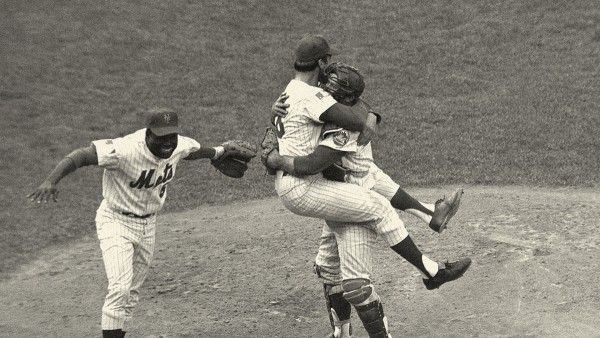
Postscript: The 1969 Mets. A model of hope for the unexpected.
Please indulge me with an afterthought: As I was reflecting on Mamdani’s rip roaring victory, I thought of the miracle New York Mets of 1969. For many, that accomplishment is still the most amazing moment in sports. Most Mamdani voters were not alive at the time. Part of the Mets miracle is they were an “expansion” team and had not ever had a winning season prior to finding themselves in the World Series. Then, they beat the favored Baltimore Orioles four games out of five.
The parallels feel apropos. Mamdani had name recognition of 1% when he started his unlikely climb. Then Cuomo, the two-time governor entered the race. He became the heavy favorite, especially as $40 million was poured into the election for Cuomo by a number of billionaire backers including $3.5 million from former NYC Mayor Bloomberg.
I thought of the Mets, because I could not think of a political earthquake in New York politics remotely at the level of Mamdani’s. Let’s hope the energy of his election spreads and forms the foundation for a “tough and tender” takeover of America in the next few years.
Comments

Powered by RoundtableAn AI/DeFi-powered Enterprise Media Operating System. Learn more at Roundtable.io.© Roundtable 2026. By using this site you agree to the Terms of Use and Privacy Policy