


Mar 28, 2025 10:45 PM
Updated Apr 10, 2025 2:46 PM
Five leaders who threatened democracy and the citizens Wto Fought to Defend It
As America grapples with Donald Trump’s return to the White House, there is new urgency to look back at previous racist presidents who threatened our democracy. It is more important than ever to remember racist presidents who used their vast powers to pursue corrupt and authoritarian ends, and it is perhaps even more important to be inspired by how the people fought back to resist and recover our freedoms and liberties from racist presidents.. More Videos
By Corey Brettschneider. Reviewed by Stephen Rohde
As America grapples with Donald Trump’s return to the White House, there is new urgency to look back at previous presidents who threatened our democracy. It is more important than ever to remember presidents who used their vast powers to pursue corrupt and authoritarian ends, and it is perhaps even more important to be inspired by how the people fought back to resist and recover our freedoms and liberties.

Patrick Henry, the Revolutionary War hero and two-time Governor of Virginia, refused to serve as a delegate to the Constitutional Convention in 1787, warning that he “smelt a rat in Philadelphia, tending toward a monarchy.” When he saw that the new Constitution would install the president as both the singular head of the executive branch and the commander in chief of the military, his fears were realized. At the Virginia Ratifying Convention in 1788, Henry showed remarkable foresight, warning that a president could use his power to aid and abet his criminal ambitions. “If [the president] be guilty,” he told the convention, then his criminal proclivities meant that he wouldn’t hesitate “to make one bold push for the American throne.” And how would the American people respond? “What will then become of you and your rights? Will not absolute despotism ensue?”
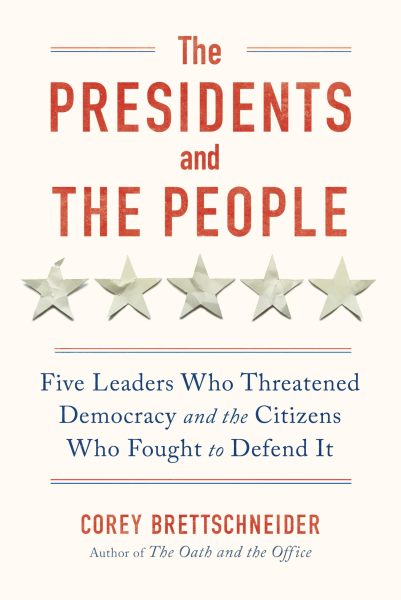
Patrick Henry serves as an American oracle in Corey Brettschneider’s engaging new book The Presidents and the People: Five Leaders Who Threatened Democracy and the Citizens Who Fought to Defend It. Brettschneider offers lucid and revealing profiles of five presidents - John Adams, James Buchanan, Andrew Johnson, Woodrow Wilson, and Richard Nixon - who “stoked the fire of a constitutional crisis” and “wielded the nation’s most powerful office to undermine a core aspect of democracy.” Given the “fragile pillars of American democracy,” Brettschneider believes each of these presidents stands “as a conspicuous example of the damage a single president can do.”
Related stories
Fortunately, Brettschneider doesn’t leave it there. He also explains in vivid detail how, in each of these fraught moments, “democratic constitutional constituencies” - or, one might say, activists - fought back to ensure a “democratic recovery.” Here we can learn important lessons that make the threat posed by Trump “a time ripe for constitutional recovery.” Brettschneider sees hope for democracy in the “cycle of constitutional reckoning and recovery.”
John Adams Punished the Press for Criticizing His Policies
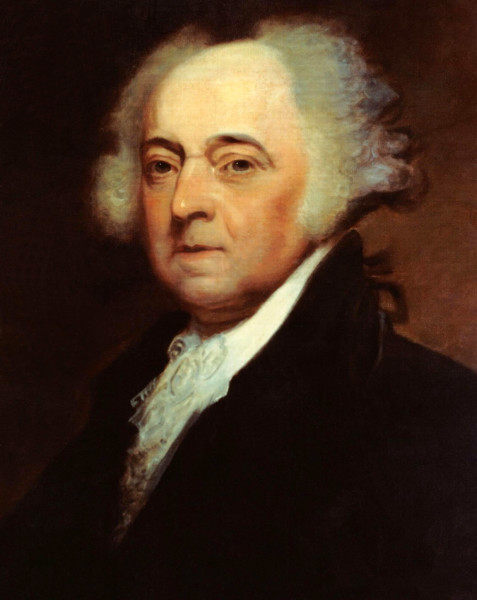
Many may be surprised to find John Adams on Brettschneider’s list of “crisis presidents,” given his legendary role as an American statesman, diplomat, and Founding Father. But Brettschneider’s account makes clear why our second president richly deserves to be included.
The ink was barely dry on the First Amendment, ratified in 1791, when Adams, fearing an impending war with France, signed the infamous Alien and Sedition Acts. Three of the acts granted Adams the power to imprison or deport resident “aliens” deemed to be enemies of America and to retract the civil liberties of virtually all noncitizens. The Sedition Act made it a federal crime to publish “false, scandalous, and malicious writing” – i.e., writing that criticized the president, the government, or members of Congress. Anyone convicted faced up to two years in prison and a $2,000 fine (about $48,000 today according to Brettschneider).
In this earliest concerted governmental attack on civil liberties and freedom of the press in American history, at least 126 defendants were prosecuted under the Sedition Act. Brettschneider describes several of the more egregious cases, and, in keeping with his theme, he also describes how several defenders of the First Amendment fought back, starting with the press.
In the late eighteenth century newspapers were partisan organs, favoring either the Federalists (Adams’ party) or the opposition Democratic-Republicans party, led by Thomas Jefferson. A glaring example was the Philadelphia Aurora. Owned by Benjamin Bache, grandson of Benjamin Franklin, the newspaper printed scathing editorials accusing Adams of needlessly inciting conflict with France while at the same time printing letters like the one referring to the “querulous and cankered murmurs of blind, bald, crippled, toothless Adams.” William Duane, who took over the Philadelphia Aurora when Bache died of yellow fever, helped organize a petition to repeal the Alien Acts, and he exposed a Federalist plot to refuse to certify electoral votes in the upcoming election of 1800. (Sound familiar?)
Thomas Cooper, a lawyer and former editor who had emigrated from England, flipped the script when he was prosecuted under the Sedition Act and turned his trial into an indictment of the Act itself. He declared that the right to criticize Adams was fundamental to democracy. The people could not “exercise on rational grounds their elective franchise,” he argued, “if perfect freedom of discussion of public characters be not allowed.” As Brettschneider points out, although Cooper lost the case, through his vocal criticism of the Sedition Act “he sought victory for his democratic understanding of the Constitution in the court of public opinion.”
Jefferson and his ally James Madison also joined the resistance to the Acts. They drafted resolutions, two of which were adopted in Kentucky and Virginia, declaring them unconstitutional and pledging to refuse to assist the federal government in enforcing them.
In the end Adams’ repression of the press figured prominently in his loss to Jefferson in the 1880. At Jefferson’s inauguration - the first voluntary exchange of power between political parties - he devoted his entire speech to the restoration of constitutional democratic principles. He allowed the Alien and Sedition Acts to expire, and he issued a general pardon to everyone who remained in prison for violating them.
James Buchanan Secretly Lobbied the Supreme Court to Uphold Slavery
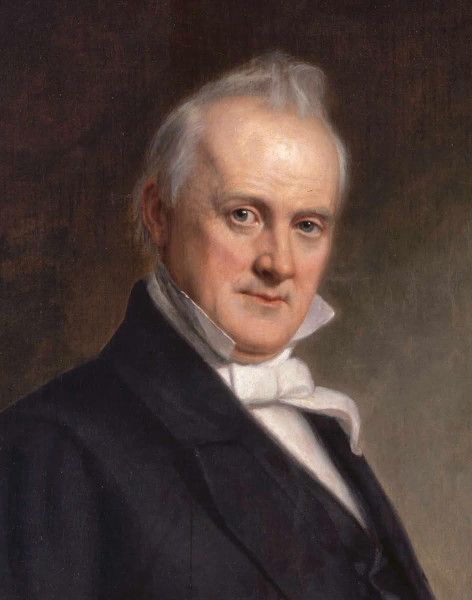
While John Adams abused his powers in public, James Buchanan, our 15th President, undermined democracy in secret. Brettschneider calls him “arguably the most radical proslavery president America ever had.” His duplicity centered around his grossly unethical backdoor lobbying of Supreme Court justices while they were deliberating over the notorious Dred Scott case. Brettschneider describes Buchanan’s deplorable chicanery in detail. In the end, the Court voted 7-2 to strike down the Missouri Compromise, which had prohibited the holding and owning of enslaved people in that new territory.
Describing Buchanan’s misdeeds gives Brettschneider the opportunity to highlight the pivotal role that Frederick Douglass, the ex-slave and incomparably eloquent abolitionist, played in the recovery and restoration of our democratic ideals. Douglass exemplifies Brettschneider’s premise that the American political experiment survives because time and again the authoritarian abuses of certain presidents is met by courageous activists who speak out and build movements to defend democracy.
In his fiery speeches and explosive writing, Douglass argued that decisions like Dred Scott and slavery itself were incompatible with the Declaration of Independence, the Constitution, and the Bill of Rights, which he had come to see as anti-slavery documents imbued with ideals that would spell the end of that abominable institution. As Jefferson followed Adams, Abraham Lincoln followed Buchanan, the next step in Brettschneider’s theme of recovery and restoration. He devotes a fascinating chapter to how Douglass privately and publicly goaded Lincoln to transform his personal opposition to slavery into official government policy until finally, on January 1, 1863, Lincoln signed the Emancipation Proclamation.
“Under pressure from Douglass and his democratic constitutional constituency,” Brettschneider writes, “Lincoln’s interpretation of the Constitution evolved from a focus on the rule of law” - reluctantly accepting slavery because it was technically legal - “to one that put a more inclusive understanding of a democratic people at its center.”
Andrew Johnson Undermines Reconstruction and Perpetuates White Supremacy
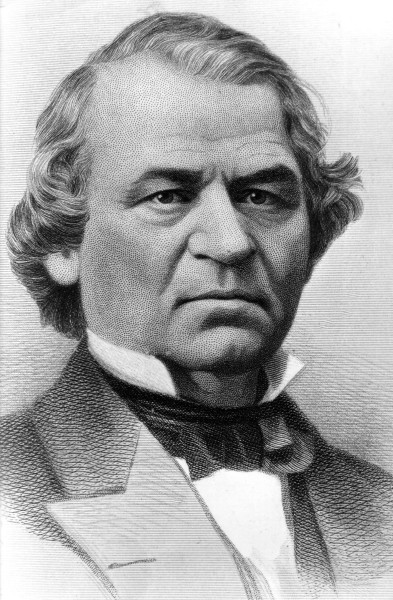
Brettschneider continues his theme by examining the racist presidency of Andrew Johnson, the ongoing resistance organized by Douglass, and the restoration fostered by President Ulysses S. Grant by supporting civil rights and constitutional protections to Blacks.
The single bullet fired by John Wilkes Booth on April 14, 1865, not only killed Abraham Lincoln and elevated his pro-slavery Vice President to the presidency; it derailed the America’s march toward becoming a multi-racial democracy.
Johnson, who was raised in Tennessee with no formal education, rose through the ranks of the Democratic Party running vitriolic campaigns condemning the Southern aristocracy while he himself owned eight slaves. He believed the Declaration of Independence included “the white race, and not the African race.” Upon Lincoln’s assassination, with “the levers of presidential power at his disposal,” Brettschneider writes, “Johnson began to enact the white supremacist ‘democracy’ he had long envisioned,” ensuring “that the end of slavery did not entail equality for Black people.”
On February 7, 1866, Douglass and a group of African American leaders engineered a meeting with Johnson. Douglass told the president that Black Americans needed the “ballot with which to save ourselves,” but the President was defiant and aggressive. He suggested that giving Blacks the right to vote would lead to a “war of races” and instead he mused about repatriating Blacks to Africa. Douglass ended the meeting pledging to take his case “to the people.” When the Republican-controlled Congress passed the Civil Rights Act, which overturned the notorious Black Codes - laws that functionally re-enslaved African Americans - and explicitly established citizenship for freed Blacks, Johnson vetoed it. He expressed doubts the newly freed slaves were qualified for the “privileges and immunities of citizenship” and he complained that “the negro” would be privileged over more “intelligent” foreigners. Congress overrode his veto, enacting the first comprehensive civil rights legislation in US history.
When the Republicans proposed elevating civil rights to the stature of constitutional protection in the form of the Fourteenth Amendment, Johnson proclaimed his horror in a letter to Missouri’s governor: “This is a country for white men, and by God, as long as I am President, it shall be a government for white men.” But his power was slipping away. The Fourteenth Amendment was approved by Congress on June 13, 1866, and ratified on July 9, 1868. Johnson couldn’t stop it from becoming law.
Outraged when Johnson fired Secretary of War Edwin Stanton, a holdover from the Lincoln administration who supported the redistribution of land to formerly enslaved people beginning with Special Field Order No. 15 (the famous promise of forty acres and a mule), the House of Representatives impeached the President. Although he avoided conviction in the Senate by one vote, he was politically weakened and the Democrats refused to renominate him in the 1886 election.
Douglass endorsed Ulysses S. Grant, a Republican. The Civil War hero won in the first presidential election in which Blacks were allowed to vote in significant numbers, despite vicious and murderous efforts by white supremacists to prevent them from casting their ballots. After a massacre in St. Landry Parish, Louisiana, killed two hundred Black people, not a single vote was cast for Grant in that state. One thousand Blacks were killed in all of Louisiana and two thousand in Arkansas.
Rewarding his new constituents even before he was sworn in, Grant applauded the Fifteenth Amendment, which banned racial discrimination in voting and gave the federal government a role in protecting that right. He called Black voting rights “the realization of the Declaration of Independence.”
Grant continued to commit his presidency to implementing the Fourteenth and Fifteenth Amendments. He supported and signed bills, generally known as the Enforcement Acts, giving him the authority to deploy federal troops to thwart the Ku Klux Klan and to send federal judges and US marshals to guarantee ballot access. The laws made it a crime for the Klan and other groups to go “in disguise upon the public highways” and elsewhere to prevent the exercise of constitutional rights and to violate the civil rights of any American. They also authorized the federal government to prosecute these cases if state and local governments failed to do so, and empowered citizens to sue officials in federal courts for violation of their civil rights.
To enforce these new laws, in 1870 Grant established the Department of Justice. Within two years, the DOJ secured a thousand convictions, frequently before majority Black juries. Grant also integrated the federal government, appointing a record number of Blacks, as well as Jews and Native Americans, to top, middle and lower-level positions, including Ebenezer Bassett, the first African American diplomat, who was appointed Ambassador to Haiti.
Through it all, Douglass and the Black constituency he had built continued to expand their political power, electing Black representatives to Congress, and lobbying Grant, now in his second term, to support more aggressive protections for civil rights. On March 1, 1875, Grant signed the Civil Rights Act of 1875, speeding up integration and codifying the idea that equal treatment regardless of race is part of American law.
But an ugly combination of unrepentant racism within the American electorate and a reactionary Supreme Court obstructed the hopeful march toward racial equality. In a series of shameful decisions, the Court struck down the Civil Rights Act of 1875 on the grounds that “social equality” could not be legislated; it eviscerated key portions of the Enforcement Acts; and in 1896 it issued the notorious Plessy v. Ferguson decision, using the noxious “separate but equal” doctrine to give legal cover to segregation.
Douglass lived to see much of his legacy undone. He died on February 20, 1895, having devoted his life to dismantling the tenacious legacies of slavery, knowing that others would have to complete the job.
Woodrow Wilson Nationalizes Racism and Segregation
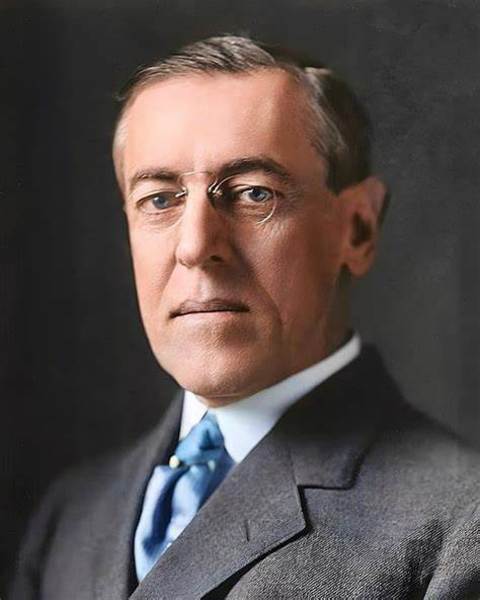
Brettschneider continues his theme by examining the anti-democratic aspects of Woodrow Wilson’s presidency. As he demonstrates, the role that Wilson played in perpetuating racism in America has not received the attention it deserves. Brettschneider does a very good job exposing it through his vivid description of the tenacious efforts of activists like Ida B. Wells and William Monroe Trotter, and the restoration and recovery that would later emerge under Harry S. Truman.
Wells, whose parents were both enslaved, became an investigative journalist, educator, and a founder of the National Association for the Advancement of Colored People. She gained prominence throughout the 1890's by documenting how the 2,658 lynchings in the United States since 1885 had been used to terrorize African Americans because they represented economic and political competition for whites.
Trotter, by contrast, was born into a wealthy political family in Boston and attended Harvard, where he become its first Black Phi Beta Kappa. In 1901, he founded the Guardian newspaper, which he devoted to reporting on, and condemning, the racism that pervaded every aspect of American life. Together, Wells and Trotter “changed the course of Black activism and defined the mission of constitutional recovery of the Reconstruction amendments.”
Wilson, a Democrat, former President of Princeton and former governor of New Jersey, first rose to prominence making statements supporting civil rights. His position was vague but sufficiently persuasive that Wells and Trotter decided to support his campaign for president, hoping he would make the Democratic Party a vehicle to renew the movement against segregation that the Republican Party had abandoned.
Once in office, however, Wilson did the opposite: He resegregated federal institutions, reversing the integrationist practices that had been initiated by Grant over 40 years earlier. “He used the presidency to normalize - indeed, nationalize - a revisionist history that made white superiority the nation’s identity,” Brettschneider writes. “The effect was to send the country into a constitutional crisis so pernicious it would not be fully undone for fifty years.” Wilson’s “white supremacist ideology completely rebuked the multiracial democracy that Frederick Douglass had envisioned.” As president, Wilson was able to implement, on a national scale, the racist ideology he had earlier taught at Princeton. His lectures, according to Brettschneider, “narrowed the meaning of the post-Civil War amendments to almost nothing” and “minimized Reconstruction.” Applauding German and Prussian aspirations to political and cultural efficiency, “Wilson opened the door to nationalizing ideas like segregation and anti-pluralism.” Brettschneider bases this fascinating portion of his book on his unprecedented examination of a collection of black, leather-bound notebooks kept by Wilson’s students, which are maintained in the Princeton University archives and have never before been examined or described.
Wilson believed that “friction” was the enemy of liberty, and thus equality was secondary. Ominously, he even applied this theory to voting. Since the right to vote depended on the “capacity to judge,” he believed and taught that race served as a good predictor. Based on his observation of “fact and performance,” whites were more capable at judging than Blacks. He popularized these racist theories in his writings, including A History of the American People, a sweeping five-volume set. According to Brettschneider, Wilson argued that “expanding franchise and political power to Blacks was a disaster for a society that should have sought to avoid inefficiency, and the ‘ignorance and credulity’ of Blacks ‘made them easy dupes’ for opportunistic Republican politicians.” As just one example, in 1909, as president of Princeton, he rejected the admission of a Black applicant regardless of his qualifications, telling him “It is altogether inadvisable for a colored man to enter Princeton.”
During his presidency, as Wilson worked largely outside the spotlight, segregation became gradually unmistakable in Washington, DC. “One by one, cafeterias, workplaces, and bathrooms became segregated in practice,” Brettschneider writes, and “Black federal employees suddenly found themselves subject to menial jobs, worse working conditions, or openly discriminatory managers.”
But as Wilson rose, so did Trotter and Wells. “Trotter and Wells teamed up to respond to Wilson’s betrayal,” Brettschneider writes. They formed the National Independent Political League to fight for voting rights and a new federal anti-lynching law. “They understood the imperative to sound the alarm to Black activists, while also seeking to convince Wilson to undo his stealth segregation.” Brettschneider tells this story in rich detail, describing how Trotter and Wells and the movement they built ushered in “a new democratic constitutional constituency that opposed second-class citizenship for Black Americans, demanding equal protection and the right to vote.” They would continue their struggle for racial equality until Wells died in 1931 and Trotter in 1934.
Brettschneider then continues his overarching theme by describing how the cause of restoring the march toward equality would be taken up by others, including a young lawyer named Thurgood Marshall and Sadie Alexander, a lawyer and the first Black woman in America to earn a PhD in economics. And they would have the unexpected support of Harry Truman.
In the wake of Franklin D. Roosevelt’s lackluster record on civil rights, Truman surprised many on December 5, 1946, by establishing the President’s Committee on Civil Rights to explore how federal, state, and local governments “may be strengthened and improved to safeguard the civil rights of the people.” He appointed Alexander as the only woman on the committee. She played a pivotal role, including inviting Marshall to testify. According to Brettschneider, when Marshall testified, he propounded “one of the most influential constitutional arguments of the twentieth century,” asserting that “the preservation of American democracy required the destruction of Plessy.”
In December 1947, the committee published its groundbreaking report, “To Secure These Rights,” cataloguing the humiliations and terrors of daily life experienced by Black Americans. “The national government of the United States,” the report unequivocally declared, “must take the lead in safeguarding the civil rights of all Americans.” The report made a series of specific recommendations that Brettschneider calls a “roadmap for recovering a Constitution that had been abandoned since the demise of Reconstruction.”
Less than two months later, in a special message to the nearly all-white Congress, Truman enthusiastically embraced the report, calling for strong anti-lynching legislation, bills to protect the right to vote, a permanent commission on civil rights, fair employment practice legislation, and an end to discrimination in interstate transportation facilities. A few months later, by executive order, Truman ended legal segregation in the federal government and the military, and he created the Fair Employment Board.
Driving home his theme, Brettschneider concludes that “Truman’s transformation did not occur in a vacuum,” but was generated by the organized democratic constitutional constituency steered by Alexander, Marshall, and the NAACP, building on the work of Wells and Trotter and inspired by Douglass and all those who struggled alongside them.
Richard Nixon Brings Criminality into the White House
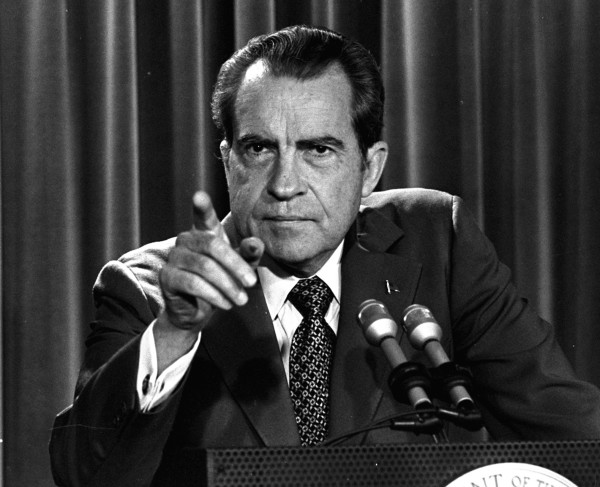
Before turning to the fifth and last of his crisis presidents, Brettschneider provides an excellent account of how Thurgood Marshall, the NAACP, and Dr. Martin Luther King, Jr. continued to pave the road to recovery through the presidencies of Dwight D. Eisenhower, John F. Kennedy, and Lyndon Johnson. It was a rocky road, full of potholes and detours, but the leaders of the modern civil rights movement never gave up, winning the historic - and unanimous - decision in Brown v. Board of Education in 1954. Thereafter Eisenhower signed the Civil Rights Act of 1957 – over the objections of his vice-president, Richard Nixon – and he used the military to protect Black children attending school in Little Rock, Arkansas. Johnson then signed the Civil Rights Act of 1964 and the Voting Rights Act of 1965.
It is in the context of the anti-democratic presidency of Richard Nixon that Brettschneider recounts the ominous warnings of Patrick Henry, where we began. Brettschneider is deeply concerned that while our system and our society “challenged Nixon’s monarchical idea of the presidency,” the “structure of the executive branch that allowed Nixon to flout the law largely still exists.” Consequently, he believes “we have never fully recovered from the Nixon presidency.”
The Watergate story is familiar to most of us, but Brettschneider brings new and revealing insights. Incensed by Daniel Ellsberg’s leaking of the Pentagon Papers and the Supreme Court’s refusal to enjoin their publication, Nixon launched an all-out attack on Ellsberg and the press. Even before the Supreme Court issued its ruling on June 30, 1971, he had begun his criminal conspiracy. On June 17, 1971, he ordered his staff to break into the Brookings Institution, which held additional classified documents detailing his private thoughts and misdeeds during the Vietnam War, including his efforts to prolong the war by undermining peace talks and bombing Cambodia. When his staff hesitated to break the law, on July 1 he renewed his order, saying, “I want the Brookings Institute safe cleaned out.” But when word of the plot reached John Dean, who was serving as White House legal counsel, he called it off.
Undaunted, that same month Nixon formed the Plumbers - officially known as the “Special Investigations Unit” - a group that, on September 3, 1971, broke into the private office of Ellsberg’s psychiatrist. On May 3, 1972, the Plumbers planned to start a riot as a cover for physically assaulting or possibly murdering Ellsberg on the steps of the Capitol during the reading of an anti-war play, while 19-year-old college student Roger Stone created a diversionary counterdemonstration. The plot was foiled when a scuffle broke out blocking the Plumbers as they approached Ellsberg, who escaped unharmed. And on June 17, 1972, the Plumbers were caught breaking into the Democratic National Headquarters at the Watergate office complex.
While the criminal trials of the Plumbers and several of Nixon’s closest aides are well known, to advance his theme of how democracy is defended by ordinary people outside the institutions of government Brettschneider focuses on the service and tenacity of the twenty-three anonymous American citizens who sat on Grand Jury One, fourteen of whom were Black and at least thirteen were women. Convened from June 1972 to March 1974, it sought to hold Nixon and his co-conspirators accountable for their crimes.
But Nixon stonewalled the Grand Jury. He resisted a subpoena of his secret taping system and tried to blunt the investigation by ordering his Attorney General to fire Special Prosecutor Archibald Cox. When eventually a new prosecutor, Leon Jaworski, was appointed, the jurors decided to flex their independence by meeting in private away from Jaworski’s gaze. They voted unanimously to indict Nixon on four counts for bribery, obstruction of justice, obstruction of a criminal investigation, and unlawful interference with a witness. Jaworski was livid. He ordered the grand jury into session and strenuously argued against the indictment, which required his signature. But the citizen jurors pushed back. A standoff ensued. Eventually, the jury forced Jaworski to name Nixon as an unindicted co-conspirator and turn over all the evidence they had accumulated to the Congressional impeachment investigation. The rest is history.
When President Gerald Ford pardoned Nixon, the grand jurors sent Jaworski a letter demanding that he challenge the pardon on the grounds that it interfered with their ability to hold the now former president accountable. But Jaworski declined.
Despite the work of Ellsberg and Grand Jury One, and despite the public uproar over Watergate, Brettschneider believes that when understood properly, “Nixon’s presidency and resignation is not a study in the strength of our institutions,” but instead their vulnerability. The “recoveries led by citizens after the threats from Adams, Buchanan, Johnson, and Wilson contrast with the Nixon presidency, where Daniel Ellsberg and Grand Jury One fought for accountability but never saw full justice.”
Brettschneider doesn’t adequately explain why Nixon’s impeachment, resignation, and public shaming do not constitute at least as much accountabilty as was visited upon the other four presidents. And Ellsberg certainly deserves to be included in the pantheon of activists who courageously resisted a crisis president. He was never tried and convicted of espionage because the crimes committed by Nixon’s Plumbers prevented him from getting a fair trial. Instead, Ellsberg lived an active public life publishing books and speaking out, condemning government secrecy, defending scores of other whistleblowers, exposing the threat of nuclear war, and leading the campaign to stop the prosecution of WikiLeaks founder Julian Assange. Awarded the 2018 Olaf Palme Prize for his “profound humanism and exceptional moral courage,” Ellsberg died on June 16, 2023, at the age of 92.
Why Aren’t George W. Bush and Donald Trump Included Among the Presidents Who Threatened Democracy?
It is curious that Brettschneider decided not to include George W. Bush and Donald Trump among the ignoble pantheon of crisis presidents. Bush lied to the American people, to Congress, and to the world to justify waging devastating wars against Afghanistan, Iraq, Syria, and elsewhere, which have since spread to 78 countries. According to an assessment conducted by the Watson Institute for International and Public Affairs of post-9/11 wars, over 900,000 people have been directly killed, the targeted countries have been driven into chaos, the US has spent over $8 trillion, and 38 million people have been displaced. Bush launched all this while opening the notorious Guantanamo detention center, signing the USA Patriot Act, and violating civil liberties and human rights on an unprecedented scale. It sure sounds like he’s at least as much a threat as Adams and the others were. If not, Brettschneider should have explained why.
While he devotes a short concluding chapter to Trump’s first presidency, without explanation Brettschneider holds back from including Trump in his rogue's gallery. He briefly mentions the Mueller investigation, the first Trump impeachment, and January 6, and he notes that the current moment is “marked by profound antidemocratic threats.” But Brettschneider does not begin to describe the profound and multifaceted threats to democracy posed by Trump, which is the very essence of his thesis.
While Brettschneider is optimistic that the past responses to crisis presidents “offer hope for the future of democracy,” he reminds us they provide “no guarantees about the future.” That lesson is even more important now that Trump is back in office. Brettschneider wisely observes that the Constitution “will not provide democratic rights and presidential accountability to the people on its own.” It depends on the resistance of all of us - We the People - to fight back, speak out, organize, and vote. We fail to do so at our peril.
Comments

Powered by RoundtableAn AI/DeFi-powered Enterprise Media Operating System. Learn more at Roundtable.io.© Roundtable 2026. By using this site you agree to the Terms of Use and Privacy Policy