



Jul 7, 2024 5:17 PM
Updated Jul 23, 2024 4:54 PM
Is undecipherable political language and a complicated electoral process destroying democracy? Some might argue that these complexities are unavoidable, but the more cynical among us suspect something more is at hand.
Every four years, the airwaves across the United States are bombarded with election lingo. We're flooded with a language that disappears the day after the general election. Words like primary election, ballot box, electoral college, instant runoff, caucus, Super Tuesday, superdelegate, precinct, and dozens more roll off the tongues of pundits as if everybody is fluent in this language. The truth is, most of us aren't as familiar with the lingo as perhaps we ought to be.
So, the LA Progressive is going to provide a regular column, defining and explaining many of these terms. This piece will focus on the national presidential election and these terms: primary election; caucus; democratic convention; delegate; and superdelegate.
Primary Elections and Caucuses
Every state and territory in the United States participates in the presidential general election, but before they can send their nominee to the general election, they must first choose a nominee. To elect a nominee, each state holds a primary election or a caucus, or a combination of the two, and then each party sends delegates to the national convention to confirm the nominee chosen in the primaries and caucuses.
Primary Elections
Primary elections are held 6 to 9 months before a presidential election. Primary voters choose their preferred candidate anonymously by casting secret ballots, either via vote-by-mail or by voting at an election site. The state where the primary is held takes the results of the vote into account to award delegates to the winners. Most states use this method to elect a nominee. Approximately 20% of eligible voters participate in the primary election.
Related stories
Caucuses
A few states use the caucus method to determine who the nominee will be. Caucuses are meetings run by political parties where the nominee is chosen. Some caucuses choose candidates by secret ballot. Others require participants to divide themselves into groups according to the candidate they support. Undecided participants form their own group. Each candidate’s group gives speeches and tries to get others to join their group. At the end, the number of delegates given to each candidate is based on the number of caucus votes they received.
Also, at the convention, the presidential nominee officially announces who will run with them for vice president.
To sum this up, in most cases, people registered as members of a particular party will vote in the primary for that party or attend a caucus meeting for that party to choose a nominee. Each political party has a mechanism for selecting delegates that will then go to the convention to confirm the outcome of the primaries and the caucuses.
In the Democratic Party, each state has an allocation of pledged delegates and unpledged delegates. These people go to the national convention and usually vote for the person who won their state's primary, or caucus.
Democratic Party Delegates and Superdelegates
In the Democratic Party, there are two overarching types of delegates.
- Pledged / Bound Delegates: Rank and File Democrats who are locally elected to go to the Democratic National Convention as delegates. These delegates must support the candidate they were awarded through the primary or caucus process.
- Super Delegates / Unpledged Delegates: Unelected delegates who are selected and can support any presidential candidate (in their party) they choose. Unlike pledged delegates, super delegates are chosen by virtue of their role in the party—because of the positions they hold, i.e. Party Leaders and Elected Officials (PLEO) and others.
The table below indicates the number of pledged delegates and superdelegates allotted to each state.
Delegates and Superdelegates by State / Territory
In order to secure the nomination, the presidential candidate must garner a majority of the pledged delegates on the first ballot which is an estimated 1,968 pledged delegates. Joe Biden has already met and exceeded this requirement. He has 3894 pledged delegates as of this writing (July 7, 2024). It is widely reported that there is no clear-cut mechanism to replace Biden as the Democratic Party's nominee because he already won the delegates during the primaries. This is why so many people are urging him to voluntarily withdraw from the race. The system just doesn't have a built-in solution. The convention, in reality, is unnecessary. The pledged delegates are already in the bag for Biden. This really puts a spotlight on the importance of primary elections -- in other words, 20% of eligible voters picked Joe Biden while the other 80% stayed home.
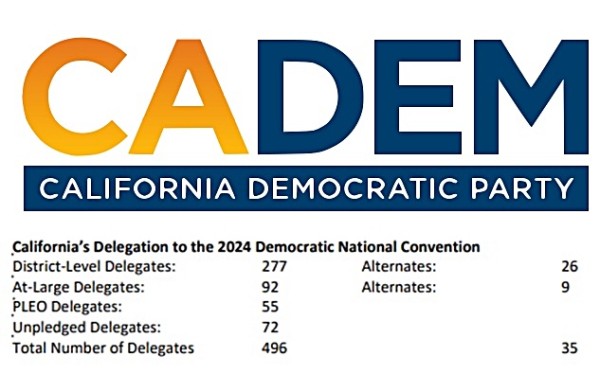
The electoral process is made more complicated by complex party rules, much of which is not covered in this piece. Of course, each state and territory has its own set of rules, and each party has their own as well. The delegate data provided in this piece could change, but at the time of this writing, the data was current, although I should note that as I researched to prepare this article, there were times when the source material conflicted. For example, with respect to the number of superdelegates in California, the California Democratic Party is currently reporting that California has 72 superdelegates, while the Green Papers posted that California has 71. The source material for this article was primarily drawn from Ballotpedia, Wikipedia, The Green Papers, and the California Democratic Party website.
According to the census, approximately 4 million Americans reach the voting age of 18 every year. That means that approximately 16 million people will have the opportunity to vote for the first time in a presidential election this November. Given that civics is no longer taught in the vast majority of American public schools, I'd say we've done a piss poor job preparing them to take the reigns of this so called democracy. But perhaps this, too, is by design.
Comments

Powered by RoundtableAn AI/DeFi-powered Enterprise Media Operating System. Learn more at Roundtable.io.© Roundtable 2026. By using this site you agree to the Terms of Use and Privacy Policy