


Feb 1, 2023 11:58 PM
Updated Feb 28, 2024 10:08 AM
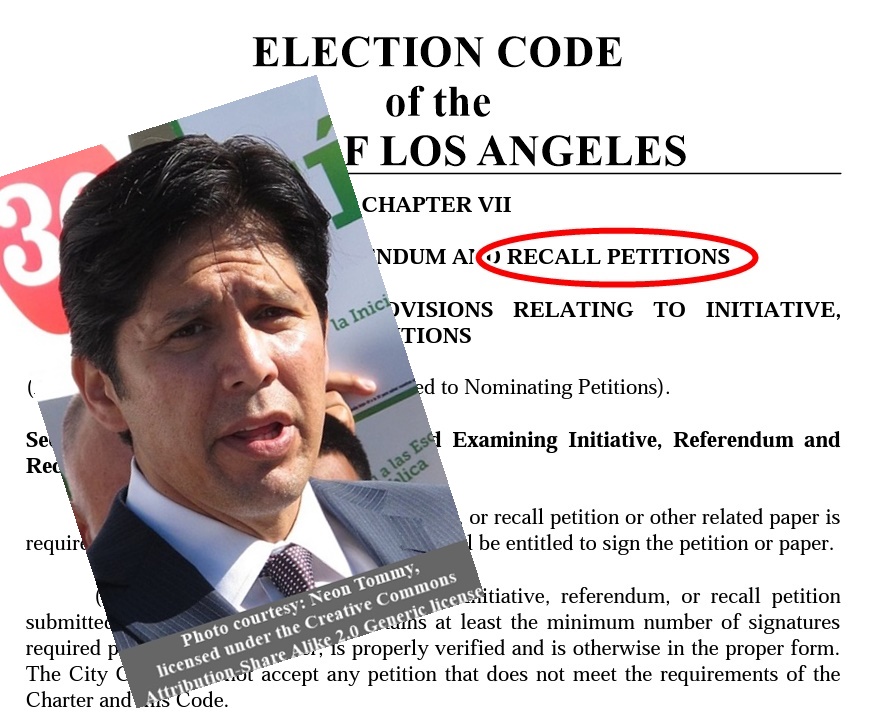
The rules for a recall election in L.A. may frustrate the goal of regaining a trustworthy, new representative in CD 14 this year.
Hans Johnson of EAPD discusses the pros and cons of a recall for Los Angeles City Council district 14.More Videos
It’s not as simple as some Angelenos believe. The self-destruction of Councilmember Kevin De Leon over his bigotry, hypocrisy, and narcissism has driven a strong majority of voters in Council District 14 (CD 14), 58 percent, to support recalling him from office, since he refuses to resign.
But the rules for a recall election in L.A. may frustrate the goal of regaining a trustworthy, new representative in CD 14 this year. Recall supporters need to reckon with the rules, including how they prescribe for the choosing a successor. It would be sad if grassroots campaigners toiled to initiate a special election only to anoint inadvertently yet another politician funded by insiders and fixated on their own career path instead of a community servant focused on solving the problems of constituents.
Start with the facts about replacement candidates. In L.A., a recall targeting a local official that gathers sufficient voter signatures for an election triggers a ballot with two parts.
Part one is the recall question. Part two is replacement candidates. They get to file and qualify for the ballot in a brief window once the recall reaches the threshold of valid voter signatures.
Related stories
On part one of the ballot, the recall question, a majority of votes—50 percent plus one—is required to remove a local official from office.
On part two, many candidates typically file and qualify to compete in a recall election, from wannabe celebrities to gadflies to politicians past and present. In L.A., the $220,000 taxpayer-funded pay to each councilmember would be added inducement for some candidates. It is 15 percent higher than the Governor’s and boosted by a $66,000-per-year city pension payment, plus car, plus expenses. This lofty salary has kept Councilmember De Leon collecting each paycheck despite scorn from voters, unrelenting calls for his resignation, cutoff of his committee assignments, and protests even by Council colleagues.
Under L.A. rules for recall, a replacement candidate needs a majority of votes to win, if the recall question is approved. This differs from the rules for California state officials, which allow a successor to prevail with merely the most votes, or a plurality.
Under provisions common to both the state and the City of L.A., any official targeted for recall cannot appear on the ballot as a replacement candidate.
It is worth noting that California recently amended state law on recalls. Lawmakers passed AB 2582 in the 2022 legislative session, which Gov. Newsom signed on Sept. 29, just a year after celebrating his own victory over a recall that sparked pledges of reform. The new law effectively separates local recall elections from the selection of a replacement. But this new law does NOT apply to Los Angeles. L.A.’s city charter and its own election code hold sway.
In L.A., if the recall question passes and no candidate secures a majority of votes as replacement, then the top two vote-getters go to a runoff election. Even if recalled, the local office-holder remains in office a few more weeks, pending the outcome of that runoff. The two competitors, and the interests aligned with them, would square off in a compressed, costly, high-stakes fight for the seat.
Given the rules in L.A., three major concerns about a recall election in CD 14 stand out. First, the accelerated timeframe of a recall benefits replacement candidates with existing campaign treasuries and those with deep ties to wealthy donors and entrenched favor-seekers. These connections allow them to raise more money more quickly to pay for voter outreach and communication.
Second, the snap timing also gives an advantage to candidates with high name recognition. Existing elected officials or recent candidates who benefited from their own campaign publicity or blitzes of outside spending to promote them have an edge in any field of replacement candidates.
Third, appearing as a replacement candidate on a recall ballot is a special election. Office-holders such as Assemblymembers and Members of Congress, who must run every two years, get a free run as replacement for the higher-paying job as City Councilmember. This means they do not have to give up their current role or choose which position they will run for, which a regular election requires.
It is clear that voters in CD 14 are ready to remove Kevin De Leon. In the words of the professional pollster commissioned by the L.A. Times to survey voters, De Leon is embroiled in “a disqualifying set of events” of his own making. If it were to reach a ballot, a recall question would probably pass with flying colors. Far less clear, however, is the outcome of part two.
The factors described here show that, in a crowded field of candidates, it’s quite likely that no candidate would get a majority and that both candidates who would advance to a runoff to succeed the current councilmember could themselves be politicians with little demonstrated commitment to focused community service. Instead, both runoff competitors could be well-versed if not immersed in the influence-peddling that has led to recent indictment of three L.A. City councilmembers.
For supporters of recall, to seize on the promise of the recall while overlooking the facts, hazards, and calculus of replacement could betray constituents’ hope for effective representation going forward. It could lead CD 14 astray, again. De Leon himself succeeded Councilmember Jose Huizar, accused of serial sexual harassment, who pleaded guilty on January 19 to running a long-running racketeering operation out of his Council office. Even with the plea deal, Huizar could end up in jail for 9 to 13 years. Constituents report a pile-up of unmet needs, from parks upkeep to potholes to transit safety to pollution concerns, that have languished as the current Councilmember has taken on pariah status and seems more focused on recruiting a dwindling cadre of supporters to vouch publicly for his rehabilitation.
Filing for the regularly scheduled March 2024 primary election is likely to open this October and close in December. That existing recourse for replacing the disgraced office-holder may allow him to collect a few more paychecks. But it does not require extraordinary time, money, and labor to launch. It also holds fewer pitfalls to electing a well-trained, trustworthy, unbought new councilmember who puts service to community before self-aggrandizement. That standard is not too much to ask for. But what may seem like the obvious path to achieving it, through a recall and replacement election, may not be the surest.
Comments

Powered by RoundtableAn AI/DeFi-powered Enterprise Media Operating System. Learn more at Roundtable.io.© Roundtable 2026. By using this site you agree to the Terms of Use and Privacy Policy