


Mar 4, 2020 4:33 PM
Updated Feb 10, 2022 10:16 PM
Frank Fear: In Draconian fashion, unaffiliated voters in Closed Primary states experience taxation without participation as political parties get a free ride.
Why? It’s because 13 jurisdictions conduct Closed Primaries. ‘Closed’ means registered voters can’t vote in a state’s primary election unless they are also register as a Democrat or Republican. The 13 jurisdictions include Connecticut, Delaware, Florida, Kansas, Kentucky, Maine, Maryland, District of Columbia, Nebraska, New Mexico, New York, Pennsylvania, and Wyoming.
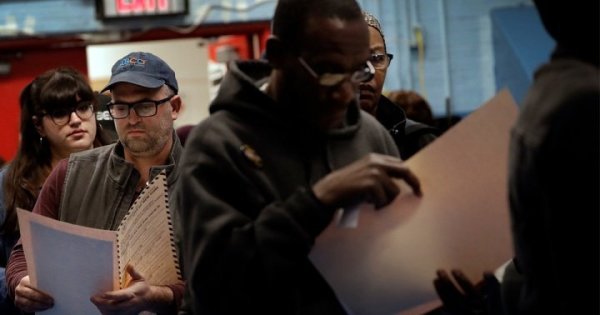
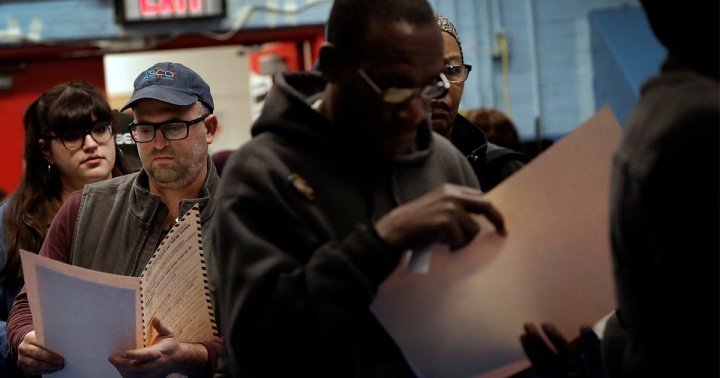
It means that millions of registered, but unaffiliated, voters can’t vote in their jurisdiction’s primary. In 2019, 70,000 unaffiliated Maryland voters were added to the voting rolls—second only the number of newly registered Democrats. But they can’t vote. There are 750,000 unaffiliated registered voters in New York City. They can’t vote. Over 1 million such voters reside in the Commonwealth of Pennsylvania. They can’t vote. The unaffiliated voting-block in Florida numbers over 3.6 million voters or nearly 30% of the state’s electorate. They can’t vote. And the fastest growing-group of newly registered voters in the District of Columbia (10,000 voters last year) can’t vote either.
In Draconian fashion, unaffiliated voters in Closed Primary states experience taxation without participation as political parties get a free ride.
“Only party members should be allowed to vote in party primaries,” is the common defense. But it’s a vacuous argument. Why? Political parties aren’t public sector organizations, even though we treat them as such. Political parties are either non-profit corporations or ‘unincorporated’ non-profit organizations. Parties don’t pay for their primary elections; citizens pay for primaries through taxes. In Draconian fashion, unaffiliated voters in Closed Primary states experience taxation without participation as political parties get a free ride.
For democracy’s sake, the primary system needs to be reformed, and efforts are underway to do just that. Bills have been introduced—and will be introduced—in state legislatures across the country. But changing a state’s primary system isn’t easy. Florida is a good example why.
Related stories
A reform proposal—Amendment 3— will go before Florida’s voters on November 3. If approved (a 60% yes vote is required), the state’s current closed system will change to an open system by modifying language in the State Constitution.
The Republican Party is opposed to Amendment 3, claiming that (if adopted) it will create what it calls ‘a jungle primary.” The Democrat Party is opposed, too, arguing that that the Amendment language is misleading and confusing. But the South Florida Sun-Sentinel sees it differently. The newspaper’s editorial board views the current closed primary system as “a smoke-filled room dressed up as a polling place to trick people into thinking it is real democracy.”
The Florida proposal also takes one giant step beyond what exists in open primary states, including my voting state—Michigan. In Michigan, voters don’t declare a party affiliation when they register to vote. It means that Independents (like me) are free to vote in one party primary or the other.
But the Florida proposal goes well beyond enabling voter access. The Florida proposal changes the conventional frame of reference—voting in one party primary or the other’ (that is, two primaries)—to a single primary for all registered voters.
And there’s more. If Amendment 3 passes on November 3, the top two vote-getters in the statewide primary election will advance to the fall general election. Think about what that means. It means that the two-party system won’t be automatically represented on the general election ballot. It will be possible for two Democrats or two Republicans to face off for the same position.
The audacious Florida proposal replaces a party-driven primary system with a voter-centered primary system. Called a ‘Top-Two Open Primary,” here’s what voters will read on November 3:
“Allows all registered voters to vote in primaries for state legislature, governor, and cabinet regardless of political party affiliation. All candidates for an office, including party nominated candidates, appear on the same primary ballot. Two highest vote getters advance to general election. If only two candidates qualify, no primary is held and winner is determined in general election. Candidate’s party affiliation may appear on ballot as provided by law. Effective January 1, 2024.”
The wonderful thing about Florida’s proposal is how it came about—through political activism. In this case, activists were affiliated with three organizations: ‘All Voters Vote,’ Open Primaries, and Florida Fair and Open Primaries. When asked about the challenges faced along the way, Steve Hough, director of FFOP, put it this way: “That's a tossup between the pushback I get from rank-and-file members of the Democratic and Republican parties and the challenge of educating voters.”
Millions of registered voters can’t vote this primary season because Closed Primaries link voting access to membership in a political organization. That’s a form of voter suppression.

This is America! The system needs to change.
Frank Fear
Comments

Powered by RoundtableAn AI/DeFi-powered Enterprise Media Operating System. Learn more at Roundtable.io.© Roundtable 2026. By using this site you agree to the Terms of Use and Privacy Policy