


Dec 12, 2020 8:30 PM
Updated Feb 10, 2022 10:16 PM
Will Bush v. Gore participants now sitting on the Supreme Court dare reprise their 2000 extralegal theft of the presidency from the victorious Democratic Party candidate?
Will Bush v. GoreParticipants Now Sitting on the Supreme Court Dare Reprise Their 2000 Extralegal Theft of the Presidency From the Victorious Democratic Party Candidate?
Twenty years ago today, five conservative members of the U.S. Supreme Court stained the escutcheon of their institution and the country, issuing an extralegal open-and-notoriously partisan ruling effectively appointing their fellow Republican George W. Bush president.
Only one of those members, Clarence Thomas, remains on the Court. But he is now part of a 6-member conservative majority, a faction that includes three members of the GOP legal team (Justices Roberts, Kavanaugh and Barrett) that helped take George W. Bush’s case “all the way to the Supreme Court,” where “the fix was in.”
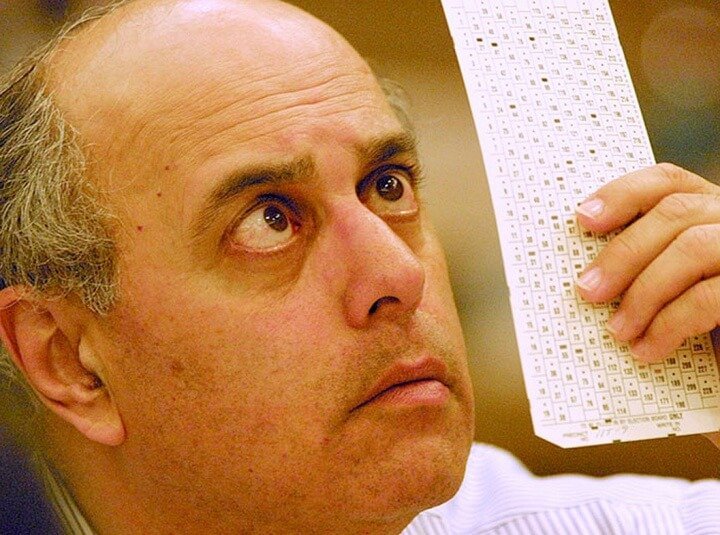
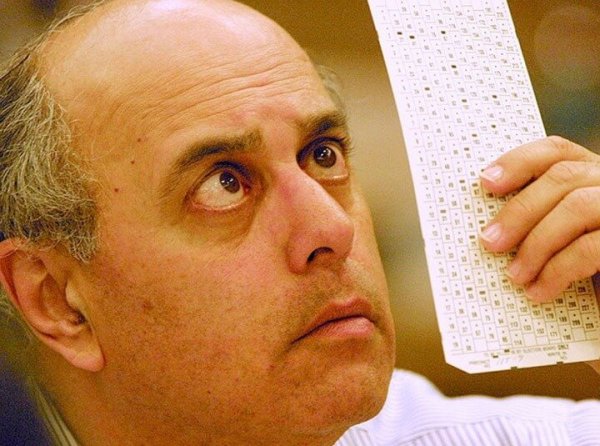
At the time of the high Court’s infamous Dec. 12, 2000 edict permanently halting a recount-in-progress in Florida—on which the outcome of the entire 2000 presidential election hinged— 175,000 Florida ballots with decipherable votes remained unexamined and uncounted.
The Electoral College was not scheduled to meet until Jan. 6, 2001 and federal law established Dec. 18, 2000 as the meeting date for electors in each state, and additionally established Dec. 12, 2000 as a “safe harbor” date, one that enabled states to insulate their democratically determined electors from Congressional challenge if the state’s electors were chosen by that earlier date.
Related stories
The Supreme Court’s five justice Bush v. Gore majority said that Florida’s recount, examining and counting (if the voter’s intent could reasonably be determined) one category of slightly mis-executed ballots (undervotes—ballots on which the machine records no vote for president but where the voter imperfectly attempted to vote for one candidate such as by dimpling or partially perforating a chad) but not another category of slightly mis-executed ballots (overvotes—ballots on which the machine registers multiple votes for president, such as a filled-in circle and a hand-written name) violated the equal protection clause of the 14th Amendment to the U.S. Constitution.
Instead of remanding the case to Florida for a new legally valid recount to be completed by no later than Jan. 6, 2001, the high Court arbitrarily cut the process short.
But instead of remanding the case to Florida for a new legally valid recount (one that complied with their equal protection ruling, in which the intent of the voter of all such mis-executed ballots would be determined) to be completed by no later than Jan. 6, 2001, the high Court arbitrarily cut the process short.
The Supreme Court Five so “put the fix in” for George W. Bush by falsely purporting that Florida had decreed that the process for choosing electors for the Electoral College had to have been completed by Dec. 12, 2000, and Justices Kennedy and O’Connor said (in their case-dispositive 5-4 majority opinion issued as an unsigned per curiam ruling): Since “[t]hat date is upon us, and there is no recount procedure in place under the State Supreme Court’s order that comports with minimal constitutional standards” the recount could not continue and (in sum) the originally tabulated result showing George W. Bush with a 537 vote lead, would have to stand.
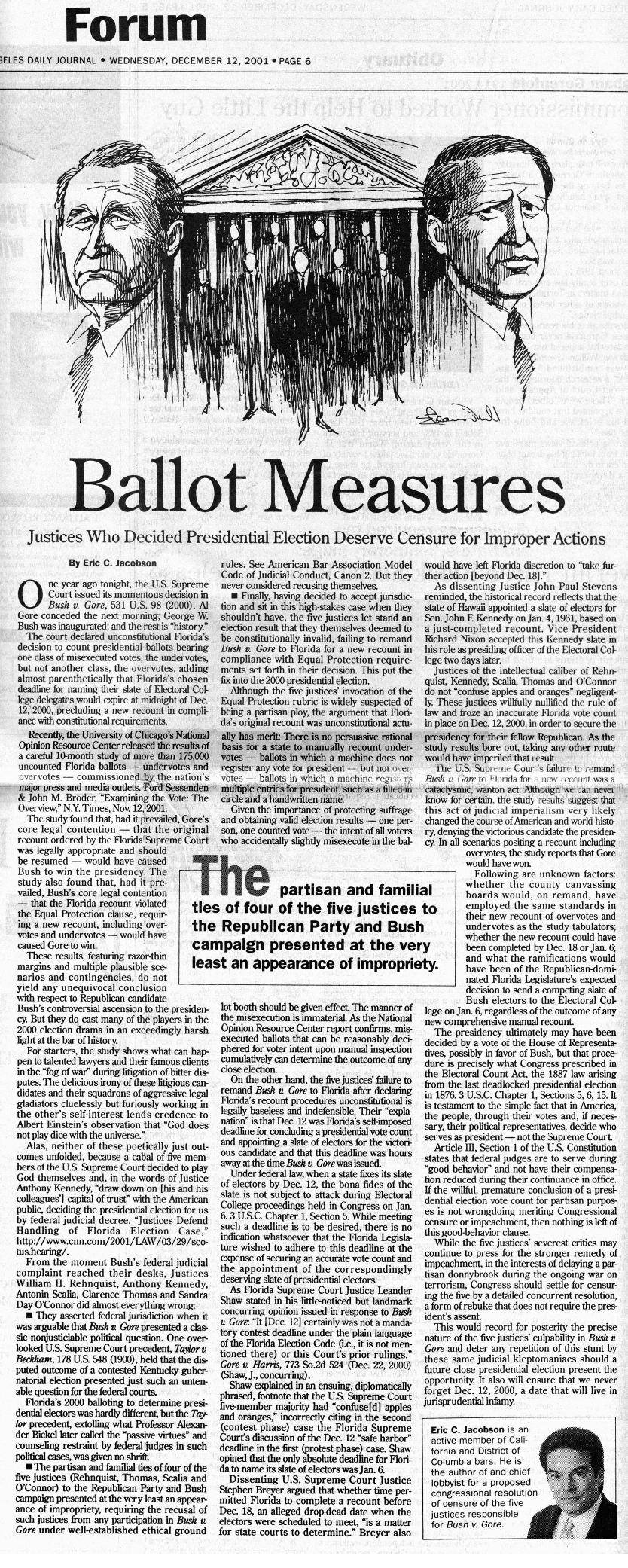
In their ruling that will “live in jurisprudential infamy,” as I put at the close an article I published in the Los Angeles Daily Journal on the first anniversary of Bush v. Gore, the Supreme Court of the United States said in effect that Florida officially preferred to insulate from challenge in Congress the wrong slate of electors (loyal to the losing candidate) created via an inaccurate statewide vote count, than await the results of a new Constitutionally-valid recount and empanel the right slate of electors (loyal to the winning candidate) created via an accurate statewide vote count.
It fell to Florida Supreme Court judge Leander Shaw to point out in a powerful statesmanlike (but unjustly historically forgotten) concurrence when the Florida Supreme Court met to execute the U.S. Supreme Court’s rogue Bush v. Gore edict, that the Florida legislature had expressed no such preference and enacted no such “drop dead” date!
Judge Shaw adverted to the two occasions the Florida Supreme Court had ruled on the recount dispute, a “protest” phase and a “contest” phase: “It [Dec. 12] certainly was not a mandatory contest deadline under the plain language of the Florida Election Code (i.e., it is not mentioned there) or in this Court’s prior rulings.” Gore v. Harris, 773 So. 2d 524 (Dec. 22, 2000) (Shaw J., concurring).
In an ensuing, diplomatically phrased footnote Judge Shaw asserted that the U.S. Supreme Court five-member Bush v. Gore majority had “confuse[d] apples and oranges,” incorrectly citing in the second (contest phase) case the Florida Supreme Court’s discussion of the Dec. 12 “safe harbor” deadline in the first (protest phase) case.
This was overly-generous. As I wrote in my Daily Journal article: “Justices of the intellectual caliber of Rehnquist, Kennedy, Scalia, Thomas and O’Connor do not ‘confuse apples and oranges’ negligently. These justices willfully nullified the rule of law and froze an inaccurate Florida vote count in place on December 12, 2000, in order to secure the presidency for their fellow Republican.”
And, it later turned out, when all 175,000 uncounted ballots were later carefully studied for voter intent by personnel of the University of Chicago’s National Opinion Resource Center (which was hired by a consortium of newspapers), the Supreme Court Five’s failure to remand the case to Florida did thwart the will of that state’s electorate: Had the Florida recount included all decipherable mis-executed ballots (both overvotes and undervotes), Al Gore would have won Florida and (seemingly but not definitely as further noted below) with it the presidency.
Ironically such a universal recount was the remedy Bush’s legal team had sought and Gore’s legal team opposed! As I wrote on the first anniversary of Bush v. Gore:
[T]he study shows what can happen to talented lawyers and their famous clients in the “fog of war” during litigation of bitter disputes. The delicious irony of these litigious candidates and their squadrons of aggressive legal gladiators cluelessly but furiously working in the other’s self interest lends credence to Albert Einstein's observation that “God does not play dice with the universe.”
Alas, neither of these poetically just outcomes unfolded, because a cabal of five members of the U.S. Supreme Court decided to play God themselves and, in the words of Justice Anthony Kennedy, “draw down on [his and his colleagues'] capital of trust” with the American public, deciding the presidential election for us by federal judicial decree. “Justices Defend Handling of Florida Election Case”.
From the moment Bush’s federal judicial complaint reached their desks, Justices William H. Rehnquist, Anthony Kennedy, Antonin Scalia, Clarence Thomas and Sandra Day O’Connor did almost everything wrong:
- They asserted federal jurisdiction when it was arguable that Bush v. Gore presented a classic nonjusticiable political question. One overlooked U.S. Supreme Court precedent, Taylor v. Beckham, 178 U.S. 548 (1900), held that the disputed outcome of a contested Kentucky gubernatorial election presented just such an untenable question for federal courts.
- Florida’s 2000 balloting to determine presidential electors was hardly different, but the Taylor precedent, extolling what Professor Alexander Bickel later called “the passive virtues” and counseling restraint by federal judges in such political cases, was given no shift.
- The partisan and familial ties of four of the five justices (Rehnquist, Thomas, Scalia and O’Connor) to the Republican Party and Bush campaign presented at the very least an appearance of impropriety, requiring the recusal of such justices from any participation in Bush v. Gore under well-established ethical ground rules. See American Bar Association Model Code of Judicial Conduct, Canon 2. But they never considered recusing themselves.
- Finally, having decided to accept jurisdiction and sit in this high-stakes case when they shouldn’t have, the five justices let stand an election result that they themselves deemed to be constitutionally invalid, failing to remand Bush v. Gore to Florida for a new recount in compliance with Equal Protection requirements set forth in their decision. This put the fix into the 2000 presidential election.
Because he had not been duly elected but rather appointed by Supreme Court judicial fiat (5 votes cancelling out Gore’s national popular vote majority) President Bush took power under a cloud of illegitimacy. And what is perhaps most significant for present purposes is that the Supreme Court Five got away with their monumental crime against the Republic.
OUR SHORT-LIVED (NINE-MONTH) 2001SUPREME COURT CENSURE CAMPAIGN
A few of us tried to hold the Supreme Court Five accountable:
I had supported and voted for Ralph Nader in 2000 and protested outside the Los Angeles Convention Center during the 2000 Democratic National Convention. Out of curiosity I had attended Al Gore’s last California campaign event in Westwood (at which Gore spoke following an introduction by Rob Reiner) and came away with the sinking feeling that the public image of Gore as incapable of connecting emotionally with the electorate was true, and that Bush was likely to win.
Yet, despite having essentially “no dog in the fight,” when the impasse in Florida occurred, I viscerally recognized that the vitality of the rule of law hung in the balance, at a time when our society had already lapsed into plutocracy, a “might makes right” ethos and “unchecked selfishness” across the board. See my earnest (if quixotic) Nov. 1997 op-ed titled “Law Schools Should Look For Moral Character.”
Because mainstream Democratic politicians reacted with (to me) appalling insouciance to the Republicans’ broad-daylight heist of the presidency via a power-mad conservative Supreme Court majority, in the days, weeks and months following this outrage, I resolved to do my part (as a public-interest-minded officer of the courts of California and the District of Columbia) to document the travesty that had transpired, one that (it quickly became apparent) had sown confusion in the legal commentariat about “what just happened” (the precise nature of the illicit power-play the Supreme Court Five had pulled), and the remedy available to civil society to rebuke it.
Having once served as an intern in the office of Rep. Ronald V. Dellums in my law school years, I concluded that a proposed Congressional Resolution of Censure was the minimum form of documentation and (I hoped eventually) accountability the Supreme Court Five should face. And through online discussion on the subject, I encountered a talented writer and activist from Washington state, David Harnden-Warwick, who became my chief colleague in what we soon dubbed the Supreme Court Five Censure Campaign.
We wrote and published online our rigorously reasoned and formally styled proposed “Draft Resolution of Congressional Censure Against United States Supreme Court Justices Kennedy, O’Connor, Rehnquist, Scalia, and Thomas for Their Betrayal of the American People and the United States Constitution Displayed in the Decisions of Bush v. Gore” (with all the gore-y details—pun intended), issued a press release, circulated the Resolution to our few political friends in high places, and began outreach to members of Congress including our own, and to fellow activists including Bob Fertik of Democrats.com and local counterparts, who helped publicize our effort.
During the Spring of 2001 I traveled to San Francisco to participate in a small march and rally protesting the Bush-Cheney administration and the Supreme Court’s action in Bush v. Gore organized by a group known as Citizens for Legitimate Government. Whereas the event failed to strike a chord with the public, which by then regarded the Bush presidency as a fait accompli, we garnered the interest of at least one celebrity activist, environmentalist Ed Begley, Jr., who rode over to our crowd in San Francisco Civic Center on his bicycle and commended us for our effort.
During the summer of 2001 I also heard from an older local Democratic Party activist who presented himself as an emissary and friend of Norman Lear. We met and discussed the Supreme Court Five Censure Campaign over lunch twice in Marina del Rey. As Bush’s presidency floundered following his passage of tax cuts in early 2001, a few aides to Congressional Representatives began to express preliminary interest in the proposed censure resolution.
Then 9/11/2001 struck. No one needed to tell me that this epochal catastrophe would stop cold any interest elected politicians might otherwise have had in a censure resolution (indirectly) calling into question the legitimacy of the Bush presidency. Three days later the gentleman representing Mr. Lear called to beg off. And that was that. But to this day I believe Congress might have censured the Supreme Court Five if 9/11 hadn’t happened. Our proposed Resolution stalled due to force majeure, not its merits, which no one has ever refuted.
And I still persisted. After the initial shock of 9/11 began to subside, as the first anniversary of Bush v. Gore approached, the Daily Journal kindly accepted my article updating the story in light of the results discovered by the University of Chicago’s National Opinion Resource Center at the behest of the newspaper consortium. When I sent the link to the Daily Journal article to former presidential candidate Gary Hart, on whose 1980s presidential campaigns I had served as an outer-circle senior advisor, he sent me a kind return email line describing me as a “bulldog” for sticking with the subject in such detail and pursuing a remedy.

On Bush v. Gore’s 10th anniversary in 2010, George Will wrote a soothing op-ed (more or less) characterizing the infamous ruling as a “tempest in a teapot.” I responded with a corrective letter to the editor, which the Post not only ran but linked to Judge Shaw’s devastating Florida Supreme Court opinion that effectively (if not explicitly) demonstrated that the Five had knowingly “put the fix in” for George W. Bush on Dec. 12, 2000.
LIKE HORROR-MOVIE CHARACTERS:THEY’RE BACK!
Flashing forward 10 more years to the present: Just as the non-conservative majority within the U.S. electorate were feeling good about having voted our fake-populist con-artist president out of office, Bush v. Gore is back in the news!
Using the infamous ruling as a blueprint for roguery rather than an ultra-cautionary tale that forever placed the respectability of the Supreme Court and its justices at risk, on Dec. 9th Texas Attorney General Ken Paxton filed a lawsuit directly in the Supreme Court pitting Texas against the states of Pennsylvania and three other swing states Trump lost in the 2020 presidential election, a complaint that openly and notoriously invites the high Court to reprise their act of judicial kleptomania in Bush v. Gore two decades hence!
The least that can be said for this brazen attempt by Texas authorities to foist a nut-bar narrative on what they hope will be a coup-compliant Supreme Court is that it gives new meaning to getting something “ass-backwards.” Bush v. Gore gave the lie (I presumed on a “one-off” basis) to America being “a nation of laws and not of men.” (Had the Supreme Court followed the law and remanded the Bush v. Gore case to Florida, Gore would’ve won the new universal recount of all mis-executed ballots in Florida and with it the presidency unless the Florida legislature had sent a competing set of pro-Bush electors to Congress on Jan. 6th, in which case the 2000 election would likely have been decided in a state-by-state vote of Congressional delegations in the House of Representatives, possibly in Bush’s favor.)
The worst that can be said about this current brazen “ask” by TrumpGOP politicized legal ghouls (who would be deemed a disgrace to their profession if the legal profession could be disgraced any further) is that the conservative Republican faction of what C. Wright Mills politely called America’s “power-elite” have devolved into nihilistic neo-Nazi knaves who believe that in America it is the “rule of men and women” and not “the rule of law” that matters.
Together they threaten to put to dross the Herculean effort what’s left of America’s civil society has made for the past year to pincer-out the “wild hair up America’s butt,” President Donald J. Trump, and deposit him in the dustbin of history.
The Texas complaint’s content is a phantasmagorical gish-gallop of purported perfidy in advance of Election Day whereby partisan Democratic operatives and (the complaint infers) closeted Never-Trump Republicans, conspired to reduce or remove safeguards surrounding absentee and mail-in ballots, and engineered their illicit outsized use during the 2020 presidential election balloting. Spelling it out further here is time- and space-prohibitive (and over-dignifies it), but here is a GOP doppelgänger version of " target="_blank" rel="noreferrer noopener">Ticked-off Vic (complete with the “bada bing bada boom”) sitting in his driver’s seat spewing-out a basic account of the lawsuit’s fumes on which the TrumpGOP’s 2020 presidential campaign is now running.
Since the filing of the Texas Complaint and Motion to Intervene by John C. Eastman on behalf of President Trump, a plethora of supportive “joinder” and “friend of the court”-type filings from red-state-America have followed in the space of days (including a bizarre filing from an attorney claiming to represent the fictional rump-states of “New California” and “New Nevada”) as well as the respective responses of counsel for the put-upon swing-states being sued by Texas and opposition and amici filings from “blue-state-America.” All are enjoying their 15 minutes of fame on the docketing page of the Supreme Court’s website.
Most noteworthy perhaps, is that nowhere in their litanies do the the Complainant (Texas) and Intervenor (Trump) say how the alleged vote “rigging” in the four fellow states of the union Texas maliciously chose to sue—trickery that purportedly cost Trump the election—simultaneously caused such desultory results for down-ballot Democrats! And why the Democratic “fraudsters” only “fixed” the presidential race and ignored the Senate and House races.
The awful truth, of course, is that the Texas allegations are a wholly deceitful scripted narrative created by TrumpGOP personnel that long ago made Goebbels-type gaslighting and “big lie” fabulism their standard operating procedure. John Dean’s latest book has their authoritarian number.
Here’s how I personally vetted the right’s preposterous claims (a form of baseless “legal wilding”) and (easily) firmly concluded Joe Biden actually won the 2020 presidential election, and not via Democratic Party vote rigging:
The USC Dornsife poll (based on a sample of the electorate that duplicates the voting populace by characteristics) and uses impeccable methodology that enabled them to call the 2012 presidential general election popular vote exactly correctly, had Biden up in the 2020 general election popular vote by >10%.
USC Dornsife’s final 2016 poll had Trump up in the national popular vote by 3.2%. See this article. Per the official final tally Trump actually lost the 2016 national popular vote by 2.1%. I’m sure USC-Dornsife did a post-mortem and improved their methodology in 2020. (Another possible explanation—since " target="_blank" rel="noreferrer noopener">tabulation systems aren’t failsafe, as Sen. Bernie Sanders’ voters found out the hard way in both the 2016 and 2020 Democratic primaries—is that some of the solidly blue states greatly padded Hillary’s 2016 reported popular vote total.)
In 2020, whereas USC-Dornsife’s final poll predicted a 10% Biden national popular vote win, in the official final tally of the 2020 national popular vote Biden actually defeated Trump by only 4%.
Presuming USC-Dornsife’s polling methodology is very accurate, either Trump closed the gap 6% in the final day of campaigning or something else happened to account for the 6% difference.
One (unlikely) possibility is that USC-Dornsife has lost the impeccable polling touch it had in 2012, which enabled it to pick up Trump’s support in 2016. Another possible explanation (since “rigging” is at issue), is that some of the solidly red states greatly padded Trump’s 2020 reported popular vote total to create a false impression that Trump did much better in the 2020 election popular vote than he really did.
That would be consistent with the TrumpGOP’s ideology featuring deep-seated contempt for democratic theory and practice and complete comfort with the “big lie” technique.
MEMO TO THE SUPREME COURT: NEVER AGAIN ENTERTAIN A PRESIDENTIAL ELECTION-DETERMINATIVE NON-JUSTICIABLEPOLITICAL QUESTION!
Alas, the specter of one unpunished still-serving Bush v. Gore Justice (Clarence Thomas) maniacally conspiring with 3 right-wing Bush v. Gore legal team veterans turned Supreme Court justices (and their +2 conservatives), to treat the past Bush v. Gore treachery as prologue, cannot be completely ruled-out. But such an act would provoke a civil society uprising the high Court as we’ve known it would almost certainly not survive. So (unless the country’s Constitution and common law traditions have been wholly nullified) there is a slim chance the high Court will take the Texas complaint seriously (other than perhaps to issue the authorities involved a richly-deserved rebuke perhaps accompanied by voluminous sanctions for vexatious litigating), and essentially nil chance they will grant relief.
As a legal scrivener myself, it will be interesting to see which of the myriad grounds the honorable justices will employ to dispatch this galling collateral attack on America’s 224 year old tradition of peaceful transfers of presidential power following democratic elections mediated through the Electoral College.
While myriad (procedural and substantive) doctrinal grounds are available for denying relief (e.g. the Texas complaint is subject to dismissal for failure to meet the “plausibility pleading” standard), some of the valid options seem far too lenient. For example, to merely rebuke the zany Texas screed attacking other sovereign states’ governmental electoral internal affairs in order to blow-up the 2020 presidential election, as a form of “officious inter-meddling,” is almost as inappropriately euphemistic as calling Ted Kaczynski’s letter bombs and manifesto a form of “misguided political protest.”
The most helpful response the Supreme Court could make to this Bizarro spectral return of Bush v. Gore, the ghost of Christmas past, is to atone for its intervention therein by declaring the instant dispute and any resembling it, off-limits for the judiciary. Here, the honorable Justices could advert to the wisdom of their judicial forbears regarding non-justiciable political questions collected by myself and my colleagues David Harden-Warwick and Barbara Hamrick in the proposed Resolution censuring the Supreme Court Five at section IV and section VII.
The instant “controversy” the Texas Attorney General has dreamt-up (evidently partly to ingratiate himself with the departing con-artist president), is in fact way beyond the capacity of the judiciary to resolve, at least at this juncture. Presuming the merit of some of the allegations might (in some Platonic abstract) be deemed worthy of being litigated (e.g., as mentioned, our nation’s abnormally privatized and overly computerized vote tabulation systems are in fact notfailsafe), the dispute is already a non-justiciable political question, if not formally moot: It is simply logistically impossible for the Supreme Court to adjudicate any facet of the “case” (from disputes over the pleadings and the conduct of discovery, much less preside over a trial—even with the full use of the services of auxiliary judges as “special masters”) and issue a ruling by Jan. 6, 2020.
The dead-giveaway of the Texas lawsuit’s frivolousness (except as a publicity stunt) is the non-recognition in either Paxton’s main brief or Eastman’s Intervenor brief of the insuperable obstacle of concluding the proposed litigation by Jan. 6, 2021, the legally mandated hard deadline for resolving the dispute. As if the country really were a “banana republic” that could feasibly wait until the eve of Inauguration Day (or even beyond!?!) for the rightful winner of the 2020 presidential election to be firmly decided!
The last word, then, on this daft desperate attempted “deus Tex machina” (as one Twitter wag dubbed it), on the 20th anniversary of the Bush v. Gore abomination, goes to Karl Marx:

“Hegel remarks somewhere that all great, world-historical facts and personages occur, as it were, twice. He has forgotten to add: the first time as tragedy, the second as farce.” — The Eighteenth Brumaire of Louis Bonaparte.
Eric C. Jacobson, a Los Angeles civil rights lawyer, is an active member of the California and District of Columbia bars, and the Supreme Court bar. In 2001 he co-founded the Supreme Court Five Censure Campaign, which advocated for a congressional resolution of censure against the five justices who decided Bush v. Gore.
Editors Note: Shortly after this article was transmitted in the late afternoon of Dec. 11th, 2020, the Supreme Court issued a brief "ORDER IN PENDING CASE". In the Order the Supreme Court precluded the State of Texas from proceeding any further with their Complaint "for lack of standing under Article III of the Constitution." The Court stated: "Texas has not demonstrated a judicially cognizable interest in the manner in which another State conducts its elections. All other pending motions are dismissed as moot."
Comments

Powered by RoundtableAn AI/DeFi-powered Enterprise Media Operating System. Learn more at Roundtable.io.© Roundtable 2026. By using this site you agree to the Terms of Use and Privacy Policy