


Apr 19, 2016 4:33 PM
Updated Feb 10, 2022 10:36 PM
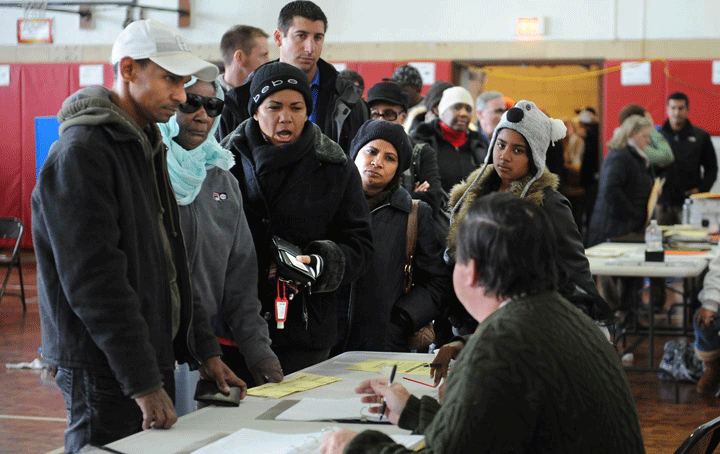
Frank Fear: The onerous outcome of New York State’s policy is that a large number of people won’t be voting on Tuesday.
The party rules … mean … the party rules.
Rules define who can and can’t vote, including the ability of otherwise eligible voters to vote on Tuesday. So the party rules (both parties, in fact, Democrat and Republican), despite the fact that all State taxpayers foot Primary costs. (And New York taxpayers pay for three separate primaries—for presidential candidates in April, for congressional candidates in June, and for state and local candidates in September).
Here’s a description of voter eligibility in Tuesday’s NY Presidential Primary as offered on the New York State Board of Elections’ home page.
The onerous outcome of New York State’s policy is that a large number of people won’t be voting on Tuesday.
“To vote in the upcoming Presidential Primary, you must be a registered Republican or Democrat. For already registered voters, any change to party enrollment was to have been requested by October 9th, 2015 in order for it to have gone into effect and be applicable for any primary election occurring in 2016 or beyond. The deadline for new voter registrations is March 25th.”
Related stories
The onerous outcome of New York State’s policy is that a large number of people won’t be voting on Tuesday. Based on numbers from the NY Board of Election over 2, 250,000 of New York’s voters (around 20% of all voters) aren’t party-affiliated. That group includes independents and members of the Green Party and The Working Families Party.
The decision to switch parties had to be executed months ago (the “October 9, 2015 rule”). And new voters had to register to vote with a primary party—like it or not, true preference or not. Even with the proviso, it’s estimated that nearly 50,000 new voters registered under New York’s rules in just ten days—between March 10 and 20.
Because it’s a “closed primary” (available to party affiliates only) an argument can be made—and Democratic National Committee Chairwoman Debbie Wasserman Schultz made it—that unaffiliated voters can distort voting outcomes. “I’m speaking for myself — this is not something that the national party’s had a discussion on – but in my opinion the Democratic primary should be determined by Democratic voters,” she toldThe Washington Post.
But even if you buy that point, the outcome remains the same: the media-hyped “New York showdown” between Bernie and Hillary is anything but. It is a one-handed fight for Sanders because it excludes voters who represent sources of strength in his campaign—independents, particularly.
It’s no wonder, then, that Clinton has a firm lead in the polls according to RealClearPolitics. The lead is between 10-17 points, with an average of 12.8 points, according to seven recent polls. The lead is so firm, in fact, that on Monday morning FiveThirtyEight.com estimated Clinton’s odds of winning at 99%.
The New York State Primary is an important event with national implications. Make no mistake about that. But the outcome is diminished by restrictive voting rules. Yes, any private club has a right to say who’s in, but this isn’t any old club and it shouldn’t be private.
This native New Yorker is profoundly disappointed in my birth state. And it’s not just because I’m a Bernie supporter who’s upset at disadvantageous game rules. I just helped a family member—a strong Clinton supporter—fill out an absentee ballot application. I’m primarily disappointed for the sake of democracy.

From my vantage point, at least, The Empire State stands small on Tuesday.
Frank Fear
Comments

Powered by RoundtableAn AI/DeFi-powered Enterprise Media Operating System. Learn more at Roundtable.io.© Roundtable 2026. By using this site you agree to the Terms of Use and Privacy Policy