


Nov 26, 2024 8:00 AM
Updated Nov 26, 2024 10:56 PM
LA’s City Hall reveals the Democratic Party’s failing domestic policies
There are no shortage of explanations for Kamala Harris’s loss to Donald Trump, such as:
- Harris did not have enough time to fashion her campaign.
- The Democratic Party abandoned its working-class base.
- Harris welcomed the support of the Cheney’s.
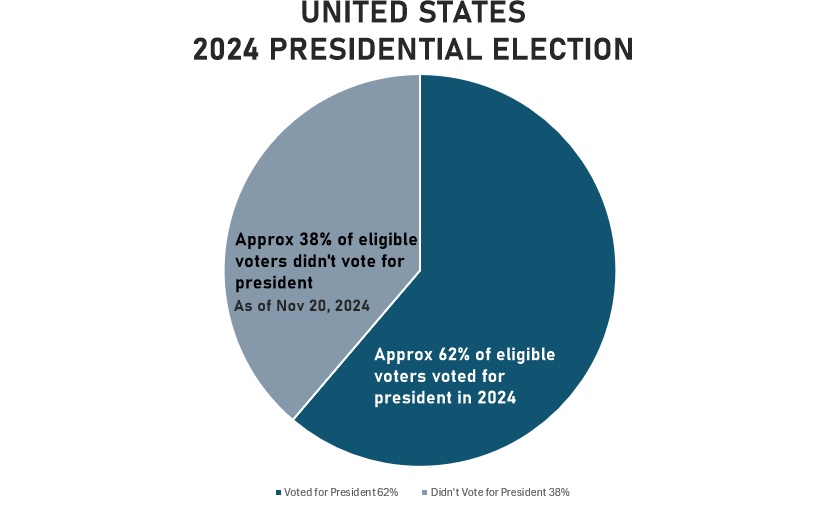
Despite these and other explanations, the mainstream rarely discusses low voter turnout, especially for Democratic voters.
Trump had 2,000,000 voters less than 2020, and Harris had 14 million fewer votes than Biden had in 2020. Overall, about 16,000,000 fewer people voted in the 2024 election than in 2020.
Related stories
How do we explain low voter turnout, as well as those who did not vote for a presidential candidate? In addition to voter registration barriers, I think these potential voters were either dissatisfied with the major political parties or the candidates themselves.
Why? The Democratic Party began its reinvention under President Bill Clinton (1993-2001). And this includes state legislators and local office holders. The party’s leaders also marginalized progressives, like Dennis Kucinich and Bernie Sanders. Since then, the power of the party’s leadership has increased. For example, even though 83 percent of identifying Democrats support a Gaza ceasefire, the Bident-Harris administration ignored their views. They repeatedly used their UN Security Council veto to protect Israel, while supplying billions of dollars in weapons to Israel for the bombing and shelling of Gaza’s people, infrastructure, hospitals, schools, and homes.
This shift to the right can also be seen at LA’s City Hall, where elected officials are non-partisan, but privately nearly all are Democrats. If you look closely at their record, it is hard to find anything progressive, especially their housing, climate, and infrastructure policies.
Homelessness is a chronic problem in American cities, especially in California, and local officials have made this crisis worse through their counterproductive policy of upzoning. This bipartisan approach benefits real estate investors and contractors, not Angelenos who need affordable housing. Despite the obvious failure of this policy, LA’s elected officials, including Mayor Bass, have zero interest in restoring HUD and CRA public housing programs. Instead, upzoning raises land values and housing costs and forces people into overcrowded, overpriced apartments, live in their cars, turn to street drugs, or sleep outside.
Climate change: The Democrats who control LA’s City Hall are not overt climate change deniers. Instead, they are climate change ignorers. For example, after two years in office, Mayor Karen Bass still relies on a 2019 climate change executive document prepared by former Mayor Eric Garcetti. It has had no public hearings, budget, monitoring, or City Council adoption votes.
Furthermore, California cities and counties must adopt an Environmental Justice Element in their General Plans, a legal requirement that Los Angeles has ignored. The State’s General Plan Guidelines also contain a chapter on climate change, which City Hall flouts.
Despite City Hall’s climate change denialism, we know what climate conditions lie ahead. The Los Angeles Times recently reported:
“In Los Angeles, average maximum temperatures are expected to increase by as much as 5 degrees by midcentury, along with an increase in extreme temperatures and extreme heat days, according to the state’s most recent climate change assessment.”
City Hall can continue to ignore climate change, but it does so at great peril.
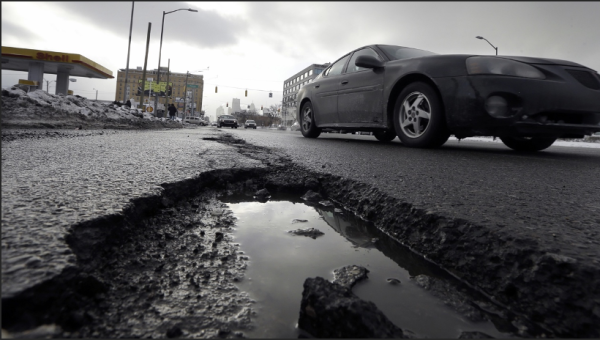
Decaying Infrastructure. While Los Angeles has many new, expensive apartment buildings, the infrastructure that serves them is old and often fails. The adopted General Plan elements for Public Infrastructure and public Services are 55 years old. They are also incomplete, unmonitored, and have no scheduled updates.
I am at a loss to tell readers how City Hall is updating its antiquated infrastructure. The closest effort is LA’s five-year Capital Work Program, maintained by the City’s Administrative Officer (CAO). This document, however, is not a plan; it is only wish lists from the City’s operating Department for public infrastructure projects.
Connecting the dots: While it might be hard for readers to connect the bipartisan hawkish foreign policy of the Federal Government to the shortsighted governance of cities, like Los Angeles, there are at least two threads that tie them together.
First, as more of the federal budget is devoted to past, present, and future wars, there is less money available for domestic needs. For example, between 1969 and 2019, federal grants to state and local governments declined for education, social services, income security, transportation, and community and regional development. During this same period, military spending increased from $450 to $750 billion.
Since 2019, both trends have continued.
Second, as the international stature of the United States declines, an increasing amount of the federal budget is devoted to war, especially those fought by proxies. Examples include the US funding for the proxy war in Ukraine, which is $175 billion to date, while Israeli attacks on Lebanon and the Gaza war total $27.8 billion so far, direct and indirect. For both major political parties, these two proxy wars are a major political priority.
But there is a not-well-hidden cost to these massive military outlays: the systematic disregard of homelessness, climate change, and urban infrastructure. As Angelenos, we are painfully aware of this. Living conditions are getting steadily worse, with City Hall unable or unwilling to stem the tide.
Comments

Powered by RoundtableAn AI/DeFi-powered Enterprise Media Operating System. Learn more at Roundtable.io.© Roundtable 2026. By using this site you agree to the Terms of Use and Privacy Policy