


Jul 30, 2021 11:00 AM
Updated Mar 8, 2024 4:37 PM
Johnny Townsend: It's in our best interest to develop policies that reduce homelessness. Stop letting monied forces trick us into maintaining the status quo.
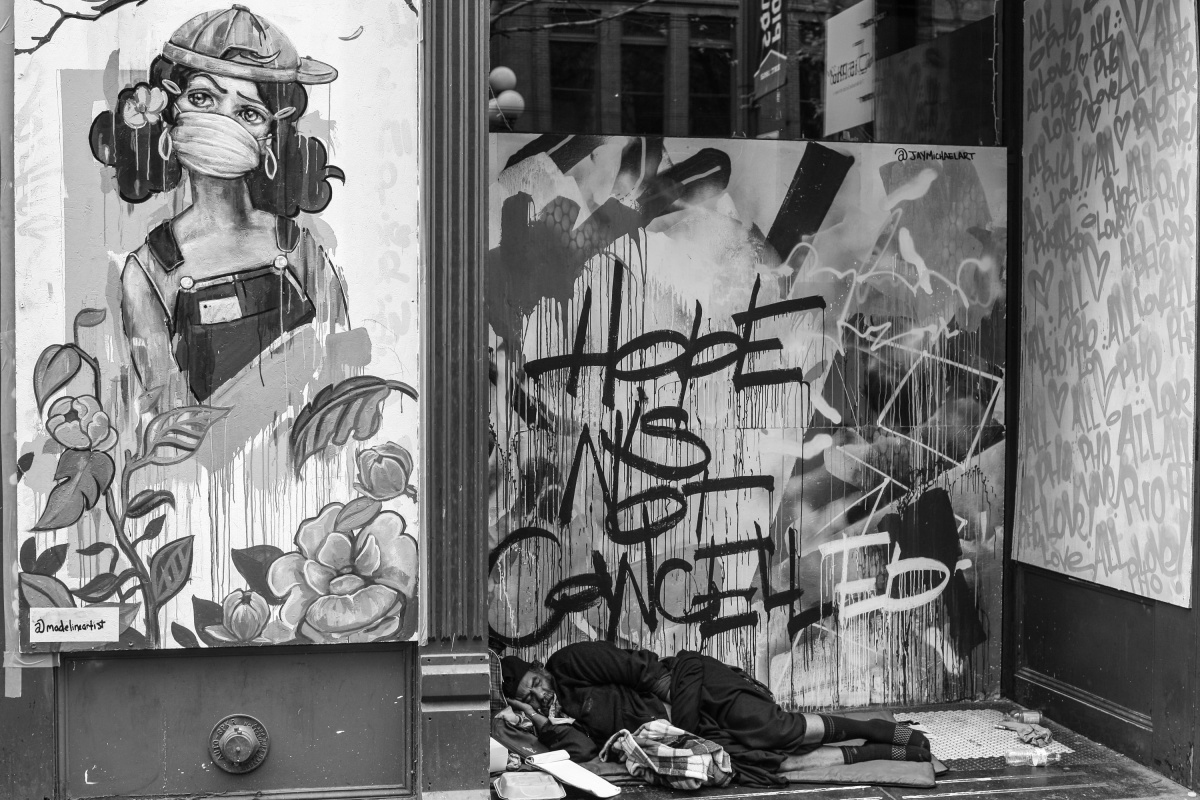
"Compassion Seattle" is just the latest attack in yet another city on the most vulnerable members of our society. It’s a charter amendment that permanently encodes actions like sweeps so that neither voters nor the city council can stop them.
According to House Our Neighbors, the charter amendment is backed by private donors and PACs that are pro-developer, many of the same individuals mounting a Recall Sawant campaign to remove a bold socialist already elected three times to the city council.
Around the country, and indeed around the world, corporate interests fund proposals that sometimes sound good on the surface but instead make things worse. If the word “Compassion” is in the name, after all, it can’t be bad.
Plus, Charter Amendment 29 in Seattle will require that 12% of the City’s general fund go toward “human services and homeless programs and services,” mostly by relocating people into “emergency” housing and constructing 2000 units of “affordable” housing within a year.
Related stories
It's in our best interest to develop policies that reduce homelessness. Stop letting monied forces trick us into maintaining the status quo.
It’s something, right? A “start.”
Of course, at last count, back in January of 2020, before the pandemic hit and homelessness skyrocketed in Seattle, there were already over 11,750 homeless people living on the streets here.
And 11% of the budget already goes to human services and homeless programs, so we’re agreeing to the bad parts of the amendment just to get a few extra dollars, almost none of it going to those who need it most. Homeless people are already living in emergency housing—tents, boxes, doorways, whatever they can manage. And affordable housing isn’t the same for someone making $65,000 a year as it is for unemployed and low-wage workers.
Nowhere in the U.S. can someone working a full-time, minimum wage job afford to rent a two-bedroom apartment. In 93% of U.S. counties, a full-time, minimum wage worker can’t even afford a one-bedroom apartment.
For those unable to work, a monthly disability check often provides less than a minimum wage job. And even disabled folks who are employed can legally be paid less than the minimum wage.
When the police, assisted by the Parks department, conduct sweeps of homeless encampments, employed but unhoused folks trying to get back on their feet must coordinate moving their belongings with still arriving at work on time. Sometimes, volunteers help relocate homeless folks with their belongings before a sweep, and then the sweep simply targets the new location instead.
Poverty pimps—organizations that “serve” homeless populations—make their living seeking grants to “help.” Since we have no way to ensure that these jobs have a limited lifespan, administrators have a vested interest in not solving the problem. They’d be out of a job.
That’s not to say everyone working with one of these organizations is actively sabotaging viable solutions. But even when dedicated humanitarians get grants and donations to provide sleeping bags and other items for homeless folks, the police and Parks employees follow that success by conducting sweeps and throwing all of that investment into the trash. The organizations then seek grants and donations to supply new sleeping bags, and the whole, horrible cycle continues.
During these sweeps, it’s not just dirty sleeping bags that are confiscated, of course. People lose their IDs as well, making it virtually impossible to apply for a job or even assistance.
Sweeping a neighborhood “clean” of homeless encampments doesn’t solve the problem in any event. It just transfers problematic human beings temporarily. The homeless are worse off, having lost what few possessions they have, and the “community” in the new area where the homeless people have been forced to relocate are now the ones enduring the tents and garbage and needles. All that money and effort, yet we do nothing constructive to solve the problem.
Making miserable people more miserable doesn’t provide job skills or rehab or mental health therapy or anything else that helps. It certainly doesn’t provide bootstraps.
Even housed residents in the newly cleaned neighborhoods can’t enjoy their relief for long. Homeless people set up encampments there to begin with because these neighborhoods are close to the necessities which keep them alive.
They’ll be back because the problems that pushed them there haven’t been resolved.
How many times have we faced a problem but put it off because we were too busy or too stressed to deal with it right at that moment? People struggling to eat healthy food but with no access to refrigeration don’t have the capacity to solve the complex problems that led to their homelessness.
The long game with sweeps and other types of “tough love” policies is to find permanent housing. But how long a game are we talking? And where do we expect these people to live in the meantime? Do we expect them to stop having bodily functions for that entire time?
Six years to house 12,000 homeless people. That’s a long time to cross your legs and clench.
At best, most cities and counties in the U.S. make an attempt at half measures. We provide clean needles but then don’t pick up the dirty needles.
We provide trash receptacles but then don’t empty them. And we make sure that housed residents and small business owners see the trash and danger in the hope they’ll resent both homeless people and any help offered them.
But it doesn’t need to be this way. In the U.S., Columbus, Houston, and Salt Lake City have reduced their homeless populations in healthier ways. Vienna, Austria has also seen some success.
A spokesperson for Finland’s Housing First program found that while it’s enormously expensive to house homeless folks, the country still spends €15,000 less per individual homeless person than it costs to leave them on the streets.
So it’s not that we don’t have the money to house our homeless people, provide job training, and medical and psychological treatment for conditions that have contributed to their desperation. We already spend far more on not housing our neighbors.
Acting humanely is a matter of will. And of common sense.

Because even with the most selfish of motives, it’s still in our best interest to develop policies that reduce homelessness. We must stop letting monied forces trick us into maintaining the status quo—or even worsening conditions—just to allow policy makers to keep wealth at the top.
Johnny Townsend
Comments

Powered by RoundtableAn AI/DeFi-powered Enterprise Media Operating System. Learn more at Roundtable.io.© Roundtable 2026. By using this site you agree to the Terms of Use and Privacy Policy