


Aug 28, 2024 6:03 PM
Updated Aug 28, 2024 7:23 PM
One reason for the big divide is that some young men supporting Trump—but not a majority—believe that women’s gains in recent decades have come at their expense.
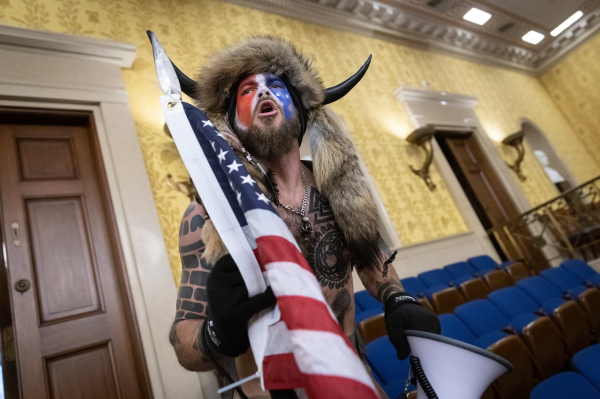
A recent New York Times (NYT) article was labeled “Many Gen Z Men Feel Left Behind. Some See Trump as an Answer.” It pointed out that young men under 30, especially young men without college degrees, were (in the words of a right-wing source) “drawn to his message, his persona, the unapologetic machismo he tries to exude.” Various signs of this “machismo,” might be mentioned, but one such was the combined speech and theatrics of wrestler Hulk Hogan at the recent Republican National Convention, as Trump smiled and clapped at his performance.
According to the NYT piece, August polls of six swing states indicated that “young men [ages 18-] favored Mr. Trump by 13 points, while young women favored Ms. Harris by 38 points, a 51-point gap.” One reason for the big divide is that some young men supporting Trump—but not a majority—believe that women’s gains in recent decades have come at their expense. A recent CBS poll found that “people who think efforts at promoting gender equality between men and women are going too far in America today are voting overwhelmingly for Trump. That's especially the case for men who think so.” Like similar feelings among some Whites about non-White gains under Affirmative Action, such sentiments sometimes occur because of a failure to appreciate how detrimental past discrimination was and how vigorous new measures need to be in order to achieve true equality.
Likely even more important, however, are the way young men and women look at economic issues. Polling indicates that more young women than young men believe their economic opportunities are greater today than they were decades ago, which could partly be because the former are now receiving more formal education than men.
Informal education, through media and other forms of cultural absorption, however, also play a part. Our culture places more emphasis on making money, on gaining profits, than do some others. If we brag about our kids “doing well” or about someone achieving the “American Dream,” we usually mean, or at least imply, that they are doing well financially. Thus, in American popular culture, billionaire Donald Trump seems more successful than some hard-working social worker who might be happier and more well-adjusted, but whose annual income is far less than Trump’s. Fame is also important in our culture, and there is little doubt that a billionaire, former television personality, president, and even convicted felon is more famous than any social worker or wildland fire fighter, however happy and worthwhile such workers’ lives might be.
Related stories
One form of informal education is films. In his 1977 book, Rumor of War, Philip Caputo recalled how as a young college student in 1960 he enrolled in a Marine officer training program partly as a result of the romantic heroism of such war movies as Sands of Iwo Jima (1949), Guadalcanal Diary (1943), and Retreat, Hell! (1952) He explained his motivation as such: “The heroic experience I sought was war; war, the ultimate adventure; war, the ordinary man's most convenient means of escaping from the ordinary...Already I saw myself charging up some distant beachhead like John Wayne in Sands of Iwo Jima, and then coming home a suntanned warrior with medals on my chest...I needed to prove something—my courage, my toughness, my manhood.” From 1982 until 2019, five Rambo films later depicted a similar macho toughness, and the Rambo franchise also produced an animated television series, comic books, novels, and video games.
Also in films we have director Clint Eastwood’s American Sniper (2014), which one critic described as “simplistic in its emphasis on strength and eschewal of sensitivity, and dangerous in its celebratory zeal for violence. It is not masculine as much as macho.” This same critic contrasted Eastwood’s film with another 2014 film, Selma, which he thought displayed a nobler type of masculinity (by Martin Luther King Jr. and others), one more grounded in sound values and ethical judgments.
The problem of education is not just in the informal education that our culture provides. It is also in our formal education. There is little doubt that the main goal of most higher education is job preparation. And that is the path Donald Trump followed. In Anti-Intellectualism in American Life (1962), historian Richard Hofstadter mentions that the Wharton School at the University of Pennsylvania (founded in 1881) was the first of our nation’s business schools. And he suggests that such schools like Wharton had no concern with a more intellectual approach. In the late 1960s Donald Trump, after transferring from Fordham, received a bachelor’s degree from Wharton’s small real estate department.
To Trump, college was primarily about vocational training, a preference that Hofstadter believed became more prevalent in the late nineteenth and early twentieth centuries. This emphasis on the vocational was part of a growing emphasis on the practical—"On two matters there was almost no disagreement: education should be more 'practical'; and higher education...was useless as a background for business.”
From 1956 until I retired in 2010, most of my life was spent in either attending or teaching higher education classes. As an undergraduate, I graduated with a liberal arts education, majoring in English and minoring in history and philosophy. And I have always been grateful for such an education. I believed then, and still believe, that what education should do for us is broaden our horizons and make us less narrow, provincial, and biased. Humanities disciplines like literature, history, and anthropology should do so partly by increasing our empathy for other people in other places, circumstances, and times. Studying philosophy and religion should lead us to more ethical inquiries. If we appreciate the sciences, we are more likely to respect facts (like those related to climate change) and be truth-seekers. (I am not saying that career preparation should play no role in higher education, only that better balance is needed.)
Reading economist and environmentalist E. F. Schumacher’s book A Guide for the Perplexed (1977), I agreed with his observation that modern education completely failed to answer a key question for us, “What should I do” with my life? Later on I thought wise what Robert Sternberg wrote in “It's Not What You Know, but How You Use It: Teaching for Wisdom” (2002). Among his most memorable statements:
- “Traditional education, and the intellectual and academic skills it provides, furnishes little protection against evil-doing or, for that matter, plain foolishness. The United States has had some very well-educated politicians and even presidents whose foolishness in their lives has cost them and their reputations dearly.”
- The “high and mighty” often thought “they were omniscient, omnipotent, and invulnerable, and concerned only with themselves instead of others.”
- And people should be taught that they “are wise to the extent that they use their intelligence to seek a common good. They do so by balancing, in their courses of action, their own interests with those of others and those of larger entities, like their school, their community, their country, even God. And they balance these interests over the long and the short terms.”
But neither in our formal nor informal education is teaching wisdom even considered. What humorist Dave Barry once said about our television programming—"[Its] ] message has always been that the need for truth, wisdom and world peace pales by comparison with the need for a toothpaste that offers whiter teeth and fresher breath”—could be modified for education. Its message would be, forget about wisdom; instead prepare yourself to prosper in our economy.
Because of this emphasis, wise Kentucky writer Wendell Berry once warned about seeking to solve our racial problems by just integrating minorities into our deeply flawed capitalist consumer culture, where earning a college degree was “conceived as a way to get money,” and where power was determined by wealth and we lay waste our environment.
Although it is not difficult to grasp all of Trump’s macho ways, including his fondness for “strongmen” dictators like Vladimir Putin, the former president’s appeal to Gen Z men is less clear. One guide is Richard Reeves’s Of Boys and Men: Why the Modern Male Is Struggling, Why It Matters and What to Do About It (2022). The author cites numerous statistics indicating that U. S. men, especially the least educated, are suffering and need a positive image of masculinity. Another aid is a article that appeared just weeks ago in the progressive English newspaper The Guardian.
The author of it is a U. S. 59-year-old progressive teacher who plans to vote for Kamala Harris. To him “manhood is all about using your energy to make life better for the person next to you.”
But his 21-year old son “holds traditional, conservative values...which correlate the right with patriotism, manhood, intelligence, independence and honesty.” The son—his real name is not given—is “on the upper end of the autism spectrum,” and what he “wanted to do was follow whatever the big kids were doing...Some of the older guys at school who...[he] was trying to emulate were really into building computers, hacking and the dark web. He got online as a teen, joined some far-right message boards, and I think that’s where he got massaged into these rightwing positions. He started echoing those points, and then he got praise from whatever knuckleheads posted that crap.”
The dad thinks “that Trump appeals to a perceived loss of masculine power: by his logic, because we’re treating LGBTQ+ people like humans, some men feel a loss over that, as their outrageous privilege has diminished somewhat, at least on surface level.” His son “was vulnerable to that because he was becoming a man. I think he also naively thought, well, Trump’s a powerful person running for president; he can’t just get up there and spew bullshit.”
Some time after Trump was elected in 2016, the family moved from Huston to the “Bay Area” of California, but in 2020 a divorce occurred, and the mother moved back to Huston, followed some months later by the son. There he “started hanging out with guys . . . who shared his beliefs or had even more radical ones. They started talking about what makes a man. They said men have to be strong...They introduced . . . [his son] to guns and started taking him to the shooting range. On his 21st birthday, his mother and I sent him money, thinking he’d spend it on a computer or something, but he went out and bought a gun. He didn’t tell either of us, because he knows how we feel about them.”
According to the dad, one of his son’s “rightwing friends is really wealthy,” from whom he (the son) “hears all this stuff about how people who aren’t rich are basically parasites. And...his “friend’s parents have a Mercedes in the driveway and live in a million-dollar house.”
On the other hand, the son now has a Latina girlfriend, “so his feelings on immigration have softened after he spent time with her family.” The dad hopes he will soon be able to afford flying to Houston more and talk to his son, and ends his article writing, “Even if we argue, I can always tell him that I love him.”
This newspaper piece reinforces several of my prior beliefs.
- U. S. education, as Sternberg writes, “furnishes little protection against evil-doing or, for that matter, plain foolishness.” This is especially true in Texas, where rightwing beliefs are strong and state law restricts how one can teach about race relations.
- For many Gen Zers, peer influence is as strong or stronger than that of parents.
- For Gen Zers the Internet and social media also remain strong influences.
- And as the father above recognizes, despite differences enlightened love is the best way forward
One way of showing that love would be, as the father intends, to vote for Kamala Harris in the fall. Her election may not wipe out toxic machoness in our culture, but electing our first female president would at least be a start.
Comments

Powered by RoundtableAn AI/DeFi-powered Enterprise Media Operating System. Learn more at Roundtable.io.© Roundtable 2026. By using this site you agree to the Terms of Use and Privacy Policy