


Nov 8, 2025 3:47 PM
When Mamdani quoted Debs this week, he was not reaching backward. He was reminding us that democratic courage has ancestors.
Last Tuesday, as scholars and citizens gathered to reflect on democracy in a precarious hour, Mahmood Mamdani invoked a name far too often forgotten in American life: Eugene V. Debs.
It was the right reminder at the right moment.
Debs (1855–1926) — railroad worker, union leader, and five-time candidate for president — believed democracy was not simply a system of government, but a moral commitment to human dignity. His life shows that courage is not always rewarded with victory. Sometimes it is measured in endurance.
A Working Man’s Awakening
Debs began as a locomotive fireman in Terre Haute, Indiana. Exhausting shifts and dangerous conditions forged his belief in solidarity from the ground up.
Related stories
He helped form the American Railway Union, one of the first industrial unions to unite workers across trades, and led the 1894 Pullman Strike after a ruthless wage cut. The federal government sent troops, workers were killed, and Debs was jailed.
Prison did not quiet him — it transformed him. Reading Marx and Ruskin behind bars, he concluded that the struggle for labor was not only economic but fundamentally ethical: Who deserves the fruits of human work?
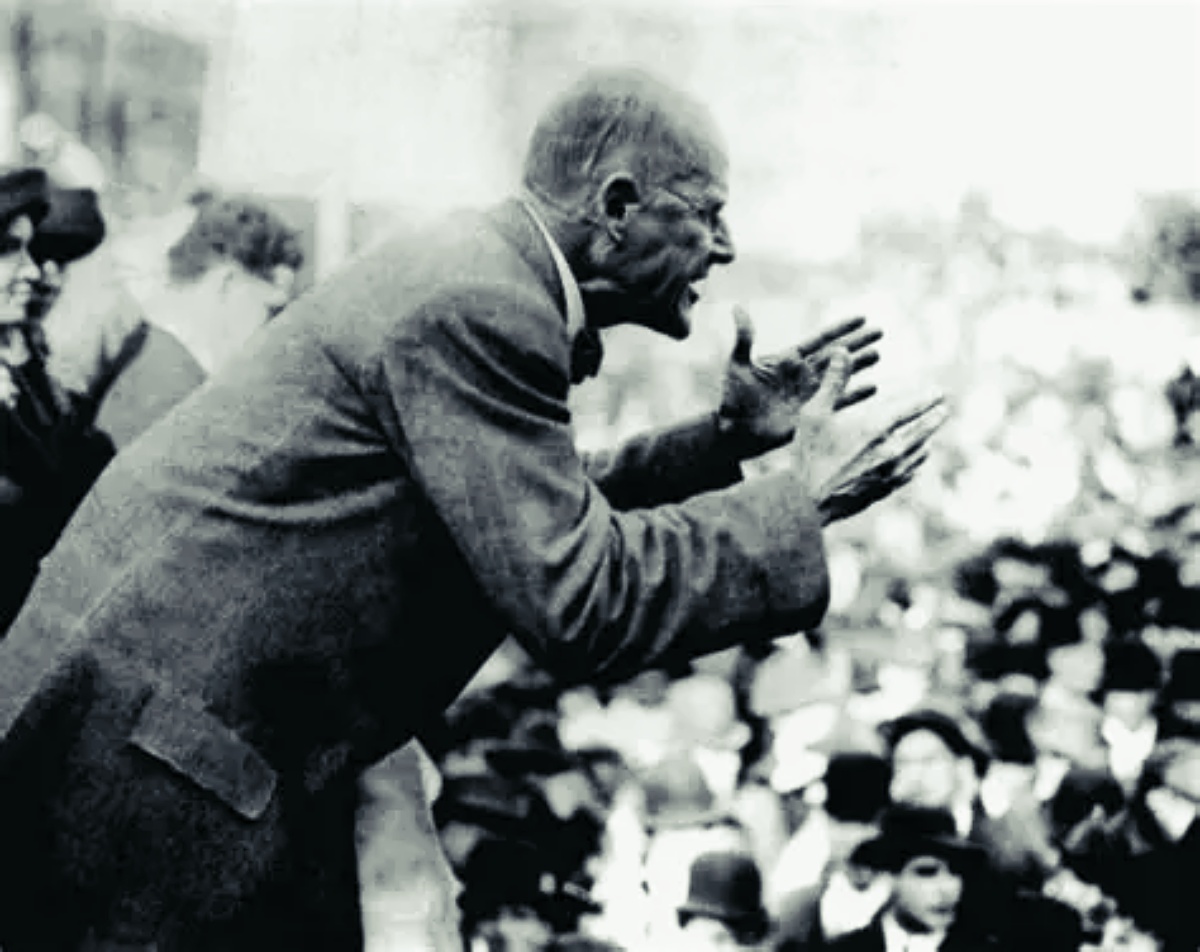
Emerging from prison, Debs became a national voice for working-class dignity, founding the Socialist Party of America and speaking to overflowing halls and fairgrounds. His language blended outrage at injustice with a tender commitment to the common good.
War, Dissent, and a Prison Cell
During World War I, the Espionage Act made dissent dangerous. Debs opposed the war as a betrayal of working people — a sacrifice demanded of the poor while the powerful profited.
In 1918, in Canton, Ohio, he delivered a quiet speech urging resistance to militarism. He knew he would be arrested. He spoke anyway.
At trial he told the court: “I have been accused of obstructing the war. I admit it. I abhor war. I would oppose it again.”
He was sentenced to ten years. At sixty-three he entered the Atlanta Federal Penitentiary, vision failing, health weakened — yet he continued writing letters of encouragement, signing them “Yours for the Revolution.” His faith in human decency never faltered.
The Presidential Campaign from Behind Bars
In 1920, imprisoned as Convict No. 9653, Debs ran for president and received nearly a million votes. His campaign was not a bid for power but a moral declaration: democracy must belong to all, not to the privileged few.
“In the struggle for liberty, the jail is a greater honor than the palace.”
When President Warren G. Harding commuted his sentence in 1921, Debs walked out frail but unbroken. Even prison guards lined up to shake his hand.
Why Debs Matters Now
Debs never held office. He did not live to see the equitable society he imagined. But his life carved a moral path through American politics. He believed that the measure of a nation is how it treats workers, the poor, and the imprisoned — and that solidarity is democracy’s most radical promise.
His words echo still:
“While there is a lower class, I am in it;
while there is a criminal element, I am of it;
while there is a soul in prison, I am not free.”
In a time again marked by profound inequality, efforts to criminalize dissent, and impatience for easy victories, Debs reminds us: moral progress is often slow, and those who begin it may not live to see it fulfilled.
Carrying the Torch Forward
When Debs died in 1926, the New York Times called him “the most beloved man in America.” He earned that love not through power but perseverance — through the stubborn belief that kindness, equality, and human solidarity are not sentimental ideals, but democratic duties.
“The earth for all the people. That is the demand.”
When Mamdani quoted Debs this week, he was not reaching backward. He was reminding us that democratic courage has ancestors.
Debs saw a better dawn even when the night was long. We owe his memory not admiration but emulation — to keep faith in each other, to stand where dignity is threatened, and to refuse to surrender the horizon.
Comments

Powered by RoundtableAn AI/DeFi-powered Enterprise Media Operating System. Learn more at Roundtable.io.© Roundtable 2026. By using this site you agree to the Terms of Use and Privacy Policy