
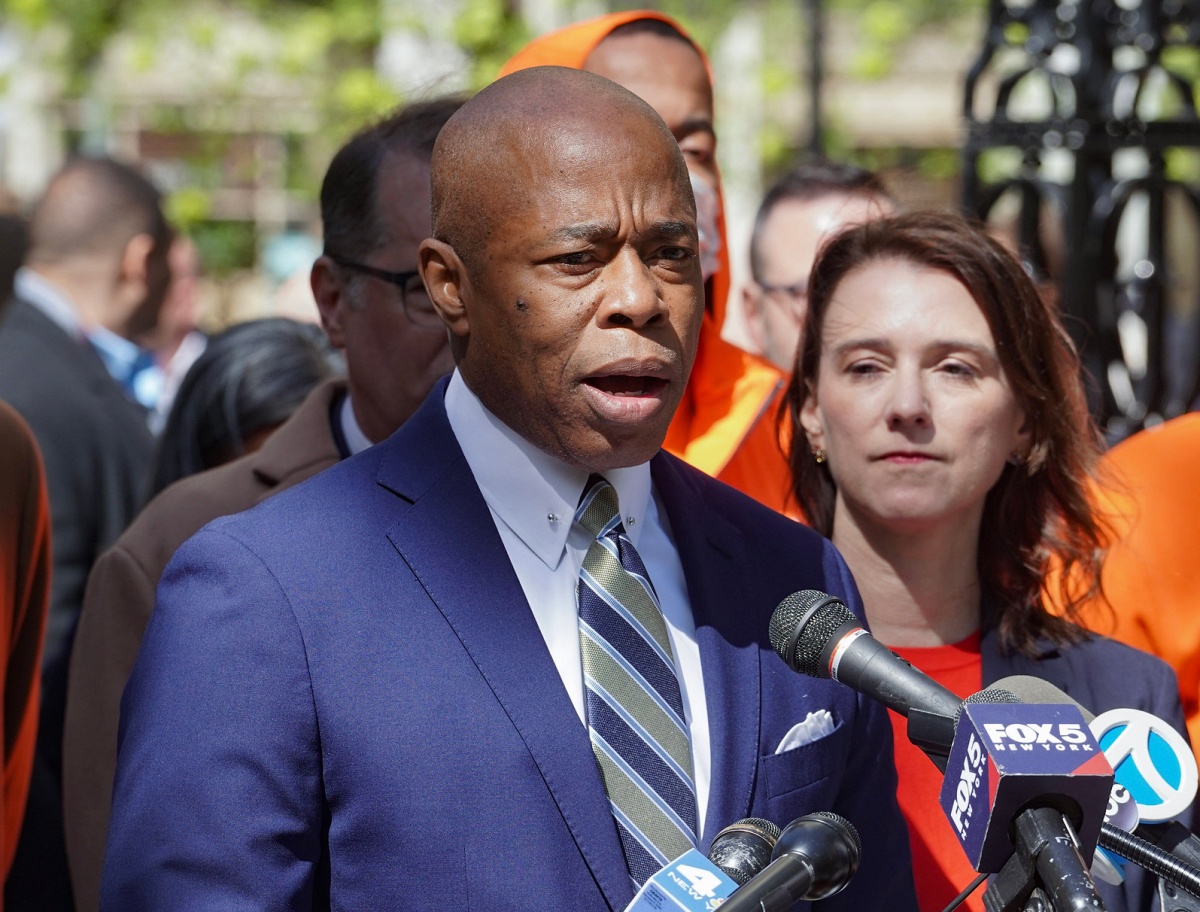
MTA Photos • CC BY 2.0 • Flickr


Sep 28, 2025 8:44 PM
Updated Sep 29, 2025 4:17 AM
His withdrawal represents far more than one politician’s downfall, it signals the beginning of the end for New York's political establishment as we know it.
Eric Adams dropped out of the New York City mayor’s race today, marking a stunning political collapse that would have been unthinkable just months ago. The sitting mayor of America’s largest city, once considered a lock for reelection, has bowed out after watching his support evaporate amid mounting scandals, federal investigations, and polls showing him in free fall. His withdrawal represents far more than one politician’s downfall, it signals the beginning of the end for New York's political establishment as we know it.
The latest polling data painted an impossible picture for Adams: just 9 percent support among likely voters, landing him in a distant fourth place. Leading the field is Assemblymember Zohran Mamdani with a commanding 45 percent, followed by Andrew Cuomo at 24 percent and Republican candidate Curtis Sliwa at 17 percent. For any politician, these numbers would be concerning. For a sitting mayor with all the advantages of incumbency, they represent a historic political collapse.
The mathematics of Adams's situation were unforgiving. Even if every single one of his remaining supporters had shifted to Cuomo, the establishment’s preferred alternative, Mamdani would still maintain a double-digit lead. The scenarios only get worse for the old guard from there. If Sliwa were to drop out of the race, redistribution models show Mamdani easily crossing the 53 percent threshold in a head-to-head matchup with Cuomo, transforming what might have been a plurality victory into an outright mandate from New York voters.
What Money Cannot Buy
Mamdani's surge defies every conventional wisdom about New York politics. This is not a campaign built on billionaire checks, corporate endorsements, or the machinery of political establishments. Instead, it represents something far more powerful and sustainable: genuine grassroots momentum fueled by New Yorkers who have decided their city's future cannot wait for incremental change. The energy driving this campaign comes from tenants organizing against evictions in Brooklyn apartments, immigrants demanding dignity and representation in Queens communities, students insisting on a livable future in the face of climate change, and workers across all five boroughs who are tired of being told that their city belongs to someone else. Every canvassing shift, every neighborhood meeting, every small-dollar donation compounds into a movement that no super PAC can replicate or neutralize.
Related stories
This represents a fundamental shift in how political power operates in New York. The so-called “headwinds” that have historically stifled insurgent campaigns, lack of name recognition, limited resources, establishment opposition, are now pushing Mamdani forward. What we're witnessing is the collapse of a political order that assumed money alone could determine electoral outcomes. Cuomo and his billionaire allies will undoubtedly pour millions into the final stretch of this campaign, hoping that a late advertising blitz can stem Mamdani’s momentum. The political machine will deploy every tool in its arsenal from endorsements to opposition research to coordinated media campaigns. But Adams’s fall demonstrates the fundamental limitations of this approach when voters have already made up their minds about the direction they want their city to take.
The old order built its power on three pillars: incumbency advantage, donor networks, and backroom deal-making. Adams possessed all three, yet found himself politically isolated when New Yorkers needed leadership most. His administration's failures on housing affordability, police accountability, and climate resilience were not just policy disappointments, they were a demonstration that the establishment’s approach to governance has reached its limits. New Yorkers have drawn their own conclusions from this experience. They understand that public safety doesn't come from expanding police budgets but from building stronger, more connected communities. They recognize that addressing the housing crisis requires confronting the real estate interests that have captured city government, not appeasing them with minor reforms. They see that climate resilience demands transformative action, not photo opportunities and press releases.
Momentum That Cannot Be Manufactured
This shift in New York politics extends far beyond any single election cycle. What Mamdani’s campaign represents is the emergence of a new political era: one rooted in participatory democracy, economic justice, and the radical idea that city government should serve all New Yorkers, not just those who can afford to influence it. The campaign’s success stems from its authentic connection to communities that have been marginalized by decades of establishment politics. This is not momentum that can be manufactured through focus groups or purchased through consulting contracts. It emerges from the daily work of building relationships, listening to constituents, and developing policy proposals that address real problems in people's lives.
Of course, nothing in politics is guaranteed, and Mamdani’s team understands this better than anyone. The campaign continues organizing with the discipline and urgency of an underdog operation, knowing that electoral victories are earned through persistent effort, not polling numbers. This humility and focus on concrete action has only strengthened the movement's credibility with voters who have grown skeptical of politicians who promise transformation but deliver incrementalism.
A New Chapter Begins
Eric Adams’s withdrawal today marks the end of one chapter in New York politics and the beginning of another. The billionaires and party bosses will spend the coming weeks deploying every strategy they know to prevent fundamental change. They will argue for “stability” and “experience” while hoping voters forget that their version of stability has produced a housing crisis, deepening inequality, and a city government that responds more quickly to corporate interests than community needs. But momentum cannot be purchased, and the energy driving Mamdani’s campaign cannot be redirected by expensive advertising campaigns or establishment endorsements. What’s happening in New York represents something larger than electoral politics, it’s the emergence of a truly democratic movement that sees city government as a tool for advancing justice rather than protecting privilege.
The collapse of Eric Adams’ reelection campaign is just the first crack in a political establishment that has dominated New York for decades. If today’s events prove anything, it is that when New Yorkers decide to move together toward a different future, no amount of money or institutional power can stop them.
Momentum beats money, and in this race, the momentum belongs to the people.
Comments

Powered by RoundtableAn AI/DeFi-powered Enterprise Media Operating System. Learn more at Roundtable.io.© Roundtable 2026. By using this site you agree to the Terms of Use and Privacy Policy