


Jun 8, 2026 10:44 PM
Updated Jun 8, 2026 10:45 PM
Inside the Polls: Order, Care, and Civic Duty in Action
Like many Americans, I have spent the last several years hearing claims that our elections are broken, insecure, or vulnerable to widespread fraud. Given the constant stream of accusations, court cases, social media posts, and political rhetoric, it would be easy to believe that chaos reigns at our polling places.
That is why I decided to become an election observer.
My experience was organized through Common Cause California. Volunteers participated in online training and were provided with a detailed guide explaining both our responsibilities and our limitations. Common Cause refers to these volunteers as poll monitors. Our goal was straightforward: to ensure that all eligible voters can cast a ballot without interference or confusion.
Before Election Day, we completed training, reviewed election laws, and familiarized ourselves with the California Secretary of State’s Election Observation Rights and Responsibilities Regulations, approved on February 29, 2024. We were assigned polling locations and given questionnaires to complete at each site.
Related stories
I visited three voting centers.
What struck me most was not what I found, but what I did not find.
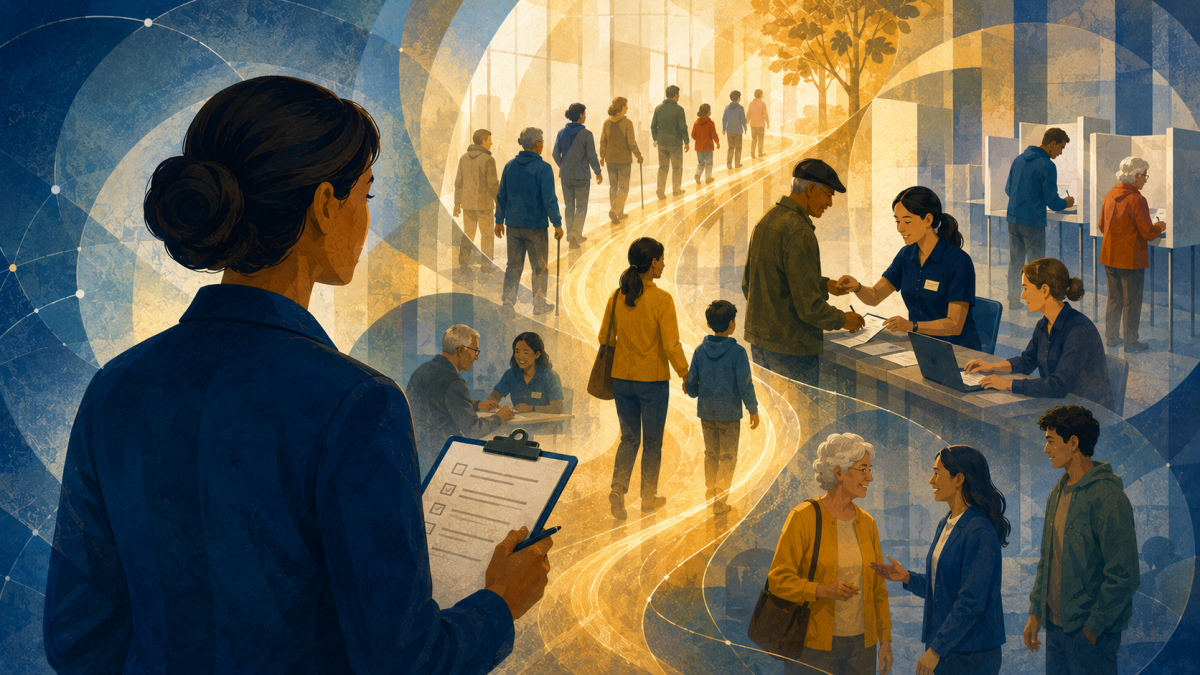
I did not witness intimidation. I did not see attempts to interfere with voting. I did not observe partisan disputes or confusion among election workers. Instead, I encountered dedicated poll workers carefully following procedures designed to protect voters and ensure that every eligible citizen could cast a ballot.
At each site, election workers patiently answered questions, assisted voters, and carried out the detailed processes required to maintain election integrity. The procedures were often more extensive than most voters realize. Every step—from voter check-in to ballot handling—was governed by established rules and multiple layers of accountability.
As observers, our role was not to interfere. We were there to watch, document, and report. We completed standardized questionnaires and recorded observations about accessibility, signage, voter assistance, and overall operations. The process itself reflected an important democratic principle: transparency.
What I experienced was echoed by another observer, Terry, who shared with me similar impressions from her own polling place observations. She described poll workers who were not only committed to ensuring that every voter was welcomed and able to cast a ballot, but also attentive to the practical details that keep the process running smoothly.
According to Terry, voters of all ages arrived throughout the day—from the young to the very elderly. Some were escorted carefully to voting booths, and those who needed assistance were provided chairs or step-by-step guidance on how to use the electronic voting equipment.
She also observed poll workers diligently maintaining voting machines, ensuring they were clean and functional, and promptly addressing any technical issues that arose. Beyond Election Day voting itself, she noted that these workers carried the responsibility of preparing ballots for secure transfer to the Registrar of Voters—an essential step in the accurate counting of votes.
Terry was particularly moved by the sight of a young first-time voter registering that day. After completing the process, the room erupted in applause. She learned this was not an isolated moment, but one of several first-time voters participating that day—small but powerful reminders of civic engagement in action.
At another location outside a church, she observed community members who were not official poll workers but who nonetheless chose to participate—welcoming voters and directing traffic simply because they wanted to support the democratic process. As she noted, there is a role for everyone in sustaining democracy.
The experience reminded both of us that democracy is not sustained by politicians alone. It depends upon ordinary citizens who volunteer their time, election workers who spend long hours serving the public, and community members who step forward to support the process in whatever way they can.
Watching democracy in action was unexpectedly reassuring.
At a time when confidence in institutions is often low, I came away with a renewed appreciation for the safeguards built into our election system. No system is perfect, and vigilance will always be necessary. But what I witnessed was a process carried out by conscientious people committed to helping their neighbors exercise one of the most fundamental rights of citizenship.
For those who want to do more than simply vote, there are meaningful ways to participate directly in the democratic process. Organizations such as Common Cause California recruit and train nonpartisan volunteers to serve as poll monitors and help ensure that voters can cast their ballots freely and without confusion. Information about volunteering can be found at Common Cause California’s Election Protection program.
California counties also rely on poll workers to staff voting centers and support the smooth functioning of elections. Information about becoming a poll worker is available through the California Secretary of State.
Engaging in these roles offers a firsthand understanding of how elections operate—and provides an opportunity to strengthen the very system that depends on public participation.
Sometimes the best way to understand democracy is not to argue about it online. It is to show up, observe carefully, and see how it actually works.
My day as an election observer did exactly that.
Comments

Powered by RoundtableAn AI/DeFi-powered Enterprise Media Operating System. Learn more at Roundtable.io.© Roundtable 2026. By using this site you agree to the Terms of Use and Privacy Policy