


Jul 12, 2026 5:13 AM
Updated Jul 12, 2026 5:19 AM
The little-known bipartisan agency helps protect voting systems, support election officials, and maintain the democratic machinery Americans rarely notice until it is threatened.
Before this week, had you ever heard of the U.S. Election Assistance Commission?
Most Americans probably had not. Yet when controversy erupted over the commission's future, many people found themselves asking the same question: What is the Election Assistance Commission, and why does it matter?
That question points to something much larger than one agency or one administration.
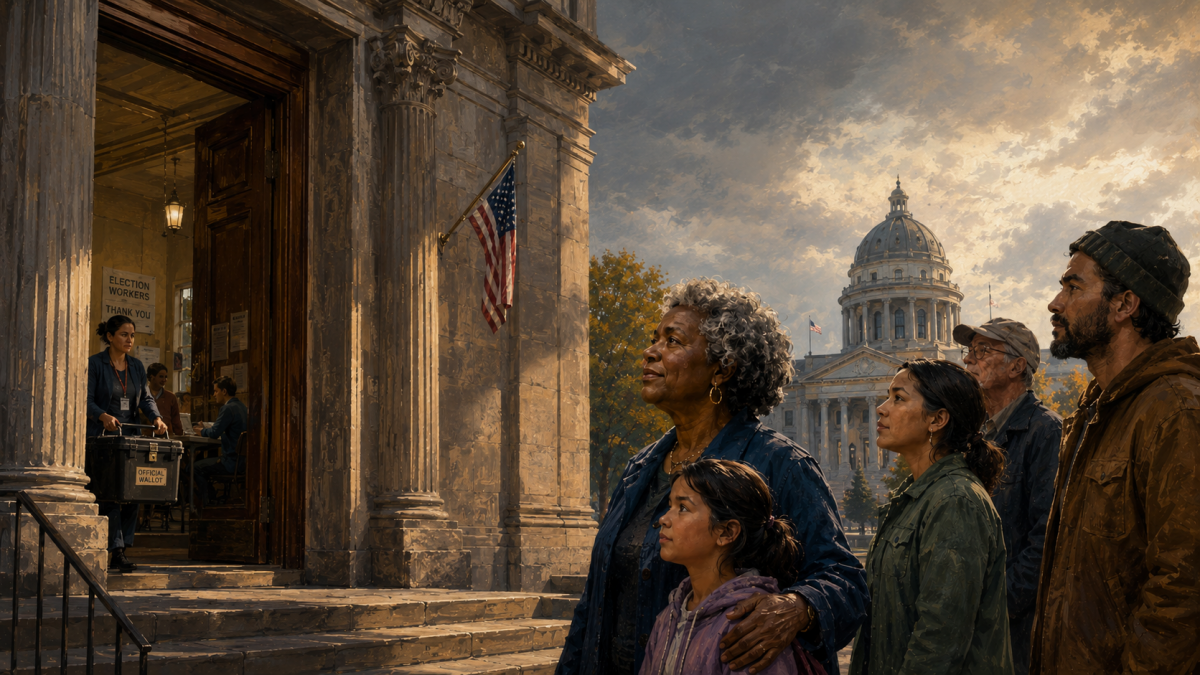
Most of us think democracy happens on Election Day. We watch campaign advertisements, listen to debates, read polls, and cast our ballots. But democracy begins long before the first vote is cast, and it depends upon institutions that most Americans rarely notice until they are threatened.
Related stories
The Election Assistance Commission was created by Congress after the disputed 2000 presidential election to help states improve election administration, certify voting systems, distribute federal election grants, and support local election officials. For more than two decades it has quietly helped strengthen the nation's election system. Whether one agrees or disagrees with recent actions affecting the commission, the controversy reminds us that much of our democracy is maintained far from television cameras and campaign rallies.
James Madison understood this when he wrote in Federalist No. 51, "If men were angels, no government would be necessary." The Framers did not create our constitutional system because they trusted those in power. They created it because they understood that power always requires limits. That is why responsibility for elections is divided among the states, Congress, the courts, and the executive branch. No single office was ever intended to control the machinery of American elections. That complexity is not a flaw. It is one of democracy's greatest protections.
Over the past several months, many of the most important battles over American democracy have taken place not on campaign stages but in courtrooms. Questions involving voter information, election administration, executive authority, voting rights, and the constitutional limits of governmental power have all been challenged before judges. These are not simply political disputes. They are constitutional questions.
Most Americans will never read the legal briefs or follow these cases from beginning to end. That is why organizations such as Democracy Docket, Democracy Forward, the Brennan Center for Justice, Protect Democracy, the Campaign Legal Center, the ACLU, and many state organizations have become so important. They explain complicated litigation, challenge government actions they believe violate constitutional principles, and help citizens understand what is happening before those cases become national headlines. They do not determine election outcomes. They help protect the rules under which elections take place.
Equally important are thousands of public servants whose names we will probably never know. The county clerk who refuses political pressure, the election administrator who follows the law rather than partisan demands, the judge who issues an unpopular decision because the Constitution requires it, the lawyer who spends months preparing a case that may never lead the evening news, and the poll worker who arrives before dawn so neighbors can vote. These people are not celebrities. They are the quiet guardians of American democracy.
One of the greatest dangers facing any democracy is not disagreement. Americans have always argued about public policy, and they always will. The greater danger is indifference. When citizens assume someone else is paying attention, democracy begins to weaken. We tell ourselves that the courts will handle it, that lawyers will challenge it, that journalists will explain it, or that someone else will defend the Constitution.
History teaches otherwise. The Constitution does not enforce itself. Courts cannot decide cases that are never brought. Election officials cannot maintain public confidence without public support. Independent journalism cannot survive without readers who value it. Democracy is not self-sustaining. It requires citizens.
So what can we do?
Begin by becoming informed. Subscribe to Democracy Docket and follow organizations such as Democracy Forward that explain and defend constitutional principles through the courts. Support independent journalism that follows these issues long after television cameras have moved on.
Pay attention to offices that rarely receive national attention. Attorneys general, secretaries of state, governors, county election officials, judges, and state legislators often have more influence over the administration of elections than the political figures who dominate the nightly news. Vote in every election, not just presidential elections. The people who administer our democracy are often chosen in state and local races that receive the least public attention.
Expect constitutional integrity from every public official, regardless of party. Americans will always disagree about taxes, immigration, education, health care, and foreign policy. Respect for the Constitution, the rule of law, and the peaceful administration of elections, however, should never become partisan values.
John Dewey wrote that democracy is more than a form of government. It is a way of living together that depends upon informed and engaged citizens. Perhaps that is the lesson our generation most needs to remember.
The recent controversy surrounding the Election Assistance Commission reminds us how easily institutions can disappear from public attention until they are suddenly placed at the center of a national debate. Most Americans had never heard of the commission until this week. Yet for more than two decades it quietly helped states administer elections, improve voting systems, and strengthen public confidence in the electoral process.
Whether the commission is ultimately restored, reorganized, or replaced, the episode illustrates an important truth. We often notice democratic institutions only after they have been weakened. The same is true of independent courts, election administrators, professional civil servants, local journalists, and public-interest organizations. Their work is usually quiet. Their successes rarely become headlines. Yet together they form the constitutional guardrails that help keep political power within the rule of law. When these institutions are weakened, every American has a stake in paying attention—not because we will always agree with every decision they make, but because constitutional democracy depends upon their independence.
Democracy does not ask all of us to become constitutional lawyers. It asks something much simpler. It asks us to pay attention, to learn how our institutions work, and to support the organizations that defend them. It asks us to vote—not only for presidents, but for attorneys general, secretaries of state, governors, legislators, judges, and local officials whose decisions shape our democracy every day. It asks us to teach our children and grandchildren that democracy is more than an election. It is a system of institutions, laws, traditions, and citizens who understand that freedom requires constant care.
The Constitution has never protected itself. It has always depended upon institutions strong enough to defend it—and citizens wise enough to support those institutions. Every generation inherits American democracy, but no generation is guaranteed to keep it. Whether it survives for those who come after us depends, in no small measure, on whether we choose to become its guardians today.
Comments

Powered by RoundtableAn AI/DeFi-powered Enterprise Media Operating System. Learn more at Roundtable.io.© Roundtable 2026. By using this site you agree to the Terms of Use and Privacy Policy