
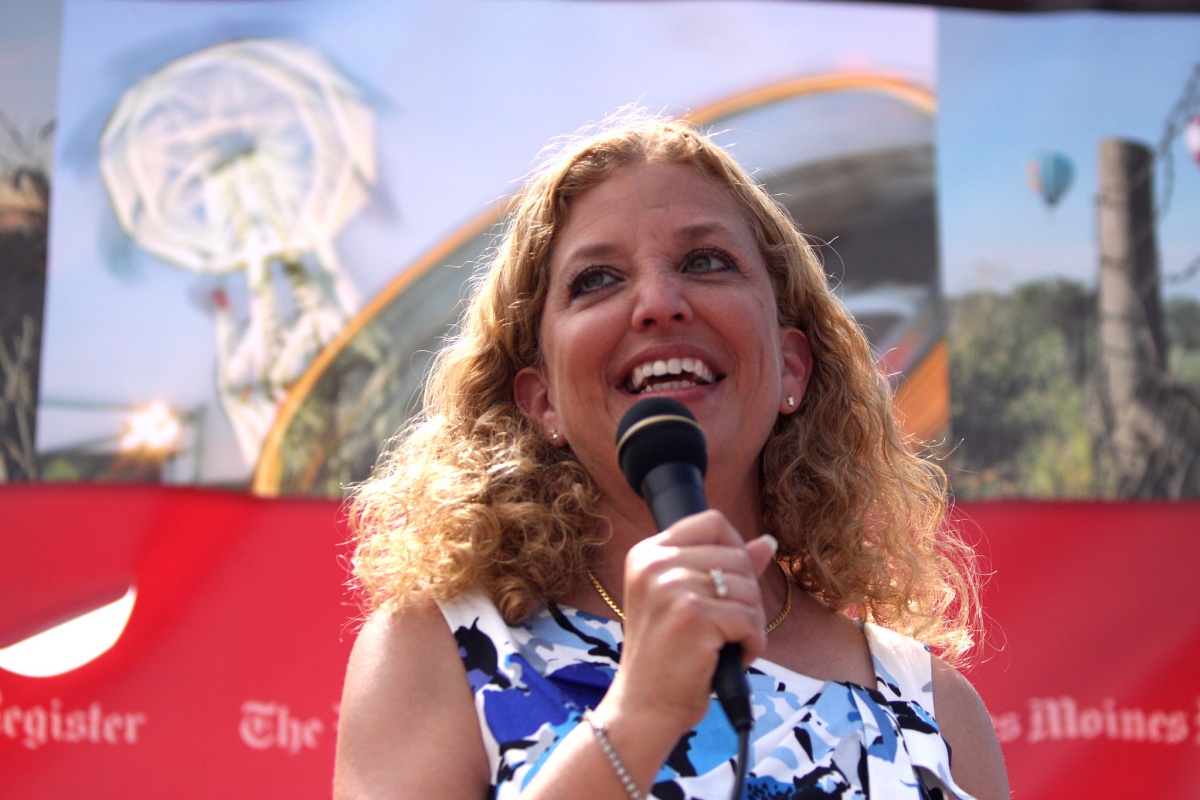
Gage Skidmore • CC BY-SA 2.0 • Flickr


Jul 15, 2025 7:29 PM
Updated Jul 20, 2025 10:14 PM
This isn’t just about Florida. Or Washington. It’s about the kind of democracy we’re building—or failing to build.
Debbie Wasserman Schultz isn’t just about Florida. Or Washington. It’s about the kind of democracy we’re building—or failing to build. More Videos
In July 2025, OpenSecrets confirmed what many already suspected: Rep. Debbie Wasserman Schultz has violated the STOCK Act—again. This time, she disclosed a stock trade in New Gold Inc. more than 14 months late, well beyond the law’s 45-day reporting window. The stock had tripled in value during that period, earning her a 464% profit—while the public remained in the dark.
This is her fourth documented violation of the STOCK Act, and still, no penalties have been announced. No accountability. No transparency.
But this latest scandal is not an isolated case. It’s a symptom of something much larger—a political culture that rewards insider privilege, punishes democratic dissent, and allows lawmakers to profit from the very systems they’re supposed to regulate. And Wasserman Schultz is one of its most blatant examples.
A Career Built on Party Control, Not Public Service
Wasserman Schultz has held power in the Democratic Party for over two decades. As Chair of the Democratic National Committee from 2011 to 2016, she played a central role in shaping how the party operated—and who it served.
Related stories
That all came crashing down in 2016, when leaked emails revealed that the DNC, under her leadership, had worked behind the scenes to sabotage Bernie Sanders’s primary campaign. Her resignation—days before the convention—was a rare public moment of consequence. But the machine that protected her never stopped running.
Instead of being sidelined, she was immediately hired by the Clinton campaign. She retained her congressional seat. And she’s continued to hold powerful committee positions, even as the scandals have piled up.
From Ballot Irregularities to Insider Trading
Wasserman Schultz’s record includes:
- FEC complaints from her 2016 primary challenger, Tim Canova, alleging illegal use of DNC resources and destroyed ballots in Broward County. No audit was ever conducted.
- Defense contractor investments, including a 2024 purchase of ViaSat Inc. while serving on the subcommittee that oversees military construction and foreign aid—including funding for Israel. She later sold the stock for a 58% profit.
- A 142% portfolio surge in 2024, one of the highest in Congress, driven by mining and military stocks often tied to her legislative jurisdiction.
None of this has led to a formal investigation or reprimand. Instead, the House Ethics Committee has quietly waived or ignored potential fines. And the political establishment has looked the other way.
Who Is She Really Working For?
Wasserman Schultz isn’t just collecting dividends. She’s collecting influence—funded by lobbyists, enforced by insider power, and shielded by a political party that punishes whistleblowers more than it punishes corruption.
She’s received nearly $1 million from pro-Israel lobby groups like AIPAC and consistently votes for defense and military aid packages that benefit both her donors and her investments. Her seat on the Appropriations Committee gives her control over precisely the kind of budgets that feed the defense industry.
And when activists raise concerns—about ballot integrity, about Palestine, about ethics—she doesn’t engage. She dismisses. She deflects. She doubles down.
Why It Matters Everywhere
This isn’t just about Florida. Or Washington. It’s about the kind of democracy we’re building—or failing to build.
Every time a member of Congress hides a trade, dodges accountability, or rigs the rules to their advantage, working people lose faith in the system. And that loss of faith doesn’t stay in D.C.—it trickles down to every local race, every policy fight, every attempt to build something better.
When elected officials profit from war while calling it peace, or crush dissent while claiming to protect democracy, it sends a chilling message: The rules don’t apply to the powerful. Only to the rest of us.
We cannot afford to accept that message. Not now. Not ever.
What We Deserve Instead
This moment demands more than reform—it demands transformation:
- Ban congressional stock trading for members and their families.
- Enforce ethics laws with real consequences, not waivers behind closed doors.
- Reinvest in democratic accountability, including full audits of elections, public transparency of lobbying relationships, and campaign finance reform.
- Elect representatives who serve people, not portfolios.
Wasserman Schultz is not a rogue actor. She is a case study in how power protects itself—unless we, the people, challenge it head-on.
Comments

Powered by RoundtableAn AI/DeFi-powered Enterprise Media Operating System. Learn more at Roundtable.io.© Roundtable 2026. By using this site you agree to the Terms of Use and Privacy Policy