


May 13, 2018 6:58 PM
Updated Mar 8, 2024 4:36 PM
Ted Vaill: I pleaded sickness, and stayed in the hotel and stole out to meet him, unfollowed by the KGB. I was more interested in finding out the views of young Russians like Leonid than I was touring the museums of Leningrad.
It was summer, 1960. I had been a student at the University of Oslo in Norway, and the Soviet Union was suddenly opened up to foreign students who wanted to travel there as tourists. The U.S. Government warned Americans not to travel there, as the U-2 spy trial was about to start in Moscow. There was a lot of bad sentiment in the Soviet Union against Americans due to the spying on their country by Gary Powers, the pilot of the U-2 plane that was shot down over the Soviet Union as it was taking reconnaissance photos of parts of this Communist country that were closed to foreigners.
President Eisenhower had said the U-2 plane was a "weather tracker" plane that had ventured off route, but when Soviet President Nikita Kruschchev produced the pilot, alive (he was supposed to kill himself rather than be captured), and said he was to go on trial as a spy, Eisenhower had to admit he was lying.
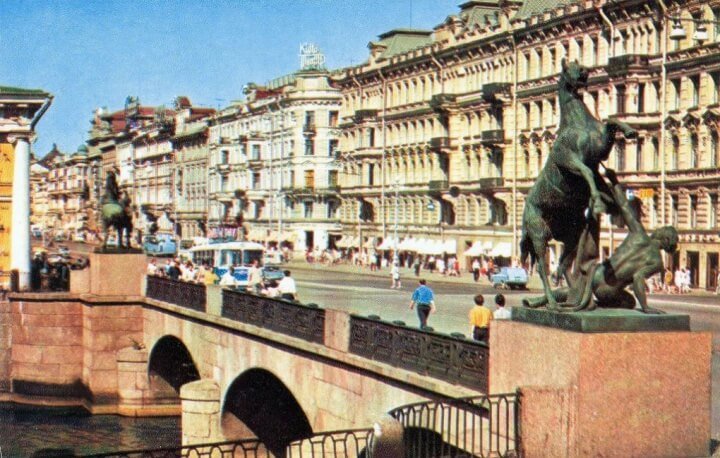
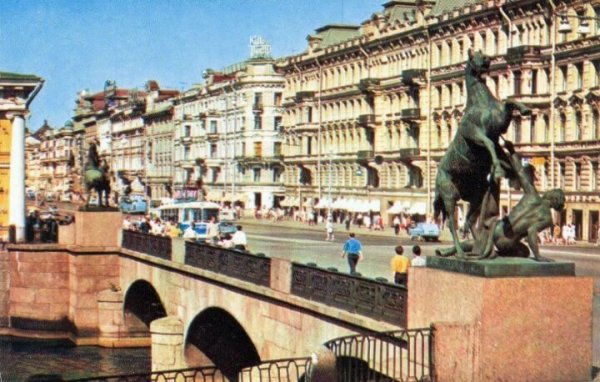
So of course I had to go to the Soviet Union. I joined an international student group, all summer students at the University of Oslo, perhaps 20 of us from many countries, with five or six of us from the U.S. After our summer session was over in late August, 1960, we traveled by boat and train from Oslo to Stockholm to Helsinki, and by train to the Soviet border, where we changed to a Soviet train and travelled to Leningrad (now St. Petersburg).
In Leningrad, I went to the Kirov Ballet, and decided to sit upstairs in the student section rather than in the front section reserved for foreigners. At an intermission, the Russian student sitting next to me leaned over and asked, in good English "Are you British?". I replied "No, American". The look on his face was astonishment, that he was actually sitting next to a citizen of a country that was a sworn enemy of his, a student like he was, and about the same age.
Related stories
I pleaded sickness, and stayed in the hotel and stole out to meet him, unfollowed by the KGB. I was more interested in finding out the views of young Russians like Leonid than I was touring the museums of Leningrad.
His name was Leonid, and he was a scholarship student at Leningrad University, from a town I had never heard of in central Russia near Siberia. He was extremely interested in spending more time with me, so I ditched the tours of Leningrad that had been arranged for us and spent the rest of my time in Leningrad with him. It was hard to do, as operatives of the Soviet spy agency, KGB, were following us everywhere. But I pleaded sickness, and stayed in the hotel and stole out to meet him, unfollowed by the KGB. I was more interested in finding out the views of young Russians like Leonid than I was touring the museums of Leningrad.
We had long discussions about the respective politics of our two countries, and I learned that he was not enamored with the hardline Communist regime in the Soviet Union as it existed in 1960. I also was not too enamored with the Eisenhower presidency in the U.S. in 1960, which was tired and limping through its final days in office, with the Republican arch anti-Communist Richard Nixon then campaigning against the photogenic young Democrat, Senator John F. Kennedy. Even though we came from radically different countries, with totally opposing political systems, we both felt that we had found, in each other, totally kindred spirits.
We were walking down the street together when he suddenly disappeared. When he came back, he told me that one of his university professors was walking towards us and he could not be seen with an American. Thereafter, Leonid taught me how I could look more like a Russian, wearing dark shoes, dark pants, a white shirt and a different pair of glasses. I had sunglasses that looked more Russian than my regular glasses, so I made a mental note to wear them. I had studied a year of Russian, so I knew the language a little.
We talked a lot about politics, girls, music, and all the stuff that 19 year olds discuss. Before we parted, we promised to stay in touch, and he gave me a way to contact him, through an address in his hometown.
After that, I travelled with my group to Moscow, and managed to penetrate the U-2 spy trial in the Soviet Trade Union Building near the Bolshoi Ballet, witness the trial briefly, and retrace my steps to the outside of the building without being caught. Earlier, in Moscow, I had participated in an anti-American rally, passing as a Russian in the clothing that Leonid had recommended that I wear.
Over the years, I have maintained contact with Leonid, as he graduated from the University, joined the Communist Party, became a government bureaucrat in Leningrad, married, had children, and became friendly with a rising KGB agent in Leningrad named Vladimir Putin.
In the early 1990s, as the Soviet Union was collapsing, and Boris Yeltsin was becoming powerful, there was an attempted coup against him by the Russian military. Yeltsin was barricaded in the Russian White House building, and I learned that Leonid had helped smuggle a satellite phone to Yeltsin, which enabled him to be fed news as to what was going on outside, and how the coup was proceeding, with all other communications to him cut off. With this information, Yeltsin knew when it was safe to go outside, climb on a tank of the Army forces that remained loyal to him, and declare that the coup had been defeated.
Leonid became a power in the Yeltsin government, and through him, I got hold of a lot of secret Soviet Union documents which were no longer important to Yeltsin, such as the Politburo minutes regarding the Soviet decision to invade Afghanistan in 1980, and a secret transcript of a 1989 tete-a-tete meeting between Soviet President Leonid Gorbachev and American President George H. W. Bush.
In 1999, Leonid was helpful in engineering Putin's ascent from the head of the reconstituted KGB to be the successor to Yeltsin in early January, 2000. Leonid was now 60 years old, and a respected bureaucrat who had survived a number of Russian regime changes.
By 2013, now 73, Leonid was semi-retired but still a person Putin would consult when he needed seasoned, backchannel advice. At this time, Donald Trump was holding the Miss Universe pageant in Moscow, and Putin had promised to attend. But his schedule and a horrendous traffic jam in Moscow due to the visit of the king and queen of the Netherlands had made it impossible to attend.
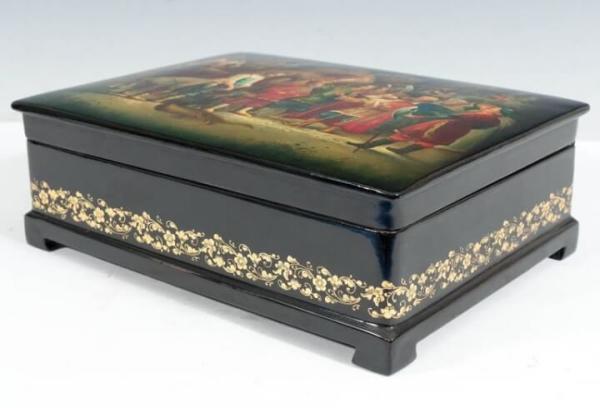
Shortly thereafter, Putin sent Trump a gift in New York, a black lacquered box. Inside the box was a sealed letter from Putin containing the following message, in his handwriting:
"If you will work with me, I will help you become the next President of the United States."
Ted Vaill*
*All of the above is true, except for the following:
- I never heard from Leonid again after leaving Leningrad in 1960.
- I have no idea what was actually in the sealed letter from Putin to Trump in the black lacquered box, but I believe that what I stated above could have been written by Putin to Trump.
Comments

Powered by RoundtableAn AI/DeFi-powered Enterprise Media Operating System. Learn more at Roundtable.io.© Roundtable 2026. By using this site you agree to the Terms of Use and Privacy Policy