


Jul 24, 2026 4:21 AM
The congressional candidate speaks with LA Progressive about housing, deportation, corporate money, community accountability, and whether grassroots candidates can resist Washington’s pull.
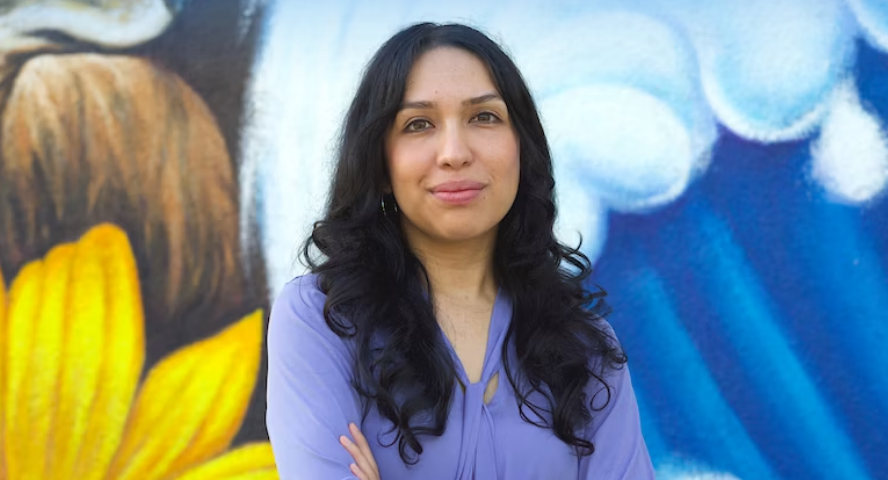
I recently sat down with Angela Gonzales-Torres, a candidate for Congress in California’s 34th District. Unlike many political interviews, this one had a personal wrinkle: should she win, she would become my representative.
That gave me more than a professional interest in the conversation.
The 34th District covers a wide and wonderfully complicated stretch of Los Angeles, including Highland Park, Eagle Rock, Cypress Park, Glassell Park, Koreatown, Chinatown, Little Tokyo, downtown Los Angeles, Westlake, Skid Row, Boyle Heights, and parts of unincorporated East Los Angeles.
It is one of those districts that makes Los Angeles difficult to explain to outsiders. It contains extraordinary cultural richness, enormous wealth, deep poverty, immigrant communities, college campuses, working-class neighborhoods, luxury development, and families living in tents—sometimes within a few miles of one another.
Related stories
Gonzales-Torres is a lifelong Angeleno and a fifth-generation resident of the area. She has worked with students, formerly incarcerated people, seniors, and families affected by deportation and housing instability. Her campaign, she told me, grew out of conversations with students at Pasadena City College, Cal State LA, Occidental College, and UCLA.
Many of those students had been touched by incarceration, family separation, or the broader failures of government. Yet they remained politically engaged.
That, she said, helped persuade her to run.
“The students I was around and working alongside had largely been hurt the most by systems of family separation,” she explained, “yet had the most hope that we could be part of positive change.”
There is something compelling about that. People who have been failed by institutions often understand those institutions more clearly than people who have been well served by them.
Still, hope is not a governing strategy by itself. The real question is whether personal experience and community credibility can be translated into effective political power.
Housing Comes Before Almost Everything Else
Much of our conversation focused on housing.
Gonzales-Torres has worked with people trying to rebuild their lives after incarceration, including students connected with programs such as Project Rebound and Rising Scholars. She said housing stability is often the difference between someone completing school and falling back into crisis.
That should not be surprising. It is difficult to concentrate on an exam, report to work, or meet the demands of probation when you do not know where you are sleeping.
She has also worked on affordable housing for seniors, a population increasingly vulnerable to homelessness. Some older residents are living in recreational vehicles, temporary shelters, overcrowded homes, or unstable arrangements with relatives.
“We can tell a lot about our society by how we treat our working families, our youth, and our elders,” she said.
On that point, I agree.
Los Angeles has managed to normalize conditions that should shock us. We have tents next to luxury towers, seniors priced out of neighborhoods where they spent decades, and teachers who cannot afford to live near the schools where they work.
Gonzales-Torres also raised a problem that deserves more attention: the official definition of “affordable.”
Housing programs often rely on area median income figures that do not reflect the actual incomes of poor and working-class residents. A unit can be called affordable on paper while remaining completely out of reach for the people who need it most.
Her argument is that affordability should be based on what people can truly pay, not on a regional income formula distorted by high earners.
That sounds reasonable. But Congress is filled with proposals that sound reasonable and never become law. Any candidate promising housing reform must explain not only what should happen, but how they intend to overcome real-estate interests, private-equity investors, resistant local governments, and members of their own party.
Family Separation Is Not an Abstraction
For Gonzales-Torres, immigration policy is personal.
Her father, a military veteran, was deported more than a decade ago. Her mother was suddenly left to raise four daughters. At one point, the family lived in a car.
She remembers that no government agency appeared to ask how the family would survive or whether the children would remain housed.
“That story is so common,” she said.
She is right about that too.
Political discussions about deportation often reduce families to numbers. We hear how many people were detained, removed, processed, or returned. The language conceals the damage: children losing parents, households losing income, and mothers becoming sole providers overnight.
Gonzales-Torres now mentors young people experiencing some of what she lived through herself. She describes this as the power of people standing with one another and “healing through helping others.”
It is a humane framework. Whether Congress remains capable of humane policy is another matter.
The Problem with Politicians
I asked Gonzales-Torres a question I ask because experience has made me skeptical.
Why should voters believe that she will remain connected to the community once elected?
I have watched candidates emerge from activist spaces, neighborhood organizations, churches, unions, and progressive movements, only to be gradually absorbed by the institution. Once in office, their calendars fill with donors, lobbyists, consultants, party officials, and carefully managed events.
The people who helped elect them are told to make appointments.
The town halls become scripted.
The difficult questions somehow never make it to the microphone.
Gonzales-Torres said accountability must begin during the campaign. Many of her volunteers are people who have known her for years, including former classmates and a former high school teacher.
“You start now,” she said. “You can be impeccable with your word while you’re campaigning.”
Perhaps. But nearly every politician promises to remain accessible. Few announce that they intend to become remote, cautious, and preoccupied with reelection.
The test comes later.
Gonzales-Torres acknowledged that she and members of her family previously voted for the incumbent, Jimmy Gomez. They believed he would represent the community. She now argues that the district needs greater urgency and a different approach.
Her criticisms center on conditions that remain unresolved: homelessness, school closures, the cost of living, incarceration, and the political influence of corporate money.
She also objects to billions being spent on warfare abroad while basic needs remain unmet at home.
“I feel very passionately about investing in our communities rather than in crimes against humanity, genocide, and atrocities abroad,” she said.
Her language is stronger than what we usually hear from congressional candidates. That may attract some voters and alarm others. But at least it is clear.
What Would Success Look Like?
I asked her to name measurable results voters could use after one term to decide whether she deserved reelection.
Her first answer was regular, unscripted, in-person town halls. Residents would not be screened and questions would not be selected in advance.
That should be standard practice, although the fact that it sounds ambitious tells us something about the current state of representative government.
She also called for reducing the influence of super PACs and corporate money. She wants working-class candidates to have a realistic chance of competing without first winning the approval of wealthy donors.
Here again, the goal is admirable and the obstacles are immense. Members of Congress benefit from the very campaign-finance system they are asked to dismantle.
Gonzales-Torres also said she would support efforts to block additional bombs for overseas wars and redirect resources toward humanitarian needs.
Finally, she named grocery price gouging and the broader cost-of-living crisis as priorities.
Food prices may not generate the drama of a televised congressional hearing, but they shape people’s lives more directly than most debates in Washington. Families are being forced to choose among rent, food, medicine, transportation, and utilities.
“People should not have to think about whether they’re fighting for rent or food,” she said.
No, they should not.
Skepticism and Hope
Gonzales-Torres describes her campaign as multicultural, multigenerational, and rooted in people typically excluded from political power.
That is an encouraging description. It is also the kind of description that must eventually be supported by votes, policies, and results.
I came away from our conversation neither converted nor dismissive.
She has lived close to the problems she discusses. She understands family separation because her own family was separated. She understands housing instability because her family experienced it. She has worked with people returning from incarceration rather than merely speaking about them during election season.
That matters.
But lived experience does not automatically produce legislative skill, and progressive language does not guarantee political courage. Congress has a way of taming people—or teaching them to explain why the things they once demanded must now wait.
Gonzales-Torres believes political change can move “at the speed of trust.”
Trust, however, should not be confused with faith.
Voters should listen carefully, ask hard questions, examine who funds the campaign, and watch who remains present after Election Day.
Angela Gonzales-Torres offers reasons for hope. Whether she can turn those reasons into accountable representation is the question voters in California’s 34th District must now decide.
Comments

Powered by RoundtableAn AI/DeFi-powered Enterprise Media Operating System. Learn more at Roundtable.io.© Roundtable 2026. By using this site you agree to the Terms of Use and Privacy Policy