
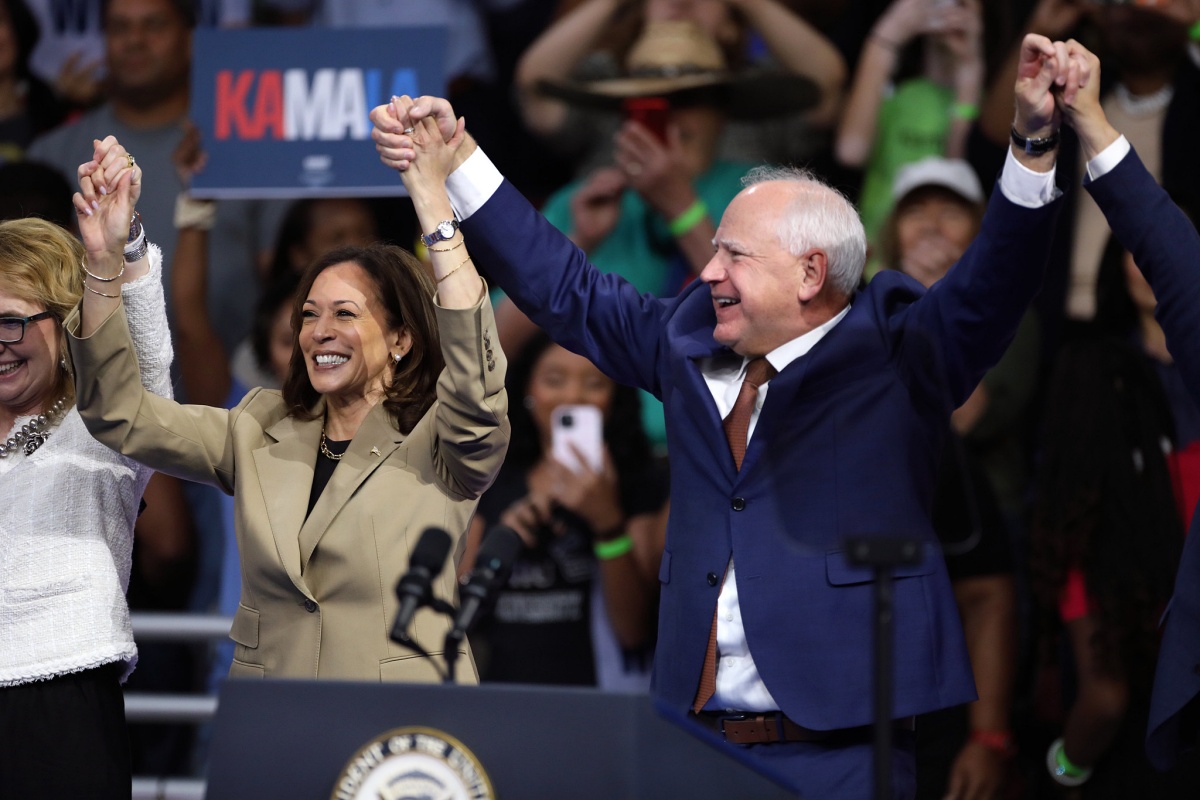
Gage Smidmore •. Attribution-ShareAlike (CC BY-SA 2.0)• Flickr


A Month of Upheaval
Aug 15, 2024 6:03 PM
Presidential Historian Rick Shenkman on the Tumultuous 2024 Campaign
It’s hard to keep track of the momentous and dizzying historic political developments in the past few weeks. Here’s some of the significant dates:
- June 27: President Joe Biden falters in televised debate with former president Donald Trump.
- July 1. On the last day of its term, the rightwing US Supreme Court majority grants immunity from prosecution to presidents for most criminal conduct when performing official acts.
- July 13. An assassination attempt at a campaign rally leaves Trump wounded.
- July 15. Federal Judge Aileen Cannon dismisses the theft of classified documents case against Trump based on finding the special counsel appointment unconstitutional.
- July 15-18. Republicans celebrate Trump and “Unity” at Milwaukee RNC convention.
- July 21. Biden drops out of presidential race and endorses Vice President Kamala Harris for president.
- July 24. In an address from the Oval Office, Biden explains his decision to end his campaign for the presidency.
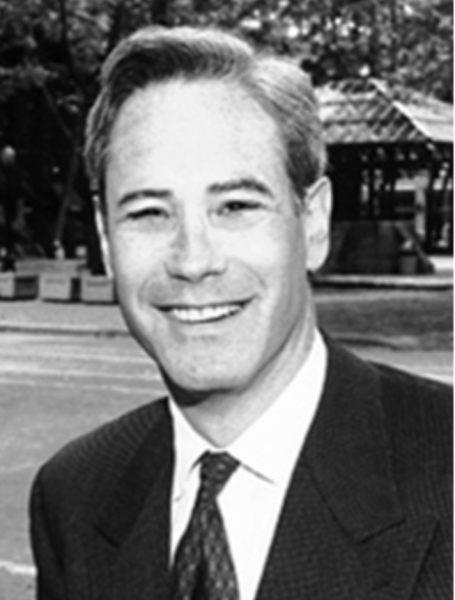
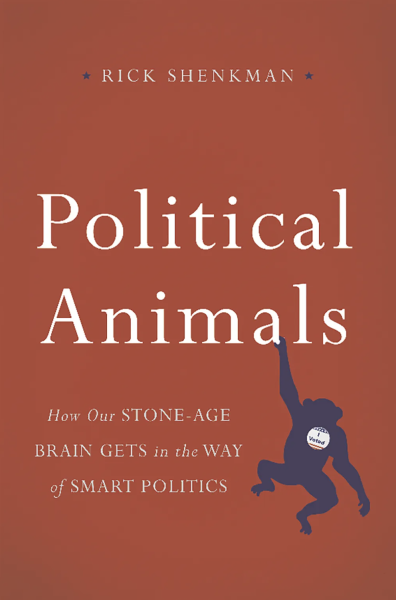
To better understand these momentous events, I asked renowned Seattle presidential historian and HistoryNews Network founder Rick Shenkman for his insights. He’s also an author and an award-winning political journalist, His books on history and politics include Presidential Ambition: How the Presidents Gained Power, Kept Power and Got Things Done; Just How Stupid Are We? Facing the Truth About the American Voter; and Political Animals: How Our Stone-Age Brain Gets in the Way of Smart Politics. Here’s some highlights from my recent conversation with historian Shenkman on our current political situation.
In this election cycle we’re navigating uncharted political waters. Momentous historic events in the past month jolted voters every week. There was an assassination attempt on former President Trump who is seeking a second term and, just eight days later, sitting President Biden dropped out of the race and endorsed his Vice President as his successor.
Related stories
Rick Shenkman: It’s definitely unprecedented that you've got these two events being paired. We've had assassinations, but we've never had a presidential candidate drop out at this stage in the election cycle.
Biden is a proud and stubborn politician who worked for decades to attain the presidency, He wanted to continue but his weak debate appearance sealed his fate. How did his own party convince him to not seek re-election?
Rick Shenkman: It was clear he’s not at the top of his game at the debate. And I don't think it was because he was sick or because he had flown on a plane 12 days earlier. He’s just an old man who has good days and bad days, and the misfortune was that the debate was scheduled on one of his bad days and it was just a disaster.
There were a lot of Democrats who were uncomfortable pushing Biden out, but you have to put yourself in the position of an old-time party boss, which means you’re clear-eyed and cold in your calculation when picking the nominee of the party. And for most of our history, party bosses sat in a smoke-filled room and decided on a nominee for president.
The bosses had three considerations. Number one always was: is this candidate going to be loyal to us party bosses? Number two: can this guy be a good president. (Democratic bosses named Harry Truman vice president in 1944 under FDR because they could conceive of him being a good vice president who could step into the president's shoes if need be. And they rejected Henry Wallace because they didn't trust him to be president.)
And then the third consideration: can this guy win? Ever since the God-awful debate, my calculation with Biden was that he's too old. We know he can be president, but the real question became: can he win? All the polls showed he could not win if the Blue Wall collapsed and polls showed it was collapsing. Eighteen states and the District of Columbia since 1992 had gone Democratic in every election. But since 2016 half of those states were no longer for sure in the Democratic column. So Biden was a sure loser and the party had to shift to somebody else. It's a risky change and it’s never happened before at this late stage, but at least now Democrats have a shot at winning.
And Biden has a remarkable record of accomplishment as President, but many voters don’t realize that. Why?
Rick Shenkman: The problem that Biden had is that he had thin majorities in Congress so they kept doing these omnibus bills that were huge. They stuffed everything into them. And as a result, the public never digested what was in all this legislation.
When Woodrow Wilson, Franklin Roosevelt and Lyndon Johnson had overwhelming majorities, they were able to take up one issue at a time and focus the public's attention on each issue, then pass legislation on it, and then get the credit for having done something big.
I'm sure 99 percent of the American people can't describe what the legislation Biden got passed because it was in these huge omnibus bills. Maybe the CHIPS Act was narrowly drawn and got through as a stand-alone bill, but everything else such as Inflation Reduction Act, which was really a climate change bill, and even the infrastructure bill had so much stuff in it that people didn't get it.
On top of that, Biden's a terrible salesman. He is not a good communicator and that’s been his biggest problem. As president, you wear many hats. You're commander in chief. You’re moral leader in chief. You're educator in chief. You're cheerleader in chief. And you’re communicator in chief. You can accomplish some of those tasks without communicating with the public, but you cannot accomplish most of those tasks without being a great communicator in chief because, if you are going to succeed as president, you have to have followers. You can't have followers unless you can communicate with people. That's a problem endemic to Biden’s presidency. He was a great president for getting legislation passed but he was not a great president for changing the zeitgeist.
Given Biden’s ambition and love of the presidency, it’s stunning to many that he agreed to leave the race.
Rick Shenkman: In the introduction to my book Presidential Ambition I wrote that as raw as a president's ambition is, and as complicated as it is, and as dark as it often is, presidents are tasked with grasping history by the horns and trying to direct history in a certain direction. The presidency demands overweening ambition. It's not a job for a bureaucrat, it's not a job for a manager. It's a job for somebody who's super ambitious.
Biden was right in the long line of previous super ambitious presidents. For him to decide to leave the race is impressive because he had to betray everything that he has dedicated his life to for the last half century. Hats off to him for putting country above himself.
When we see politicians on television, it’s only for a truncated time, mostly in controlled environments that they map out with advisors so they come off looking good, as in a presidential debate. Biden obviously couldn't because biology caught up with him and he simply is not the Biden of yore.
What does your extensive research tell us about ambition and the history of the presidency?
Rick Shenkman: I wrote Presidential Ambition 25 years ago, and one of the clear patterns that I identified is that presidents are not like you and me. They have a fountain of ambition that knows no end. It keeps going and going and going.
This super ambition suggests an understanding of presidential contenders. They run despite the sacrifices they have to make personally to their families, to their fortunes, to their principles. They have to be willing to sell out their friends and to compromise what they believe in. They have to be willing to raise lots and lots of money from often dubious characters. They have to cut deals with unsavory groups and individuals all to win the prize. And, after they have won the presidency, they keep on running. They run for a second term and, if they don't make the second term on the first try, they often keep running.
Abraham Lincoln had all of one year's schooling and, by the time he's barely 20, he's decided to run for office. And he runs for office and he loses. That doesn't stop him. The next election cycle, he winds up running and winning. And he had pitiless ambition. Lincoln’s former law partner William Henry Herndon perhaps said it best: “Lincoln's ambition was an engine that knew no rest.” When talking about himself in 1863, Lincoln said, "No man knows, when that presidential grub gets to gnawing at him, just how deep it will get until he has tried it."
Martin Van Buren for years was running for president. He finally got himself elected president and then he lost. He ran more times and even abandoned his party to run under the banner of another party because he had this engine that knew no rest. John Quincy Adams ran and then he lost. He couldn’t stay away from politics though so then he ran for a seat in the House of Representatives — and won. Grant served two terms, then went on a worldwide tour and came back and decided he missed being president so threw his hat in the ring. But the bosses put a stop to it because they were not convinced he could win even though he easily had won two terms.
Woodrow Wilson, after he had suffered several strokes and was literally unable to function as president of the United States, decided after two terms he wanted to run for a third. He was practically confined to a sickbed full time, but he wanted to run again. Herbert Hoover, despite having the Great Depression happen on his watch, decided to run for a second term. And when he lost to FDR in 1932, he couldn’t fathom how he had lost.
Only one president decided he’d serve only one term when he was in a position to run and probably win again, and that's James Polk. He had four goals when he came into office, and he accomplished all four goals and then was done and out. But for all these other presidents, they run again even when there's little hope that they can win.
And where does Trump fit into the history of presidential ambition?
Rick Shenkman. Trump comes from a different world. I'm in the camp of those who believe he wasn't convinced that he would be president. He didn't even seem to pour all of his chips into the race in 2016. And he would win even if he lost because his brand would be bigger and better than ever.
Trump won much to his own surprise. And obviously it was a very close election, not in the popular vote, but in the electoral college vote. If 45,000 votes in three states had gone the other way, we'd never have heard from Donald Trump as a politician again. But he managed to sneak in.
In your 2016 book Political Animals: How Our Stone-Age Brain Gets in the Way of Smart Politics, you examined voter attitudes, neuroscience, and psychology. You anticipated how voters could elect a populist demagogue and then Trump won the presidency in 2016.
Rick Shenkman: I never anticipated Donald Trump or anybody like him running for president and winning the nomination of a major party and actually winning the presidency. Not in my worst nightmares did I ever think something like that could happen. I thought our institutions were stronger than that, but we no longer have the party boss system, so we don't have gatekeepers who can keep a demagogue like Donald Trump away from the levers of power. So that puts us in a different position.
Is Trump running for president now just to stay out of jail?
Rick Shenkman: Clearly, he has to be president or he’ll go to jail unless the Supreme Court continues to rescue him.
It seems ironic that candidate Trump was the victim of a shooting when he has encouraged violence against his foes and actually incited a deadly riot at the Capitol. He must be the most incendiary and malicious candidate since the Civil War and his lies and hate speech are normalized by the media. Is his conduct the new normal?
Rick Shenkman: He has injected a poison into the body politic from which we are unlikely to recover for maybe a generation. People like President Obama keep saying they expect the fever will break, but it’s the wrong metaphor. Fevers last just a short time. Trumpism is a poison. We have already been living with it for nine years. The cure will be a Trump loss, but even then, it will take us years to recover.
In another historic development this month, the US Supreme Court held that presidents are mostly immune from criminal prosecution for acts conducted in the performance of official duties. Some legal scholars see this decision as unconstitutional and part of a rightwing judicial coup d’etat. How do you see the immunity decision?
Rick Shenkman: The immunity decision basically says it's okay for presidents to commit crimes and it upends the Constitution and our understanding of the presidency and what the founding fathers did. The Court’s majority clearly betrayed its professed belief in originalism that requires going back to the text of the Constitution. The founding fathers clearly did not anticipate granting immunity to the president, otherwise they would have. They granted limited immunity to members of Congress, but they granted no immunity of any shape or form to the President of the United States because they had just come through a revolution against monarchical authority. They expressly set about creating not a monarchy but a republic, with the fundamental idea that nobody is above the law.
And then, on July 15 Federal Judge Aileen Cannon, who was appointed by Trump, dismissed the stolen classified documents case against him based on the supposed unconstitutionality of appointing a special prosecutor.
Rick Shenkman: Virtually all of her decisions, with one or two exceptions, have been in favor of Trump. She has taken seriously arguments that other legal scholars find laughable and never should have been entertained by the court. She kept loading her schedule up with hearings and then not issuing opinions on any of these hearings in an obvious attempt to delay a trial. The docket just kept growing and growing and she wasn't issuing opinions, which served Donald Trump's purposes to delay the trial until after the election. And lo and behold, there won’t even be a trial now, although I think she'll get reversed on appeal and there ultimately may be a trial—unless Donald Trump becomes president because he'll close down all of these federal cases against him.
How do you see the Republican Party now after the assassination attempt on Trump and his reception as a virtual saint at the recent RNC convention as the party claimed unity and nominated Trump for president.
Rick Shenkman: The average Republican now is a MAGA supporter. If you're not a MAGA supporter, you've left the party or been booted out of it. All that's left is a uniformity of opinion and they’re all singing from the same song sheet. As we saw in this last party convention, they all sang in tune and with unanimity. That's impressive but that kind of unanimity at a political convention for anybody would be scary. You want dissent. Even with Franklin Roosevelt, as popular as he was, there was always dissent in the Democratic party. And now you have this horrible immunity decision so Trump can basically do whatever he wants as president and nobody could hold him accountable.
Now Vice President Kamala Harris is on track to be the presidential nominee of the Democratic Party. How do you see her as a candidate?
Rick Shenkman: Her most important attribute here is that she's young, and she's not Joe Biden, and she's not Donald Trump. The American people have been very clear over the last year. They didn't want these two old people running for president again. So the dynamic underlying this election has been completely upended, and that will work to her benefit.
Now, she's still stuck with having to defend everything that happened in the Biden administration. While it was a good record overall, there were plenty of places where there were weaknesses, and she's going to be tagged with the weaknesses.
Immigration is one issue and Biden's record on immigration is weak. Not until his fourth year in office did he finally get serious about immigration. It was because he was afraid to tackle the left wing in his party that basically wanted open borders, and the American people don't want open borders. As a Democrat, he finally figured out that we can have open borders and hand the next election to the Republicans, or he could do something about the border crisis, and maybe then win. He finally came to terms with that. But in the meantime, Kamala will have to defend the fact that for three years the administration really wasn't serious about it and basically allowed an open border.
She's also saddled with how the Afghan war ended. And I don't really blame Biden for the fact that it was messy. I do blame him for not preparing public opinion when he came out and confidently said, we're not having helicopters on the top of buildings taking people off at the last minute like we did in Vietnam. But then that happened. I'm sure that military people were telling him that the Afghan army was collapsing in those final weeks when the Taliban were on the outskirts of Kabul. He should have immediately delivered a White House address and prepared public opinion for how hard the withdrawal would be. But the mistake wasn't what he actually did. The mistake was not preparing public opinion for it. I mean, the collapse of that army is mostly on Bush and Obama who just kept throwing money at the problem in the form of weapons and soldiers with no clear idea of how to achieve victory.
And then you have inflation. And she’ll be saddled with the inflation problem as well, but it’s not Biden's fault. We saw that same level of inflation everywhere around the world in all the advanced countries. And, no matter what we did, we were going to have inflation because of a shutdown economy and snarled supply lines. Now, everything's open again but we have an inflationary mess. It was very predictable.
Harris has been criticized for her unsuccessful campaign for the presidency in 2020. How do you see her performance then?
Rick Shenkman: Kamala Harris's main problem was that she was the wrong candidate for the George Floyd moment. She was a prosecutor at a time when people in the Democratic Party had had it with the police and prosecutors. She'd been a prosecutor six years as California Attorney General and before that as the district attorney in San Francisco.
Her presidential run collapsed because she couldn't be who she was. At the same time, she benefited from the George Floyd protests. The only reason she got on that ticket was because she was black and a woman. Biden promised he’d pick a woman running mate, and he needed the support in South Carolina of Rep. Jim Clyburn, and Clyburn wanted him to pick Harris. That she was black was not incidental. That's how she wound up on the ticket.
She could not benefit from her own run for president. At that time, she was not very good on the stump when talking to a crowd but she was apparently very good when talking to a small number of people. And, when she was grilling Supreme Court nominee Brett Kavanaugh, she did a fantastic job. If we get her on a stage with Donald Trump in a debate this fall, she'll just cream him. I'm confident of that. And all it will take is one creaming to define who she is. She'll come across as the prosecutor she was and she’s tough and articulate.
Right now, people have only the foggiest idea of who Kamala Harris is because, when you're vice president, you're always in the second fiddle position and you can't be too visible. And she never had a lane until the Supreme Court decision overturning Roe v. Wade, particularly since Biden as a good Catholic who was always uncomfortable talking about abortion. Harris had a position then, and she started to get a following and a reputation for dealing with reproductive rights. She's been strong on that but she'll have to do a lot more going into the election. She must be her own person and break away from Biden and define herself. She will.
She needs money to introduce herself. If I was her, I'd buy five minutes on every network, every big cable channel and flood them so that people understand who she is.
Now the candidate and the moment have met. And now it’s the prosecutor versus the criminal.
Comments

Powered by RoundtableAn AI/DeFi-powered Enterprise Media Operating System. Learn more at Roundtable.io.© Roundtable 2026. By using this site you agree to the Terms of Use and Privacy Policy