
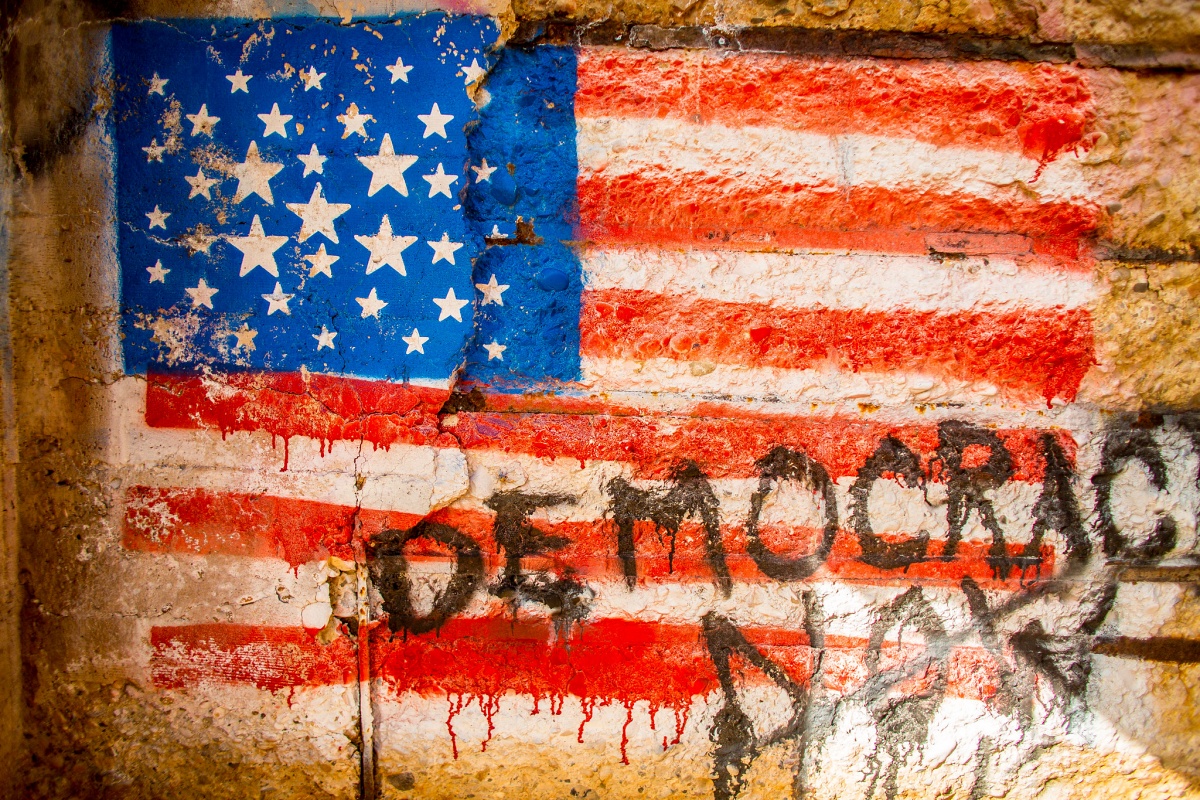
Thomas Hawk • Attribution-NonCommercial (CC BY-NC 2.0) Flickr


Deficient Democracy
Mar 18, 2024 3:25 PM
The supposedly democratic system of party primaries is dominated by the most ideologically consistent and extreme voters in each party.
We are barreling toward an election between two old men that 80 percent of American voters don’t want. Polls consistently show that the overwhelming majority does not want to have to choose between Trump and Biden, but it looks like that’s exactly what they’ll get. And independent or third party candidates won’t win: the most they can do is take votes from one or the other of the major party candidates. Trump, polling shows, is the most likely beneficiary of third-party voting.
What kind of wretched excuse for a democracy is this?
The supposedly democratic system of party primaries is dominated by the most ideologically consistent and extreme voters in each party. On the Republican side, Trump’s solid and militant base can dominate any primary, and thus impose Trump on the professional politicians, who fear for their jobs if they oppose him, and fear a lost election if he is nominated. The base dominates the primaries, but it’s only about a third or less of the general electorate.
The dynamic is different among the Democrats. The rank and file of the party, though they appreciate Biden’s accomplishments, are not sure he can still be a viable candidate. They would prefer someone else, someone younger but still liberal on the issues. That party base is being ignored by Biden and the Democratic political elite. While the base rules the Republicans, the elites are imposing Biden on the Democratic base.
Related stories
Neither party is producing what the vast majority of voters want.
Party primaries emerged a century ago as a more democratic way for parties to choose their candidates, replacing the old system of smoke-filled rooms filled with political bosses. On the whole, primaries have worked pretty well, as long as they produce candidates who can appeal to moderate voters. But now, as Trump marches his supporters to the far right, Republicans’ ability to nominate candidates who can reach moderate voters is in question.
The Democrats, in contrast, have reverted to the old system of settling on a nominee approved by the bosses. They have obviated primaries. The rooms aren’t smoke-filled anymore, but they’re just as closed.
While nothing short of a couple of deaths will change the scenario this year, there are some reforms that could make things more democratic in the future.
While nothing short of a couple of deaths will change the scenario this year, there are some reforms that could make things more democratic in the future.
Since the primaries are at the core of our problem now, we should support open primaries, whereby any registered voter could vote in either party’s primary. This would give moderate or centrist voters more say in party nominations, and thus weaken the more ideologically extreme activists who now dominate. This would have a particularly strong impact on the nomination process among Republicans.
Most of our elections at every level are “first-past-the-post” contests, in which the single candidate with the most votes (often not an absolute majority) wins the election. Several states and localities are already experimenting with ranked-choice voting, whereby each voter stipulates an order of preference among the candidates. Vote counting then progressively eliminates the candidate with the fewest votes, assigning their votes to the voters’ second preference. The final winner will have an absolute majority of votes. This system is likely to favor candidates who are less objectionable to more voters.
Other potential changes would require a constitutional amendment, and are thus less likely.
- Abolish the Electoral College. This institution has two paradoxical ill effects. First, it obviously gives disproportionate weight to states with small populations, most of which are rural and Republican. The Republicans thus have a built-in advantage. Secondly, however, the Electoral College puts excessive weight on a small number of larger swing states (like Pennsylvania) that could tip the election. Getting rid of the Electoral College would give every voter equal weight.
- Adopt a parliamentary system. In European democracies, the parliament elects the prime minister and government, who serve as long as they have a parliamentary majority. The president or monarch is purely ceremonial. While elections are still important, they are much less focused on the personalities of the top leaders, and more on the party programs.
Our democracy could use a major tune-up.
Comments

Powered by RoundtableAn AI/DeFi-powered Enterprise Media Operating System. Learn more at Roundtable.io.© Roundtable 2026. By using this site you agree to the Terms of Use and Privacy Policy