
SWinxy, CC BY-SA 4.0, via Wikimedia Commons


The harm done by letting one guilty person go scot-free is the trade-off for living in a free society, that balances government power versus individual rights.
Sep 19, 2024 7:26 AM
Updated Sep 22, 2024 4:20 PM
The harm done by letting one guilty person go scot-free is the trade-off for living in a free society, that balances government power versus individual rights.
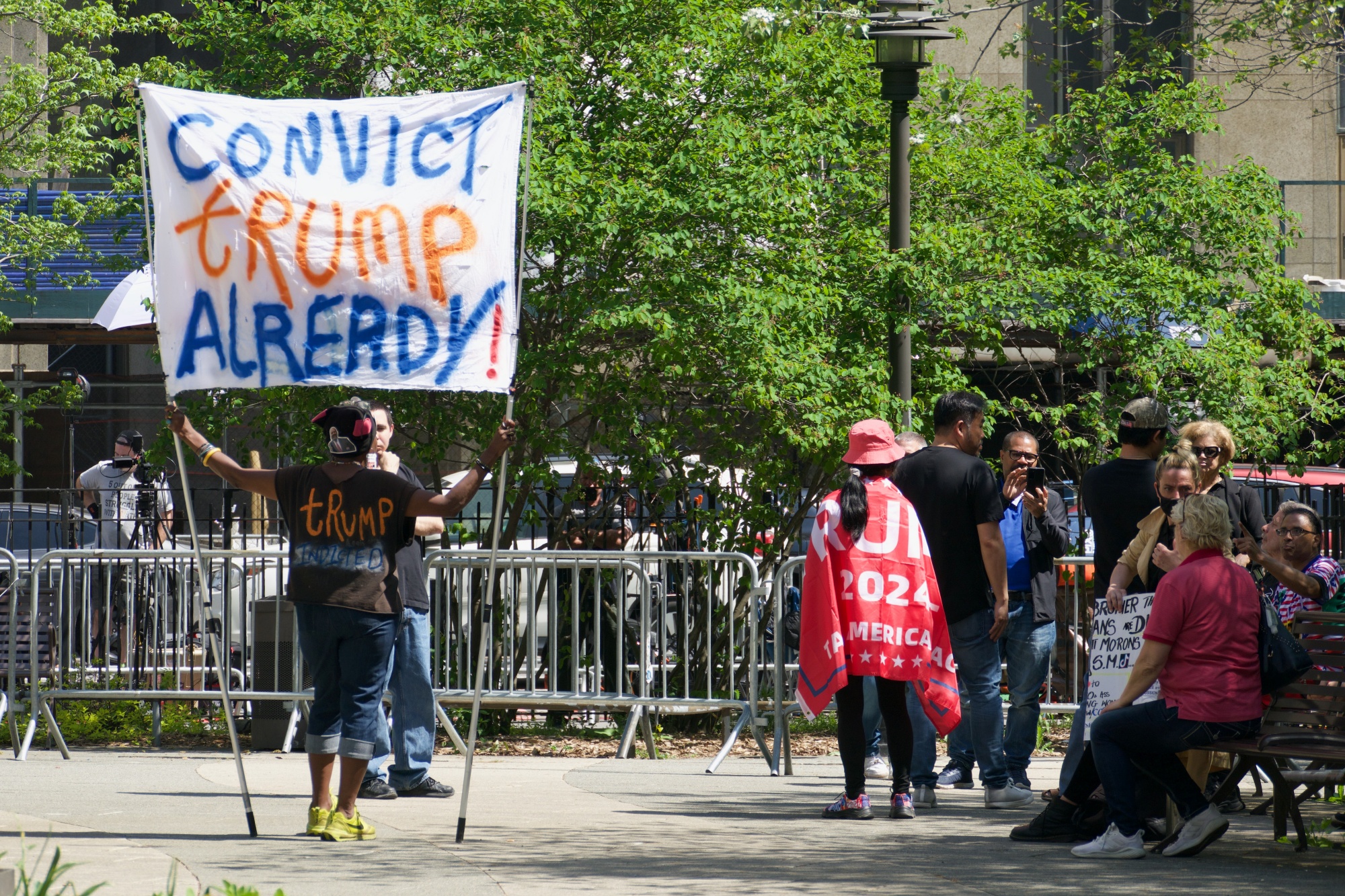
Donald Trump, already a convicted felon, is still awaiting three other criminal trials even more relevant to whether he is fit to be president. Since those criminal trials have been delayed until after the 2024 presidential election, it might make sense to view the 2024 election itself as a trial, with Trump the defendant, the voters the jury (rendering a verdict of elected or not elected), and subject to the same rules of evidence used in an actual criminal trial.
Sometimes In a criminal trial a jury returns a verdict of not guilty even though it is clear to the prosecutor that the defendant is guilty. This can happen when the judge rules that certain highly incriminating evidence is inadmissible, and so the prosecution is not allowed to present it to the jury.
The judge can rule evidence or testimony inadmissible on four main grounds: (1) It is “hearsay”, meaning that its reliability hasn’t been sufficiently established. (2) It is “prejudicial” meaning that its probative value is outweighed by the danger of misleading the jury by arousing emotions such as bias, hostility, or sympathy, and so interfering with the jury’s ability to reach an impartial verdict. (3) It is not relevant to the case. (4) It was obtained by “illegal means.”
Although deciding whether evidence was illegally obtained is generally quite objective, excluding evidence as hearsay or prejudicial can be quite subjective; so, inadmissible rulings give the judge the potential power, either unintentionally or on purpose, to cause the acquittal of someone who is clearly guilty.
Related stories
The trial for the murder of the Hollywood movie-star, Dominique Dunne, by her abusive ex-boyfriend, John Thomas Sweeney, was very controversial. A few weeks after she broke up with Sweeney, he showed up at her house and choked her to death. The prosecution wanted to bolster its case for first degree murder, using evidence of Sweeney’s history of violence by bringing to the stand an ex-girlfriend whom Sweeny had assaulted on multiple occasion resulting in her being hospitalized twice. Inexplicably, the judge would not allow that testimony, ruling that it was prejudicial.
The jury went easy on Sweeney with only a manslaughter conviction, and he served a mere three and a half years. Outraged members of the Dunne family blamed Sweeney’s light sentence on the judge’s inadmissibility ruling. After the trial, when the blocked evidence became public, the jury foreman said that had that evidence been made available to them, they would have convicted Sweeney of first-degree murder. Finding out after the trial was too late!
Again, if we view the 2024 presidential election as a trial, with Trump the defendant, and the voters the jury, is there a judge with the power to decide that certain evidence is inadmissible? The six conservative Supreme Court justices (three appointed by Trump) and Trump-appointed, District Court Judge Cannon, delayed three criminal trials of Trump until after the 2024 election, thereby preventing voters from learning potentially crucial evidence from those trials. In effect those Trump appointees, assumed the authority of judge with the power to decide that certain evidence was inadmissible.
There are two serious problems with that evidence being made inadmissible.
- The evidence that would be presented in those trials, by being allowed by the judges, would have passed a test for not being hearsay or prejudicial. Compared to the many exaggerations and outright falsehoods spewed during a presidential campaign this evidence would be much more objective and relevant.
- In a criminal trial, although the inadmissibility rules can lead to a bad outcome, the harm done by letting one guilty person go scot-free is the trade-off for living in a free society, that balances government power versus individual rights. However, in this election, Trump’s rights as one individual should not preclude the voters from learning crucial information, and must be weighed against the potential harm to our entire society if Trump is elected. Given Trump’s authoritarian tendencies, his desire to imprison opponents, and his three pending trials for serious criminal acts, including trying to prevent the peaceful transfer of power, isn’t it imperative that voters learn what might be revealed by those three trials? Instead, Trump appointees have made that evidence inadmissible?
In the Dominique Dunne murder trial, crucial inadmissible evidence was revealed only after the trial when it was too late! If Trump wins in 2024, too late might be the best-case scenario, because a reelected Trump would try to permanently block those trials.
Comments

Powered by RoundtableAn AI/DeFi-powered Enterprise Media Operating System. Learn more at Roundtable.io.© Roundtable 2026. By using this site you agree to the Terms of Use and Privacy Policy