


School for Scandal
May 7, 2024 6:24 AM
Updated May 7, 2024 4:21 PM
The threats of protests and disruption were a godsend to administrators who were uncomfortable with the choice of Tabassum but initially couldn’t devise a graceful way out.
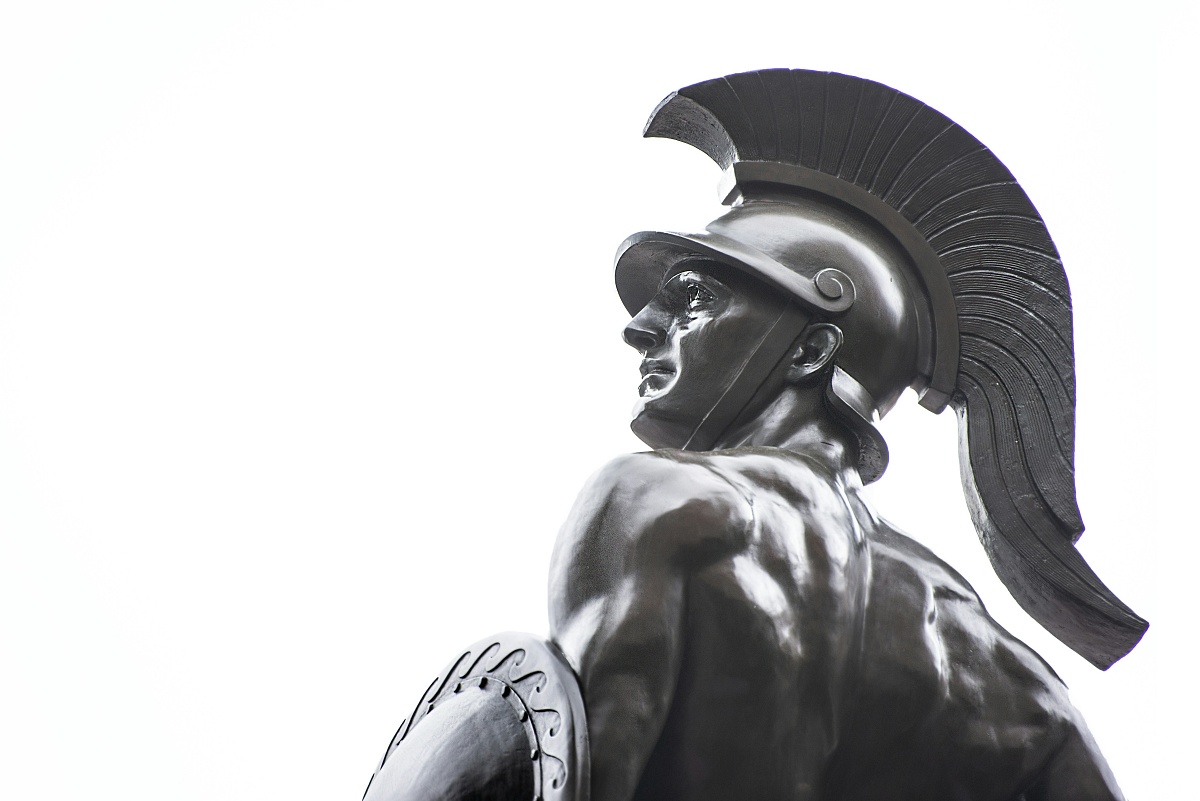
Asna Tabassum, a hijab-wearing biomed student, was selected by the University of Southern California (USC) as this year’s valedictorian and was looking forward to giving the commencement address. Following immediately upon USC’s announcement of her selection, pro-Israel groups mounted a strident opposition campaign based on political and religious—not academic—criteria. A typical complaint came from Trojans for Israel (USC students call themselves Trojans after the school’s unofficial campus mascot, Tommy Trojan).
The campus group’s complaint cited a three-year-old link, on Tabassum’s Instagram bio, to an article calling Zionism “a racist settler-colonial ideology.” Based on that, the group alleged that Tabassum was anti-Semitic. Despite Tabassum’s much milder, and hard-to-fault, personal position—she espouses the recognition of Palestinian’s human rights—USC bowed to pro-Israel pressure and cancelled her commencement speech.
In an online letter to the campus, Provost Andrew T. Guzman cited “security and disruption”:
Over the past several days, discussion relating to the selection of our valedictorian has taken on an alarming tenor. The intensity of feelings, fueled by both social media and the ongoing conflict in the Middle East, has grown to include many voices outside of USC and has escalated to the point of creating substantial risks relating to security and disruption at commencement.
Related stories
(I can imagine the “alarming tenor” of the discussion in USC President Carol Folt’s office: “Who’s the braniac who thought it would be a good idea to choose a hijab-wearer to be our commencement speaker?” The threats of protests and disruption were a godsend to administrators who were uncomfortable with the choice of Tabassum but initially couldn’t devise a graceful way out.)
According to a statement from Tabassum, USC officials told her their real concern was optics:
In a meeting with the USC Provost and the Associate Senior Vice President of Safety and Risk Assurance on April 14, I asked about the alleged safety concerns and was told that the University had the resources to take appropriate safety measures for my valedictory speech, but that they would not be doing so since increased security protections is not what the University wants to “present as an image.”
So it has come to this in a post-Trump, tantrum-throwing America: An institution of higher learning, a supposed safe space for the unfettered airing of ideas, has succumbed to threats and intimidation; under the generic, excuse-all rubric of “security”—somewhere Michel Foucault is nodding—USC squelched the speech of a student whose diligence and hard work had earned her the honor of speaking to and for her classmates.

Reverse the situation: Imagine that instead of a hijab-wearing Muslim student, USC had selected as valedictorian a kippah-wearing Jewish student who three years ago had linked to a pro-Israel article containing intemperate remarks about Palestinians and Muslims. Would USC have accommodated pro-Palestinian protests? And if USC had even considered caving to such complaints, would not its trustees, alumni, and wealthy supporters have been equally outraged, albeit to the opposite end? Would not these same groups that demanded Tabassum’s squelching have instead decried censorship and anti-Semitism and then taken solemn, principled stands that free speech and academic freedom must be upheld regardless of cost? Would not USC have hired however much security was necessary to provide that Jewish student the opportunity to make a commencement speech?
Permitting protesters to suppress the peaceful expression of ideas is a travesty anytime and anywhere in America, but for an American university—an institution for which such principles should be bedrock values—to allow the squelching of speech is a scandal. Or would be if we were talking about a real institution of higher learning. But in fact, we’re not. We’re talking about USC. (If labelling itself a “university” makes USC an educational institution, then so is Trump University.)
Founded in 1880 with a Methodist affiliation, USC’s reputation as an academically mediocre but athletics powerhouse began early. Its football tradition particularly is storied (although not all stories are equally uplifting): USC has the most Heisman Trophy winners, with eight, and all but two have behaved honorably on the field and off. But those two exceptions are striking: the late O. J. Simpson, who was very publicly tried and acquitted of a gory double murder, then later imprisoned for armed robbery and kidnapping; and Reggie Bush, who voluntarily relinquished his trophy in the wake of flagrant violations of NCAA rules. (The Heisman Trust recently restored Bush’s trophy, stating that because what he did is no longer considered wrong, he no longer did it. Colin Kaepernick, who sacrificed principal—in the form of NFL salary—for principle, need not apply; for him, virtue will have to be its own reward. Gambling on sports now being ubiquitous, next for reputational rehab are Pete Rose, followed by Shoeless Joe Jackson.)
USC has strived mightily for academic cred, mostly in vain. Its Board of Trustees and its administration, determined to overcome twin stubborn stains—academic mediocrity, and recurring, long-running, and lurid scandals reeking of corruption and sexual excess—have thrown money at the problems, sparing no expense to rebrand the school as a serious research university. And with some success: USC students, should they choose—not all do, thus the school’s nickname, the University of Spoiled Children—can in fact extract first-rate educations from a faculty that comprises many fine educators and scholars devoted to their disciplines: history, humanities, film, science, medicine. These teachers dedicate their careers and lives to their students and to the cultivation of their fields, fiercely and lovingly tending those fields via inspiring their students—some of whom go on to be teachers—and via research and publishing that is, ultimately, dialog with other educators and scholars.
But USC’s faculty and students accomplish this despite, not because of, its trustees and administrators. A wide, deep, and long-established gulf exists between USC’s academics and its administration, the latter primarily concerned with marketing and branding, a hefty chunk of which consists of boilerplate lip-service to academic ideals. Many members of USC’s bloated Board of Trustees are there for their own reputational enhancement, calculating that an association with an institution of higher learning will polish off some accumulated tarnish, salve their consciences, or spiffy up their public-spirit chops before running for office (i.e. former Los Angeles mayoral candidate Rick Caruso).
Many trustees, to the extent they take an interest in USC’s affairs beyond self-burnishing, quarreling among themselves, and raising/donating money, conduct themselves as overseers of a diploma mill targeting the spoiled children of wealthy parents (another USC nickname is the University of Special Connections): The cost of attending USC for the 2024-25 academic year is estimated (by USC) at $92,525.00. Financial aid is available, though much of it comes in the form of future-hobbling loans to affray a four-year total nudging $400,000.00. For perspective: In 1965, I enrolled in my first year at Albany State College, now called the State University of New York (SUNY), Albany. Until then, New York state colleges had been free; that year, student protests erupted over the state’s imposition of a $400.00 tuition fee. Where were we supposed to come up with that kind of money?
The steeply rising costs of higher education have wildly outstripped inflation. This is due to complex social, economic, and political factors, but a major contributor is dramatically decreased state support. Rising costs have pushed schools to seek (let’s charitably call them) innovative funding sources, and at most colleges and universities, athletics programs are fundamental recruiting tools and draws. College football is particularly important because of lucrative media contracts. Yet for many schools, particularly USC, the quest for that money has become an end in itself, not only corrupting their educational missions, but also, in extreme cases, actually leading to deficits as support costs for the football programs (and huge, new arenas) exceed college football revenues.
Try as USC’s branding and marketing departments might to render the school’s scandals academic, new ones, often sexually exploitive, continue to expose themselves:
the 24/7 sex, drugs, and rock-n’-roll party hosted by a Keck School of Medicine dean Dr. Carmen Puliafito;
the secret settlement between USC and 80 mostly LBGTQ students after allegedly inappropriate behavior by a gay doctor employed by the Student Health Services;
the $1.1 billion settlement of a case, covering thousands of USC’s female students, against another USC Student Health Services doctor;
the school’s central role in the varsity blues scandal, during which its personnel sold access to USC admissions, which piggy-backs on USC’s venerable record of trading admissions for donations (this goes on at all schools);
the (male) donors whose names have been removed from buildings or programs after #metoo-era sexual-assault allegations; after a student-led Change.Org petition, the school rejected a $5 million scholarship endowment from Harvey Weinstein;
the 20-count indictment, on federal corruption charges, of an L.A. City Council member and a dean of USC’s School of Social Work.
This all during the past seven years.
It’s a sad reality that every institution of higher learning, both private and public, must cozy up—if not suck up—to donors, compromising academic ethics. The more an institution is lionized, the more potentially lucrative its credentials become, and the more parents believe that only those credentials will save their children from a life slinging burgers. The more valuable its credentials are deemed, the more a school will be vulnerable to the corruption of its ideals.
Every financially struggling college and university—which, practically speaking, means virtually every college and university—is sorely tempted by ethically compromising outside money: sports television, sports media companies, sports paraphernalia, electronic-gaming companies, government grants for research with ambiguous implications, private-corporation funding for murky motives. It goes on and on. Wealthy individuals propose ego-boosting projects that are philanthropy-themed symphonies with strings. For instance, the University of California, Santa Barbara (UCSB), desperate for more on-campus housing, excitedly announced plans for a $1.5 billion, 11-story dormitory whose singular positive attribute—almost none of the rooms had windows—was that it would have been free, a gift from the late billionaire Charles “Charley” Munger. Munger, a partner in Berkshire Hathaway, fancied himself an amateur architect and used his money to indulge his whims. After a tsunami of scorn—Munger’s dorm was essentially a prison with in-out privileges—UCSB reluctantly abandoned the plan.
To survive and thrive, nearly all educational institutions must hold their noses and dance with malodorous partners. What makes USC different? Where the leaders of other academic institutions have to hold their noses to find funds for higher education, USC’s trustees and administrators smell perfume, embracing the agents of hire—as opposed to higher—education. The resulting plethora of USC’ scandals and their length and breadth have put USC in a scandal league of its own. Worse, trustees and administrators then strive to ignore, hide, and bury the most-egregious, and potentially costly scandals regardless of ongoing harm to thousands of students.
Nor is there any sign USC’s beacon of infamy will fade, not as long as its trustees direct its administrators to run the school primarily as a diploma mill and NFL feeder rather than as an academic institution with priorities that sometimes undermine or conflict with profits, not as long as they continue to operate it as though it were a for-profit corporation, branding and marketing itself as though it were a factory, the chief products of which are diplomas and credentials.
The values of barbarians are barbarian values. Continuing to operate in ways that produce corruption and scandal will continue to produce corruption and scandal. For instance, this latest self-inflicted blow to its compulsion to be taken seriously as an institution of higher—as opposed to hire—education: the shameful capitulation to threats and intimidation from pro-Israel thugs. In the end, Asna Tabassum is less a victim of Zionist extremism—though she is that—than of USC’s culture of unprincipled amorality.
From that perspective, President Folt’s decision to cancel first Tabassum’s speech and then USC’s main commencement is completely, coldly, corporately calculated and rational: Folt and the trustees decided capitulation to thuggery provides better optics, is better for the brand—and USC’s bottom line—than are images of cops breaking high-paying students’ heads, alarming their wealthy parents, and scaring away potential donors.
And for what it’s worth—here’s to you, Asna Tabassum—one form of Zionism is, at its most toxic, a “racist settler-colonial ideology.”
Comments

Powered by RoundtableAn AI/DeFi-powered Enterprise Media Operating System. Learn more at Roundtable.io.© Roundtable 2026. By using this site you agree to the Terms of Use and Privacy Policy