


Feb 5, 2025 6:27 PM
Updated Feb 5, 2025 9:10 PM
To erase the Department of Education along the lines of Trump and Musk’s vision for America is to create a future where the ideals of opportunity and justice are unrecognizable.
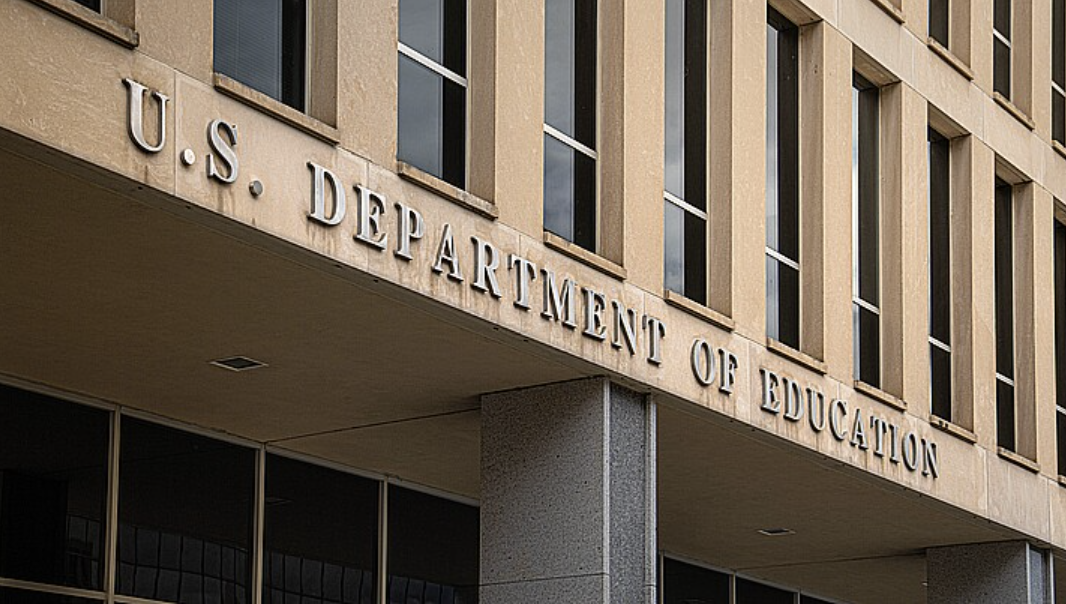
As a proponent of critical pedagogy since the early 1980s, I have over the years been at pains to address serious shortcomings associated with the US Department of Education. My purpose in this article, however, is to set out some serious problems with the Trump administration’s plan for dismantling the Department of Education under the watchful eye of Project 2025, a blueprint for a radical reimagining of governance steeped in ideas as dangerous as they are destructive. Yet none carry a darker shadow than its relentless push to dismantle the Department of Education. This is no fleeting ambition; it is a long-held fixation, one that has festered within conservative circles since the Department’s creation in 1979 by Jimmy Carter. But to give this vision form would be akin to setting fire to the very foundations of American education, leaving behind nothing but smoldering ruins. The consequences would be nothing short of catastrophic, a wound that would scar students, schools, and the soul of learning itself. To erase the Department of Education along the lines of Trump and Musk’s vision for America is to create a future where the ideals of opportunity and justice are unrecognizable, leaving in its wake a bedrock upon which plutocracy can more favorably flourish.
Like a monarch sharpening his blade to sever the ties of a past he deems unworthy, Donald Trump has fixed his gaze on the towering citadel of the U.S. Department of Education, drafting an executive order that could spell its right-wing undoing. The ink has not yet dried, but the decree moves like a specter through the corridors of power, whispered in hushed tones among those who see its arrival as both inevitable and cataclysmic.
What was once a fortress of federal oversight now stands as a battleground, its walls marked for destruction. This is no ordinary skirmish in the long war against public education. It is an executioner’s decree, the latest maneuver in an administration more brazenly authoritarian than any before it—an administration where Silicon Valley’s gilded elite, the self-styled disruptors of democracy, now pull the levers of a new American plutocracy. In this second coming of Trumpism, the battlefield is no longer just policy—it is the very soul of the republic, where institutions once thought indestructible tremble under the weight of a leader hell-bent on their destruction.
According to sources entwined in the administration’s machinations, the campaign to dismantle the Department of Education will unfold like a tragedy in two acts. First, the Secretary of Education will be cast as the surgeon-executioner, ordered to take the scalpel of executive action to the department’s sinew, severing its structure piece by piece until only a hollowed-out shell remains. Then, with the carcass weakened, the administration will summon Congress to wield the final blow—legislation designed to bring the institution to its knees.
Related stories
But history has long been an unyielding gatekeeper, standing watch over the ruins of past ambitions. Others have tried and failed to shutter this bastion of public education, only to find that the machinery of governance, however battered, does not bend so easily to the whims of a single ruler. Whether Trump’s second reign will rewrite that history—or simply join the annals of thwarted authoritarian dreams—remains the question looming over this moment, heavy as an unsentenced verdict.
Previous attempts to dissolve or merge the Department of Education have crumbled, their ambitions dashed even when the political winds seemed ripe for such a transformation. The machinery of reform faltered, its gears stripped by the weight of resistance, its designs thwarted by forces both external and internal. Now, the question lingers: Can this administration succeed where others have faltered? It hangs in the air like a prophecy, its fate undecided, teetering between the realm of possibility and the realm of broken promises—its fulfillment or its shattering yet to be determined.
The push to erase the Department of Education is not a singular act of governance, but part of a broader unraveling. Recently, dozens of employees were placed on paid administrative leave, casualties of a sweeping effort to purge federal agencies of those associated with diversity, equity, inclusion, and accessibility programs. The administration’s message is clear: the tides of change will not be gentle, nor will they spare those who stand in their path.
Adding a sinister layer to this reshaping of the educational landscape is the shadow of the Department of Government Efficiency, a creation led by Elon Musk—a figure whose presence in the corridors of power seems as if it were conjured by the dark genius of George Orwell. Musk, with his brand of technocratic zeal, symbolizes a chilling ideological pivot—one that seeks to mold education into something scarcely recognizable from its current form. His vision looms like an apocalyptic specter, echoing the paranoia of the Cold War, promising a future where the very notion of equitable access to learning is eroded by the machinations of a government that is more interested in control than in empowerment.
Once a system designed to ensure federal oversight and ensure that learning remained accessible to all, the Department of Education is now being reimagined under the banner of "efficiency." But the battle is more about ideology than efficiency.
Behind locked doors, an executive order—its ink as lethal as a king’s decree—circulates among his inner circle, a death warrant for the institution that has, even with its many problems, safeguarded generations of students. Should his pen strike parchment, the great unraveling begins.
Critics see this as little more than a thinly veiled pretext—a smokescreen to dismantle long-held protections, redistribute power, and tilt education’s ideological compass toward the right. What was once a vehicle for deepening democracy is being hollowed out, its capacity to nurture critical thought replaced by a algorithmic machine crafted to churn out minds made malleable and vulnerable to the cult of MAGA.
For Trump, public education has long been an ideological battleground—a place where, in his view, students are subjected to a "government-run" system that indoctrinates them with liberal, "woke" values. His words, like the rallying cry of a crazed zealot, reflect a belief that the education system is not merely broken but weaponized against his vision of America. "We will drain the government education swamp," he proclaimed on the campaign trail, vowing to end what he deems an unchecked force shaping the nation’s youth in ways that threaten his MAGA ideals. Now, he seeks to craft an educational agenda built upon the framework of Project 2025—a blueprint for remaking the nation’s institutions in the image of his ideology, where power is consolidated, and democracy itself is subjugated to the demands of a populist vision that values conformity over thought, loyalty over inquiry.
Yet, even if the Department of Education is struck from the map, its legacy will not disappear into the ether so easily. The roots of federal education programs run deep, intertwining with the nation’s history long before the department was officially established in 1979. The funding for low-income students, the special education initiatives, and the efforts to guarantee equal access to schooling all predate the department’s formation. While the institution itself may be erased, the needs it addresses—and the battles over its role—will endure, woven into the fabric of America’s democratic struggle.
History, however, is an unyielding adversary. Time and again, Congress has stood as the reluctant gatekeeper, refusing to let the department be gutted without a fight. When presidents have sought to slash its budget, lawmakers have nearly always pushed back, increasing funding nearly three-quarters of the time. Even in the face of Trump’s first term, when his administration tried to eviscerate the department’s resources, a Republican-controlled Congress bucked the directive and instead bolstered its budget. The specter of past victories lingers, reminding those who seek to undo the department's work that history often has a way of rewriting the narrative, no matter how forcefully it is pressed into service.
The question now is whether this time will be different. Will the Department of Education, a pillar of federal oversight for more than four decades, crumble under the weight of executive power? Or will history, once again, refuse to be rewritten? The battle has begun, but the final chapter remains unwritten.
The ambition is vast, the execution ruthless. Dozens of department employees—many linked to diversity, equity, and inclusion efforts—have already been cast into limbo, placed on paid administrative leave as the first purge of the federal workforce begins. Overseeing this scorched-earth campaign is the Department of Government Efficiency, led by none other than Elon Musk, a neo-fascist technocrat wielding his own brand of disruption. Together, Trump and Musk seek not merely to dismantle, but to erase—to leave no trace of the department's mission or legacy.
From the campaign trail, Trump’s war cry has rung clear: “We will drain the government education swamp and stop the abuse of your taxpayer dollars to indoctrinate America’s youth.” The Department of Education, he claims, is an instrument of federal overreach, a breeding ground for ideologies his MAGA cult seeks to stamp out. In his vision, public education is not a right, but a battlefield in the larger culture war—a front where policy must be rewritten, programs gutted, and oversight reduced to a whisper.
Yet, even if the department falls, the programs it once housed may not vanish entirely. Like ruins repurposed by conquerors, some will be scattered across other federal agencies, reduced to mere fragments of their former grandeur. The funding streams that once nourished the education of low-income students and children with disabilities predate the department itself—an ancient infrastructure woven into the very sinews of the nation. This foundation, dug deep into the soil of American policy, remains a resilient relic that even Trump may find difficult to entirely dismantle. Though the department may be erased from the map, these programs, like enduring monuments, may continue to pulse quietly in the background, their influence felt even in the absence of the institution that once gave them shape. But to access them will likely be a nightmare.
But history, like a stubborn and unyielding river, does not bend so easily. Time and again, efforts to starve or slay the Department of Education have met with fierce resistance. Like waves crashing against jagged rocks, each attempt to erode its foundation has been repelled by those who stand in its defense. Even when past administrations aimed to slash its budget, Congress rose like a guardian of the past, not only restoring the funds but often swelling them, strengthening the institution with a force the attackers did not anticipate. In Trump’s first presidency, when he handed Congress the axe he hoped would bring the department to its knees, the Republican-controlled legislature refused to follow his lead. Instead, they chose to fortify the very institution he sought to weaken, a striking defiance of the would-be dismantlers, an assertion that some pillars, however battered, will not fall so easily. Things will be different this time.
Trump and Musk together have an army of sycophants like no other at their disposal, quislings not content merely to kiss the ring but all too eager to kiss the whip instead. There is nothing more repugnant than witnessing Republican politicians initially brutalized by Trump to later fawn over him, drooling, almost begging to be punished once again. Remember Congresswoman Jackie Speier, featured in the new doc, 'Cult Massacre: One Day in Jonestown,' who warned: "I was in the House gallery when January 6 took place. I thought, 'Oh my God, I survived the jungles of Guyana, and I'm going to die in this tabernacle of democracy'". She said Donald Trump has “all the trappings” of being the next Jim Jones. Seth Abramovitch writes:
At a rally in scorching Las Vegas on June 9, Donald Trump pointed out one of his followers in the crowd — a particularly fervent Trump fan nicknamed “Front-Row Joe” who’d attended over 200 such events. “It would be suicide before Biden, right?” Trump asked him.
The remark instantly evoked one of the most shocking and tragic instances of cult mind-control — that of Reverend Jim Jones, a preacher who on Nov. 18, 1978, coerced 909 members of his Peoples Temple compound in Guyana to take fatal doses of cyanide-tainted Flavor Aid, killing them all.
There are many good reasons to be worried about the dismantling of the Department of Education carried out by the hands of Trump and Musk.
Reid Setzer warns that while federal education programs account for only a fraction of overall funding, their influence is nothing short of monumental. These programs are not mere line items in a budget—they are the lifeblood of opportunity for millions. Title I, II, III, and IV of the Every Student Succeeds Act (ESSA) serve as lifelines for students from low-income communities, English learners, and other marginalized groups, ensuring that education remains a promise rather than a privilege. To defund or dismantle these programs would be to sever that lifeline, draining high-poverty districts of essential resources, widening the chasm between the privileged and the forgotten, and crippling the futures of countless children. Without federal oversight, the most vulnerable schools would be left to flounder, adrift in a system that favors those with wealth and power, deepening the very inequities education was meant to bridge. Setzer writes:
While the amount of federal P-12 education funding provided is much less than that supplied by states and localities, federal programs include those within ESSA Title I, II, III, and IV, all of which are vital in supporting students from low-income backgrounds, developing and training educators, and providing resources for English learners, alongside other traditionally underserved students. If conservatives succeed in defunding or outright killing these programs as they have previously proposed, schools in high-poverty districts would be drained of millions of dollars, crippling their ability to function and aiding in the explosion of educational attainment gaps that would leave millions of children at huge disadvantages.
The Individuals with Disabilities Education Act (IDEA) stands as a fortress against the tides of neglect, ensuring that students with disabilities receive the tailored support they need to thrive. Through its gates, the Department of Education channels $15 billion each year, upholding a promise etched into law—a promise that no child will be cast aside. But should this foundation crumble, millions would find themselves stranded, their essential services vanishing like a bridge collapsing into the abyss.
Public schools, already burdened, would, Setzer notes, buckle under the weight of unfunded mandates, struggling to uphold their legal duty with empty hands. Meanwhile, private institutions, unshackled from IDEA’s protections, would become fortresses of exclusion, slamming their gates on those who need support the most. Project 2025 whispers of shifting oversight elsewhere, but behind its vague assurances lies a chilling truth: without the federal government’s steadfast hand to enforce these protections, families would be left wandering a barren landscape of diminished resources and vanished options, their children’s futures left to the mercy of an indifferent system.
Education data collection and school accountability measures serve as a lighthouse in the storm, illuminating where students struggle and ensuring they are not left to drift unseen. To phase out federal oversight of all 13,000 school districts would be to shatter that beacon, plunging the nation’s most vulnerable children into darkness.
The Department of Education’s Office for Civil Rights (OCR) would be abolished, transferring enforcement to the Department of Justice—a move that would all but guarantee weaker protections. In Setzer’s words,
Abolishing the Department of Education also means that the Department’s Office of Civil Rights (OCR) would cease to exist. Schools and colleges need to be assisted in, and held responsible for, creating safe and welcoming learning environments for all students. OCR has an essential role in holding schools and colleges accountable for when they violate students’ civil rights to be free from sex-based and race-, national origin-, color-, and religious-based discrimination, as outlined in Title IX and Title VI, respectively. Adding this work to the Department of Justice’s workload and restricting enforcement to only the court system as outlined in Project 2025 will reduce protections for students, diminish their sense of belonging on campus, lower completion rates, and let schools off the hook for providing supports.
Further, writes Setzer, without the infrastructure provided by the Department of Education, Pell Grants, student loans, and the Free Application for Federal Student Aid (FAFSA), helping millions access higher education, would be fractured across agencies ill-equipped to handle its complexity. Eliminating the Department would devastate Historically Black Colleges and Universities (HBCUs), Minority Serving Institutions, and other schools that rely on federal support, disproportionately harming underserved communities. What will happen to support for American Indian and Alaska Native students and financial support for Tribal Colleges and Universities and other minority serving institutions? (Faircloth, email)?
Setzer warns that the Department of Education is not merely a financial lifeline—it is the architect of a system designed to protect students from the predatory forces of the private lending market. Through its oversight of federal student loans, the Department ensures that protections like income-driven repayment plans and Public Service Loan Forgiveness are available to those who need them most. Without this safeguard, students would be cast adrift into the unforgiving seas of private lenders, where interest rates soar and repayment terms tighten like a vice.
Without the Department’s support, millions of borrowers would lose access to crucial assistance, driving them into financial ruin and making higher education an unattainable dream for countless working-class families. The promise of education as a ladder out of poverty would be replaced by a harsh reality where the price of knowledge becomes an insurmountable barrier, further entrenching inequality and crushing the hopes of future generations.
But history has long been an unyielding gatekeeper, standing watch over the ruins of past ambitions. Others have tried and failed to shutter this bastion of public education, only to find that the machinery of governance, however battered, does not bend so easily to the whims of a single ruler. Whether Trump’s second reign will rewrite that history—or simply join the annals of thwarted authoritarian dreams—remains the question looming over this moment, heavy as an unsentenced verdict.
According to Setzer, a 2023 poll found that 65% of Americans— including 52% of Republicans—support increased federal education funding. Programs like Pell Grants and TRIO have bipartisan backing, and there is little political appetite for gutting education funding at the national level. Project 2025’s vision does not reflect the will of the people; it is an ideological crusade against the very foundation of public education.
The Department of Education is more than a bureaucratic construct—it is the bulwark against inequality, the architect of opportunity, the guardian standing between millions of students and the abyss of neglect. It is the hand that steadies the scales of justice in education, ensuring that learning is not a privilege bestowed upon the few, but a right upheld for all.
To dismantle it would be an act of calculated destruction, unraveling decades of progress like a tapestry torn apart thread by thread, leaving behind only frayed remnants of what once was. Schools would falter, educators would be cast into uncertainty, and the children who rely most on its protections would be left to navigate a fractured landscape, where the promise of education is dictated not by need, but by power.
The Trump administration must reject this reckless assault and stand firm in its duty to safeguard the Department of Education. To abandon this fight is to abandon the very foundation of American democracy. For in the end, a nation that forsakes its children does not simply lose its way—it loses itself.
The storm churns. The siege begins. But whether the fortress of public education will stand or fall remains a tale yet to be written. Will it be replaced by private charter schools advancing a white nationalist curriculum? Or, more in keeping with Elon Musk’s support for Germany’s far right neo-Nazi political party, Alternative for Germany, the AfD, will homeschooling curricula be unleashed on America bearing a resemblance to the infamous online homeschooling network following in Ohio, boasting over 3,000 subscribers, that operates through a social media messaging platform, where it distributes lesson plans and curriculum recommendations for elementary-aged children? Here is the group’s very first message:
“We have fought hard for our right to homeschool the children,” one post from December reads. “Without homeschooling the children, our children are left defenseless to the schools and the Gay Afro Zionist scum that run them.”
Another post with a “Thanksgiving copywork” assignment showed pages of handwritten Hitler quotes.
In January, as Martin Luther King Jr. Day approached, a user with the screen name “Mrs. Saxon” posted in the channel, “It is up to us to ensure our children know him for the deceitful, dishonest, riot-inciting negro he actually was.”
“Mrs. Saxon” continued in the January post, “He is the face of a movement which ethnically cleansed whites out of urban areas and precipitated the anti-white regime that we are now fighting to free ourselves from.”
“Keep in mind that this is a unit study for elementary ages,” she wrote in bold and underlined font.
And so the question now lingers in the air like a prophecy: Will the Trump administration finally succeed in toppling the Department of Education, or will resistance rise once more from the embers of academia, from elementary school teachers and from concerned parents? Will a ‘far-right woke agenda’ emerge from between the coattails of Elon Musk that will lead America down the path towards South African apartheid? Will children be taught to quote their Dear Leader Donald Trump, referring to migrants as “vermin” “poisoning the blood of our country”? Ginger Gibson writes:
“They let — I think the real number is 15, 16 million people into our country. When they do that, we got a lot of work to do. They’re poisoning the blood of our country,” Trump told the crowd at a rally in New Hampshire. “That’s what they’ve done. They poison mental institutions and prisons all over the world, not just in South America, not just to three or four countries that we think about, but all over the world. They’re coming into our country from Africa, from Asia, all over the world.”
Trump then repeated the use of “poisoning” in a post on his social media website Truth Social, saying overnight in an all-caps post, that “illegal immigration is poisoning the blood of our nation. They’re coming from prisons, from mental institutions — from all over the world.”
The term “blood poisoning” was used by Hitler in his manifesto “Mein Kampf,” in which he criticized immigration and the mixing of races. “All great cultures of the past perished only because the originally creative race died out from blood poisoning,” Hitler wrote.
Can you imagine a classroom where the teacher enters to begin the day of instruction and the class stands in unison to give a Elon Musk ‘Seig Heil’ salute? Excuse me, a “Roman greeting gesture”.
What happens when education is wielded as a tool for indoctrination, and when hateful ideologies are cultivated under the guise of learning? Americans need to do some soul-searching before they allow the Department of Education to be shuttered.
Comments

Powered by RoundtableAn AI/DeFi-powered Enterprise Media Operating System. Learn more at Roundtable.io.© Roundtable 2026. By using this site you agree to the Terms of Use and Privacy Policy