


Aug 1, 2026 5:53 PM
Updated Aug 5, 2026 9:12 PM
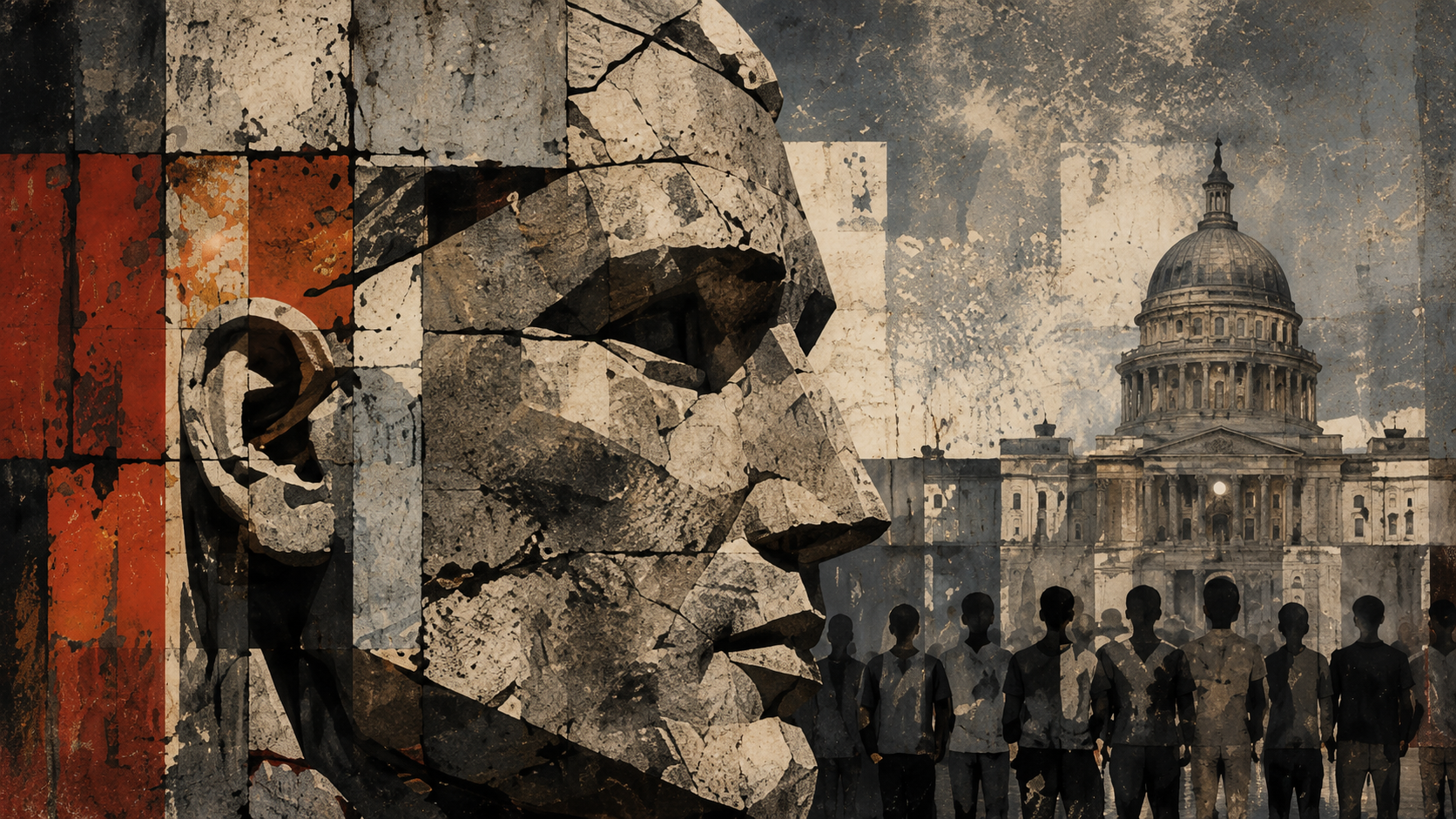
As authoritarianism, artificial intelligence, ecological collapse and oligarchic power threaten democracy, revolutionary prophetic pedagogy offers a new vision of education as a practice of freedom.
Democracy at the Crossroads and the Birth of Critical Pedagogy
We inhabit a historical threshold in which democracy increasingly survives as political spectacle while oligarchic power quietly consolidates its command over everyday life. Elections remain, constitutions continue to function, and the rhetoric of freedom saturates public discourse. Yet beneath these democratic appearances, public institutions are steadily hollowed out by privatization, wealth exercises unprecedented influence over political decision-making, and the common good is increasingly subordinated to the imperatives of global capital. The language of democracy survives, but its social foundations are progressively weakened.
This transformation is not merely economic. It is cultural, educational, technological, and moral. Artificial intelligence, digital surveillance, algorithmic governance, and the commodification of personal data increasingly shape the ways individuals understand themselves and interpret the world around them. Public attention has itself become a commodity to be bought, sold, and manipulated. Citizens are recast as consumers, political participation is reduced to branding and performance, and democratic deliberation gives way to permanent distraction. Fear becomes one of the principal currencies of political life, as authoritarian movements convert economic insecurity, cultural anxiety, and social fragmentation into resentment directed against immigrants, intellectuals, educators, journalists, and democratic institutions themselves.
Education occupies a central place within this historical transformation.
Once regarded as one of democracy's indispensable public goods, schooling is increasingly organized according to the logic of the market. Universities adopt corporate models of governance, students become customers, teachers become service providers, and knowledge is valued primarily according to its market utility. Standardized testing, managerial accountability, and vocational efficiency increasingly replace democratic inquiry, ethical reflection, and historical understanding. Under such conditions, education ceases to cultivate citizens capable of participating in public life and instead produces adaptable workers prepared to accommodate themselves to an increasingly unequal social order.
The consequences extend far beyond educational policy. Every educational system contributes to shaping the moral and political imagination of the society it serves. Every curriculum embodies assumptions about history, justice, citizenship, and human possibility. Every classroom distributes not merely information but legitimacy, identity, memory, and hope. The fundamental educational question is therefore never simply, What should students learn? It is, What kind of human beings—and what kind of society—does this education seek to produce?
Related stories
It was precisely in response to these questions that critical pedagogy emerged during the second half of the twentieth century. Critical pedagogy was never intended simply as another teaching method or a collection of classroom strategies. It arose from humanity's long struggle against domination in all its forms. Its intellectual genealogy extends through the workers' movements that challenged industrial exploitation, anti-colonial struggles against empire, Black freedom movements confronting white supremacy, feminist struggles exposing patriarchal power, Indigenous resistance to settler colonialism, liberation theology's preferential option for the poor, and democratic movements that refused to accept oppression as the inevitable condition of human existence.
At the center of this tradition stands Paulo Freire, whose work transformed educational thought throughout the world. Writing in the context of profound poverty, political repression, and authoritarian rule in Brazil, Freire challenged what he famously described as the "banking model" of education, in which students are treated as passive receptacles into which teachers deposit official knowledge. Such an educational model, he argued, mirrors authoritarian political structures by rewarding obedience rather than inquiry and adaptation rather than transformation.
Against this model, Freire proposed a radically democratic understanding of education. Learning should become a dialogical encounter in which teachers and students investigate reality together. Knowledge is not transferred from those who possess it to those who lack it; it is collectively produced through dialogue, reflection, and action. Education thus becomes inseparable from praxis—the unity of critical reflection and transformative social engagement.
Freire's concept of conscientização, or critical consciousness, remains one of the defining achievements of modern educational thought. Critical consciousness is more than the acquisition of information. It is the capacity to perceive the historical forces shaping everyday life while recognizing that those forces have been created by human beings and can therefore be transformed by human beings. Poverty, racism, colonialism, patriarchy, ecological destruction, and economic inequality are not expressions of human nature. They are historically produced social relations. To understand this is already to begin imagining their transformation.
Freire's influence quickly extended far beyond Latin America. During the final decades of the twentieth century, critical pedagogy became one of the most significant democratic educational movements in the world. Among those who played the decisive role in introducing and developing Freire's work within North American educational scholarship was Henry A. Giroux.
Giroux's own academic career became emblematic of the political tensions surrounding critical scholarship. While a faculty member at Boston University during the presidency of John Silber, Giroux's democratic socialist commitments, his critique of conservative educational reform, and his insistence that schools function as sites of ideological struggle placed him in direct conflict with an increasingly conservative institutional environment. His denial of tenure became, for many observers, a symbol of the political pressures confronting scholars whose work challenged prevailing orthodoxies. Rather than ending his career, however, the experience propelled Giroux into becoming the foremost architect of critical pedagogy in North America.
Over the next four decades, Giroux transformed Freire's educational philosophy into a comprehensive critique of neoliberalism, consumer culture, militarization, neo-liberal cultural politics, public pedagogy, youth culture, media, and the corporate restructuring of education. He demonstrated that pedagogy extends far beyond formal schooling into the cultural institutions through which identities, desires, values, and political subjectivities are continually produced. In doing so, he established critical pedagogy as one of the defining democratic traditions in contemporary educational theory. Giroux currently teaches at McMaster University in Hamilton, Ontario, Canada where he continues to make world historical advances in the field of resistance pedagogies.
It was within this expanding intellectual tradition that my own work increasingly came to be identified with revolutionary critical pedagogy. While deeply indebted to Freire's philosophy of dialogue and Giroux's analyses of schooling, politics, culture and democracy, my work undertook an explicit engagement with Marxist humanism, revolutionary political economy, and anti-imperialist struggle. Questions of race, gender, colonialism, identity, and culture remained indispensable, as I attempted to situate them within the historical dynamics of capitalism itself. Without a sustained critique of capital, critical pedagogy risked losing sight of the structural forces that continually reproduce inequality and exploitation.
Revolutionary critical pedagogy therefore argued that capitalism is not merely an economic system but a historically specific form of social life that penetrates culture, education, morality, religion, media, and everyday consciousness. Schools participate in the production of labor power, but they also shape political identities, moral commitments, and democratic possibilities. Educational struggle can never be isolated from broader struggles over labor, class, race, colonialism, ecology, and democracy itself.
This perspective did not reject the remarkable contributions of the broader critical pedagogical tradition. Rather, it sought to reframe them by returning to Marx's understanding that human beings make history under historically inherited conditions. Education is therefore always implicated in the reproduction—or transformation—of those conditions. Democracy requires more than electoral procedures. It requires citizens capable of understanding how power operates historically, economically, culturally, and ideologically.
It is for this reason that critical pedagogy embraces dialectical historical materialism not simply as an analytical method but as a democratic way of reading history itself. Reality is never static. Every institution contains contradictions. Every social order carries within itself the possibility of transformation. Capitalism appears permanent only because its historical character has been obscured and naturalized. Dialectical critique restores movement to history by revealing that what has been historically produced can also be historically transformed.
The history of critical pedagogy is therefore not simply the history of an educational theory. It is the history of an ongoing democratic struggle to recover education as a public practice of freedom. That struggle has been carried forward by an extraordinary international community of scholars, activists, teachers, artists, and social movements who refused to separate education from the broader pursuit of justice.
Yet history does not stand still. Every generation inherits new forms of domination requiring new forms of democratic imagination. The crises of the twenty-first century—digital capitalism, artificial intelligence, ecological collapse, resurgent authoritarianism, permanent war, and unprecedented concentrations of wealth—confront critical pedagogy with challenges that neither Marx nor Freire could have fully anticipated. Remaining faithful to their legacy therefore requires not repetition but creative renewal.
The International Development of Revolutionary Critical Pedagogy
It is from this historical necessity that Revolutionary Prophetic Pedagogy begins.
Before turning to that development, however, it is important to recognize the remarkable intellectual tradition from which it emerged. Critical pedagogy did not develop through the work of a single individual. Although Paulo Freire provided its philosophical foundation and Henry Giroux established it as one of the most influential democratic educational traditions in North America, its subsequent development became a genuinely international undertaking. During the final decades of the twentieth century and the opening decades of the twenty-first, an extraordinary community of scholars continued to expand, deepen, revise, and sometimes challenge the evolving tradition of critical pedagogy. The pioneering work of bell hooks, together with the contributions of numerous educators and theorists across the globe, transformed critical pedagogy into one of the world's most influential movements for democratic educational thought and emancipatory social practice. James Kirylo's important engagement with Freirean philosophy likewise anticipated several themes that would eventually coalesce in what I have come to call revolutionary prophetic pedagogy, the synthesis with which this essay concludes.
Among the foremost figures in this development was Antonia Darder, whose scholarship consistently demonstrated that education cannot be separated from questions of culture, language, identity, and power. Darder emphasized that democratic education must begin from the lived experiences of historically marginalized communities rather than from abstract educational models imposed from above. Her work on biculturalism, cultural democracy, and critical ethics revealed that education is fundamentally an act of human relationship grounded in dignity, dialogue, solidarity, and love. Throughout her career she has reminded educators that democratic teaching requires not only intellectual rigor but moral courage, humility, and genuine respect for the humanity of one's students.
Equally transformative was the work of Joe L. Kincheloe, whose astonishing intellectual range continually expanded the horizons of critical pedagogy. Refusing disciplinary boundaries, Kincheloe developed a conception of critical constructivism that brought together philosophy, sociology, psychology, political economy, cultural studies, cognitive science, and educational research into a remarkably coherent democratic project. His concept of bricolage challenged educators to recognize that knowledge itself is socially constructed within relations of power. Rather than reducing scholarship to narrow technical specialization, Kincheloe insisted that democratic inquiry requires intellectual complexity equal to the complexity of the social world itself. Few scholars did more to demonstrate that rigorous scholarship and radical democratic commitment could mutually enrich one another.
Shirley R. Steinberg carried critical pedagogy decisively into the fields of media studies, youth culture, and critical multiculturalism. Long before social media transformed public consciousness, Steinberg recognized that popular culture had become one of the primary sites through which ideology, identity, and political imagination were being produced. Schools no longer possessed a monopoly over education. Corporations, advertising, entertainment industries, and digital technologies increasingly functioned as powerful pedagogical institutions in their own right. Her work therefore expanded critical pedagogy beyond formal schooling into the wider terrain of cultural politics.
Donaldo Macedo, Freire's longtime collaborator and translator, made equally indispensable contributions through his work on language, literacy, colonialism, and critical translation. Macedo consistently demonstrated that language is never politically innocent. Every language policy reflects broader struggles over culture, identity, and power. His scholarship illuminated the ways linguistic domination often reproduces colonial relations while simultaneously revealing how critical literacy can become a powerful instrument of democratic emancipation. Through his collaborations with Freire, Macedo also ensured that Freire's ideas reached readers throughout the world with extraordinary intellectual fidelity.
While the work of Michael Apple fundamentally transformed our understanding of curriculum, educational policy, and conservative educational reform, Ira Shor translated Freire's dialogical philosophy into democratic classroom practice, showing that critical pedagogy was not simply a philosophical orientation but a concrete educational practice capable of transforming relationships between teachers and students. His work revealed that democracy is learned not primarily through abstract civic instruction but through democratic participation itself. The classroom becomes democratic precisely to the degree that students become active participants in producing knowledge rather than passive recipients of official truths.
Among the most rigorous Marxist theorists working within critical pedagogy has been Glenn Rikowski, whose analyses of labor, value production, and capitalist social reproduction deepened the movement's engagement with political economy. Rikowski insisted that education cannot be understood apart from capitalism's continual production of labor power. His scholarship illuminated the intimate relationship between schooling, labor markets, commodification, and the accumulation of capital, reminding critical educators that democratic reform remains inseparable from broader struggles over economic democracy itself.
Pepi Leistyna significantly expanded critical pedagogy's engagement with media literacy, communication, and democratic public culture. As new forms of digital communication transformed everyday life, Leistyna demonstrated that critical literacy had to include the capacity to analyze the increasingly sophisticated media environments through which contemporary consciousness is shaped. His work helped prepare critical pedagogy for an era in which information itself would become one of capitalism's most valuable commodities.
Equally important were the contributions of Christine Sleeter and Suzanne SooHoo, whose work on multicultural education demonstrated that democratic schooling must confront systemic racism through curriculum, pedagogy, and institutional transformation rather than superficial celebrations of diversity. Sandy Grande challenged critical pedagogy to engage Indigenous epistemologies and settler colonialism, arguing that democratic education cannot achieve its emancipatory promise while ignoring the continuing realities of colonial occupation and Indigenous dispossession. Richard Kahn made pioneering contributions by directing critical pedagogy toward questions of ecological devastation, environmental justice, and sustainability, thereby helping to advance the development of ecopedagogy as a distinctive field of critical inquiry.
Taken together, these scholars did far more than extend Freire's original insights. They collectively transformed critical pedagogy into an international democratic conversation extending across continents, intellectual traditions, political movements, and disciplinary boundaries. Their work demonstrated that education cannot be understood apart from capitalism, colonialism, patriarchy, ecological destruction, racism, media culture, technological transformation, or the ongoing struggle to deepen democracy itself.
Yet this extraordinary intellectual flowering also revealed important theoretical tensions. As critical pedagogy expanded, it increasingly incorporated insights from postmodernism, poststructuralism, cultural studies, feminism, critical race theory, postcolonial scholarship, and queer theory. These contributions significantly enriched the movement, opening new ways of understanding identity, discourse, representation, language, embodiment, and difference.
At the same time, I became increasingly concerned that an engagement with these new developments within critical pedagogy sometimes occurred at the expense of its earlier engagement with Marx's critique of political economy. Questions of identity remained indispensable. Yet identity itself develops within historically specific relations of production. Race, gender, sexuality, culture, and colonialism all possess their own irreducible histories, but they also intersect with the dynamics of capitalist accumulation in ways that cannot be ignored. Without a sustained analysis of capitalism itself, critical pedagogy risked becoming increasingly adept at interpreting domination while becoming less capable of explaining the structural conditions through which domination continually reproduces itself.
The question therefore became unavoidable: What historical development must now follow revolutionary critical pedagogy?
In more recent years, my engagement with Marxist humanism—especially through the work of Peter Hudis, William I. Robinson, Kevin B. Anderson, and other critical scholars—proved indispensable in deepening and clarifying my own theoretical trajectory. Yet the answer did not emerge through a single intellectual breakthrough or theoretical innovation. Rather, it took shape gradually over decades of teaching, political organizing, dialogue with colleagues across the world, and sustained engagement with communities resisting poverty, racism, colonialism, ecological devastation, and capitalist exploitation. At the same time, my thinking was profoundly enriched by a renewed encounter with Christian theology—not the Christianity of empire, nationalism, religious fundamentalism, or prosperity theology, but the revolutionary and prophetic traditions that have repeatedly confronted structures of domination in the name of justice, human dignity, and collective liberation.
The most important attempt to bring the prophetic traditions of Christianity into sustained dialogue with the struggles of the oppressed emerged through liberation theology in Latin America during the late 1960s and 1970s. Drawing inspiration from the Second Vatican Council, the Medellín Conference of Latin American Bishops, and the lived experiences of impoverished communities throughout the continent, theologians such as Gustavo Gutiérrez, Leonardo Boff, Jon Sobrino, Ignacio Ellacuría, and others argued that the Gospel could not be separated from the historical realities of exploitation, colonialism, dictatorship, and class oppression. Their insistence upon God's "preferential option for the poor" represented not an abstract spiritual principle but a revolutionary ethical commitment requiring Christians to participate actively in struggles for justice. Liberation theology neither abandoned faith for politics nor reduced politics to theology. Rather, it understood history itself as the arena in which faith acquires its deepest meaning through solidarity with those who suffer. Although drawing extensively upon Marx's critique of capitalism as an indispensable tool for analyzing the structural roots of oppression, liberation theologians refused every form of economic determinism. They insisted that human emancipation must also involve moral, spiritual, and cultural transformation. It is precisely this profound dialogue between historical materialism and prophetic faith that provides one of the principal intellectual foundations upon which Revolutionary Prophetic Pedagogy seeks to build.
Revolutionary Prophetic Pedagogy is deeply indebted to liberation theology, yet it is not identical with it. Liberation theology emerged primarily within the life of the Church and sought to renew Christian faith through the lived struggles of the poor. Revolutionary Prophetic Pedagogy begins from the educational tradition embodied in the work of Paulo Freire, and Henry Giroux, engaging educators, students, and democratic social movements regardless of religious commitment. Its purpose is not to theologize education but to demonstrate that the prophetic ethical vision of justice, compassion, and human dignity can enter into a creative dialogue with Marxist humanism, democratic socialism, and critical pedagogy in the shared struggle against capitalism, empire, racism, colonialism, patriarchy, and ecological destruction. In this sense, it extends rather than replaces both revolutionary critical pedagogy and liberation theology, seeking to recover the emancipatory promise that animates each.
Critical pedagogy has always been animated by an ethical vision. Paulo Freire never reduced education to technique or political strategy. His work continually returned to questions of love, humility, dialogue, solidarity, forgiveness, and hope. These were not sentimental virtues. They constituted the moral conditions necessary for democratic life itself. Freire understood that oppression damages not only institutions but also the human capacity to trust, imagine, create, and love. Liberation therefore requires more than structural transformation. It requires the continual remaking of ourselves
As my own work developed, I became increasingly convinced that this ethical dimension deserved fuller philosophical elaboration. Revolutionary critical pedagogy had successfully deepened the movement's engagement with Marxist political economy, anti-imperialist struggle, and socialist transformation. Yet another task remained unfinished. We required a moral language capable of sustaining democratic struggle during periods when historical victories seemed increasingly remote.
We inhabit an age marked by converging crises unprecedented in human history. Artificial intelligence is transforming the production of knowledge itself. Surveillance capitalism commodifies human attention. Ecological catastrophe threatens the material conditions of civilization. Financial oligarchies exercise extraordinary influence over democratic governments. Endless warfare has become normalized. Millions are displaced by climate change, economic devastation, and political violence. Loneliness, despair, and nihilism increasingly accompany technological sophistication.
These developments cannot be understood simply as isolated political failures or temporary policy disputes. They reveal a far deeper civilizational crisis. What we are witnessing is not merely the failure of particular governments but the exhaustion of a MAGA-inspired political and social order organized around endless capital accumulation, relentless competition, the commodification of human relationships, and the subordination of democratic life to the imperatives of capital and an increasingly predatory ruling class. This is the historical moment of ensepulcher: the living entombment of human possibility within the decaying structures of capitalist civilization. Under these conditions, social life itself becomes sepulchral. Institutions remain standing, elections continue to be held, markets function, and the rhetoric of freedom persists, yet the life-generating capacities of democracy, solidarity, critical reason, and ecological stewardship are progressively buried beneath the accumulated weight of authoritarian nationalism, racialized capitalism, imperial violence, and the fetishism of endless accumulation.
The crisis is therefore not merely political but existential. It marks the deepening ensepulcher of a social order whose governing institutions increasingly preserve the appearance of life while reproducing the conditions of collective moral, cultural, ecological, and democratic death. Historical materialism remains indispensable for understanding this crisis. Marx's critique of capitalism continues to illuminate the structural dynamics of exploitation, commodification, alienation, and class power with extraordinary force. His analysis remains one of humanity's greatest intellectual achievements. Yet Marx himself never claimed that political economy exhausted the richness of human existence. Human beings struggle not only for bread but also for dignity, recognition, meaning, community, beauty, love, salvation and hope.
Revolutionary Prophetic Pedagogy: Beyond the Civilization of Ensepulcher
It was here that I increasingly found myself returning to the prophetic traditions of Christianity.
The prophetic imagination begins from a proposition remarkably similar to that of critical pedagogy: history remains open because injustice possesses no eternal legitimacy. The Hebrew prophets denounced kings who accumulated wealth while abandoning the poor. They condemned societies that converted law into privilege and religion into an instrument of domination. Justice, they insisted, could never be separated from the material conditions under which ordinary people lived.
Jesus radicalized this prophetic tradition. His proclamation of the Kingdom of God represented not an invitation to passive resignation while awaiting heaven but an announcement that another way of organizing human community had become imaginable. His ministry continually disrupted established hierarchies by placing the poor, the excluded, women, foreigners, lepers, tax collectors, and sinners at the center of moral life. The Kingdom of God functioned as a radical reversal of existing social relations. The last would become first. The mighty would be cast down. Wealth would no longer determine human worth.
Read in this prophetic tradition, the Gospels become profoundly political—not partisan in the narrow sense, but political in the deepest sense of challenging every social order that treats human beings as disposable.
Marx and Jesus therefore confront different dimensions of the same historical tragedy.
Marx unmasks the structural organization of exploitation.
Jesus unmasks its moral and spiritual consequences.
Marx explains how capital becomes an idol.
Jesus refuses to worship it.
Marx demonstrates why exploitation persists.
Jesus insists that exploitation is intolerable.
One provides an extraordinary critique of political economy.
The other summons humanity toward an ethical community grounded in compassion, reciprocity, forgiveness, solidarity, and love.
Neither tradition is sufficient by itself.
Historical materialism without an ethical horizon risks becoming administratively revolutionary while spiritually impoverished.
Religious faith detached from the critique of political economy risks becoming morally sincere while politically accommodating.
The future of democratic education requires both.
It is from this understanding that Revolutionary Prophetic Pedagogy gradually emerged.
Revolutionary Prophetic Pedagogy does not seek to Christianize Marxism or secularize Christianity. It seeks something far more demanding. It asks whether the greatest emancipatory traditions of modern history might illuminate one another in confronting the converging crises of the twenty-first century.
Historical materialism teaches us why domination persists.
The prophetic imagination teaches us why it must never be accepted.
Historical materialism reveals the architecture of power.
The prophetic imagination expands the moral horizon of democratic possibility.
One unmasks the idols of capital.
The other refuses to kneel before them.
Together they remind us that education worthy of democracy must cultivate not only critically informed citizens but morally courageous human beings prepared to participate in the unfinished work of human liberation.
Critical analysis, however indispensable, cannot by itself sustain emancipatory struggle. Human beings do not survive on critique alone. They require ethical commitments capable of resisting despair, sustaining solidarity, and nurturing democratic courage across generations. They require moral languages capable of inspiring sacrifice in the face of overwhelming political defeat. They require visions of hope capable of resisting cynicism without surrendering historical realism.
This insight was never absent from Freire's work. Indeed, it lay at its very heart. Freire repeatedly insisted that dialogue, humility, love, solidarity, hope, and ethical responsibility were not sentimental ideals but constitutive dimensions of democratic life itself. Oppression dehumanizes both the oppressed and the oppressor. Liberation therefore demands not only structural transformation but the difficult work of becoming more fully human together.
As I continued to reflect upon these questions, I found myself returning again and again to the prophetic traditions of Christianity. Not the Christianity of empire. Not the Christianity of colonial conquest. Not the Christianity of Christian nationalism, prosperity theology, or religious authoritarianism. Rather, I returned to the revolutionary prophetic tradition stretching from Amos, Isaiah, Micah, and Jeremiah through the ministry of Jesus and continuing into the liberation theology of Latin America, the witness of Archbishop Óscar Romero, Dorothy Day, Thomas Merton, Camilo Torres, and countless others who understood faith as an uncompromising commitment to justice for the poor and the oppressed.
What increasingly became clear to me was that Marxist humanism and prophetic Christianity, despite their significant philosophical differences, converge around a common ethical refusal. Both reject every social order that transforms human beings into objects of domination. Both expose forms of idolatry that subordinate life to wealth, power, and empire. Both insist that the legitimacy of every institution must ultimately be judged by its capacity to nurture human dignity rather than private accumulation. Both understand history not as fate but as an unfinished field of collective struggle.
Marx revealed the structural organization of exploitation with unsurpassed analytical power. His critique of political economy remains indispensable for understanding capitalism's relentless commodification of labor, nature, education, culture, and social life itself. Yet Marx also understood that capitalism alienates human beings from one another and from their own creative capacities. His vision was ultimately humanist. The goal was never simply economic redistribution. It was the creation of social conditions under which the free development of each becomes the condition for the free development of all.
Jesus confronted another dimension of the same historical reality. He challenged the idolatry of wealth, exposed the moral bankruptcy of empire, and proclaimed a Kingdom of God grounded in radical hospitality, justice, compassion, forgiveness, and solidarity with the marginalized. Read prophetically rather than triumphalistically, the Kingdom of God does not signify withdrawal from history but its ethical transformation. It names the continual interruption of domination by justice and the refusal to accept inequality as either natural or divinely ordained.
Neither tradition should be reduced to the other. Marx does not become a secular theologian, nor does Jesus become a socialist economist. They speak different historical languages, employ different conceptual vocabularies, and arise from distinct intellectual traditions. Yet each illuminates dimensions of human emancipation that the other leaves comparatively underdeveloped. Historical materialism reveals the architecture of domination with extraordinary analytical precision. The prophetic imagination deepens our understanding of the ethical, spiritual, and existential commitments necessary to resist that domination over time.
It is from this sustained dialogue that Revolutionary Prophetic Pedagogy has gradually emerged.
Revolutionary Prophetic Pedagogy does not supersede revolutionary critical pedagogy. It represents its historical maturation under the radically altered conditions of the twenty-first century. It preserves the revolutionary critique of capitalism, class exploitation, imperialism, racism, patriarchy, colonialism, and ecological destruction while expanding the ethical and moral vocabulary through which democratic struggle is sustained. Historical materialism remains indispensable because it explains why domination persists. The prophetic imagination remains indispensable because it reminds us why domination must never be accepted as the final horizon of history.
The spirit of the prophetic tradition finds one of its most compelling modern expressions in the life and witness of Saint Óscar Arnulfo Romero, Archbishop of San Salvador. Initially regarded as a cautious and politically conservative church leader, Romero underwent a profound moral transformation after witnessing the brutal repression of the poor and the assassination of his close friend, the Jesuit priest Rutilio Grande. Thereafter, he became the fearless voice of El Salvador's dispossessed, denouncing state violence, military repression, economic exploitation, and the systematic violation of human rights. Week after week, his homilies named the victims of political terror, condemned the structures of injustice that sustained oligarchic rule, and called soldiers to refuse immoral orders to kill their own people. Romero understood that authentic Christian faith could never remain neutral in the face of oppression. "A church that does not unite itself with the poor," he declared, "is not truly the Church of Jesus Christ." On March 24, 1980, while celebrating Mass in the chapel of the Hospital of Divine Providence, Romero was assassinated by a right-wing death squad for refusing to remain silent before injustice. His martyrdom transformed him into one of the defining moral figures of the twentieth century and an enduring symbol of the prophetic conviction that faith demands solidarity with the oppressed, even at the cost of one's own life. Canonized by Pope Francis in 2018, Saint Óscar Romero continues to remind educators, theologians, and democratic movements throughout the world that the struggle for justice is never merely political or merely spiritual. It is a profoundly human vocation grounded in the inseparability of truth, compassion, and liberation.
Among those scholars who helped illuminate the theological dimensions of critical pedagogy, James D. Kirylo occupies a distinctive place. While much of the literature on critical pedagogy has understandably emphasized its Marxian, democratic, and emancipatory foundations, Kirylo consistently demonstrated that Paulo Freire's educational philosophy cannot be fully understood apart from the Christian faith that informed his intellectual and political development. Through a series of important books and articles, Kirylo recovered the centrality of liberation theology to Freire's pedagogy, arguing that Freire's commitment to dialogue, conscientização, solidarity, and the struggle against oppression emerged not only from historical materialist analysis but also from a profound engagement with the Gospel tradition as interpreted through the experiences of the poor. In works examining liberation theology, curriculum theory, Christian education, and Freire's spirituality, Kirylo challenged the widespread tendency to secularize Freire by stripping his work of its theological depth. Instead, he showed that Freire's revolutionary educational project drew its ethical force from a vision of human dignity rooted simultaneously in historical struggle and prophetic faith.
Kirylo's scholarship therefore helped reopen an important conversation between revolutionary educational theory and Christian social ethics, demonstrating that the prophetic traditions of Christianity possess profound resources for confronting systems of domination, exploitation, and exclusion. His writings invited educators to recognize that liberation theology was never merely a religious supplement to critical pedagogy but constituted one of its deepest moral wellsprings. By placing Freire in conversation with figures such as Gustavo Gutiérrez, Óscar Romero, Dorothy Day, Thomas Merton, and other prophetic voices within the Christian tradition, Kirylo helped recover an understanding of education as both a political and spiritual vocation dedicated to the realization of justice, compassion, and human emancipation. His work thus provides an important bridge to what I have come to describe as Revolutionary Prophetic Pedagogy. While remaining firmly grounded in historical materialist analysis and revolutionary critique, Revolutionary Prophetic Pedagogy also recognizes that struggles for social transformation require moral imagination, ethical courage, and spiritual resources capable of sustaining hope in the face of brutality, despair, and what I have elsewhere called the civilization of ensepulcher.
Kirylo's contribution lies not in subordinating critical pedagogy to theology, but in demonstrating that prophetic religious traditions and revolutionary educational praxis can converge in a common struggle for the liberation of humanity from every form of oppression.
In this sense, Revolutionary Prophetic Pedagogy seeks neither the secular abolition of faith nor the theological abandonment of historical struggle. It insists instead that the prophetic imagination and revolutionary historical materialism can meet within a shared commitment to human emancipation. One unmasks the idols of capital; the other refuses to worship them. One reveals the structural organization of domination; the other enlarges our capacity to imagine—and to struggle for—a world beyond it.
Education consequently becomes something far greater than the transmission of knowledge or the preparation of workers for the labor market. It becomes the cultivation of critically literate, ethically grounded, politically courageous, and spiritually resilient human beings capable of participating in the unfinished democratization of every sphere of social existence. Such a pedagogy does not merely interpret history. It prepares women and men to become its conscious makers.
Conclusion: Education as Humanity's Unfinished Vocation
History has never been predetermined. Every generation inherits institutions, cultures, and economic arrangements that it did not create, yet every generation also possesses the capacity to transform them. This simple insight lies at the heart of both historical materialism and the prophetic imagination. It animated Marx's conviction that women and men make history under inherited conditions. It animated Paulo Freire's insistence that the future remains a problem to be solved rather than a destiny to be endured. And it animates Revolutionary Prophetic Pedagogy's refusal to surrender democracy to oligarchy, hope to despair, or human dignity to the imperatives of capital.
Our historical moment demands nothing less.
We confront converging crises without historical precedent. Artificial intelligence is reshaping the production of knowledge. Surveillance capitalism commodifies human attention and transforms experience itself into profitable data. Ecological catastrophe threatens the material foundations of civilization. Democratic institutions are weakened by concentrated wealth, disinformation, and resurgent authoritarianism. Permanent war—even to the extent of genocide—has become normalized. The market increasingly presents itself not merely as an economic institution but as the ultimate arbiter of truth, value, and human possibility.
These developments require far more than policy reform. They require a profound transformation in how we educate ourselves to inhabit the world.
Education can no longer remain confined to preparing individuals for employment within an increasingly unequal economy. Nor can it remain satisfied with transmitting officially sanctioned knowledge while discouraging historical inquiry and democratic imagination. Such an education merely adapts human beings to systems that diminish them. It teaches accommodation where history demands transformation.
Revolutionary Prophetic Pedagogy proposes another possibility. It insists that education is first and foremost a democratic practice through which women and men learn to read both the word and the world, to uncover the historical forces shaping their lives, and to recognize themselves as participants in the unfinished work of collective liberation. It understands literacy not simply as the mastery of language but as the cultivation of historical consciousness. It understands democracy not merely as electoral procedure but as a way of living together grounded in solidarity, reciprocity, equality, and shared responsibility. It understands hope not as optimism but as disciplined political commitment sustained through struggle.
Such a pedagogy refuses every form of fatalism. It rejects the claim that capitalism represents the final stage of history. It rejects the assumption that ecological devastation constitutes the unavoidable price of economic development. It rejects every political theology that sanctifies inequality while calling it freedom. It rejects every educational philosophy that reduces students to future workers, consumers, or units of human capital. Above all, it rejects the despair that tells us history can no longer be changed.
Instead, Revolutionary Prophetic Pedagogy begins with an act of democratic faith—not faith in inevitability, but faith in humanity's collective capacity to create institutions worthy of its highest ethical aspirations. Such faith is never passive. It demands organization, dialogue, criticism, solidarity, sacrifice, imagination, courage—and prayer. It asks educators to become public intellectuals, students to become historical actors, schools to become democratic commons, and communities to become laboratories of justice.
Its political horizon remains democratic socialism—not as an authoritarian blueprint imposed from above, but as the continuing democratization of economic, political, cultural, ecological, and educational life. Democracy cannot remain confined to periodic elections while wealth governs production, corporations regulate communication, and artificial intelligence increasingly mediates human consciousness. Democracy must become a lived social relation extending into workplaces, neighborhoods, schools, universities, families, religious communities, and every institution through which people collectively determine the conditions of their existence.
This democratic horizon resonates deeply with what the prophetic tradition names the Kingdom of God—not as an otherworldly destination postponed until death, but as an historical summons calling humanity toward justice within history itself. Read through the revolutionary witness of the prophets, the Gospels, and liberation theology, the Kingdom names the continual interruption of empire by solidarity, domination by compassion, accumulation by mutual care, and exclusion by radical hospitality. It is not history's escape from the world but history's deepest ethical vocation.
Revolutionary Prophetic Pedagogy therefore refuses the false choice between Marx's uncompromising critique of capital and Jesus' uncompromising solidarity with the poor. Each tradition illuminates what the other leaves partially unexplored. Historical materialism explains why domination persists. The prophetic imagination reminds us why domination must never be accepted. Together they reveal that justice is neither an abstract moral aspiration nor an inevitable historical destiny. It is the unfinished collective labor through which women and men continually remake themselves, remake their institutions, and remake the world they share.
The future has never belonged to those who declared history finished.
It has always belonged to those courageous enough to imagine what history has not yet become.
That remains the enduring promise of critical pedagogy.
It is the promise of revolutionary critical pedagogy.
And it is the hope carried forward by Revolutionary Prophetic Pedagogy.
Comments

Powered by RoundtableAn AI/DeFi-powered Enterprise Media Operating System. Learn more at Roundtable.io.© Roundtable 2026. By using this site you agree to the Terms of Use and Privacy Policy